Moon to turn ‘blood red’ during total lunar eclipse. Can Californians see it?
A total lunar eclipse will soon be visible over much of the world.
In September, the moon will turn a “striking red” color as it passes through Earth’s shadow, according to NASA.
Here’s what to know about the upcoming unusual celestial event:
What is a total lunar eclipse?
A total lunar eclipse occurs when the sun, moon and Earth are aligned in a way that the moon crosses into Earth’s shadow, according to NASA.
The eclipse will be visible across parts of Asia, Africa, Western Australia, Europe and Oceania on the evening of Sunday, Sept. 7, and the early hours of Monday, Sept. 8, according to online calendar Time and Date.
What will lunar eclipse look like?
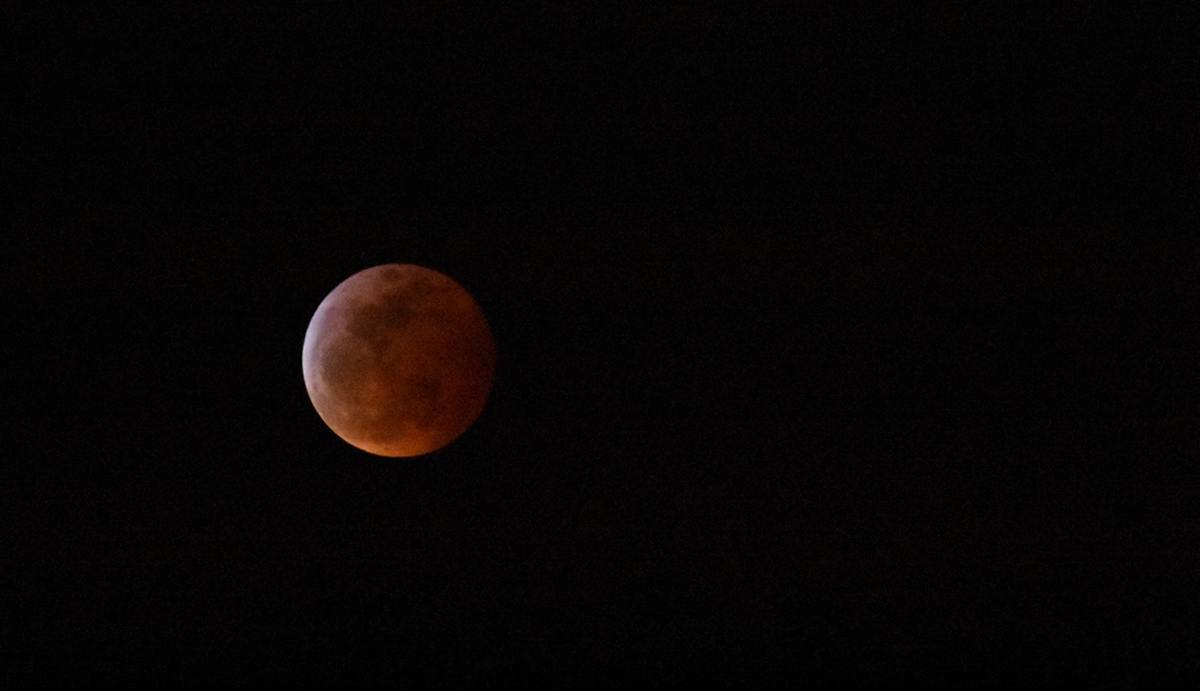
Once the eclipse starts, the full moon will take on a reddish hue and look like a chunk has been taken out from one side, NASA said.
During the 82-minute spectacle, the full moon will turn “blood red,” according to National Geographic.
When the moon is in the shadow, or the umbra, of the Earth, our planet casts a crimson shadow.
“The moon appears orangish or reddish during a lunar eclipse,” the space agency said. “The more dust or clouds in Earth’s atmosphere during the eclipse, the redder the moon appears.”
This eerie hue is why a full moon that coincides with a lunar eclipse is often called a blood moon, NASA said.
As the total lunar eclipse winds down, the process plays out in reverse.
The moon’s red coloring begins to fade and the dark part shrinks down until the moon’s appearance returns to its typical shape, according to NASA.
Will Californians be able to see the total lunar eclipse?
About 85% of the world’s population will have a chance to observe at least some of the longest total lunar eclipse since 2022, Time and Date said.
Nearly five billion people will be able to view the entire eclipse from beginning to end, according to the online calendar.
However, the rare lunar sight will not be present in the California night sky.
Instead, stargazers will have a chance to catch a glimpse of the corn full moon.
“Those in the Americas will miss the show entirely, as the moon rises too late,” National Geographic said.
When to watch September full moon in California
The ninth full moon of 2025 will reach peak illumination at 11:09 a.m. on Sunday, Sept. 7, according to Time and Date.
How did the corn moon get its name?
The September full moon is called the corn moon, according to the Old Farmer’s Almanac.
The name refers to the time when corn is traditionally harvested in much of North America, the almanac said.
September’s full moon is also known as the autumn moon, falling leaves moon and yellow leaf moon, among other names.
When is the next total lunar eclipse in California?
Californians don’t have to wait too long to witness a total lunar eclipse.
The next one will occur in the early hours of the morning on March 3, 2026, according to Time and Date.
Most of California will be able to view the entire eclipse, the online calendar said.