History is messy at the California State Library, with bad drawings to prove it
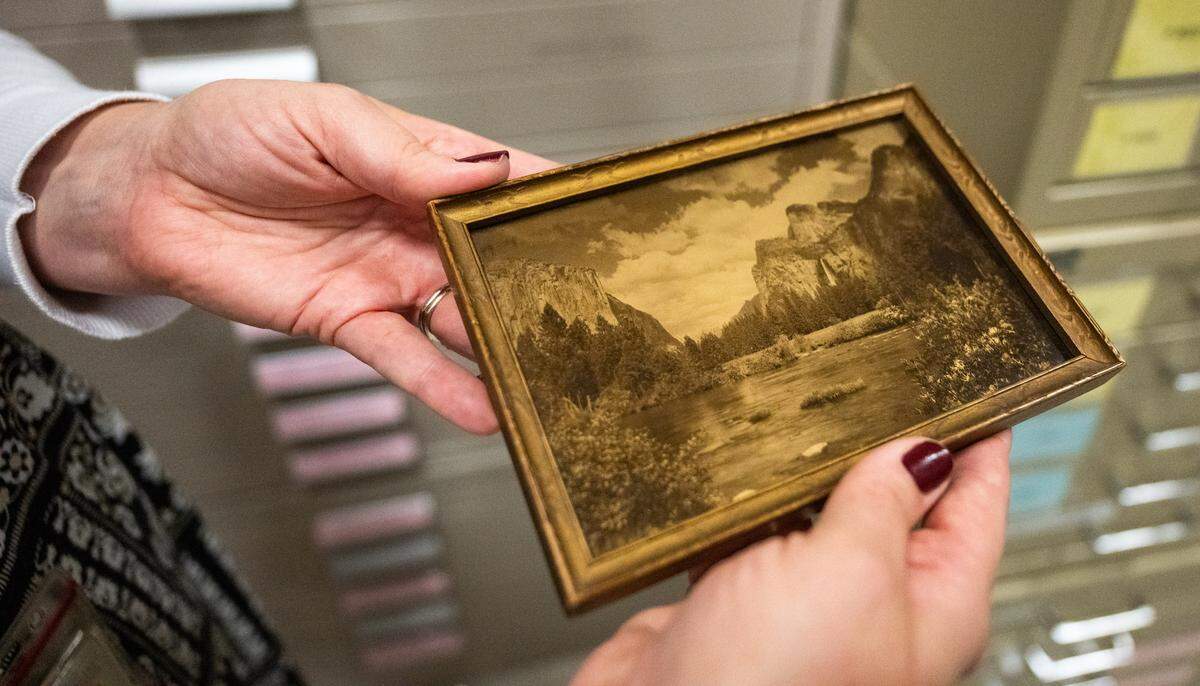
If a regular old digital picture is worth 1,000 words, the shimmering photograph in the librarian’s hands must have been worth at least 10,000 more. Jessica Knox-Jensen, a bureau chief at the California State Library, pulled it out of a gray box that belied the jewel inside. The photo — a print more than a century old — was startlingly clear.
In the image, the Yosemite Valley emerged in shades of gold on glass. The glinting waters of the Merced River appeared to flow. Bridalveil Fall crashed through the center of the frame.
Californians lobbied Congress to turn the Yosemite Valley into federally protected land in the late 1800s; it became a model for the National Park System, which was established in 1916. Arthur Pillsbury went to the valley and made this photo, called an orotone, around 1910.
The photo is one of Knox-Jensen’s favorite items in the library’s collection in part because she’s been to Yosemite, too, and experienced “the magic.”
“This is something from more than 100 years ago that reflects the same experience,” said the State Library Services bureau chief. The small object was a portal between the present and the past.
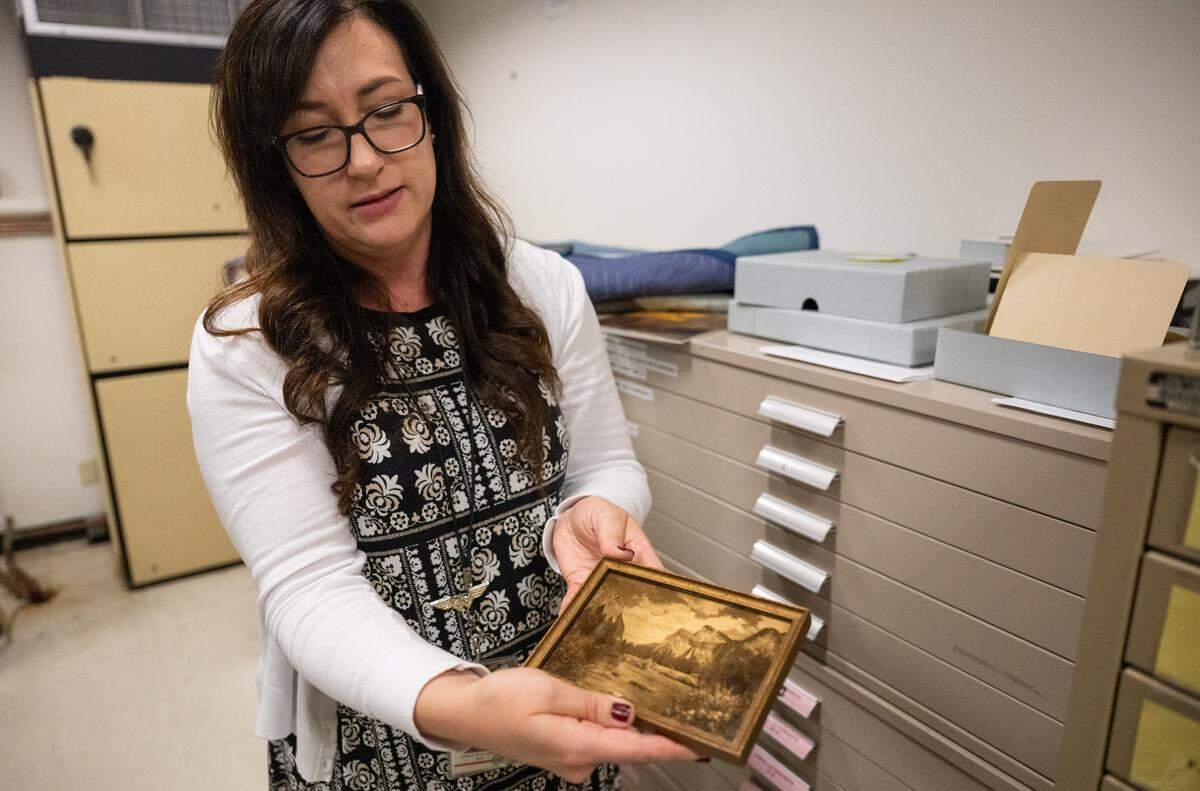
In honor of California’s 175th year of statehood, Knox-Jensen and a colleague had pulled a few unique items from the library’s vault. Some were beautiful, some were horrible. One was ridiculous.
“History is everyday activities,” the librarian said. “History is messy.”
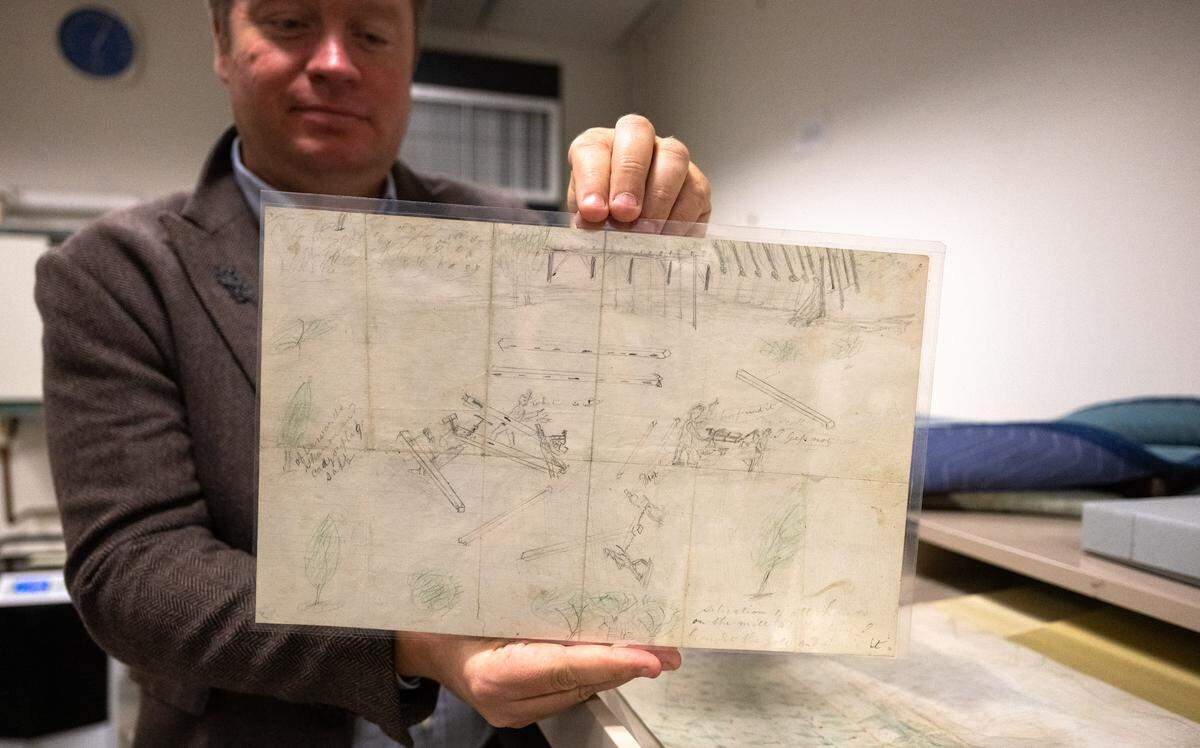
In a metal cabinet, another piece of California history was certainly far messier than the exquisitely composed Yosemite photograph. Alex Vassar, the library’s chief spokesperson, pulled out a sloppy colored pencil sketch found in the desk of James Marshall. The New Jersey man was establishing a sawmill on the south fork of the American River when he spotted gold in the water on Jan. 24, 1848, and set off the California Gold Rush. His drawings looked like they were made by a child: In one, Marshall himself is a squiggly figure with a speech bubble that says “I have found it.” A squiggly figure asks him, “what is it,” no question mark.
Marshall changed the course of world affairs, and yet his drawing is a reminder that he was just some guy.
Knox-Jensen smiled at the sketch, then said, “Sometimes the artifacts of history are not grand, but mundane.”
California librarians are the stewards of reality
The California State Library is open to the public. It boasts a collection of more than 4 million items, many of which are freely loaned out to borrowers at local libraries throughout the state. However, certain books and artifacts are so fragile that their use is highly restricted. The vault — not a fortified underground chamber but a rigorously air-conditioned room with no windows behind a nondescript door — contains some of the library’s rarest and most valuable items. The librarians help researchers use the materials to interpret the past.
Vassar said that scholars will see a single item on the shelf and say there should be a whole book written about it. Each object, he said, was a story.
The ugliest story he pulled off the shelf that day was a box containing slave deeds, pieces of paper transferring legal ownership of enslaved Black people. Although early colonizers in California did compel people of color into labor against their will — particularly Indigenous people — the state did not have the same legalized system of enslaving Black people that existed in other parts of the country. Nonetheless, enslavers did forcibly bring people here — along with the documents that proved their “property rights.” One 1861 deed in the library referred to the enslavement of a woman, Dorcas, and her baby son, Lewis.
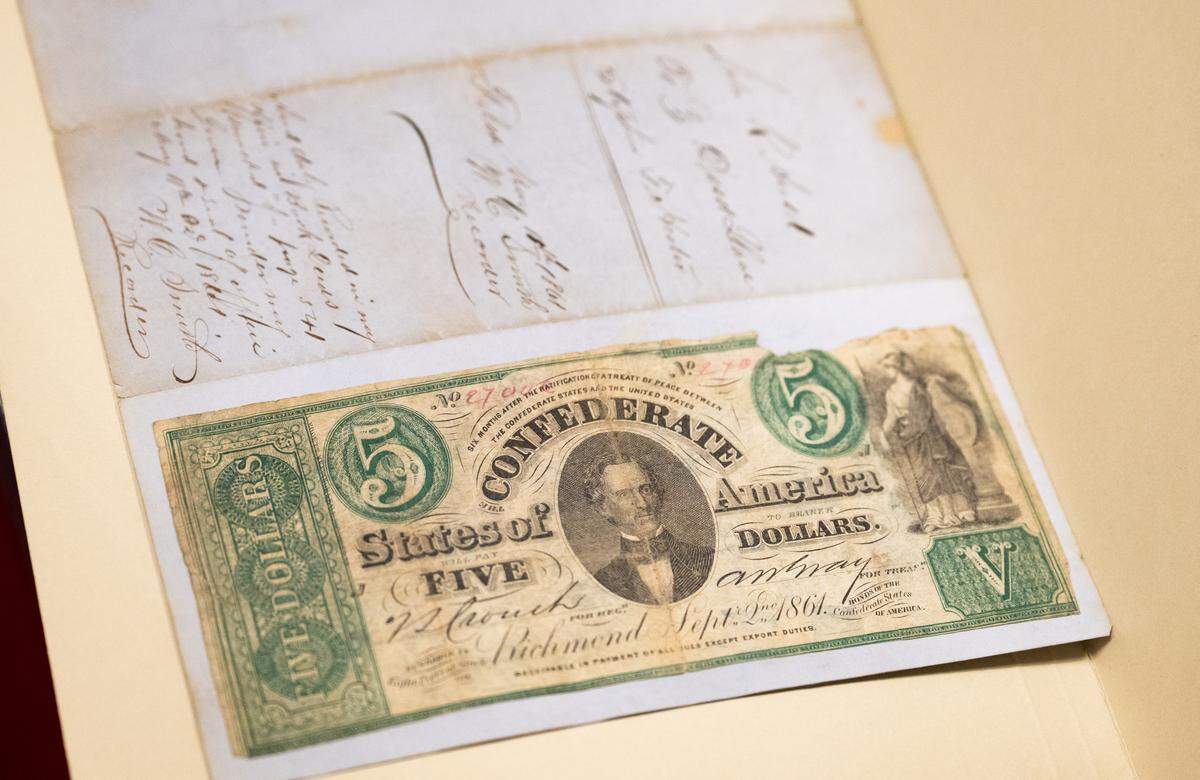
“It’s a legal document that transfers, by sale, a human being,” Vassar said. “It’s a terrible part of our country’s history, and it’s a terrible part of California’s history. And there’s something that’s different about a cold legal document conveying a person.”
Preserving such documents, he said, is critical, particularly in a world that’s ever-more-saturated with disinformation and, recently, the creations of large language models and image generators referred to as artificial intelligence.
“AI is based on original documents,” he said. “It’s either hallucinations or it’s based on reality. And so to have a hard copy volume that dates back to the 1800s is an anchor. It’s an anchor for reality.”
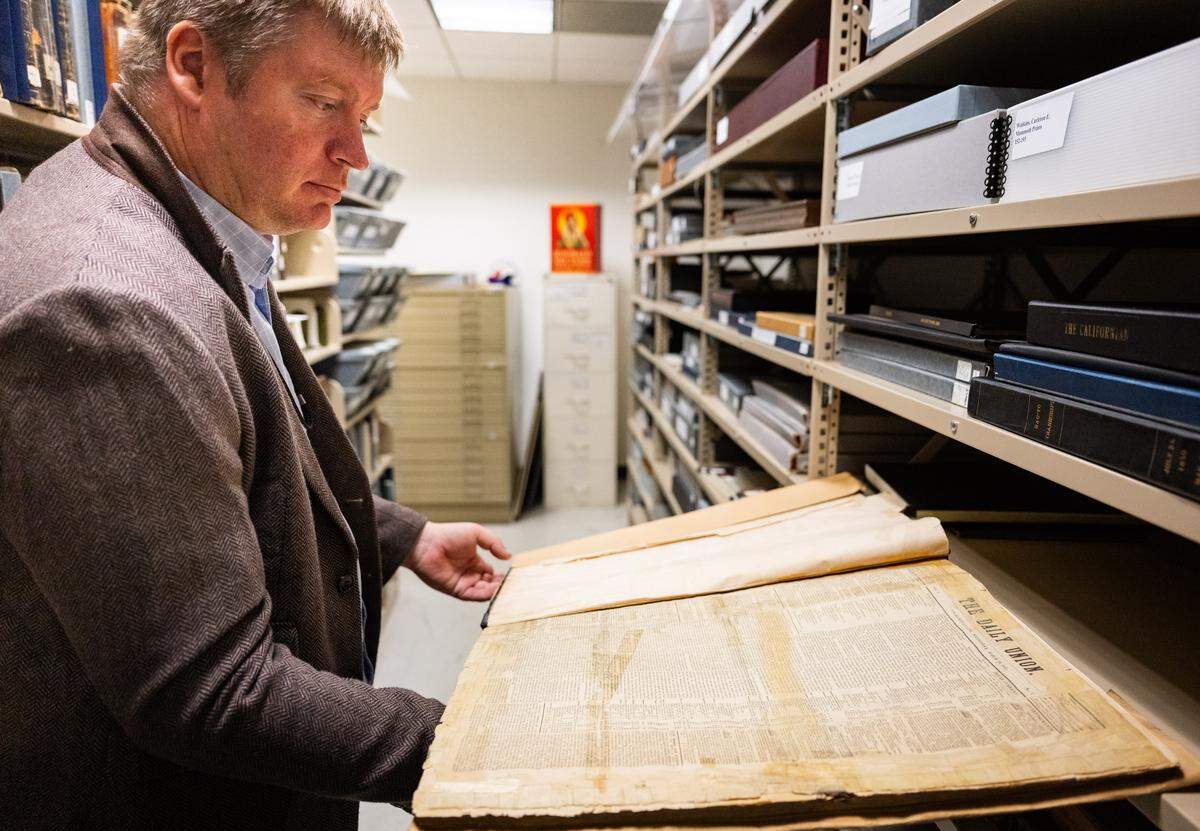
That anchor is vital to the state’s collective memory. Last Tuesday, a wildfire tore through Chinese Camp, a former goldmining town in the Sierra foothills. Vassar was able to show KCRA reporters — and the public — historic photos of the site. After the Oroville Dam’s spillway failure in 2017, reporters asked for help digging up Department of Water Resources records; a document in the library identified the vendor who’d sold the cement decades earlier.
The library can help Californians understand loss or hold officials accountable, but it can also provide a strange window into an alien past with more death and less water management infrastructure. A letter written in neat cursive by Pollie Denver on April 2, 1853 recounts the aftermath of a flood the prior December: a levee on the American River broke.
“I have neglected answering your very kind letter so long that I feel almost ashamed to write at all,” Denver begins. “I have a very good excuse.”
She received the last letter just before her baby was born, she explains, and then her beloved grandmother got sick, and then she gave birth to her baby, and then her grandmother died, and then there was such a bad flood that she was glad her grandmother was dead because “if she had been living when the floods came she would have been frightened to death.” Five months later, she said, the city was still partially flooded. She’d been boating through the city streets. Everything in her mother’s one-story home on O Street was destroyed. All the gardens and peach trees were dead.
As Denver said, she had a very good excuse not to write — but the librarians are glad that she did.
This story was originally published September 8, 2025 at 5:00 AM.