
A ‘museum’ hangs on Delta bar’s walls. Now vast taxidermy collection for sale
AI-generated summary reviewed by our newsroom.
- Foster’s Bighorn owner lists 240-piece taxidermy collection for $15 million.
- The collection spans global species, dating from 1920s to late 1950s hunts.
- Wakeman seeks museum or university buyer to preserve exhibit's legacy.
On the shaded side of Rio Vista’s Main Street, where the road climbs away from the Sacramento River, sits Foster’s Bighorn, the bar and restaurant that has occupied this spot for 90 years. Foster’s is a landmark in this Delta town, not only for its longevity but, as owner Chris Wakeman showed when he opened its doors on a Monday afternoon, for what’s inside.
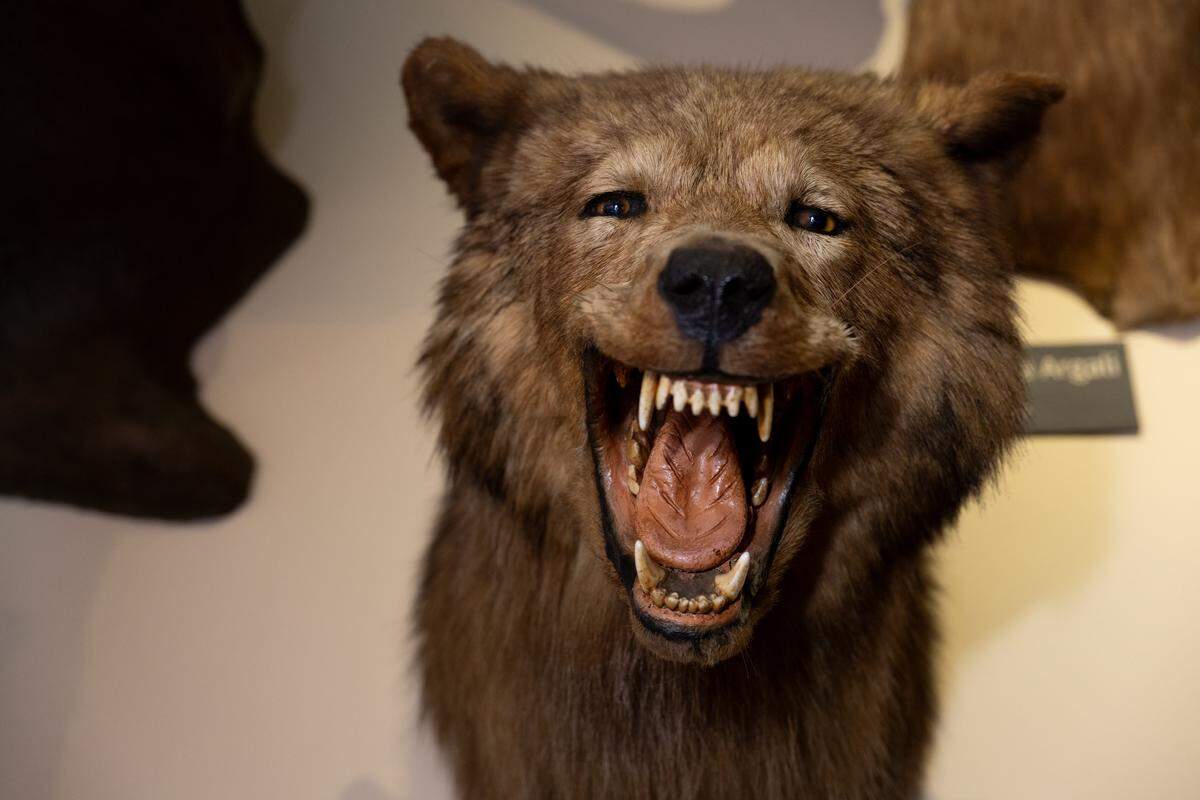
A menagerie — mounted in long rows on the walls of the old bar. It’s an imposing taxidermy gallery of lion and wildebeest, water buffalo, hippopotamus, rhinoceros and, most dramatically, elephant from Africa. Mule deer, moose and the bar’s namesake bighorn sheep, come from North America. Other species from Asia, South America and across the globe sit in static display.
The mounted trophies, some 240 in all, are a travelogue of the bygone hunt, and the legacy of Bill Foster, one-time bootlegger, saloon owner and globetrotting big game hunter who brought them back to Rio Linda from far-flung safaris and hunting expeditions from the 1920s to the late ’50s. Foster purchased the bar that bears his name in 1931, Wakeman said, and opened it in 1933. Foster died in 1963.
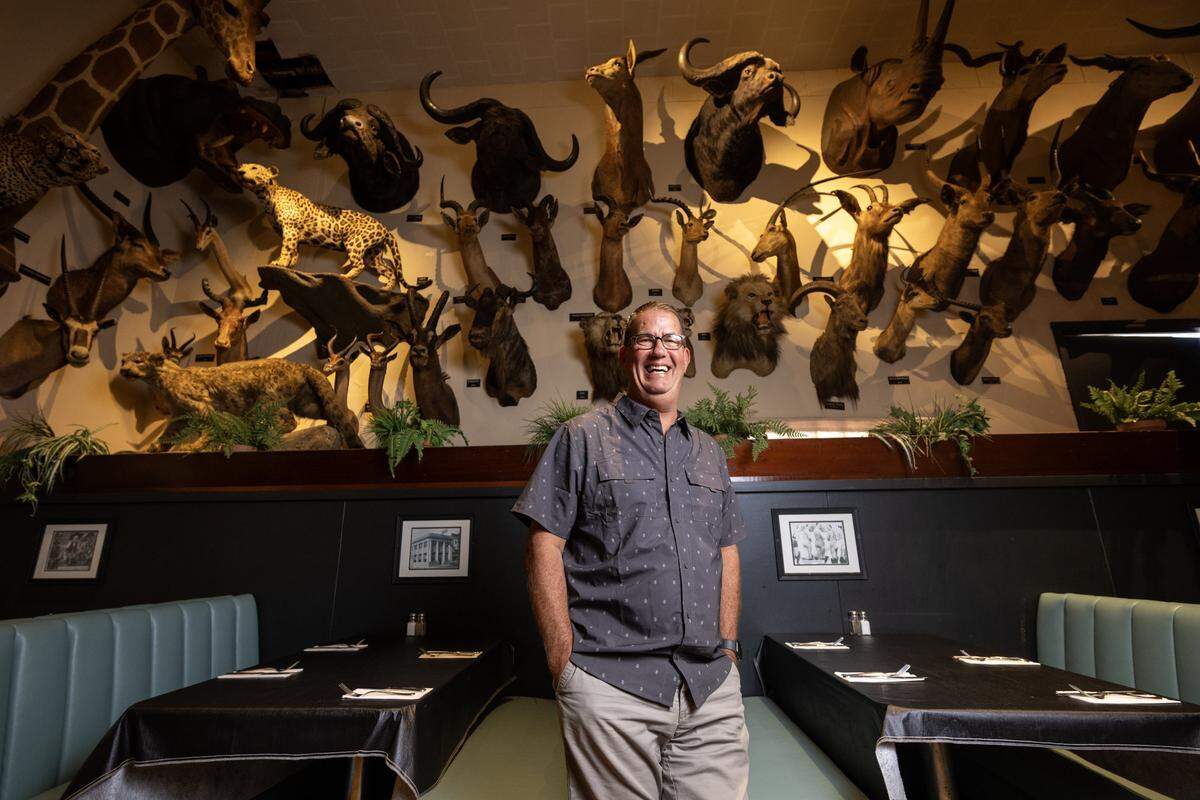
“Bill started this. He didn’t realize that 90 years later it would become a museum,” said Wakeman, who has owned Foster’s Bighorn since 2022, and is the latest caretaker of what is now known as the Foster’s Big Game Legacy Collection.
Wakeman has put the taxidermy collection up for sale at an asking price of $15 million with the aim of attracting natural history museums or universities to the assembled animals on view, the collection rare in its size, range and diversity of species.
“It is a museum,” Wakeman said, looking up at the displays lining the walls. “What I’ve tried to do is preserve Bill’s legacy. He was an Olympian of big game hunting.”
Aged black-and-white photographs of Foster’s travels and his quarry, some with hand-typed cutlines describing his exploits, line one wall.
“I wanted to honor Bill’s legacy by trying to create a museum. Whether that’s here or whether someone puts this in a museum, I think that’s ultimately the direction,” Wakeman continued. “I’ve fallen in love with this collection and I want it to be preserved as a remembrance to him. That’s the goal, so I decided to put it on the market.”
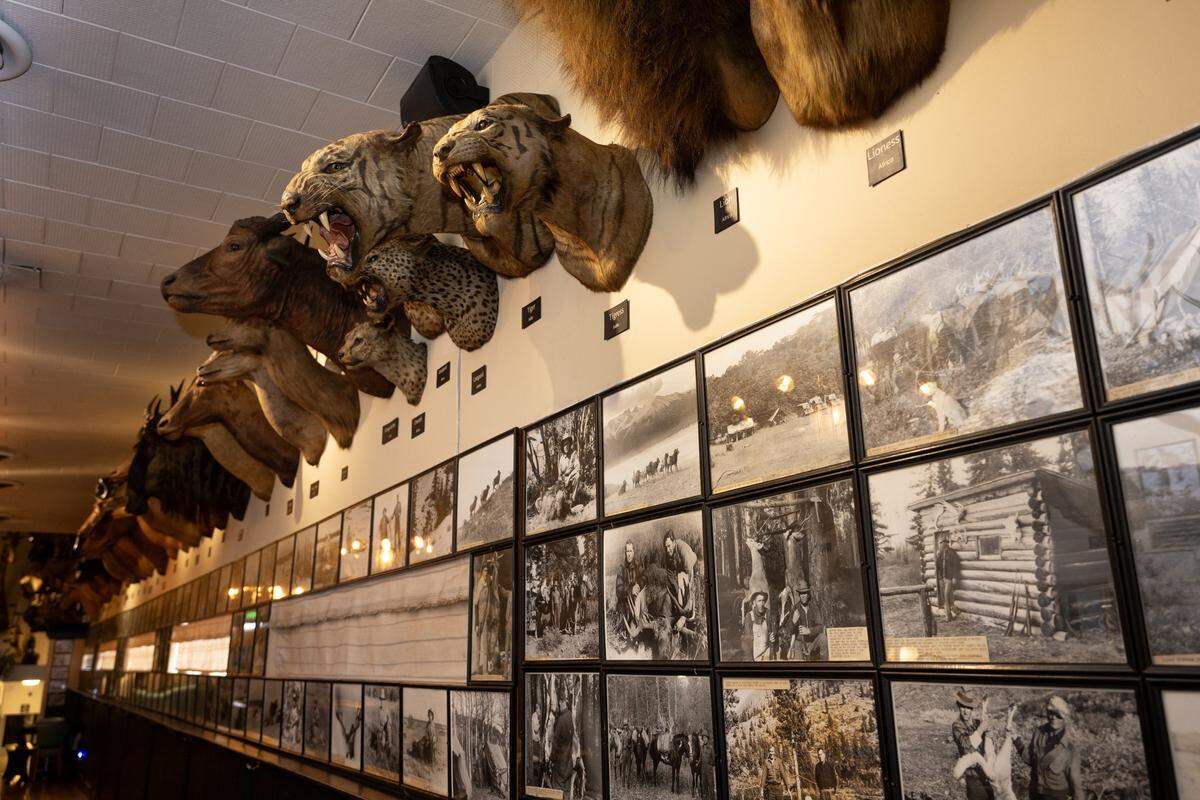
The collection’s overview notes provide insight into the decades-old taxidermy display and its nearly 40-year span, considered a prominent era of big game hunting. Foster employed preeminent 20th-century taxidermist John Jonas to mount the trophies. The collection has been featured in wildlife and other publications and documentary films and has been viewed by countless visitors over the generations.
“You can always tell a newcomer — they’re looking straight up and they’re just gazing at everything in here. It’s incredible,” Wakeman said. “Then we get the people (who say) ‘I came here with my grandfather. I’ve been coming for 40, 50, 60 years. I appreciate that. I get to talk to all the guests, find out their history behind it and what brings them here.”
Peninsula-born and raised, Wakeman was once one of them. Years, and Bay Area careers in contracting and the restaurant industry later, the Sacramento-San Joaquin Delta became his summer home. He would move to the Rio Vista area for good after the COVID-19 pandemic.
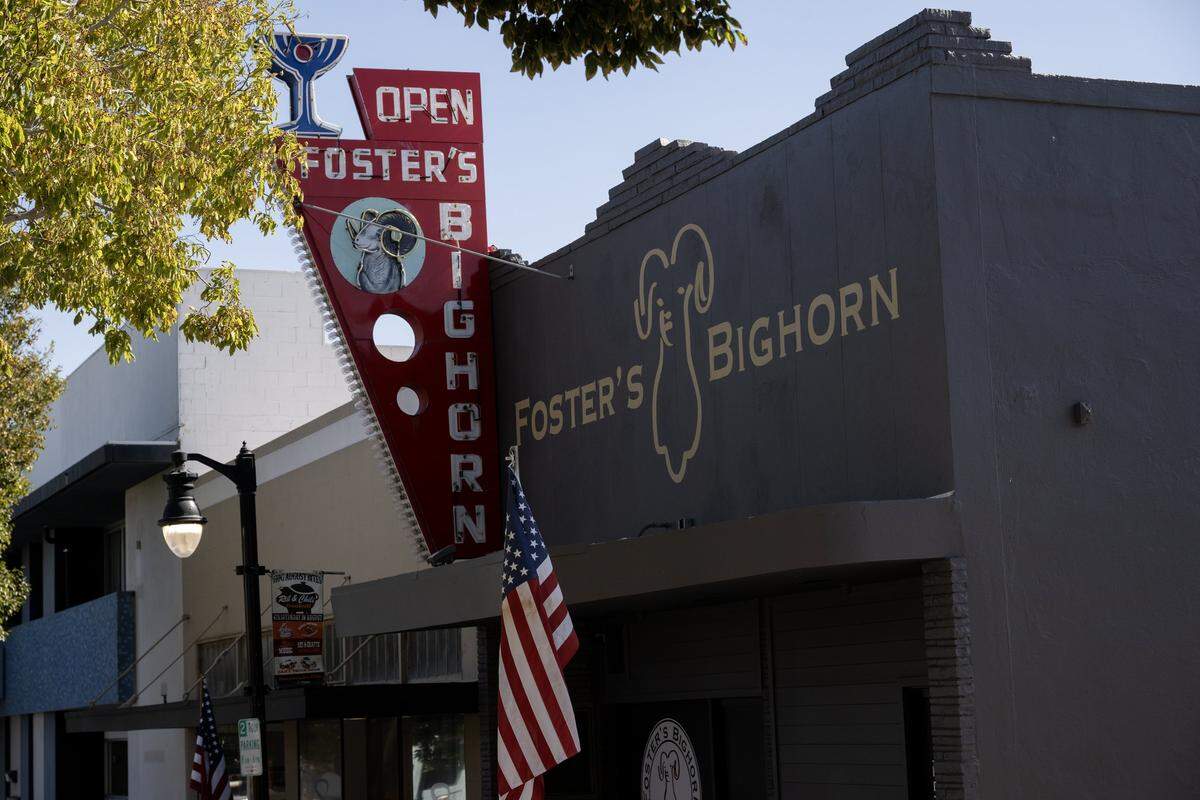
“I’ve been coming up to the Delta my entire life,” Wakeman said. “After COVID, I moved to my summer home. I was commuting back and forth to the Bay Area and came in here and met the old owner. Within five minutes of talking to him, he told me (the bar was) for sale, and I just saw the history and how iconic this place was. I pulled the trigger, and a little over six months later, I acquired it and went to work.”
Foster’s Bighorn was closed on a Monday, stools and chairs stacked atop the bar and tabletops. An employee made the rounds, cleaning ahead of Tuesday’s opening as the occasional delivery person dropped off provisions from a side entrance. The bar’s mascot, Wakeman’s 5-year-old Shar Pei, Wrigley, whiled away the afternoon, roaming from cool spot to cool spot on the barroom’s floor.
Owning and running the restaurant also meant caring for the vast, aging Foster’s collection while managing the vagaries of heat, cold, humidity and stovetop. That was one of the practical factors behind putting the Bighorn collection on the block, Wakeman said.
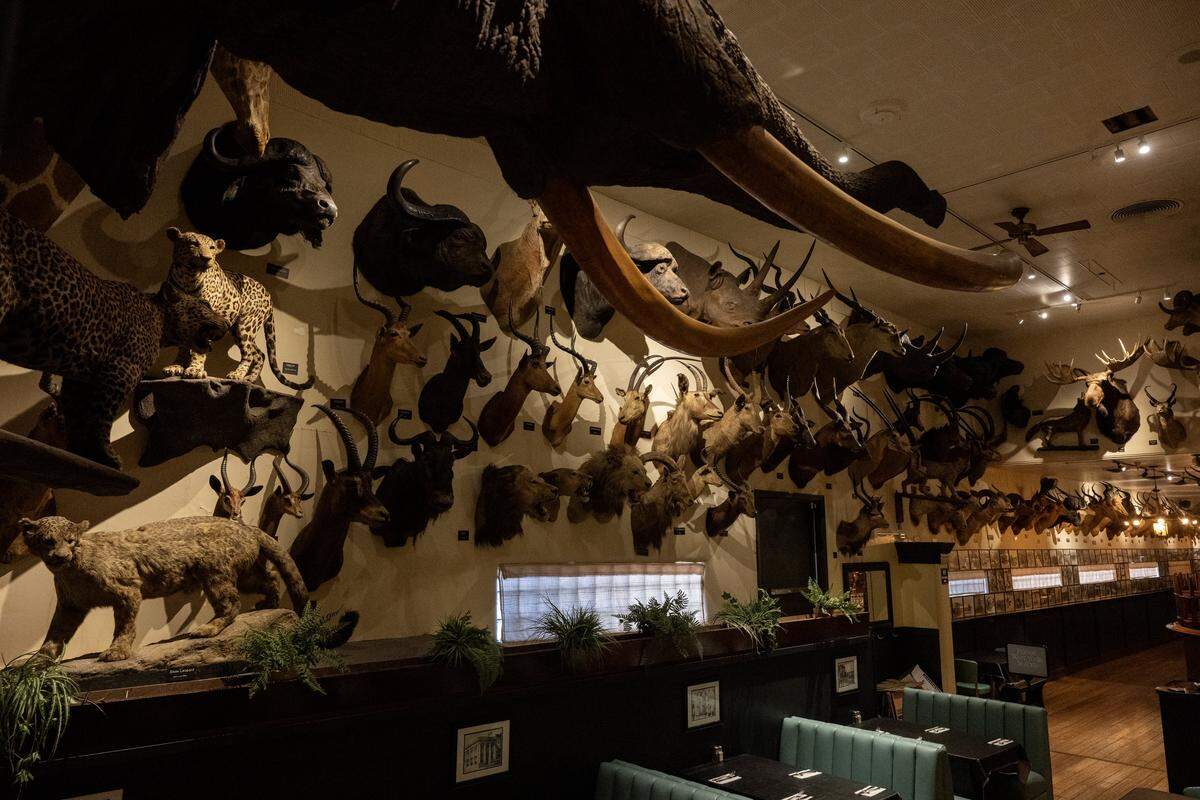
“I’ve got a lot of hours invested in taking care of this, building the business back up. We’ve done that. And I just want to see them protected, and, I want to see them in a climate-controlled space. The environment that these are in, it’s a little bit challenging to take care of,” Wakeman said. “It’s falling on my shoulders as the caretaker. ... It’s about me protecting this legacy of his and honoring what he built and what he started 90-plus years ago, and, I think that’s the job of somebody at some point.”
Wakeman said he understands that the first-ever sale means the Foster’s collection could leave Rio Vista without what has become a generational institution. He also understands evolving opinions on big game hunting, and global awareness of wildlife conservation and preservation in the decades since Foster’s death and the passage later of the 1973 Endangered Species Act.
It’s in those contexts that Wakeman wants the collection preserved, for its historical value and as an educational resource that can continue to be viewed, studied and enjoyed, he said.
“It’s so rare and it’s so valuable. You cannot replace this. I want to see it protected for the long term,” Wakeman said. “We can’t rewrite history, (but) we learn from history. It was something that (Foster) had a vision of. He had a vision, and I think, 90 years later, he’s created a new museum. It’s incredible.”
This story was originally published September 26, 2025 at 5:00 AM.
.JPG)