Historic Folsom’s annual soap box derby draws competitors from far and wide
The quiet of Folsom’s Historic District — a quaint downtown area full of galleries, restaurants and shops — was replaced Sunday with the sounds of cheering and cowbells.
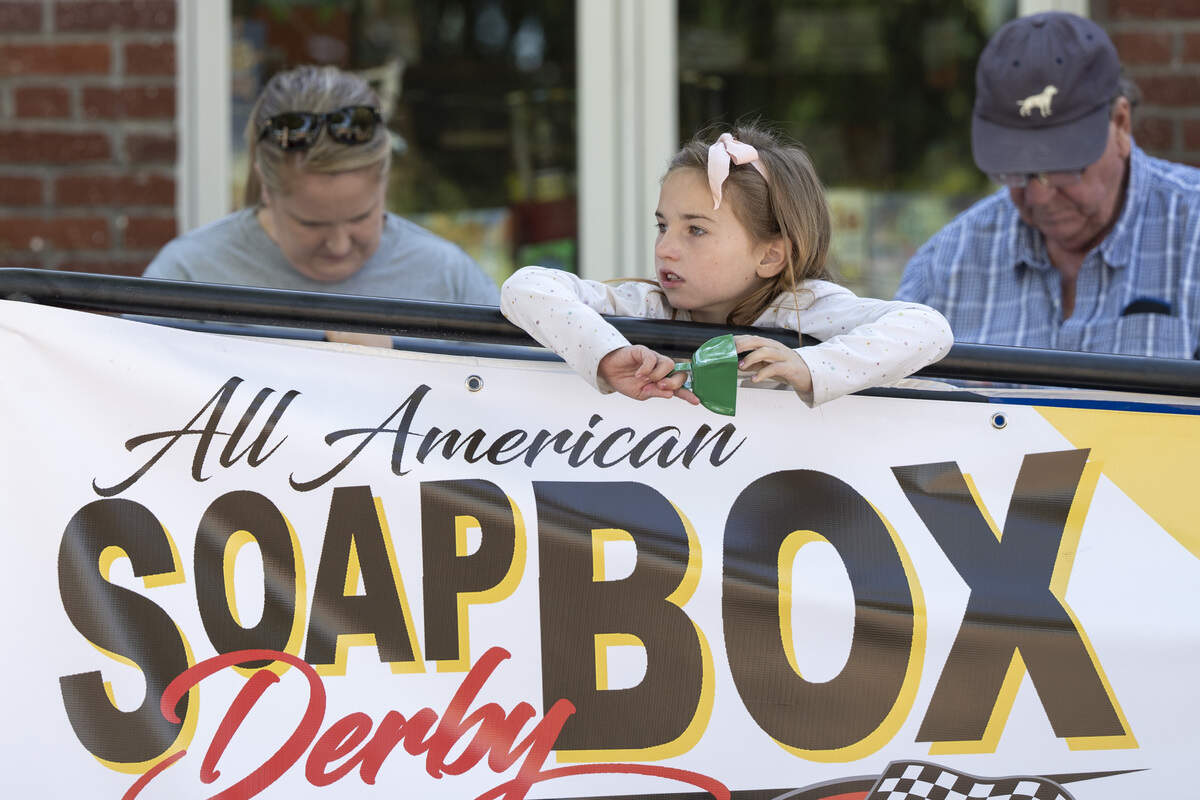
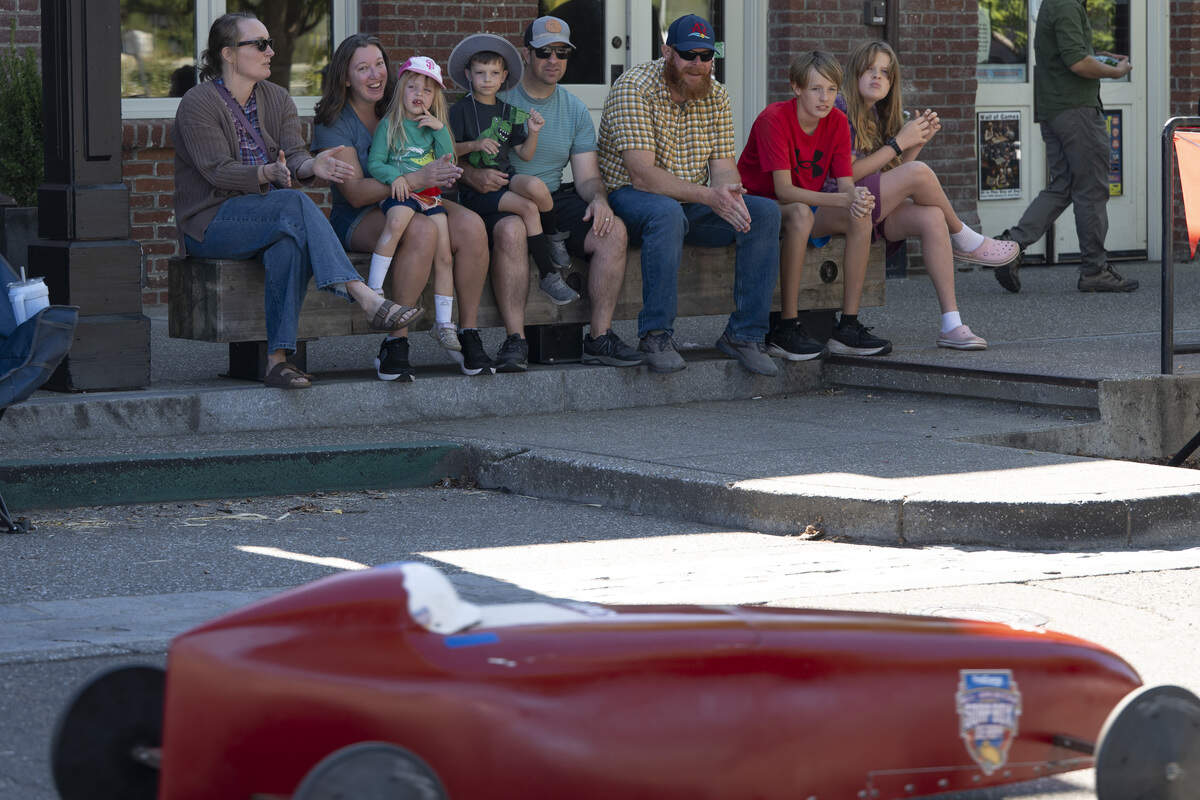
The seventh annual All-American Soap Box Derby, a series of races with handmade gravity-powered cars, kicked off on Saturday and by Sunday had drawn families and visitors to watch kids from as far away as Oregon and Washington compete on the unique track.
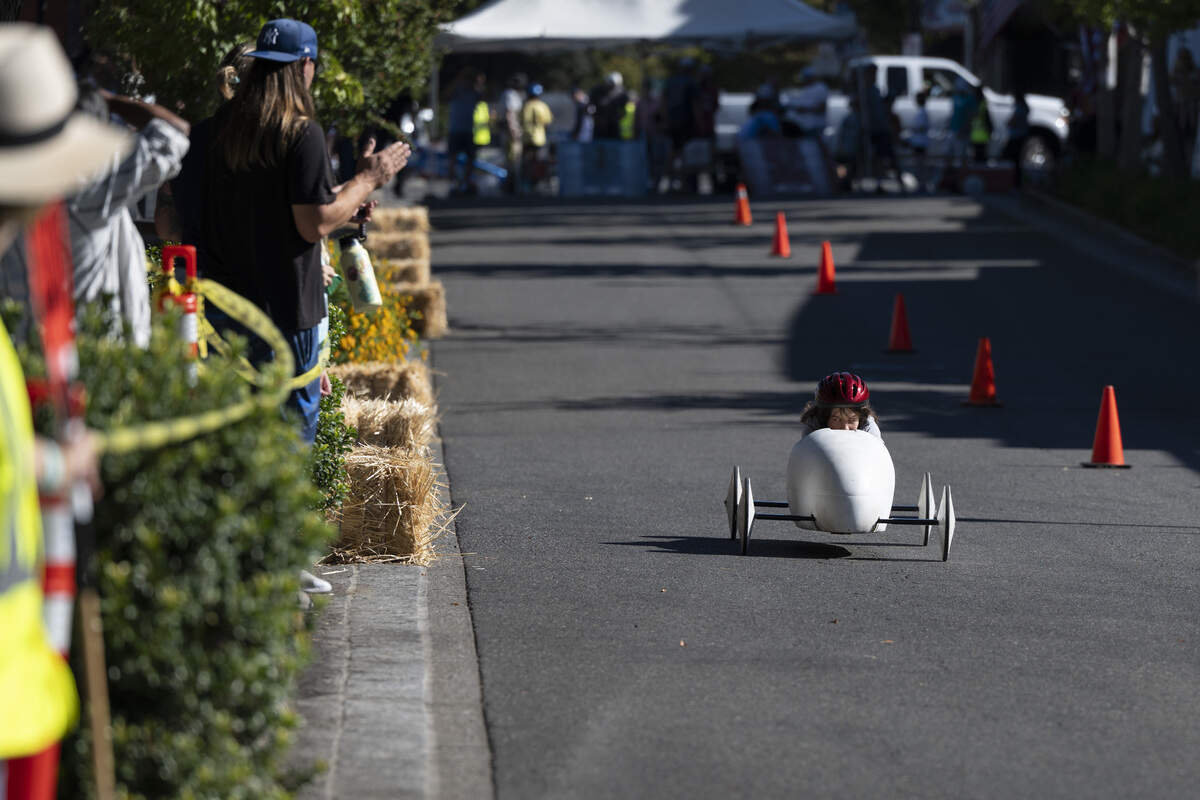
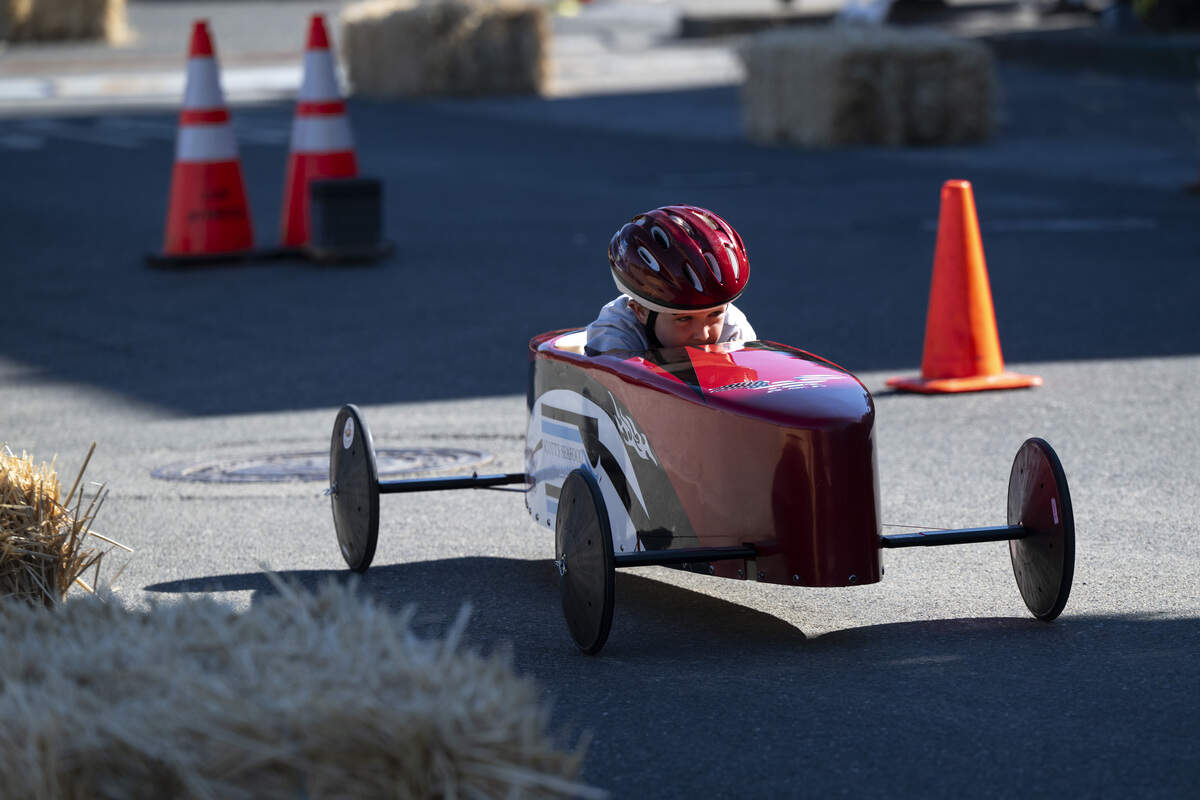
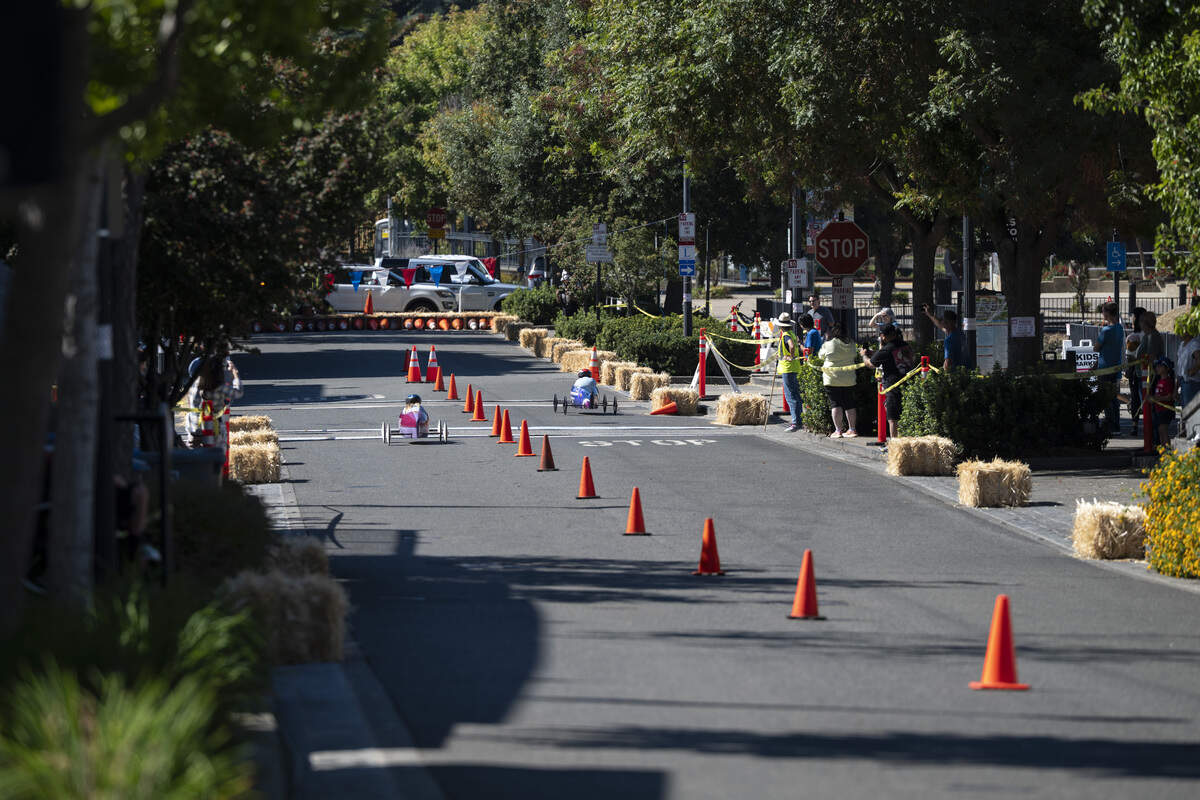
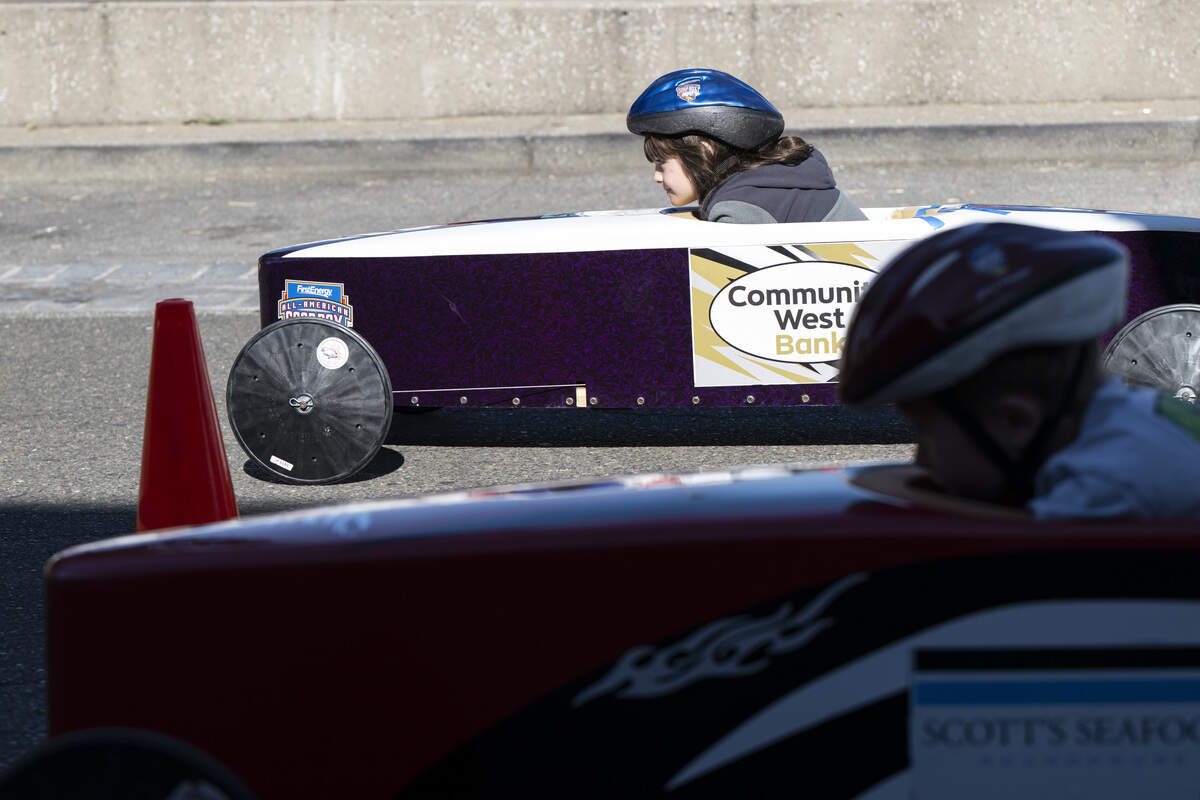
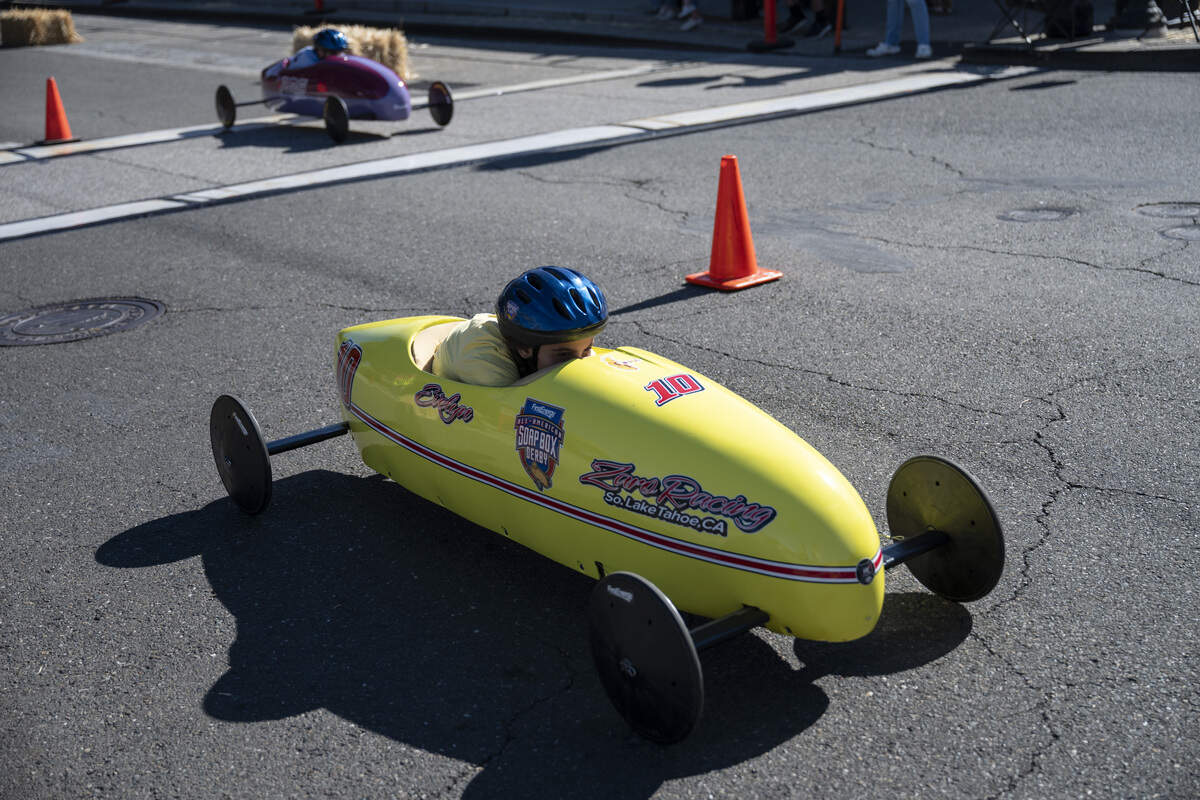
Sutter Street, normally open to vehicle traffic, played host to a two-lane racetrack divided by cones and lined with hay barrels. Racers started at the intersection of Wool Street and then rolled down to a finish line near Community Bank.
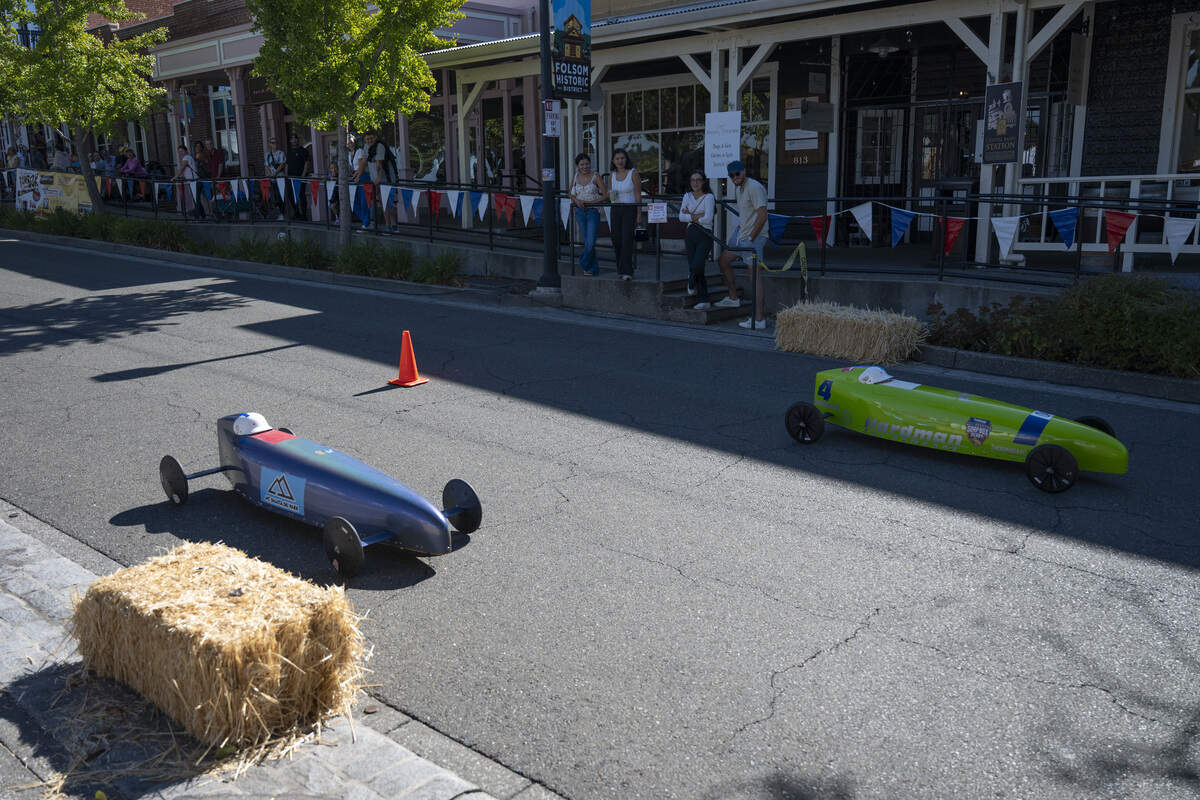
“I think soap box derby racing is important because it gives kids an opportunity to do something that is not routinely organized in their lives,” said Karen Holmes, a racing lover who helped establish the annual event after being inspired by a friend who raced soap box derby cars as a kid.
“It gives them a chance to apply science, math, engineering skills to a car,” she said.
The derby, which is open to participants from ages seven to 20, features three classes of cars: stock, super stock and master.
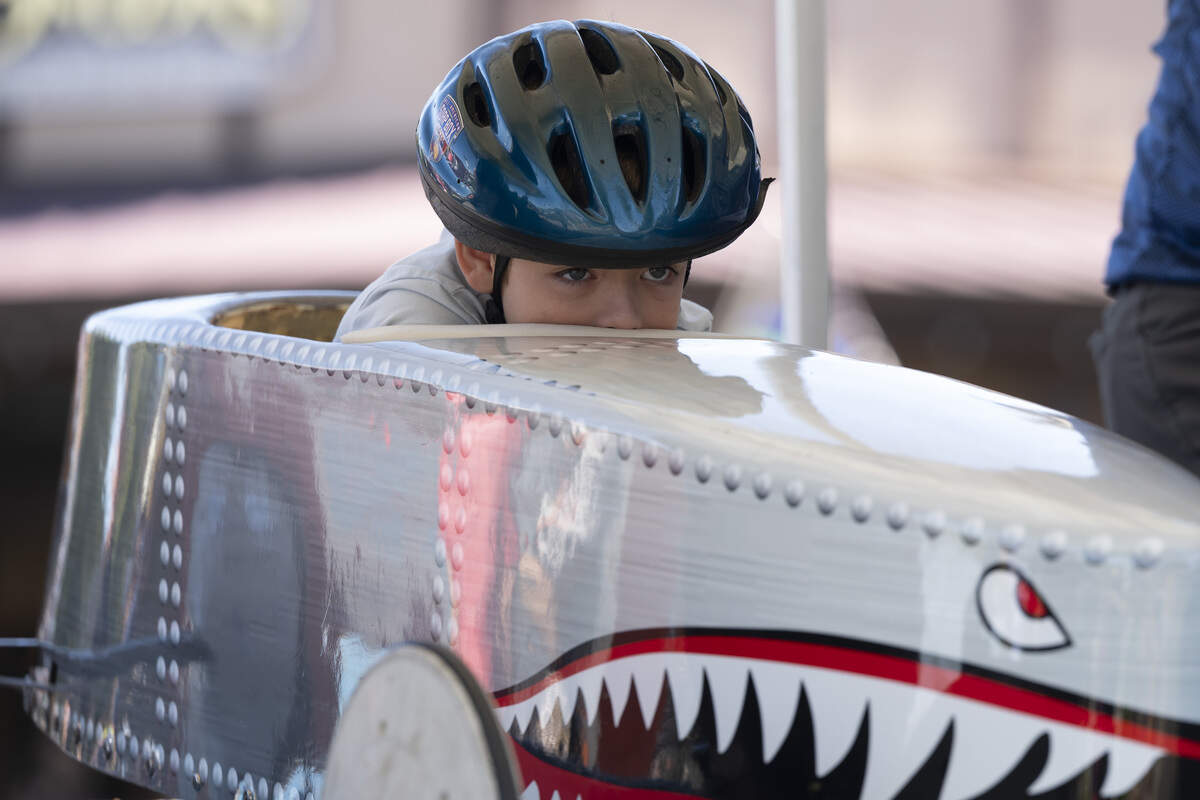
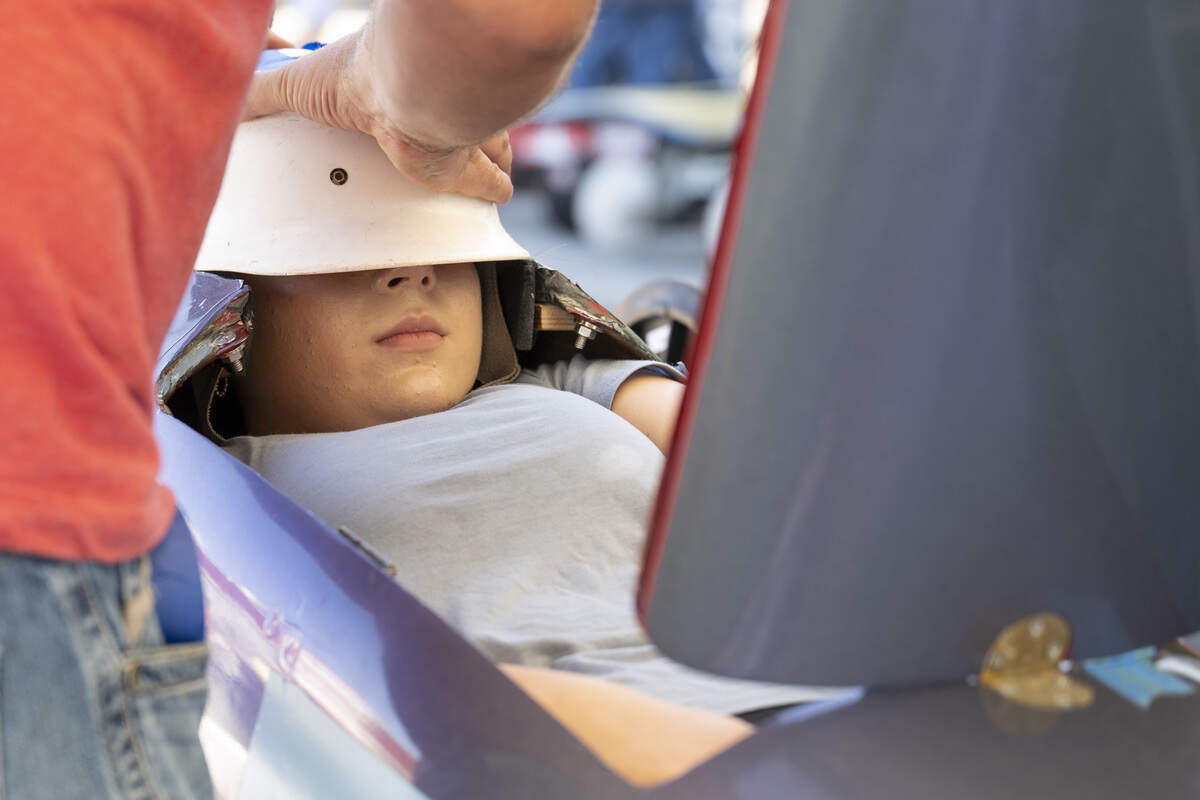
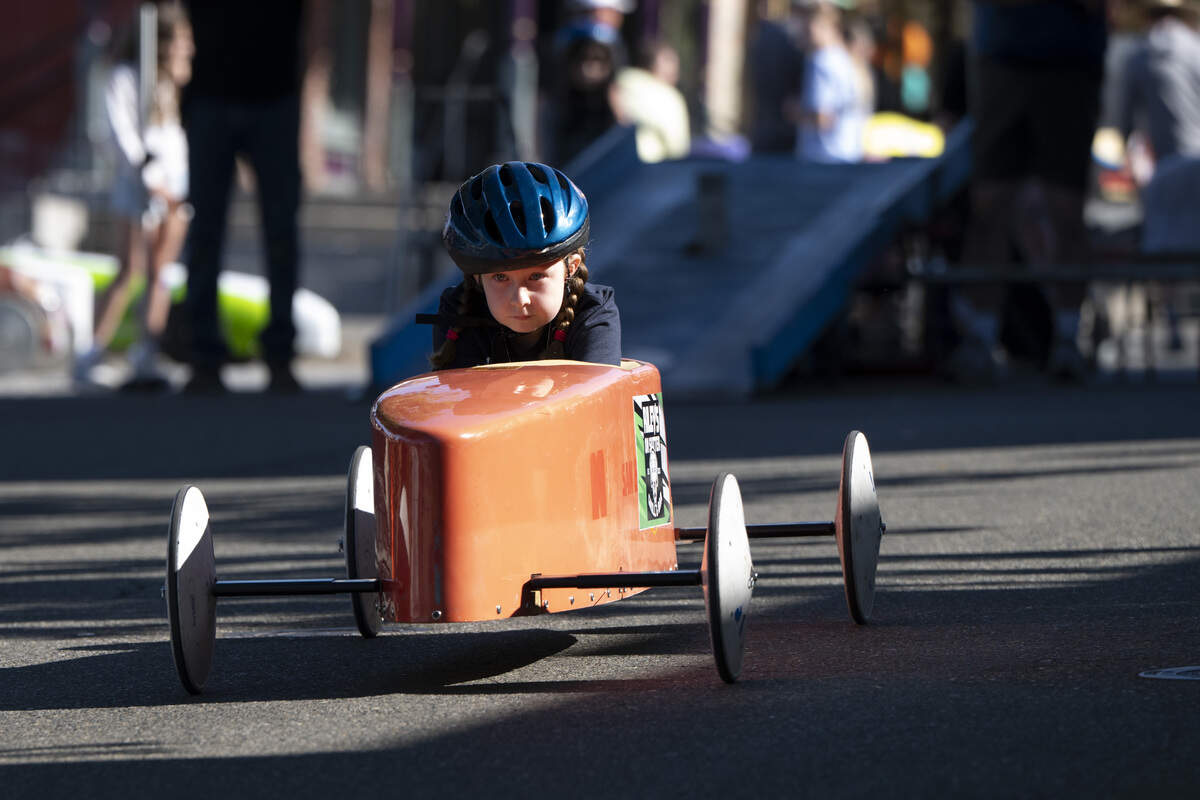
Stock cars, which can be a maximum of 200 pounds and hold the youngest racers, are blocky with tall sides, while master cars, which can be a maximum of 255 pounds, are more aerodynamic, forcing their drivers to lie in the cars with only a slight gap between the car and their helmet for them to see through. Super stock cars, which can be a maximum of 240 pounds, are in between with slightly more areodynamic, curved sides than the stock cars.
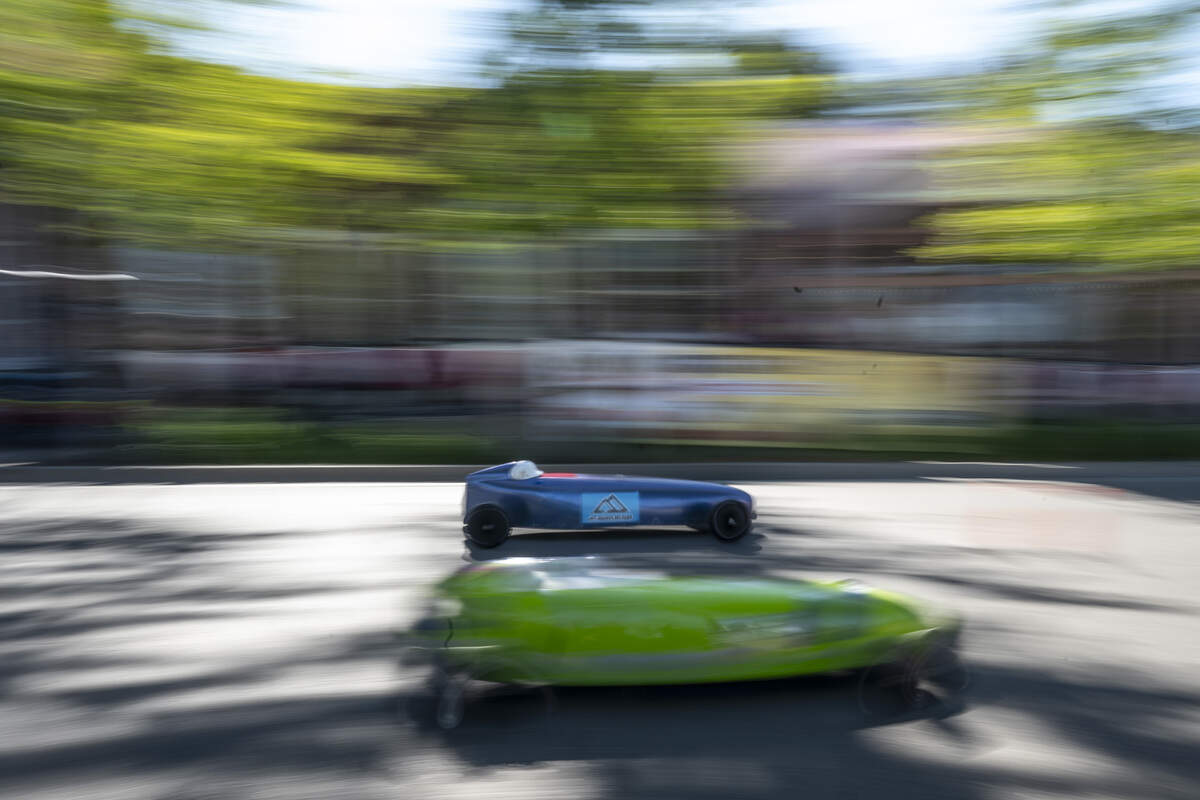
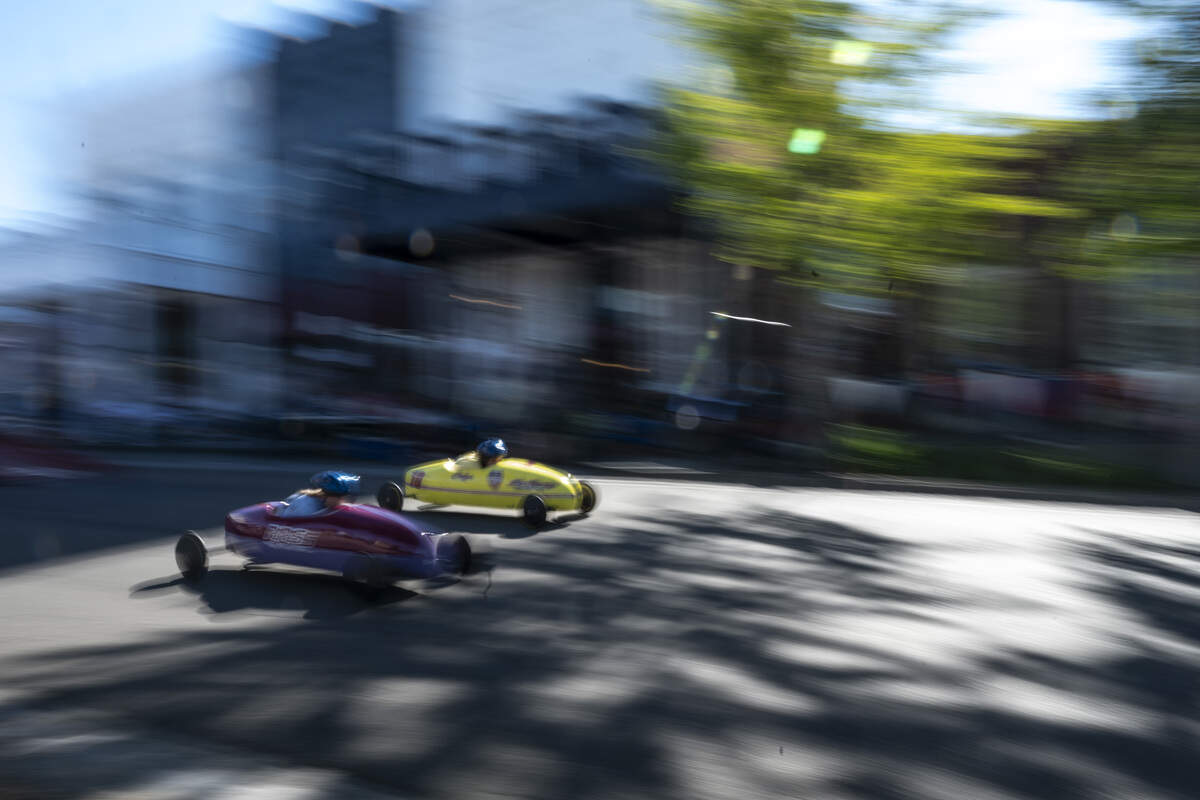
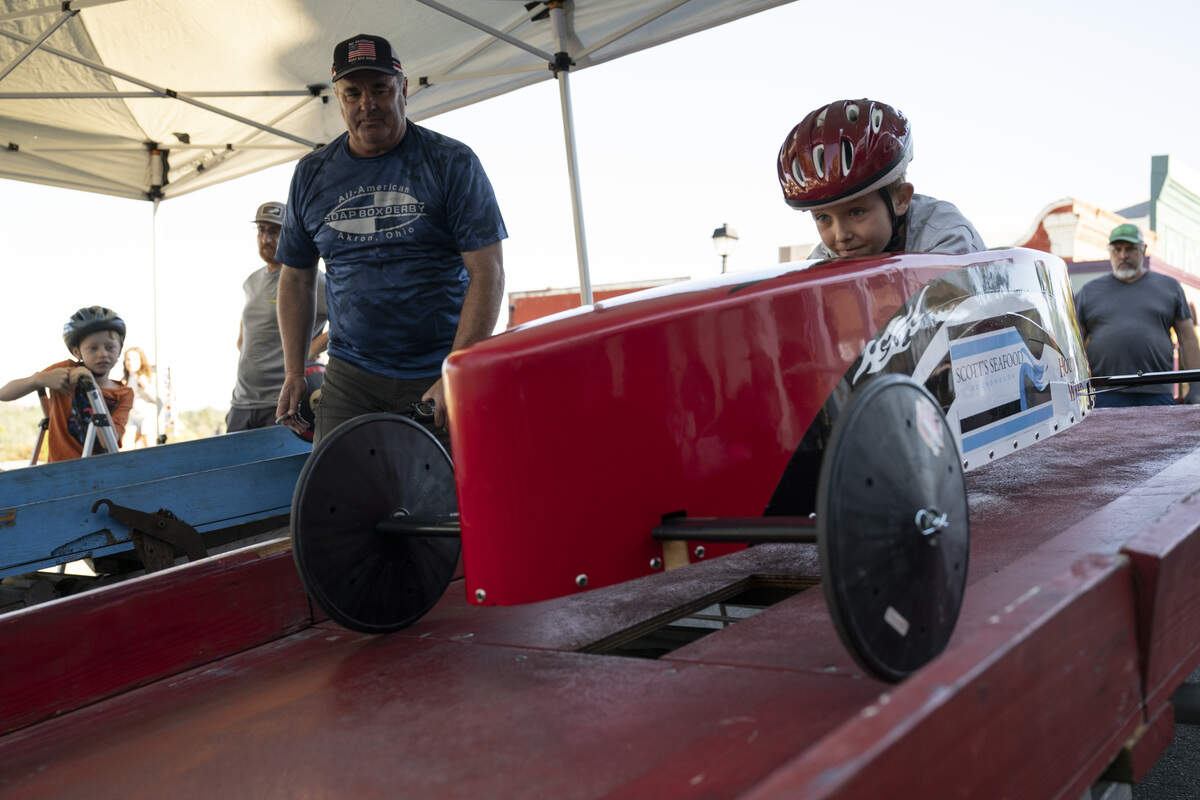
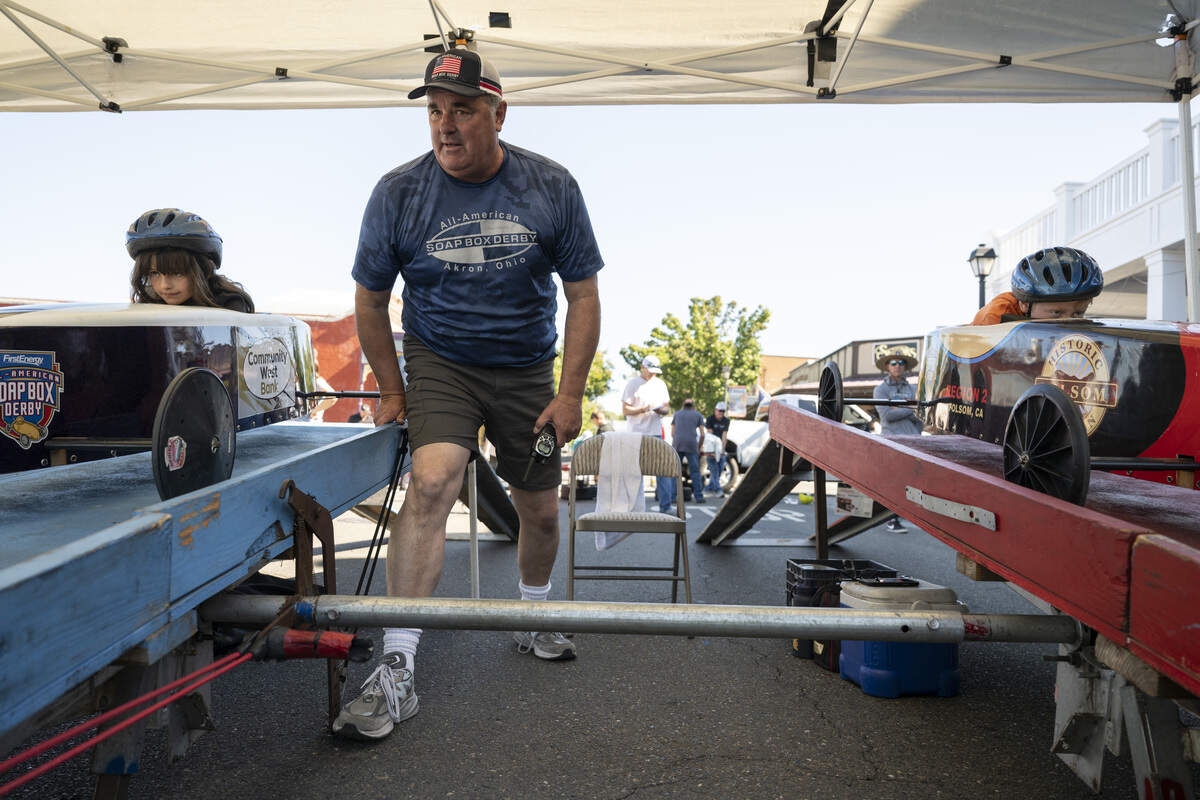
Soap box derby cars work by gravity. At the beginning of each race, two competing racers set their cars on an inclined drop gate before climbing in. Once released, the cars follow the slope of the track at high speeds. To control their car, each racer has a steering wheel and a brake..
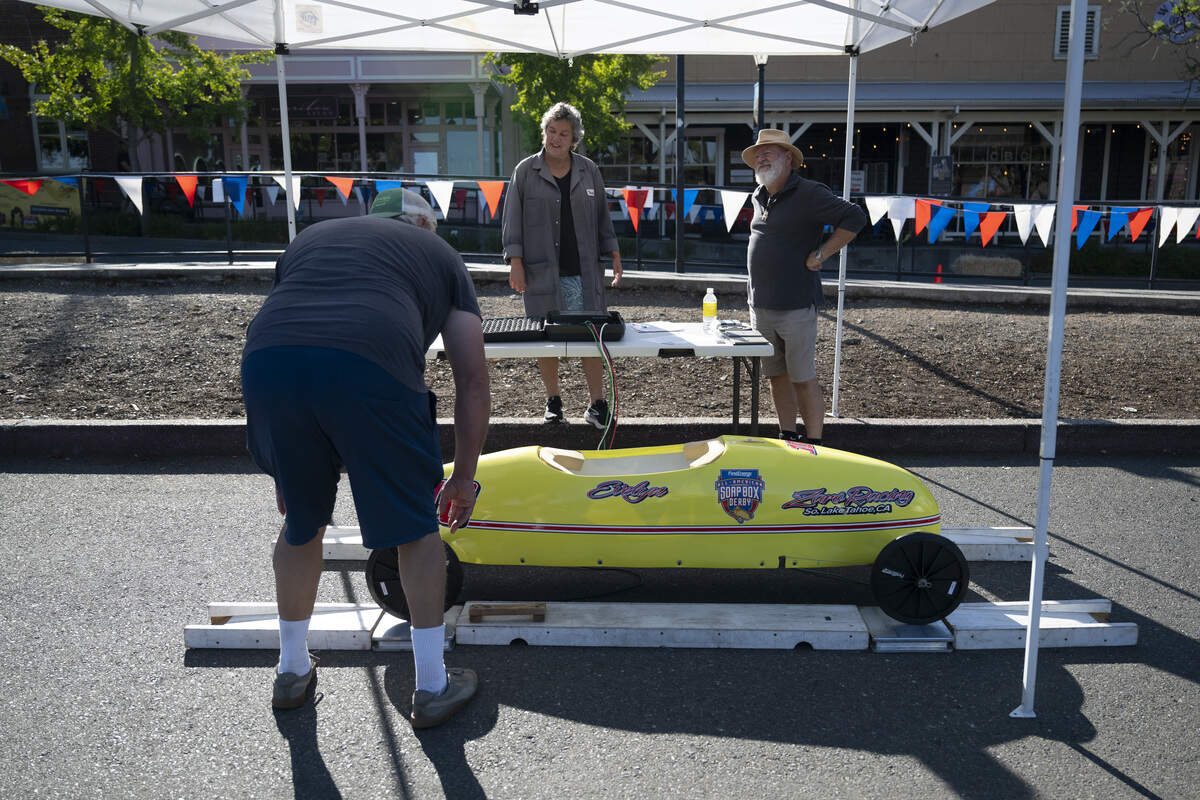
At Folsom’s derby, racers — many of whom are racing for the first time — are given a practice run after their weigh-in and inspection. The competition is a double-elimination bracket, giving the competitors more than one chance to succeed.
This year’s race featured around 30 racers according to Holmes .
“It just feels like I’m in my own world and like I’m just having the time of my life,“ said Evelyn Lacoste about the event. Lacoste, who is a 12-year-old racer from Fair Oaks, has been racing for five years.
“I always meet new friends,” she said, “and it’s always fun racing going down the hill.”
Soap box derby has been around since the 1930s, when the term was coined by a photojournalist in Ohio — which is now home to soap box derby’s international championships. According to Holmes, Folsom has had soap box derby events since the 1950s. In the 1960s races were regularly held on the grounds of rocket manufacturer Aerojet, west of the city.
Holmes encourages families to get involved in the sport.
“It’s such a family friendly sport: They buy a car and then they build the car together,” she said.
According to Holmes, those interested in getting involved can reach out to Northern California Soap Box Derby. The non-profit has some cars available for beginners to borrow.