Uncertainty lingers as Sacramento-area families await partial CalFresh payments
AI-generated summary reviewed by our newsroom.
- County officials report unknown CalFresh amounts, timing after court order
- Thousands face food insecurity as families and food banks brace for delays
- Agencies and companies mobilize donations and distribution to fill gaps
Sacramento County officials say they still don’t know how much CalFresh assistance each household will receive this month — or when the money will arrive — after two federal judges ordered the U.S. Department of Agriculture to issue partial November SNAP payments from emergency funds.
“They are moving forward with a partial funding, but at this time we do not know how much accountholders will receive or the timeline for them to see those benefits,” county spokersperson Janna Haynes said Monday. “Either way, there will still be a significant shortfall.”
The Trump administration has said it will use $4.6 billion in a USDA contingency fund to pay half of the benefits that were appropriated for benefits to the Supplemental Nutrition Assistance Program. SNAP is known as CalFresh in California.
In a post on the social media site X, Agriculture Secretary Brooke Rollins wrote: “We submitted to the courts our plan to get partial allotments to SNAP households. ... It will take several weeks to execute partial payments.”
The uncertainty comes as thousands of local families, already stretched by rising rents and grocery prices, face a deepening crisis in food access. Officials are urging residents to check their county food bank for the closest food distribution site. Be prepared for lines and long waits, they warned.
This mom buys groceries that will last a while
For Christie Patton, 39, a mother of four in south Sacramento, the news recalled past trauma. A few years ago, she and her family were homeless, sleeping on friends’ couches or in motels. She now works as an in-home supportive services provider for her disabled mother and lives in a two-bedroom apartment she obtained through a housing lottery last year.
Just weeks ago, her monthly CalFresh benefit finally rose to $330 — “which is big for me,” she said — after months of fluctuating at lower payments. That financial assistance was supposed to mean more fresh produce and protein, fewer noodles and processed foods, she said.
“We were looking forward to using that $330 this month, being able to get a little bit healthier food,” she said. “When you don’t have much money, you can’t really afford to get healthy food.”
But with CalFresh payments paused and the county unable to say when or how much aid will arrive, Patton once again must improvise.
“I have faith that God will provide,” Patton said. “I don’t care if it’s the last day, like the last minute, the last second, he always makes a way.”
While Patton would like to go to a food pantry, she said she can’t stand in long lines with two young boys, both of whom have autism.
She’s fortunate, she said, because she receives $725 a month from a guaranteed income program funded by Sacramento County and run by the United Way California Capital Region. That gives her some flexibility that other families across the state and nation simply don’t have.
A fragile balance between food and housing
Patton’s story underscores what social service agencies have warned for years: The line between housing stability and hunger is paper-thin for many working families.
Just four years ago, she lost her car and eventually her home. She ended up in a neighborhood where illicit drug use was common, she said, and she felt her young son was unsafe.
Although she now has an apartment, she remains concerned about the safety of the neighborhood, saying she won’t go out for walks because it’s common to hear of pedestrians being struck by cars.
As government agencies scramble to distribute the emergency benefits, a network of private, public and nonprofit organizations are pitching in to help relief efforts.
Houston-based Riviana Foods Inc., maker of RiceSelect, announced Monday that it would partner with the California Association of Food Banks for the second year of its “Jars of Hope” campaign.
Through Nov. 30, for every two jars of RiceSelect purchased at participating California retailers such as Raley’s, Save Mart and Food4Less, Riviana will donate one jar to CAFB, which supplies food banks across the state.
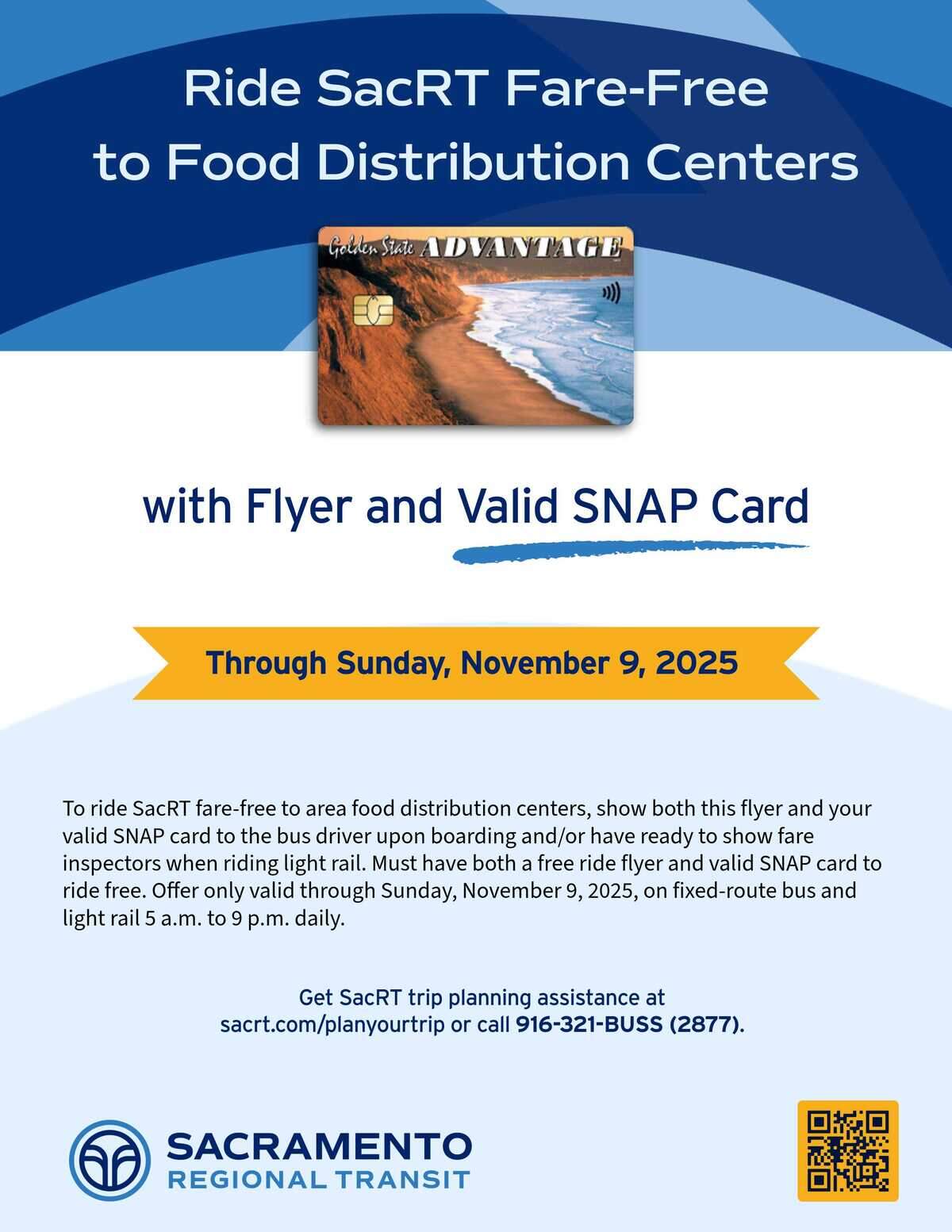
Now through Sunday, CalFresh enrollees can present their benefit cards and the free ride flyer on Sacramento Regional Transit to ride free to Sacramento food distribution centers., according to Rose Arteaga, a social services practitioner with the agency. The offer is valid on fixed-route bus and light rail transit from 5 a.m. until 9 p.m. daily.
The nonprofit advocacy organization One Fair Wage is soliciting tax-deductible donations for an emergency fund that will make relief payments to service workers in need around the nation. One Fair Wage says it has 300,000 service workers and more than 1,000 restaurant employers advocating to end wage structures that leave any American earning less than the minimum wage.
Where to find help
If you need help now, find a food distribution site near you at these websites:
Sacramento County: sacramentofoodbank.org
El Dorado, Nevada and Placer counties: feedingthefoothills.org
Yolo County: yolofoodbank.org
Yuba, Sutter counties: www.feedingys.org
Although your CalFresh benefits are delayed, keep your case active by checking at getcalfresh.org to ensure there are no requests for information. Want CalFresh? Continue signing up during this pause to ensure a smooth start when funding resumes.
For rent and utility assistance, call 211. For help with mental health, call 988, or visit your county’s behavioral health website.
Sacramento County officials said they would release more details on CalFresh payment amounts as soon as the USDA provides guidance. Even when the funds are released, it could take a week before payments resume.