Beaver supermoon to rise above California. How to see closest moon of 2025
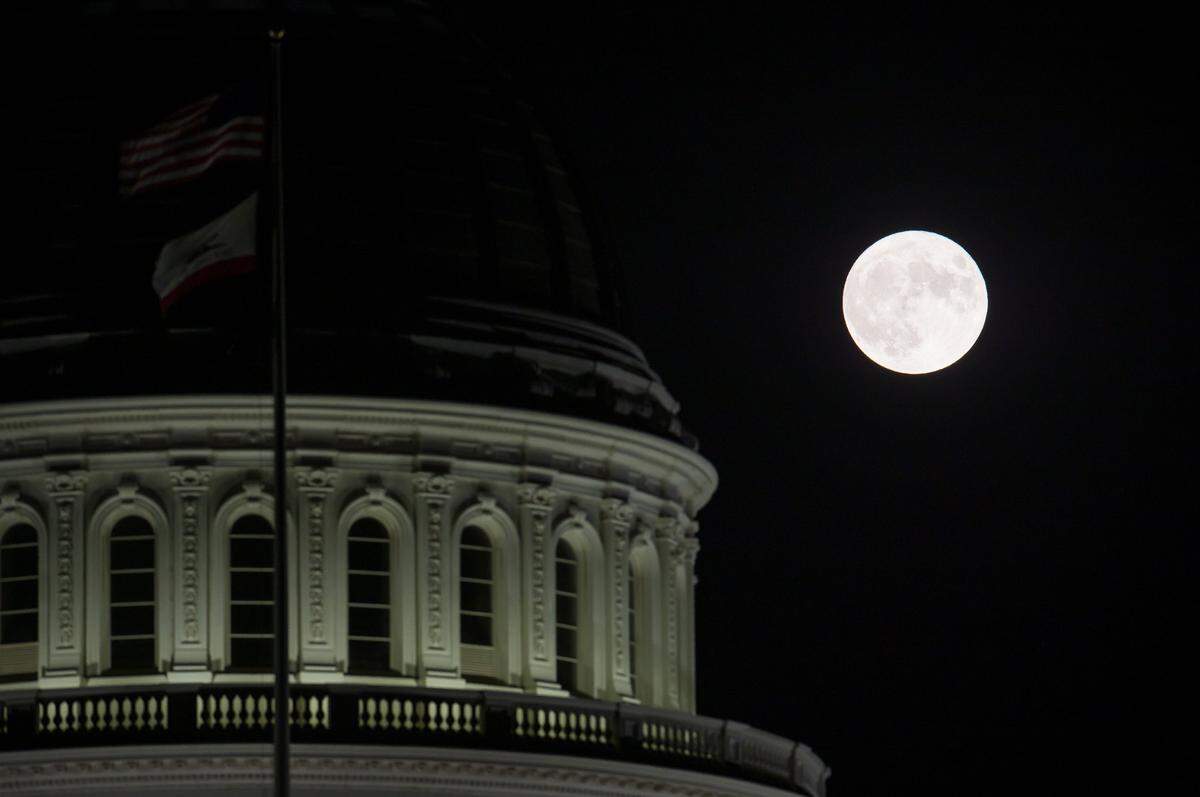
The closest supermoon of the year will soon glow brightly above California.
The orange-hued beaver moon is part of a trio of large moons in 2025. It’s also the nearest one to Earth, according to the Old Farmer’s Almanac.
“The beaver moon will be 221,817 miles from Earth,“ the almanac said. “This is the closest supermoon of the year.”
Here’s how to see the massive moon rising over California:
When to watch November supermoon in California
The 11th full moon of 2025 will reach peak illumination at 5:19 a.m. on Wednesday, Nov. 5, according to online calendar Time and Date.
The supermoon will look full on the night of Tuesday, Nov. 4, and the night of Wednesday, Nov. 5, according to National Geographic.
The celestial body will appear bigger and brighter than normal because the full moon is happening at perigee — the point when the moon is at its closest to Earth, National Geographic said.
How to see beaver supermoon in 2025
Californians can get the best view of the larger-than-usual moon around dusk.
“As the moon drifts over the horizon around sunset, it may appear larger and more orange,” the Old Farmer’s Almanac said.
The supermoon will look about 7% larger than typical. However, this bigger and brighter phenomenon may only be “an imperceptible difference to the human eye, depending on other conditions,” according to the almanac.
November’s beaver supermoon is the second of three supermoons scheduled to take place in 2025, the Old Farmer’s Almanac said.
How did November’s full moon get its name?
The November full moon is called the beaver moon, according to the Old Farmer’s Almanac.
The name refers to the time of year when beavers start hunkering down for winter by taking shelter in their lodges. Late fall is also when fur traders used to trap beavers to acquire their thick winter pelts, according to the almanac.
The November moon has also been called the digging moon, the deer rutting moon, the whitefish moon, the frost moon and the freezing moon.
The various names highlight “the actions of animals preparing for winter and the onset of the colder days ahead,” the Old Farmer’s Almanac said.