
Sacramento DA reveals push to convict Golden State Killer: ‘Never stopped searching’
AI-generated summary reviewed by our newsroom.
- Sacramento District Attorney Thien Ho reveals how the GSK case nearly left local control.
- His new book exposes long battle to find DeAngelo, tensions among California prosecutors.
- From DNA link to a conviction, book honors detectives and survivors who never gave up.
For more than 90 minutes after his arrest in April 2018, serial killer Joseph James DeAngelo sat motionless and silent in an interrogation room inside the Sacramento County Sheriff’s Office.
He had been read his Miranda rights, offered his favorite drink — Dr Pepper — and asked whether he knew why he was being detained.
“For an entire hour and a half, he sat motionless, his mouth agape, periodically taking in loud gulps of air but otherwise never moving an inch or even looking around,” prosecutor Thien Ho recalled.
The video recording of DeAngelo sitting there in a plastic chair, wearing cargo shorts, a T-shirt and tube socks, did not present an image of someone “particularly menacing,” according to Ho.
RELATED: Thien Ho announces run for 6th Congressional District
“He reminded me of a sloppy grandpa or an alcoholic uncle whom you avoided at all costs during Thanksgiving dinner.”
But DeAngelo was much more than that.
He was a former police officer, serial rapist and killer who detectives had been hunting for more than 40 years, first as the Visalia Ransacker, then Sacramento’s East Area Rapist, later as the Original Night Stalker and, eventually, the Golden State Killer.
When he finally spoke to sheriff’s Detective Sgt. Kenny Clark the night of April 24, 2018, he gave no clue that he understood it was all finally over.
“What have I done?” DeAngelo asked before Clark accused him of the 1979 Rancho Cordova slayings of Brian and Katie Maggiore, a young couple out walking their dog.
“I don’t remember any of that. ... I’ve done nothing,” DeAngelo insisted. “Please let me go home.
“I don’t remember any of that. I’ve done nothing.”
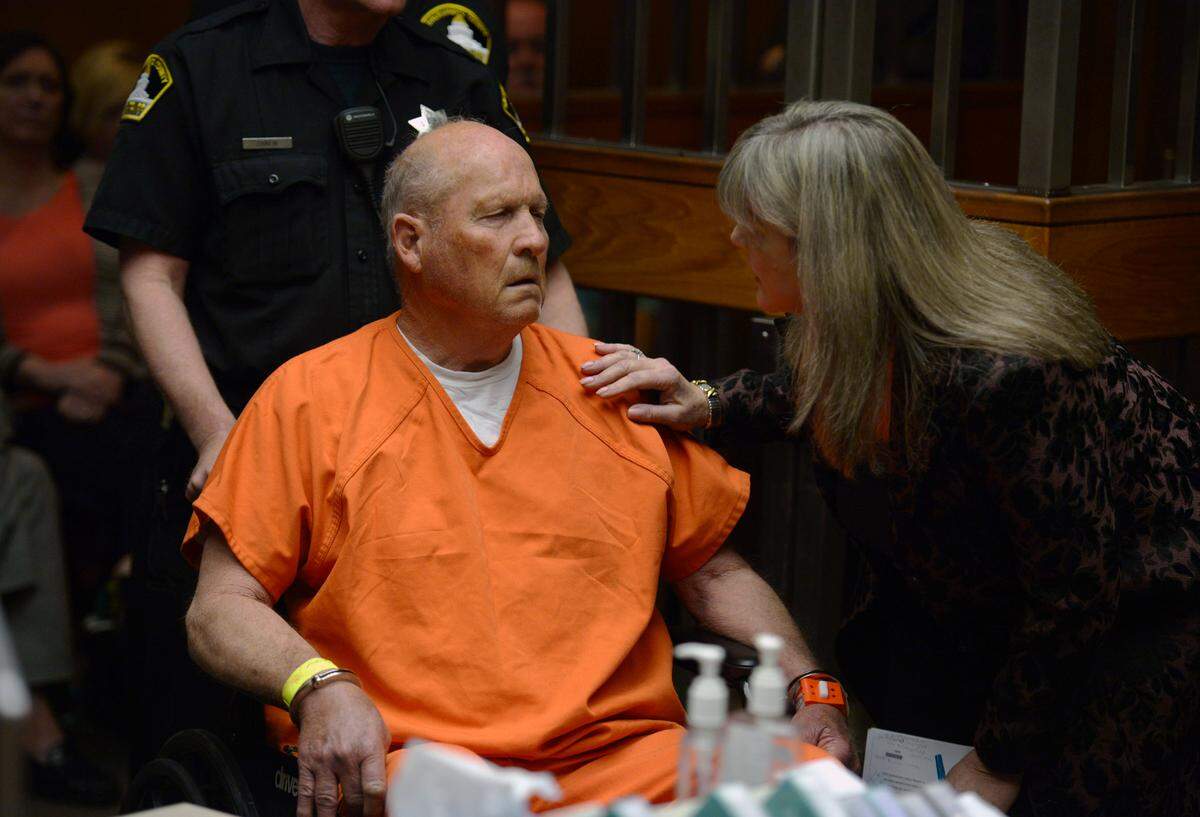
Two years later, DeAngelo would plead guilty to 13 murders and 13 kidnapping counts and admit to dozens of rapes, burglaries and attempted murders involving at least 62 victims between 1974 and 1986 in 11 California counties.
Now, a new book by Ho, who led the prosecution of Joseph DeAngelo alongside Deputy District Attorney Amy Holliday and now serves as Sacramento County’s district attorney, sheds light on the behind-the-scenes political fights and legal maneuvers that led to DeAngelo being sent to prison for the rest of his life.
The 303-page book, “The People vs. the Golden State Killer,” goes on sale Tuesday and recounts how prosecutors from across California worked to ensure that DeAngelo faced justice while the survivors of his attacks were included in key decisions about how to proceed.
Ho describes the jockeying between DA’s offices eager to lead the prosecution, including what he says was basically an effort by Orange County prosecutors to snatch DeAngelo from the Sacramento County Main Jail and have him transferred to Southern California for trial there.
He recounts the years of detective work before DeAngelo’s arrest that had authorities zeroing in on potential suspects — including an instance where they followed one man across the country until they could retrieve a DNA sample from a piece of litter that later proved he was not their man.
And he explains how lawyers on both sides worked to resolve the case — including a COVID-era social distancing meeting in a downtown Sacramento parking lot — to avoid a lengthy death penalty trial that could have seen crucial witnesses and victims die before they would have a chance to testify.
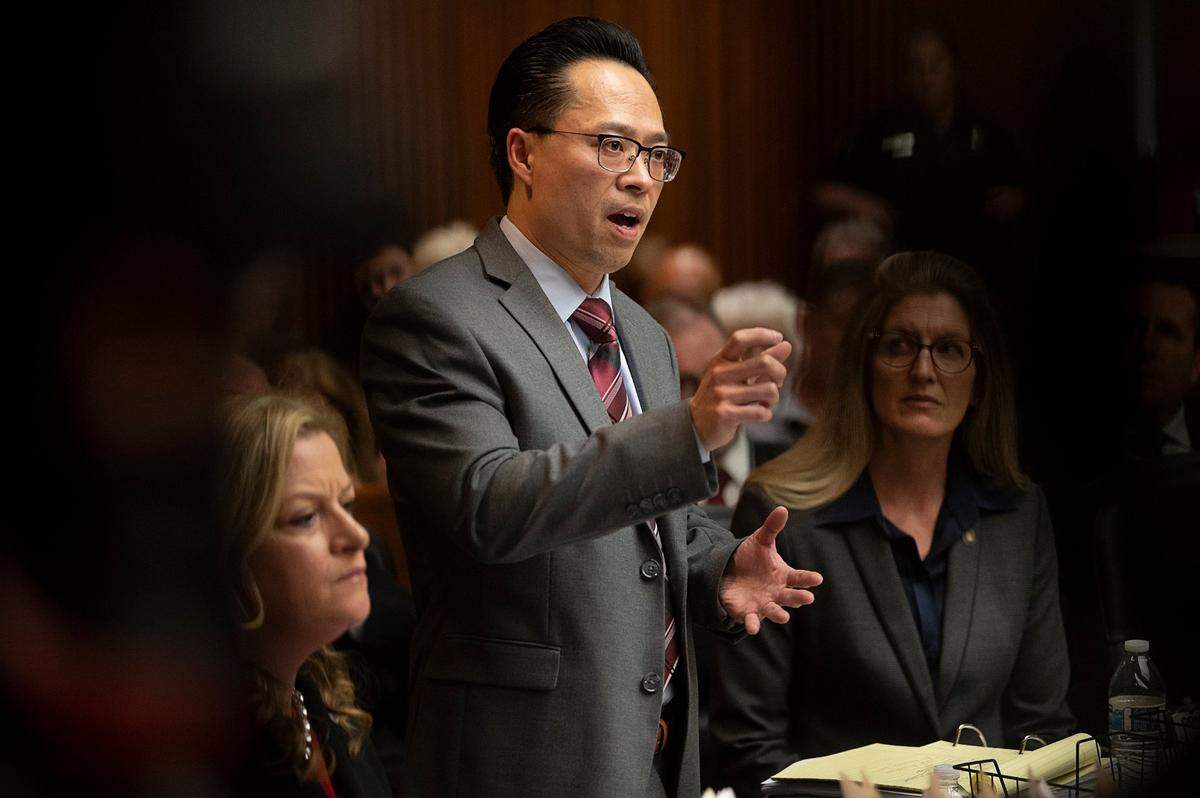
An inside look at the GSK case
The DeAngelo case has spawned worldwide media attention and been the subject of books even before DeAngelo, who was living in Citrus Heights as a retired mechanic at the time of his arrest, was identified through a novel use of public DNA databases.
Michelle McNamara’s “I’ll Be Gone in the Dark” came out months before DeAngelo was arrested, and gave the then-unknown suspect the moniker of the Golden State Killer.
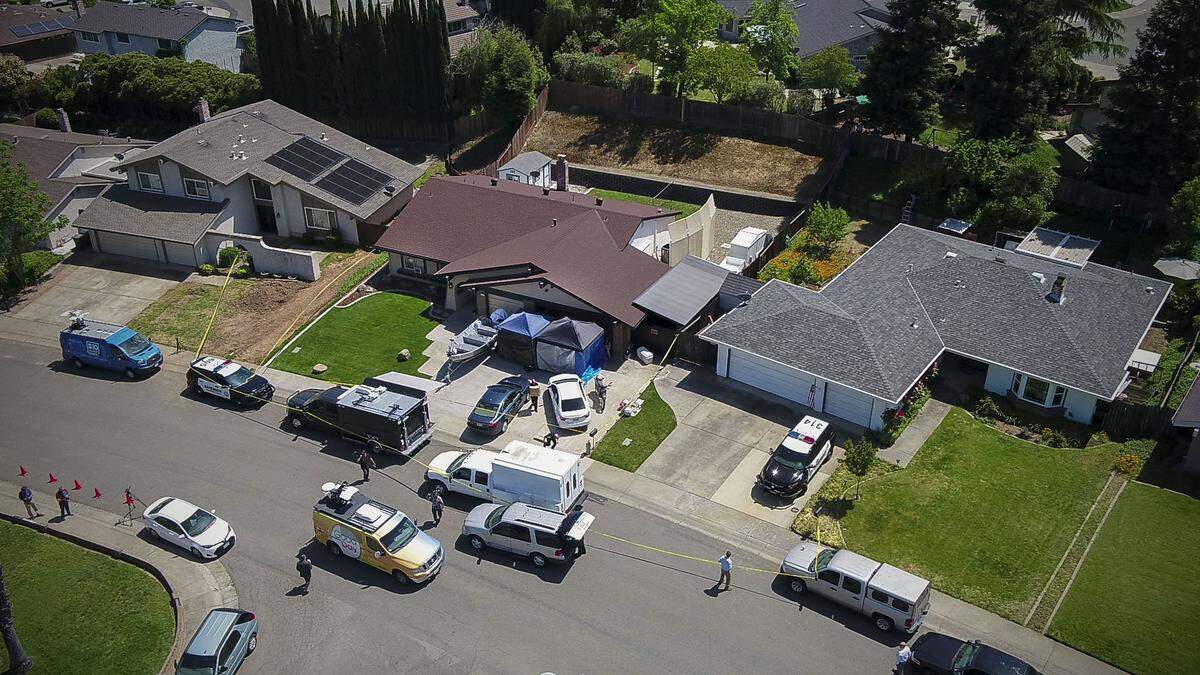
“Unmasked: My Life Solving America’s Cold Cases” followed that book and was written by Contra Costa County investigator Paul Holes, who spent years trying to find the killer and is credited with coming up with the idea of running DNA samples from decades-old attacks through databases to find likely suspects.
Ho said he considers his book the third in a trilogy of informed looks at the crimes, with his offering an inside look at how the prosecution case came together and his life story of coming to America as a refugee from Vietnam and rising to be Sacramento’s DA.
“Nobody had really written a book that covered the investigation, the capture and the prosecution ...” Ho said in an interview in The Bee’s newsroom. “In this case, I wanted to focus on the generation of law enforcement that never stopped searching for DeAngelo, and I also wanted to help give a voice to some of the survivors and the victims in this case.”
Ho, 52, was a prosecutor in Contra Costa and Santa Clara counties before coming to the Sacramento DA’s office in 2004 and worked his way up the ranks until his election in 2022 as the first person of color to hold the office.
Ho devotes great detail to the efforts prosecutors made to ensure DeAngelo’s victims — including rape victims whose attacks were so old they fell outside the three-year statute of limitations — would be included in the case by demanding that DeAngelo admit to crimes for which he was not formally charged.
He singles out Phyllis (Zitka) Henneman, the East Area Rapist’s first known victim from a June 18, 1976, attack in Rancho Cordova, as an inspiration for him.
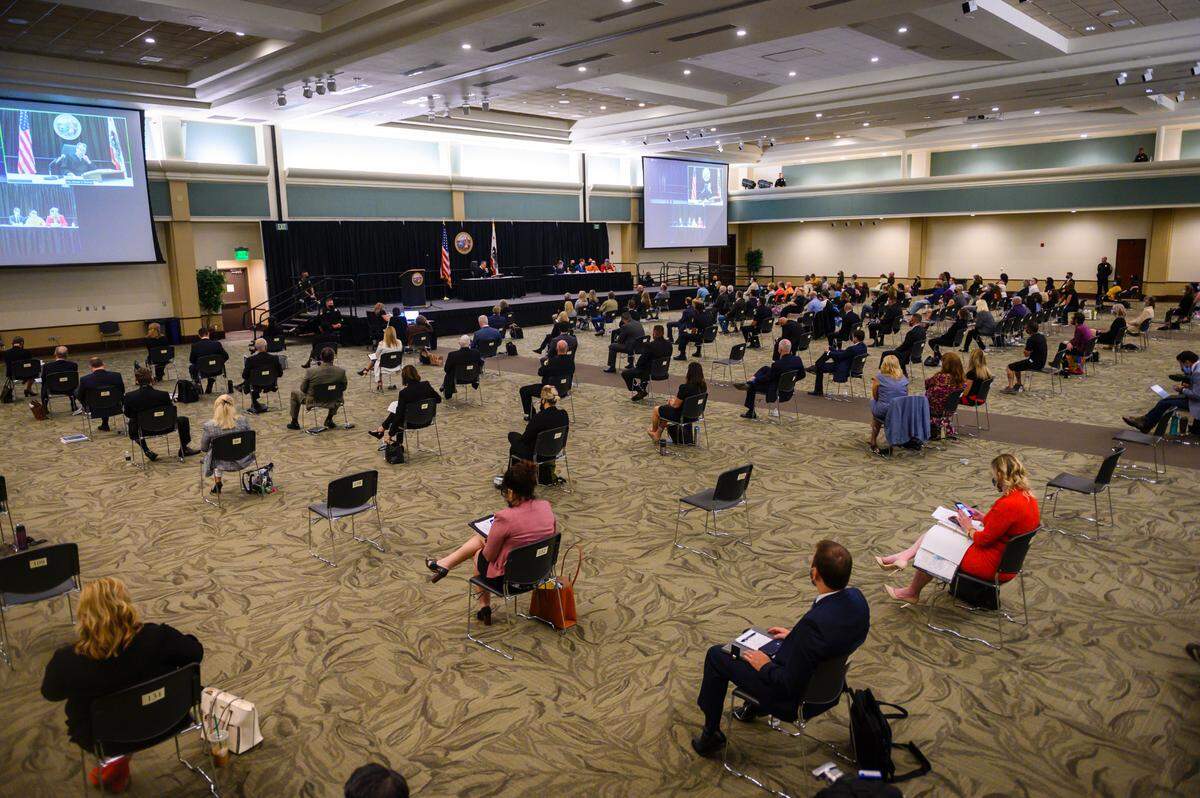
Known as Victim No. 1, Henneman battled cancer while attending court hearings and made a special effort to be at the makeshift courtroom set up inside a Sacramento State ballroom for DeAngelo’s August 2020 sentencing to life in prison without parole.
Henneman died months later, and Ho said a portion of proceeds from his book will go to a non-profit, Phyllis’s Garden, set up by other DeAngelo victims to help sexual assault victims.
The nonprofit group has donated “soft interview rooms” to police stations and prosecutors’ offices in California to make interviews for such victims less traumatizing, said Kris Pedretti, who was 15 when DeAngelo assaulted her in her Carmichael home in 1976, making her Victim No. 10 for the East Area Rapist.
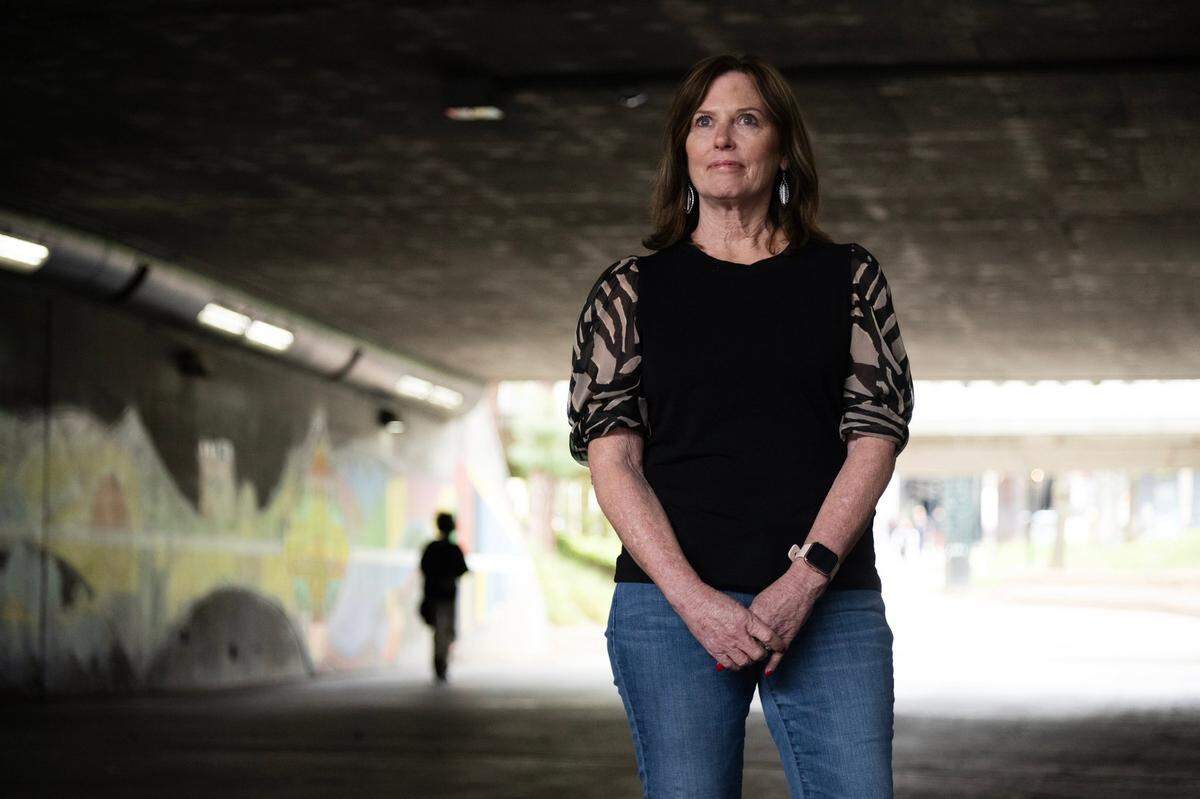
“The big part of my healing was the fact that we had a prosecution team that was open and wanted to hear what the victims felt,” Pedretti said in a phone interview. “Because there’s a prosecution side and there’s a victims’ side, and they’ve got to come together.
“And I felt that he and Amy Holliday were there for us.”
‘Who’s the ear?’
Ho said he didn’t know about the East Area Rapist case until roughly six years before DeAngelo’s arrest.
Those assaults, largely in the eastern suburbs of Sacramento County beginning nearly a half-century ago, terrified the community as the attacker stalked his victims and bound them, then left with coins or jewelry apparently taken as trophies.
Men in the homes he invaded sometimes were tied up and had dishes stacked on their backs so DeAngelo could hear if they moved as he assaulted his victims.
And he sometimes spent hours in his victims’ homes, eating and drinking their beer or Dr Pepper.
Sacramento residents rushed to buy handguns, rifles and shotguns and set up neighborhood watch groups to stand guard at night. Many placed bars over windows and doors to deter the rapist.
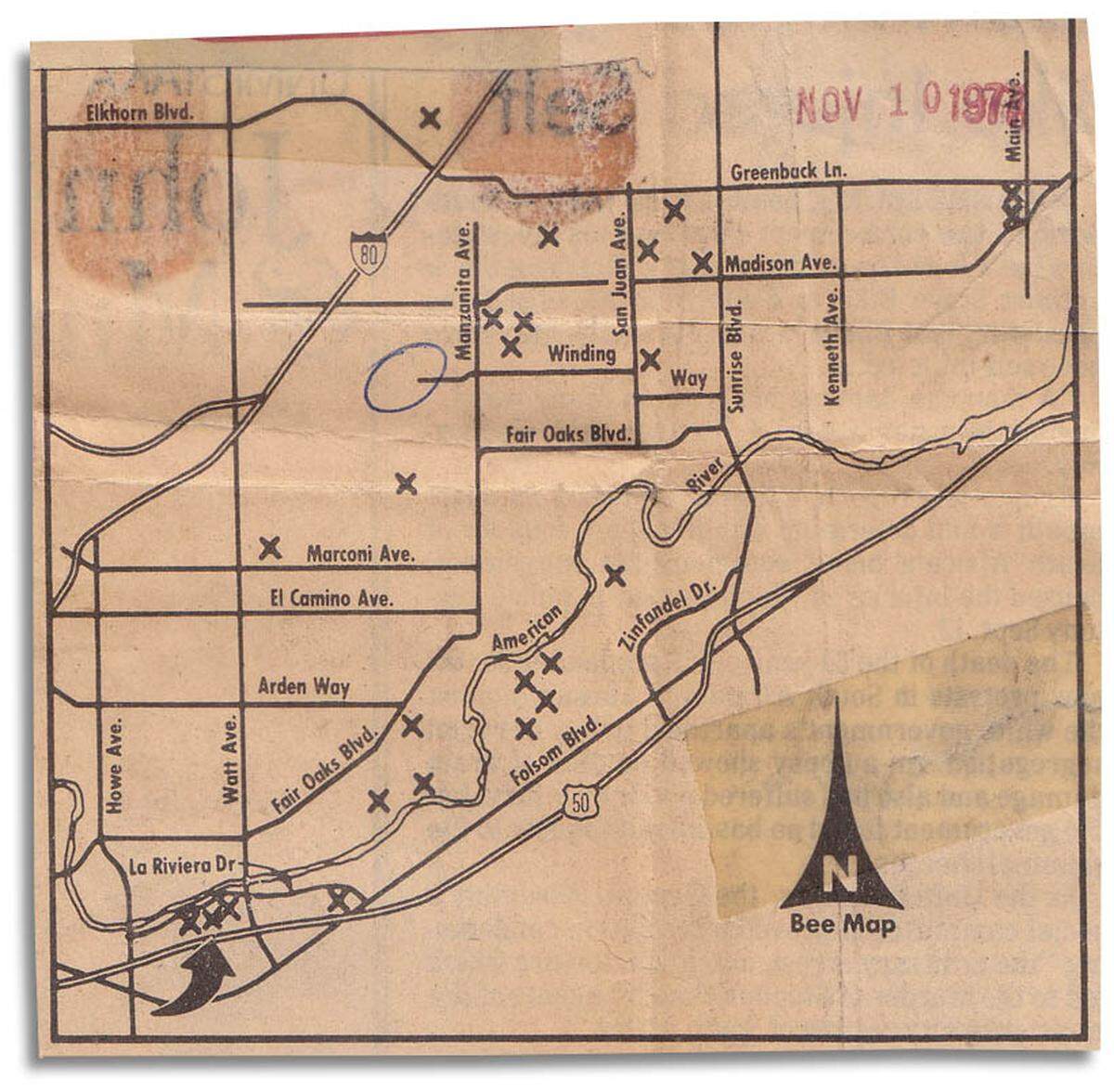
Ho said he first heard of the EAR attacks while driving to a homicide crime scene with other law enforcement officials in Rancho Cordova.
“I see all these bars on the windows of doors of homes and businesses, and I’m like, ‘What’s going on here?’,” he said. “And that’s when I first heard as they were telling me about the ‘ear.’
“And I said, who’s the ear?”
Ho said he had never before asked to be assigned to a case, but decided “if you ever catch him, that’s the one case I would actually ask to prosecute.”
His chance came in 2018 after a task force of investigators headed by then-Sacramento DA Anne Marie Schubert fed DNA characteristics from a Golden State Killer crime scene into a public genealogy database in search of a match.
That led to a relative of DeAngelo, and investigators began building a family tree from that individual looking for anyone who might have lived in the same area of the attacks. The process, now known as genetic genealogy and widely used in cold cases, led investigators to DeAngelo, a former police officer in Exeter, near Visalia, and later in Auburn.
Before that break, detectives spent years focusing on other possible suspects without any luck.
Ho writes in the book that Clark — the Sacramento sheriff’s detective who first questioned DeAngelo after his arrest — relentlessly pursued other possible suspects.
“He pored over all the police reports and developed new suspects,” Ho wrote in the book. “He once convinced my boss, Rod Norgaard, that a worker at a telephone company was the EAR because the suspect had stocky legs, could tap into people’s phone lines, and lived in each of the areas affected by the Ransacker and the EAR at the exact time of those crimes.
“His theory was compelling enough that the Sheriff’s Department followed this suspect as he drove his RV all the way to Oklahoma, where he discarded a McDonald’s wrapper out of his window. They collected the wrapper and ran a DNA test, but the sample failed to match the EAR’s DNA.”
‘They wanted to take DeAngelo by force’
Word of DeAngelo’s arrest in the case was explosive, with worldwide news coverage and law enforcement officials gathering outside the Sacramento DA’s Crime Lab to congratulate each other on the hard work that led to the break in the case.
DeAngelo eventually would be charged with 13 murders in five counties — Orange, Sacramento, Santa Barbara, Tulare and Ventura — and prosecutors vowed to work together to ensure an effective prosecution of what was being called the most complex murder case in state history.
All but the Maggiore slayings in Rancho Cordova occurred in Southern California jurisdictions, and Ho said he was prepared for the notion that the case would be moved south from Sacramento and that he would be living in Orange County for extended periods.
But, he writes in the book, any appearance of a perfectly cohesive effort was a facade.
Ho writes that Orange County District Attorney Tony Rackauckas’ office dragged its feet when Contra Costa investigator Holes initially approached them with his plan to pursue DNA evidence in a new way.
Holes eventually turned to Ventura County officials for crime scene DNA evidence from one of the attacks there.
“Resentment and distrust lingered on” between Orange County officials and others in the investigation, Ho writes.
“Prior to DeAngelo’s arrest, Orange County officials were not informed of his identity as a suspect; they only found out after DeAngelo’s arrest,” Ho wrote.
Rackauckas, who lost his bid for a sixth term in office months later and is now in private practice in Orange County, did not respond to a request for comment.
After the arrest, prosecutors from the various counties with murder cases against DeAngelo gathered at a Los Angeles County DA office near LAX to discuss logistics for the case.
During that meeting, Ho writes, Orange County delivered the unmistakable message that “Orange County is bigger and better than you” and should lead the prosecution.
A week later, Clark appeared in Ho’s office with a copy of a court order from Orange County “directing the Sacramento County Sheriff to hand DeAngelo over to the Orange County Sheriff’s Office for transport to Southern California,” Ho writes.
“They’re trying to take him and it ain’t gonna f------ happen!” Ho recalls yelling at Clark as he pondered what he termed “Machiavellian moves” by Rackauckas’ office.
“The court order reinforced our worst fears about Orange County,” Ho writes. “Unable to convince us of their superiority, they wanted to take DeAngelo by force.”
Sacramento prosecutors quickly moved to thwart the power play, typing an order for DeAngelo to remain in Sacramento’s jail and having Clark walk it over to Sacramento Superior Court Judge Steve White, himself a former Sacramento DA.
“So, what triggered this?” the judge inquired with amused curiosity, according to Ho’s book. “Kenny handed him the order from the Orange County judge.
“He read it, looked up at Kenny, and smiled. ‘The case will be tried in Sacramento.’”
In August 2018, the DAs involved in the case gathered for an announcement at Rackauckas’ office to reveal that they had jointly agreed the case would be tried in Sacramento, something Ho writes was orchestrated “to provide him with some political cover.”
“Rackauckas would lead the press event, allowing him to frame the narrative while the other DAs lavished praise on him,” Ho writes. “The event would be carefully choreographed, with Rackauckas standing at center stage, framed by the flags of the United States and California and flanked by DAs from throughout the state.”
Ho notes the irony that, a few years earlier, Sacramento had pulled essentially the same move when seeking to prosecute Luis Bracamontes for an October 2014 rampage that killed Sacramento Sheriff’s Deputy Danny Oliver and Placer Sheriff’s Detective Michael Davis.
Bracamontes was arrested in Placer County after the slayings and was taken to a hospital for treatment of a hand wound, Ho writes.
Norgaard, Ho’s boss at the time and the prosecutor who would head the effort that led to Bracamontes’ death penalty conviction, sent six members of what he calls the sheriff’s “Body Snatchers” unit to remove Bracamontes from the hospital and place him in Sacramento’s custody.
Four years later, with White presiding as judge and Norgaard joined by Placer County prosecutor David Tellman, Bracamontes was convicted and sentenced to death for the slayings.
His sentencing occurred the same day that Schubert and others gathered at the crime lab to announce DeAngelo’s arrest.
A secret meeting in a parking lot
As the case progressed in Sacramento, Ho and Holliday worked with the notion that it was going to trial, despite the complexity and more than 3 million pages of discovery.
The prosecution fought to get a preliminary hearing scheduled to ensure that evidence and testimony from aging witnesses be put on the record for use at trial years later.
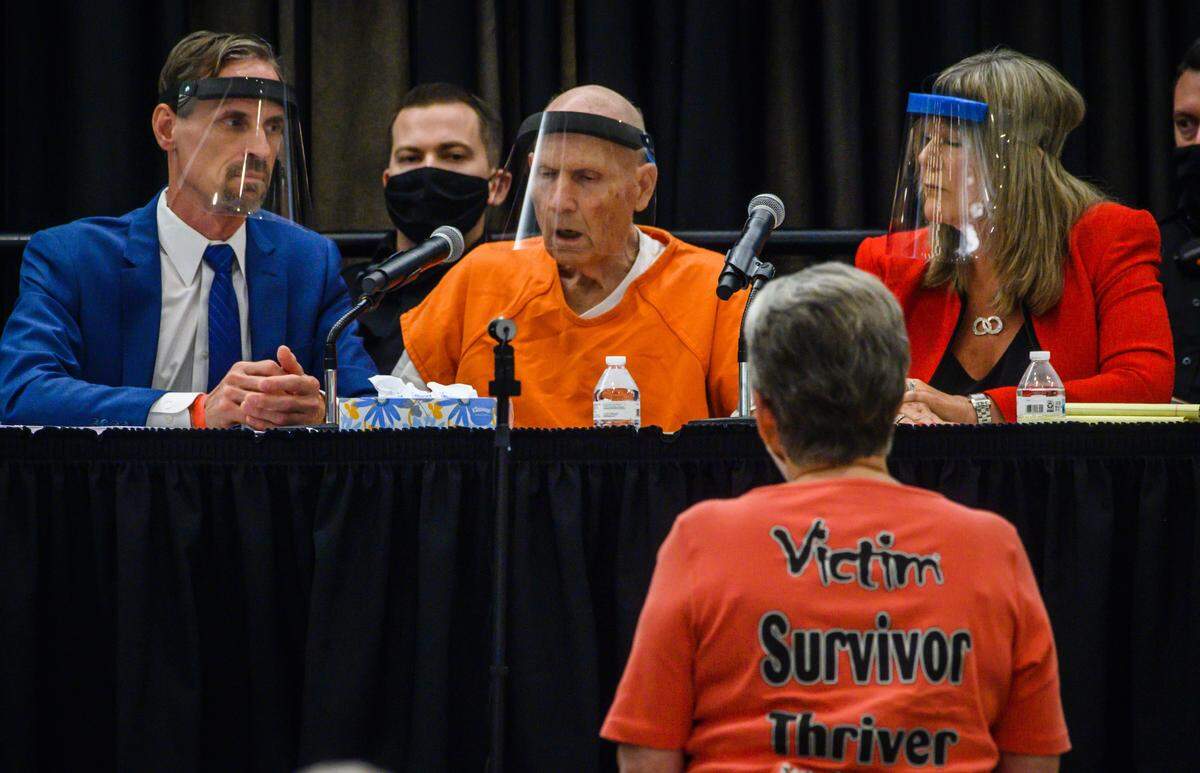
In January 2020, Judge White ordered a preliminary hearing to commence in May of that year, and prosecutors began to prepare for it.
But within months the COVID-19 pandemic had essentially shut down California.
DeAngelo’s defense team already had offered to plead guilty to the charges if the death penalty was removed from consideration, but prosecutors did not want to agree to anything without an assurance that DeAngelo would have to admit to crimes against 62 victims that were not included in the formal charges.
With COVID preventing both sides from meeting in an office and the courthouse shut down, lawyers gathered outside in the empty jury parking lot west of the DA’s office.
“A stranger walking by the lot would have seen a strange sight, people standing six feet apart in a circle talking,” Ho writes. “A meeting of this importance should be held in person, not over Zoom.”
Ho notes that “we were in the middle of a pandemic with no end in sight, with aging victims, witnesses, and a defendant in his seventies.”
“A resolution that gave every single one of DeAngelo’s victims a seat at the table of justice was the right resolution for the right moment in history,” he writes, and the two sides agreed DeAngelo would plead guilty and admit to all the crimes tied to him.
He also would have no chance of ever being released from prison.
‘He’s living in his own hell’
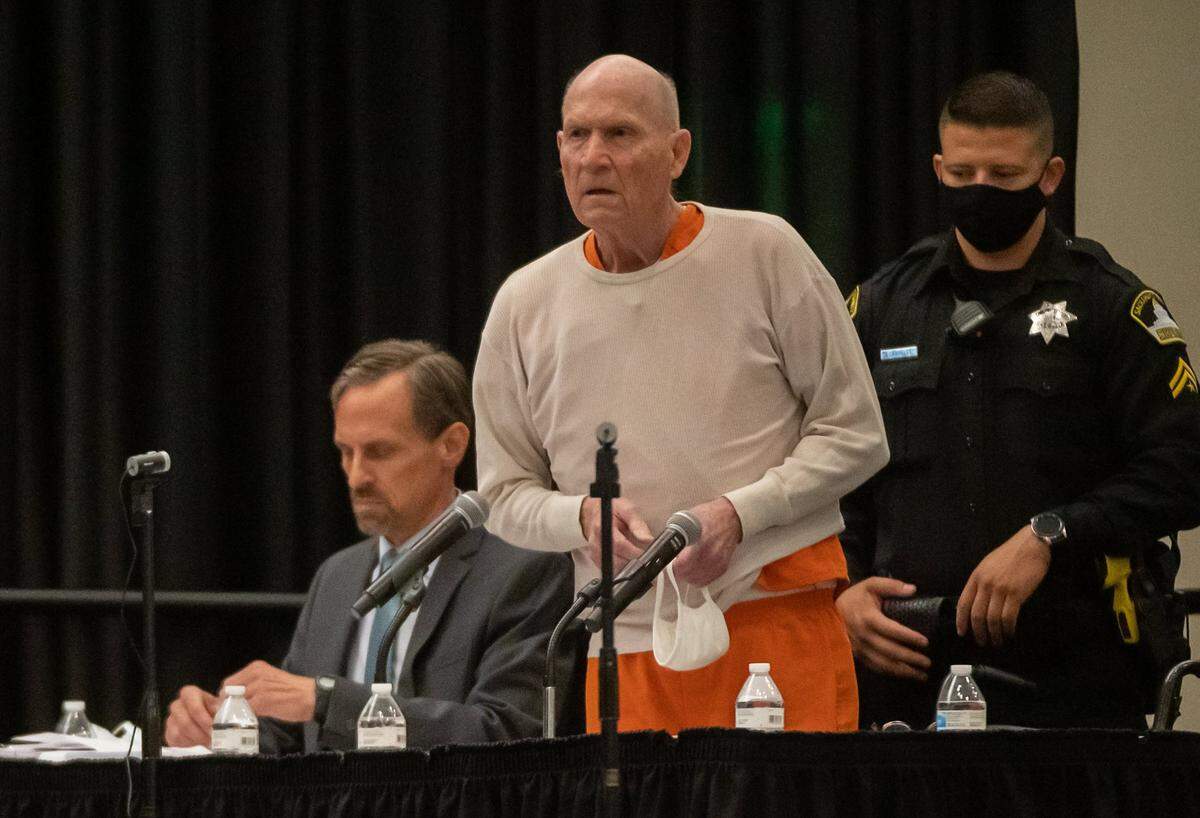
Today, DeAngelo is 79 and listed as being held in a prison that is “not disclosable” because of safety reasons, according to state corrections officials.
He originally was listed as being sent to Corcoran State Prison, but Ho said he can only reveal that DeAngelo “is in state prison down in the Central Valley.”
Still, he said, he receives updates on how DeAngelo is doing.
“He’s in a protective unit,” Ho said. “He’s working in a mess hall.
“He is constantly looking over his shoulder, worried that he’s going to get assaulted, and I get periodic updates from the prison regarding him. And so he’s living out his life in captivity, like a caged animal, constantly looking over his shoulder in fear.
“And he’s exactly where he should be, where he belongs. And he’s living in his own hell.”
Are there more victims?
One question about the DeAngelo case lingers.
After 13 murders beginning in Tulare County in 1975 with the slaying of Claude Snelling — and ending with the 1986 killing of Janelle Cruz in Orange County — why did he suddenly stop killing?
“Every time somebody asks me that question, like, why did he stop, my answer is, ‘What makes you think he stopped in 1986?’
“There’s a period of time from 1986 to 1989 down in Los Angeles where his activities and his whereabouts remain shrouded in mystery. Once we identified him, we went back and retraced every step of his life. ...
“But there is a period of time where it’s shrouded in darkness and mystery when he was working down there and living down there with his wife ... I believe that after Janelle Cruz’s murder, he was beginning to adapt already as a murderer.
“And what’s to say he didn’t kill somebody and dump the victim in the Angeles National Forest, and we just haven’t found them?”
Sam Stanton retired in 2024 after 33 years with The Sacramento Bee, covering major news stories, including the Golden State Killer case.
This story was originally published November 6, 2025 at 5:00 AM.