Karl Lysinger blew up his Oak Park house and died. Here’s what led to that moment
AI-generated summary reviewed by our newsroom.
- County auctioned Lysinger’s Oak Park house after tax defaults and code fines.
- Lysinger publicized grievances online and gave interviews days before the blast.
- Sacramento coroner ruled death a suicide; explosion left neighbors shaken and damaged.
Weeks before he died, Karl Lysinger opened up about what he felt he was facing.
On July 28 Lysinger was about four months past having his longtime home at 3975 39th St. in Sacramento sold at tax auction by the county. The sale followed several years of Lysinger being cited for code violations by the city and being in default with the county over his property taxes.
Lysinger, who claimed he was being illegitimately targeted by the city and county, had been trying to raise awareness of his situation online. A brief call-in to a show on Rumble for right-wing social media personality Tim Pool, who has 2.5 million followers on X, preceded an interview with Tyler Ritenour, who hosts a Rumble show, Tyler Today News.
“I want everybody to know what happened,” Lysinger told Ritenour. “The damage to society from me is zero.”
Not once in the 1 hour, 22 minute interview did Lysinger tell Ritenour he was planning to blow up his house in just over three weeks in an explosion that would claim his life. The Sacramento Bee reported at the time that the explosion came on the day — Aug. 21 — the Sacramento County Sheriff’s Office was due to evict Lysinger. The Sacramento County Coroner has since ruled his death a suicide.
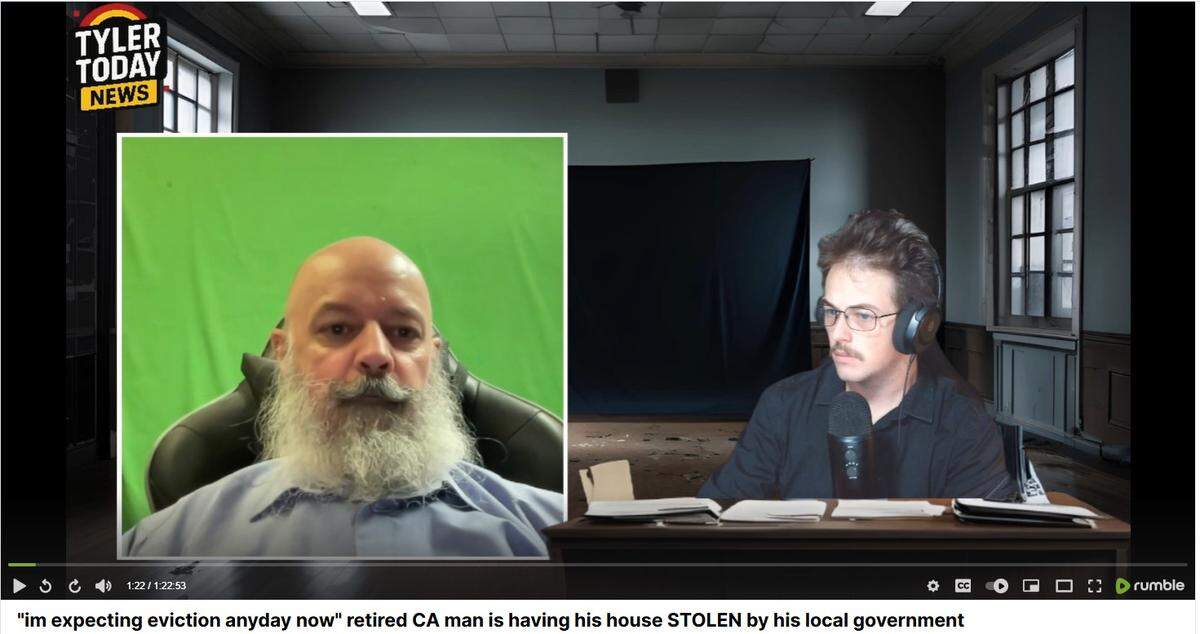
There were hints even in late July that all was not well, with Lysinger telling Ritenour, “My mind’s actually going crazy because of the stress.”
Nearly three months after Lysinger’s death, his story is many things: unusual, a cautionary tale and a long case study in what can make a person wind up homeless after having stable housing. But the missed warning signs about his suicide are perhaps the most haunting.
Losing his house
For different reasons, Lysinger’s story is uncommon, starting with how rarely people in Sacramento County lose their home through tax auction. The county held tax auctions in February and May, with Lysinger’s house one of just seven properties that sold between both auctions this year. The county auctioned 16 properties in 2024.
Lysinger, who was 62 when he died, spoke to Ritenour on July 28. He said he was facing eviction any day and possibly becoming a homeless senior citizen. This would place him in a sizable cohort locally. Of the 6,615 people identified as experiencing homelessness without shelter in Sacramento County during the most recent count in 2024, about 1,300 of these people were 55 or older.
Lysinger sought assistance from Legal Services of Northern California prior to his house being auctioned in February, according to records provided by county spokeswoman Kim Nava on Nov. 3.
Jennifer Anders-Gable, regional counsel for LSNC, declined to discuss Lysinger’s case but spoke in general terms. Anders-Gable said clients rarely die during their cases, but a senior citizen stressed about facing homelessness for the first time is understandable.
“Part of the value in helping older adults who are homeowners is that it is a real tough rental market and for a lot of them, it’s something that they haven’t had to navigate in some time,” Anders-Gable said.
Lysinger had purchased his house in 1996 from his older brother, Randall Lysinger, who had bought the house in 1980, according to county records. The house had an assessed value of about $41,000 as of the 2024-25 tax year after factoring in a standard exemption for homeowners.
Somehow, even with what should have been a minimal tax bill, Karl Lysinger’s problems with the city and county covered years. His 905-square-foot house, which had been built in 1938, sat on two parcels. County records show he had tax defaults on the lower parcel, Lot 40, off and on dating to 2009.
By the time Karl Lysinger’s house came up for tax auction in February, he owed more than $156,000 for his property taxes and appeared to have been in default since July 1, 2017, based on information from the Sacramento County Tax Collector’s website.
Much of what Karl Lysinger owed were delinquent fees he’d amassed from the city-related code violations that were added to his property tax bill and made his bill balloon.
City records going back to 2017, released to The Bee in August, show Karl Lysinger’s problems with the city revolved initially around his refusal to buy its water. Ed Williams, a neighbor, said in an interview that Karl Lysinger had wanted to be off-grid and had his own water supply.
Karl Lysinger also wrote in an email to the county that he preferred to make payments for utilities roughly every four years. Beyond this, he claimed to Ritenour that the city had targeted him after the 2016 presidential election for his conservative political beliefs.
City and county officials were aware of Karl Lysinger. He had emailed county staff and had interacted with city staff who visited his property, according to records.
In 2018, a representative for then-Councilmember Jay Schenirer’s office emailed a city staffer after having received a call from a constituent concerned about Karl Lysinger’s plight. Schenirer said he didn’t recall the email or call.
On Feb. 15, 2024, Laura Jacobson, assistant tax collector for Sacramento County emailed Ricardo Vargas, senior code enforcement officer for the city of Sacramento. Jacobson wrote that the county had pulled the house from auction in 2023 “to give the property owner, Karl Lysinger, time to work with (the city) on fines that have been rolled on to the tax bill.”
Jacobson told Vargas that Karl Lysinger wanted his property pulled from auction again. She asked Vargas if Karl Lysinger had been in contact with the city over his fines. Jacobson wrote that she had only a little time to decide if the house would be in the 2024 auction.
The house was in the county’s tax auction in 2024, but failed to sell. Jacobson attributed this, in a Feb. 18 email to an LSNC representative, to the high minimum bid and because only one of the property’s two parcels was being auctioned.
At the time of his death, Karl Lysinger had last made a property tax payment for Lot 40 in March 2017, paying about $14,500 to clear a default and settle his 2015 tax bill, per the county tax collector’s website. To make this payment, he borrowed money from Carl Giordano, a friend, who later sued him and was awarded a 1966 Chevelle to settle the debt.
The county auctioned Karl Lysinger’s house online in February with the listing telling prospective buyers that only a parcel associated with Lot 40 was being sold. The county acknowledged at this time that house sat on that parcel and on the parcel associated with Lot 39.
Alpine Holdings Inc., a Roseville-based firm that buys distressed properties, made a winning bid of $151,100. Property appraiser Ryan Lundquist said this was one of the few houses in Oak Park in recent years that could be purchased for under $200,000.
Tommy Christy, owner of Alpine Holdings Inc. declined to be interviewed, providing a statement expressing concern for those affected by the explosion and saying he and other people would await the results of investigations.
Following the auction, the county went back and forth on whether the property’s upper parcel, the southern 15 feet of Lot 39, was included in the sale. The county issued a corrective tax deed on April 21 saying it was and another on July 7 that it wasn’t, according to Sacramento County Clerk/Recorder’s Office records.
Karl Lysinger maintained ownership until his death of his portion of Lot 39 and made tax payments in June to clear three years of defaults. A document provided by Nava on the county’s tax sale process noted that a property can become eligible for auction after it has had “five years of non-payment of at least one tax bill in that time period.”
City and county officials declined to make staff available for this story.
Who Karl Lysinger was
From a young age, Karl Lysinger had a temper that could flash.
A member of his extended family who didn’t want their name used due to privacy concerns said Karl Lysinger’s grandmother had stopped seeing him after a childhood incident. “He did something and she became afraid of him,” the family member said.
Another time, according to Bee coverage from 1987, Karl Lysinger was driving north on Stockton Boulevard when a driver rammed his truck. The story noted that “Lysinger said he defended himself with an unloaded handgun” after the other driver “approached him in a threatening manner.” The other driver was arrested; Lysinger did not appear to have been.
In general, Karl Lysinger liked his solitude. Williams, who lives just down from 3975 39th St., said his neighbor had “always been a recluse.”
Karl Lysinger’s familial relationships were complicated, according to relatives and friends. His parents divorced in 1983. His father Rolin Lysinger, who goes by Joe, remarried soon after. Steve Courtney, who became Karl Lysinger’s stepbrother with the marriage, said life with Joe Lysinger was unlike anything he had experienced.
“There was a calendar by the door, an old-fashioned calendar where you would have to write where you went, what time you left and then you’d have to essentially log back in,” Courtney said. “He did the same thing with our cars.”
Joe Lysinger, who is in his late 80s and suffers from dementia, according to Courtney and his younger sister, Christa Ussery, couldn’t be reached for comment. His daughter and Karl Lysinger’s younger sister Pamela Gomez declined to be interviewed and said her family didn’t wish to comment.
But others close to the family attested to what Joe Lysinger’s children experienced growing up.
Ussery said Joe Lysinger’s children had what she would describe as “probably not a good childhood, probably a very hard upbringing” and that their personality traits weren’t their faults.
Donna Salo’s sister Sandra Lysinger was Joe Lysinger’s second wife. Salo said, “Joe was basically estranged from his children when he married my sister.”
Traumatic childhoods might have forged early independent streaks for Joe Lysinger’s children. Randall Lysinger was just 19 when he bought 3975 39th St. in 1980. He paid $28,500, according to Redfin.
Karl Lysinger told Ritenour he’d run away from home at 17, dropped out of high school and later worked his way through college. His LinkedIn profile noted that he earned a bachelor’s degree in management information systems from Sacramento State. “I was known in the industry as one of the best ever in being a systems analyst,” he said in the interview.
Lisa Jennings, who has lived across the street from 3975 39th St. for about six years, said Karl Lysinger did not work in the time she knew him, though in the past few years, he appeared to be driving for DoorDash.
Outside of work, Karl Lysinger was known for his mechanical abilities. He told Ritenour that working on cars was his hobby. Karl Lysinger did this with people such as Eric Maddux, who described Karl Lysinger as “kind of an oddball” but a skilled mechanic. “Anytime I ran across something I couldn’t figure out, I would call Karl,” Maddux said.
Jennings noted how helpful Karl Lysinger was. “I remember one time my car wouldn’t start,” Jennings said. “He came over and he helped me with my clutch and got my car started.”
Asked what he would miss about Karl Lysinger, Williams said it would be the chance to go down the street for items like monkey wrenches, drill bits, even cement mixers. “He always had whatever you needed,” Williams said.
Felicia Hill, who grew up in the neighborhood and lives on 39th Street with her husband Garee Hill, said Karl Lysinger was always nice. “I didn’t think that he would do anything that would hurt himself or the rest of the neighborhood,” Felicia Hill said.
Detonating the house
In a given year, anywhere from 13 million to 16 million Americans will think about suicide, according to Jill Harkavy-Friedman, senior vice president of research for the American Foundation for Suicide Prevention. She said 1.3 million to 1.6 million people will attempt suicide, with around 48,000 people in the U.S. dying annually by suicide.
Generally, there are warning signs.
“The data shows that about 75% of people who die by suicide have told somebody, at least one person, prior to their death,” Harkavy-Friedman said. “The problem is: That could be a year before or it could be five minutes before.”
In general, no single factor leads a person to attempt suicide. Harkavy-Friedman said suicide is complex. People can think about suicide for years before attempting it, she noted. “It’s the access to lethal means that actually leads to death,” Harkavy-Friedman said.
Ritenour, who is 24 and lives in Southern California, said he had no indication Karl Lysinger intended to end his life. On July 29, Karl Lysinger gave a similarly long interview to Ritenour’s friend, who is known online as Joey Cannoli and hosts a Rumble show called Outworld Live. Ritenour said the interview covered much of the same ground he did with Karl Lysinger.
“He seemed optimistic and hopeful,” Ritenour said. “I don’t have a massive channel. I tried the best I could to get his story out there.”
Karl Lysinger’s plans might have crystallized in the weeks after the interviews, with three people telling The Bee that he discussed plans with them to detonate his house in the week before his death.
Harkavy-Friedman said research shows that suicide can happen quickly once people go from thinking about it to actually planning to act, generally within a few hours.
Williams said Karl Lysinger had discussed plans on Aug. 19, two days prior to his death, to explode the house. He said Karl Lysinger had received notice about his impending eviction. Williams said Karl Lysinger told him he wished to make a statement and said, “I’m gonna blow this up.” Williams said he didn’t think Karl Lysinger “meant to blow himself up.”
Williams also said Karl Lysinger told him that day that he’d spoken of his plans with Maddux, who had talked him down. Maddux disputed this timeline, saying Karl Lysinger called him the following day, Aug. 20, saying he had vehicles he wished to give him, a 1966 Ford Mustang and 2006 Honda 919 motorcycle.
Maddux, who fixes and resells cars, said in early October that he had sold the Mustang a week before, making $3,000. He still had the motorcycle at this time but planned to sell it.
Maddux went back and forth in interviews for this story about whether Karl Lysinger mentioned plans to blow up his house during this call, initially saying he did not before saying he did.
Maddux’s friend Will Nunez, who runs a North Highlands-based hauling business, picked him up from his home in Sacramento’s central city in a Ford F-250 with a trailer attached to the back that could be used to transport the vehicles. They headed to Karl Lysinger’s home in the early hours of Aug. 21, Maddux and Nunez each told The Bee, to retrieve the vehicles.
While Maddux and Nunez were at Karl Lysinger’s house, he “was off his rocker,” Maddux said. “He was not his normal self at all.” Maddux said Karl Lysinger told him he was going to blow up his house and described what he would use to do it. “I tried to talk him out of what he was gonna do,” Maddux said. “I told him that was stupid.”
Not wanting to know much about Karl Lysinger’s plans, Maddux worked with him and Nunez to get the inoperable 1966 Ford Mustang loaded onto Nunez’s trailer, Maddux said. After being informed by Karl Lysinger that the motorcycle ran, Maddux drove it back to the central city.
Nunez said that after Maddux departed, he stuck around to talk with Karl Lysinger for about 30 minutes, thinking he needed a person to listen to him without judgment. Nunez said he left Karl Lysinger’s property just past 3 a.m. on Aug. 21.
Whether Williams thought to report Karl Lysinger’s plans to police is unclear. Nunez and Maddux each said they did not do this.
“I went home believing and thinking that, ‘All right, it’s all good,’” Nunez said.
Maddux expressed conflicting views on whether Karl Lysinger intended to die in the explosion, but ultimately said he did. “He said he couldn’t handle the stress of being homeless, so that’s what he was gonna do,” Maddux said.
Williams, who said he gets up at 4 a.m., said Karl Lysinger asked in the early morning hours of Aug. 21 to borrow bolt and wire cutters. Williams said he was out on a dog walk when the explosion occurred. An incident report from the Sacramento Fire Department said a call for service came in at 6:38 a.m.
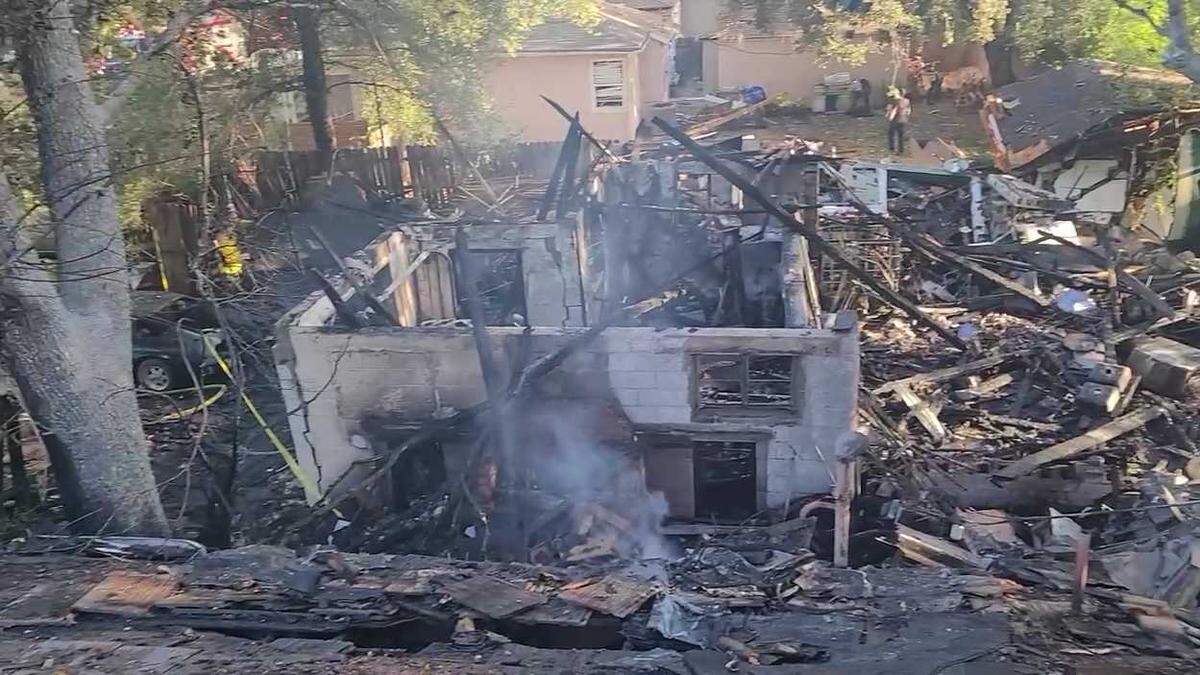
The Sacramento County Coroner’s Office ruled Karl Lysinger’s death a suicide and determined he was killed from “blast injuries” associated with the explosion, according to Nava. Sacramento Fire Department’s report stated that the explosion was intentional, with the heat source undetermined.
The Bee reported that when Karl Lysinger’s house blew, the explosion was felt in East Sacramento and Land Park.
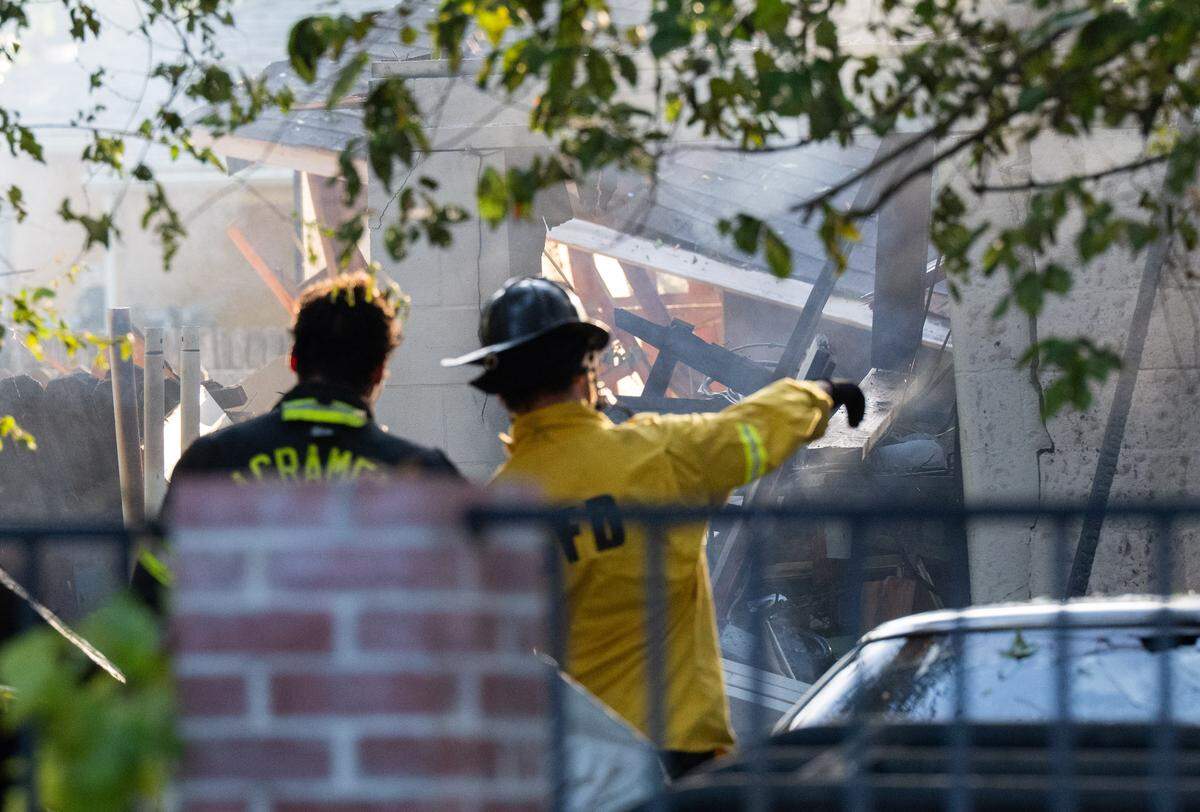
Somehow, no properties on the street were leveled by the blast, though a neighboring house had been tagged as non-occupiable as of late September. Across the street, Garee Hill said his property had suffered substantial damage and that the insurance company had spotted things he never would have caught.
But the explosion had emotional fall out. Maddux said Karl Lysinger’s death made him sick and that he doesn’t like to talk about it. Felicia Hill said when interviewed in late September that all of her neighbors were dealing with “a bit of PTSD.”
“When we hear sirens, when we hear loud noises, we’re all suffering... the mental anguish that’s left behind,” Felicia Hill said. She added that no one from the city or county had reached out to see who how they were doing.
She wanted to send a card to Karl Lysinger’s family and said she would pray for them and her late, former neighbor.
“I haven’t been in his shoes, but I think we can have compassion and on a human level, see him as someone who was human, who probably needed some help,” she said.
Resources for people in distress
- Suicide & Crisis Lifeline: Dial 988
- Crisis text line: Text “HOME” to 741741, which offers 24/7 support in English and Spanish for bullying, anxiety and depression
Bee Staff Writer Joe Rubin contributed to this story.
Eric Maddux is a cousin of reporter Graham Womack, who was unaware of Maddux’s connection to Karl Lysinger when he began reporting this story.
This story was originally published November 17, 2025 at 5:00 AM.
CORRECTION: This story has been updated to correct the number of properties the county auctioned in 2024.