How drugs have claimed the lives of homeless while in Sacramento-run shelters
AI-generated summary reviewed by our newsroom.
- Coroner records list at least six overdose deaths in Sacramento-run shelters since 2024.
- Shelter policies ban on-site drug use but use continues.
- Experts urge overdose prevention centers and supervised spaces to curb hidden use, deaths.
The day after Christmas, Rytina Heyne received a phone call.
Staff at a Sacramento County homeless shelter had found her younger sister dead in C11 —one of the 125 sleeping cabins on site. Staff called paramedics, who arrived and performed CPR, without success. She had been unresponsive for too long. A Coroner’s Office official declared her deceased at the scene.
After decades of struggling with addiction and domestic violence, Candyce Dysinger, 51, had recently found herself homeless, sleeping in her truck in a Walmart parking lot. She enrolled in the Florin Road Safe Stay Shelter for help finding a new apartment. But she was still struggling with addiction.
“They said they found her cold and unresponsive and didn’t know how long she’d been like that,” Heyne said. “She was able to get her hands on drugs in a shelter that’s supposed to be a drug-free facility.”

At least six people died of overdoses or apparent overdoses at city and county of Sacramento shelters in the last two years, since Jan. 1., 2024, according to records obtained by The Sacramento Bee from a California Public Records Act request:
Elaine Michelle Cain (Casmer), 55: Died from meth intoxication in her vehicle in the parking lot of the Florin Road Safe Stay Shelter on Jan. 5, 2024, according to coroner records. Just before, according to the incident report, shelter staff reported hearing “screaming and panic.”
Dawn Michelle Tuttle, 48: Died from meth intoxication after staff found her unresponsive on the floor of her sleeping cabin at the Florin Road Safe Stay Shelter on April 1, 2024, according to coroner records.
Candyce Dysinger, 51: Died from meth intoxication after staff found her unresponsive on Dec. 26, 2024, in her sleeping cabin at the county’s Florin Road Safe Stay Shelter, according to coroner records.
Richard Andrew Zavala, 55: Died from meth intoxication after staff found him unresponsive in his sleeping cabin at the county’s Stockton Boulevard shelter on July 5, 2025, according to coroner records.
Terrance Fowlkes, 48: Died after staff found him unresponsive in his sleeping cabin with drug paraphernalia around him in the Florin Road Safe Stay Shelter on Aug. 12, 2025, according to the shelter incident report.
Jaiden Misciagna, 23: Died after staff found him unresponsive “just outside” his sleeping cabin at the city’s Roseville Road shelter on Sept. 6, 2025. Staff administered naloxone, and when paramedics arrived, “they examined the body and informed staff that he had been deceased for a few hours,” the shelter incident report said.
The deaths represent a small subset of the at least 330 homeless people who have died in Sacramento since Jan. 1, 2024. However their death taking place while they’re living in a government facility draws greater public scrutiny.
Unlike most deaths that take place at the Sacramento County Main Jail, another government facility, the city and county have not publicly announced any of the five shelter deaths.
The county and city, according to their spokespeople, also do not privately inform the elected Board of Supervisors and the City Council about all shelter deaths.
Without knowing about the deaths, the supervisors and the council members unlikely will propose changes to any shelter policies to prevent more deaths. County staff are also not planning changes due to the deaths.
“At this time, our protocols and policies remain in place,” said Janna Haynes, a county spokesperson. “In general, our polices have worked for the majority of clients.”
Drugs risks
All of the shelters where people died have policies that prohibit guests from using drugs on campus. To enforce the policies, staff search their bags upon entry and perform regular cabin checks.
“Roseville Road is a low-barrier shelter, and sobriety is not a requirement for program participation,” said Jennifer Singer, a city spokesperson. “It’s also worth noting that all treatment is voluntary. Drugs and alcohol are not allowed at the shelter for both the safety of clients as well as staff. Many people at the shelter are working to achieve and maintain sobriety, and allowing onsite monitored drug use would not be conducive to their recovery or efforts to exit homelessness.”
County staff agreed.
“The county chooses to keep our shelters as low barrier as possible,” said Haynes. “This means we do not require sobriety to be there, but we do not allow drug use inside the facility. This is for the safety of both clients and staff, and a step towards addressing their addiction in general.”
If they find drugs, shelter staff have the option to exit the person from the shelter, Haynes said.
Although it seems like drug-free policies help people get sober, it actually rapidly increases their risk of overdose, because they’re likely to sneak in drugs, and use alone, said Dr. Margot Kushel, director of UCSF’s Benioff Homelessness and Housing Initiative.
“Using (by yourself) increases risk of death, said Kushel, who is also a UCSF professor of medicine. “If people are using in a place they have to hide their use, they’re much less likely to be rescued from Narcan and much less likely to get involved in treatment. Shelters across the country have spaces where, if they need to use, they’re not using alone.”
Overdose prevention centers, where people can use in the presence of professionals who know how to detect and reverse overdoses, have operated in other countries for years, according to the National Institute on Drug Abuse.
“Evidence from more than 20 years of overdose prevention center operations in other countries indicate that no one has died of a drug overdose while at an overdose prevention center,” according to a National Institute on Drug Abuse study.
‘I wish she had a better life’
Haynes said the county is not planning to open safe injection sites at its shelters, or make any other changes to prevent overdose deaths.
Shelter deaths are an issue across California. Statewide, shelters are actually more deadly than jails, CalMatters investigation found.
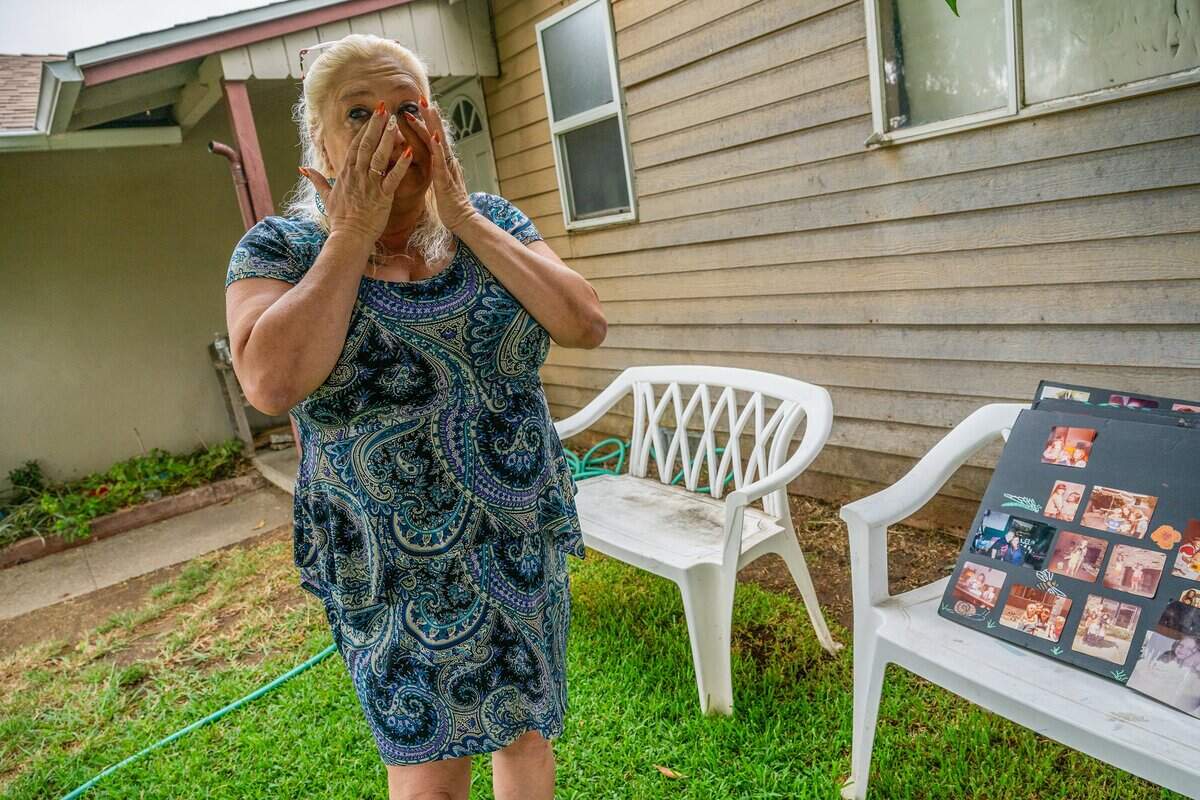
On a recent morning before work, Heyne recently looked at poster boards in the front yard of her South Sacramento home, tears running down her cheeks.
Heyne had painted sunflowers on poster boards and stuck polaroids of her sister on it for her memorial service. The photos showed Candyce in high school, smiling big at the camera with different boyfriends, modeling clothing, and sitting in her favorite tree. She hadn’t looked at it since.
“I wish she had a better life and I miss her every day,” Heyne said. “Every one of those people who died has a story.”
This story was originally published November 24, 2025 at 5:00 AM.