An Ang Lee movie will film locally. An expanded state program helped set this up
It was news to Sacramento City Councilmember Phil Pluckebaum that a film by director Ang Lee would shoot in the capital region in the months to come.
Pluckebaum had no complaints, though.
For one thing, Lee, who has twice won the Academy Award for Best Director, directed Pluckebaum’s favorite big-screen version of “The Incredible Hulk,” starring Eric Bana in the early 2000s. Pluckebaum also touted the value that film productions can bring to the Sacramento area.
“This is a part of our overall economic development strategy,” Pluckebaum said. “You think about all the jobs that come with a production.”
Lee’s upcoming movie “Gold Mountain” was among 28 films that will receive tax credits for qualified expenses in-state, the California Film Commission announced Wednesday. Figures provided by a spokesperson for the office show that the film has qualified expenses of about $31 million and will receive a tax credit of about $7.7 million.
The latest round of tax credits, approved Dec. 8, come as part of a push by the state to increase film production in California amidst competition in recent decades by other places. This included legislation that helped more than double the state’s film and TV tax credit from $330 million to $750 million.
Jennifer West, film commissioner for the city of Sacramento said the tax credit helped bring “Gold Mountain” to film in Sacramento. She is part of a group, Film Liaisons in California, that lobbied for the increased tax credit by the state.
“We’re really just beginning to see that program work,” West said.
An expanded push to make more films and TV shows in California
It used to be that the hazy hills or skies of the Los Angeles region were ubiquitous in films, even if what was on-screen was being portrayed as somewhere else.
An episode of “The Office” set at The Steamtown Mall in Scranton, Pennsylvania? That’s actually a mall in Sherman Oaks. Seemingly any film set at a college in the 1990s or 2000s? There’s a good chance the movie was shot either on-campus at the University of Southern California or University of California, Los Angeles.
This has been changing in recent years. The Marvel Cinematic Universe and shows like “Karate Kid” revival “Cobra Kai” opted to shoot in Georgia. The Georgia Office of Economic Development noted in July that more than 550 productions had “called the State of Georgia home over the past three years.”
State leaders have seemingly awoken to the incursion on one of California’s signature businesses. In July, Gov. Newsom announced the annual increase for California’s Film & Tax Credit Program. Newsom also signed two bills that passed the California Legislature this year, AB 1138 and SB 630, that were introduced to help expand filming in the state. After AB 1138 was signed into law, SB 630 was changed into a law related to state parks.
Those involved in the film industry welcomed expanding the tax credit.
“These changes were necessary,” the California Film Commission’s executive director Colleen Bell said.
Bell added, “Because of our limited funding, we had to turn away qualified projects — television projects, film projects — and most often those projects then went on to shoot in other jurisdictions where they were able to receive tax credits.”
Results of the changes in California are already being seen. A news release provided by a spokesperson for the California Film Commission noted that the updated tax incentive program has “generated $4.17 billion in economic activity and more than 25,000 cast and crew jobs over 4,000 filming days statewide.”

California Sen. Ben Allen, who authored SB 630, said he went “not too long ago” to a set with Assemblymember Rick Zbur, who authored AB 1138, a companion bill. “People were coming up to us both, Rick and I, saying how excited they were to finally be back to work,” Allen said.
Zbur, like Allen, represents part of Southern California and said that bringing more film productions to the state “had been one of the biggest issues that I had been hearing about from constituents in my district for at least two years.”
Lee’s film has the fifth-largest credit of the 28 productions in the California Film Commission’s list released Wednesday.
Other major tax credits in this round include:
- An untitled NBCUniversal production by rapper Snoop Dogg receiving a credit of $17 million against qualified expenses of $48.3 million.
- An untitled Amazon Studios thriller getting a credit of $12.5 million compared to qualified expenses of $35.6 million.
- An untitled Apple Studios feature due for a credit of $14.1 million and that has $39.8 million in qualified expenses.
Eighteen of the movies that will receive tax credits through this round are independent films with budgets of less than $10 million.
What the expanded credit means for Sacramento
“Gold Mountain” will have 50 shooting days in the Sacramento area, according to Bell. She didn’t disclose when shooting would start beyond saying once productions receive a reservation for their credit “they have 180 days to start principal photography.”
West said it was her understanding that “Gold Mountain” had done pre-production work in El Dorado County earlier this year before shutting down production to take advantage of the increased tax credit. She believed that production for the film could potentially start in April 2026.
In general, the prospect of bringing films to Sacramento is something that excites city leaders, who have developed a program of their own, offering a $250,000 rebate to productions that have at least $1 million in approved expenses within city limits.
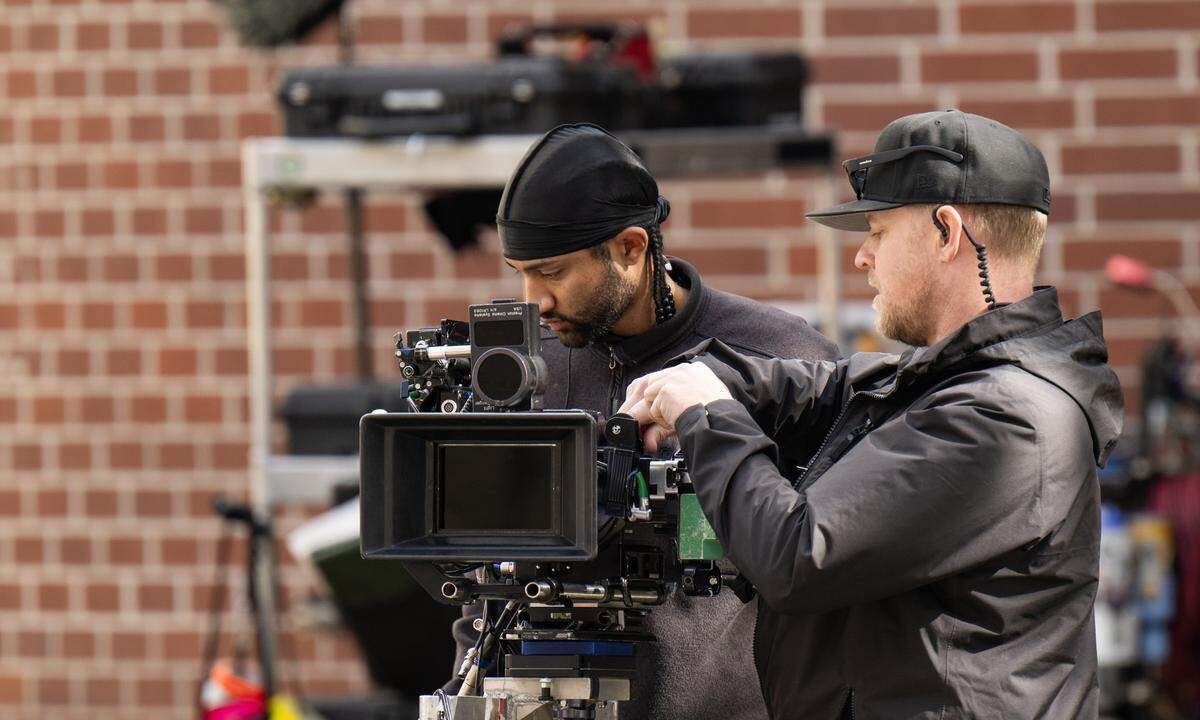
West said that no film or television show had applied for the city’s rebate yet, but that there’d been a lot of interest. She hoped that Lee would apply. She also sounded eager about the latest round of tax credits that would be announced by the California Film Commission.
“Every time the list comes out of the awardees, I’m doing my research… to find out where these productions are,” West said. “Where are they going to film? How can I get in contact with them? How can I encourage them to film in our area?”
There have been high-profile gets in recent years for the city with film productions like “Lady Bird” and “One Battle After Another.” Even smaller films like “Sacramento” and “No Address” have stirred local excitement, news coverage and an unannounced visit to The Sacramento Bee’s newsroom by William Baldwin, who starred in the latter film.
Film productions can generate local economic activity. And there are other possible impacts for people like Mark S. Allen, a longtime local Sacramento television personality who also directs and acts in films. His work includes the 2019 horror film “Apparition” starring Mena Suvari and Kevin Pollak that was shot at historic Preston Castle in Ione.
Allen predicted the expanded state’s tax credit program would bring work to Sacramento, which is fine with him.
“The more the world sees what Northern California looks like through our eyes, the better it’s going to be,” Allen said. “So I love cameras being pointed any direction in the Sacramento area.”
This story was originally published December 17, 2025 at 8:00 AM.