
How a stormy week caused the 1955 flood that nearly destroyed Yuba City
AI-generated summary reviewed by our newsroom.
- 70 years ago, storms, snowmelt caused the levee breach in Sutter County
- Delayed warnings and faulty communication left residents unprepared.
- Flood prompted dams, levee upgrades and formation of Yuba Water Agency.
Kathy Goodnight remembers the television her family had just purchased.
A TV was rare in a Yuba City household at that time, but more out of place was the sight of it unplugged on the dining room table. Coupled with the sight of her parents moving Christmas presents, blankets and their dog into the family car, Goodnight and her younger brother began suspecting the worst.
They stayed up late, glued to the radio on Dec. 23, 1955, listening for news past midnight into the early minutes of Christmas Eve.
Their father Bud Karstens had been working a couple of miles from the house with a crew of men struggling to maintain a section of levee south of Yuba City, a glorified pile of earth and sandbags stacked between Sutter County and the increasingly angry Feather River. The Yuba-Sutter area had been soaked by more than a week of steady rain.
She remembered her father returning home, rushing through the door, leaving little time to pack. He knew what the radio announcers had not yet shared.
“He was in a hurry to get us out of there,” Goodnight said.
Karstens appeared uncharacteristically nervous through his child’s eyes.
“He was not an excitable person, but he and his friends could hear the rumble,” Goodnight said. “He said it was the loudest thing they’d ever heard.”
Four minutes after midnight, what was known as the Gum Tree section of levee north of Shanghai Bend gave out, widening half a mile and letting in a wall of water 20 feet deep that submerged more than 100,000 acres of Sutter County and Yuba City.
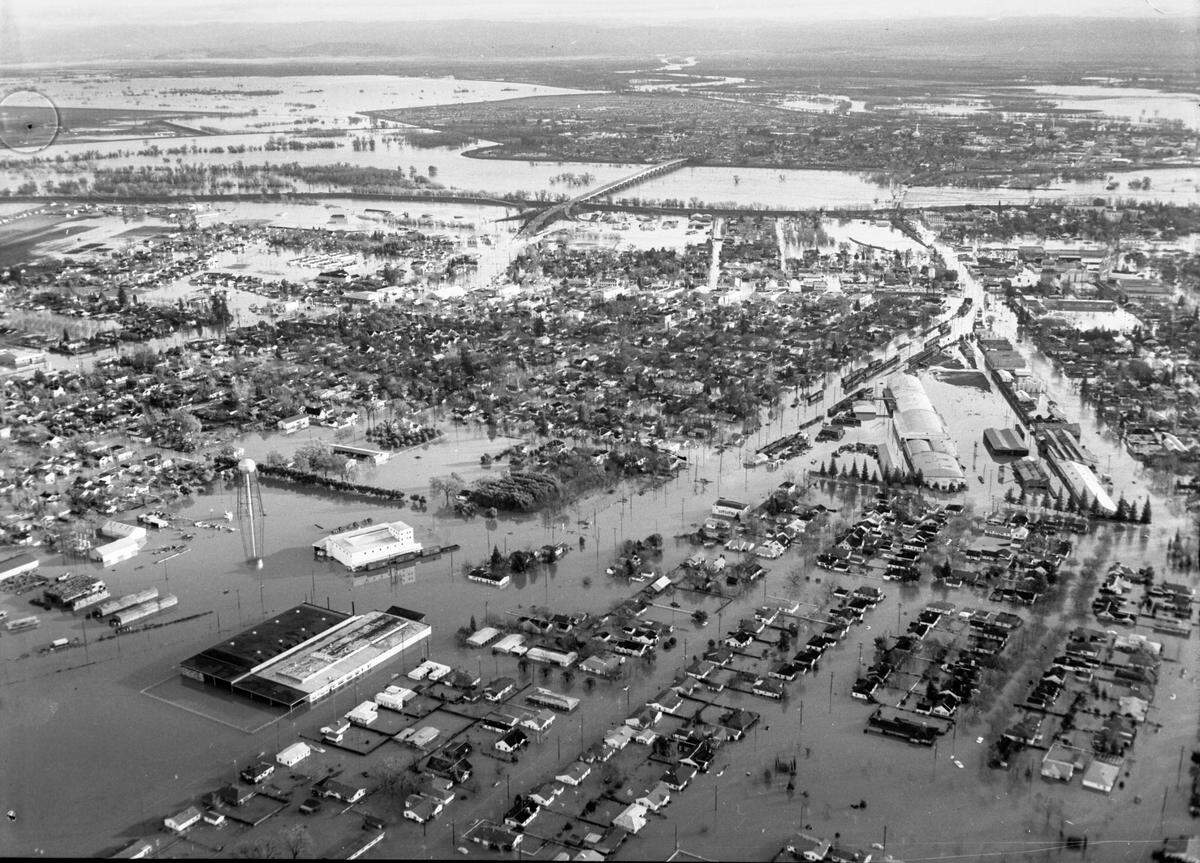
The water Bud heard crash through Sutter County’s last line of defense would claim 37 lives, by some estimates, and strand countless more before receding out of the flood-prone land once known as an inland sea.
Lessons have been learned in the subsequent decades from the mistakes and misfortune of Yuba City on Christmas Eve, 1955.
The flood would become a cautionary tale of trying to control the natural order of water and gravity that carved the Central Valley through the heart of California. It would lead to the creation of new dams, stronger levees and better communication in the face of seasonal flooding inherent to life in Northern California.
Seventy years have passed since the levee failure and the sound of it still reverberates in the memories of those who heard it and had the good fortune to survive.
At that moment, no one could predict how many lives would be lost, and homes would be broken, as water surged into Yuba City through the dark of night, and the race for survival began.
Calm before the storm
The storms started more than a week before Christmas.
Yuba City and Marysville, despite their proximity and interlocked fates, prepared differently for what became the flood of 1955.
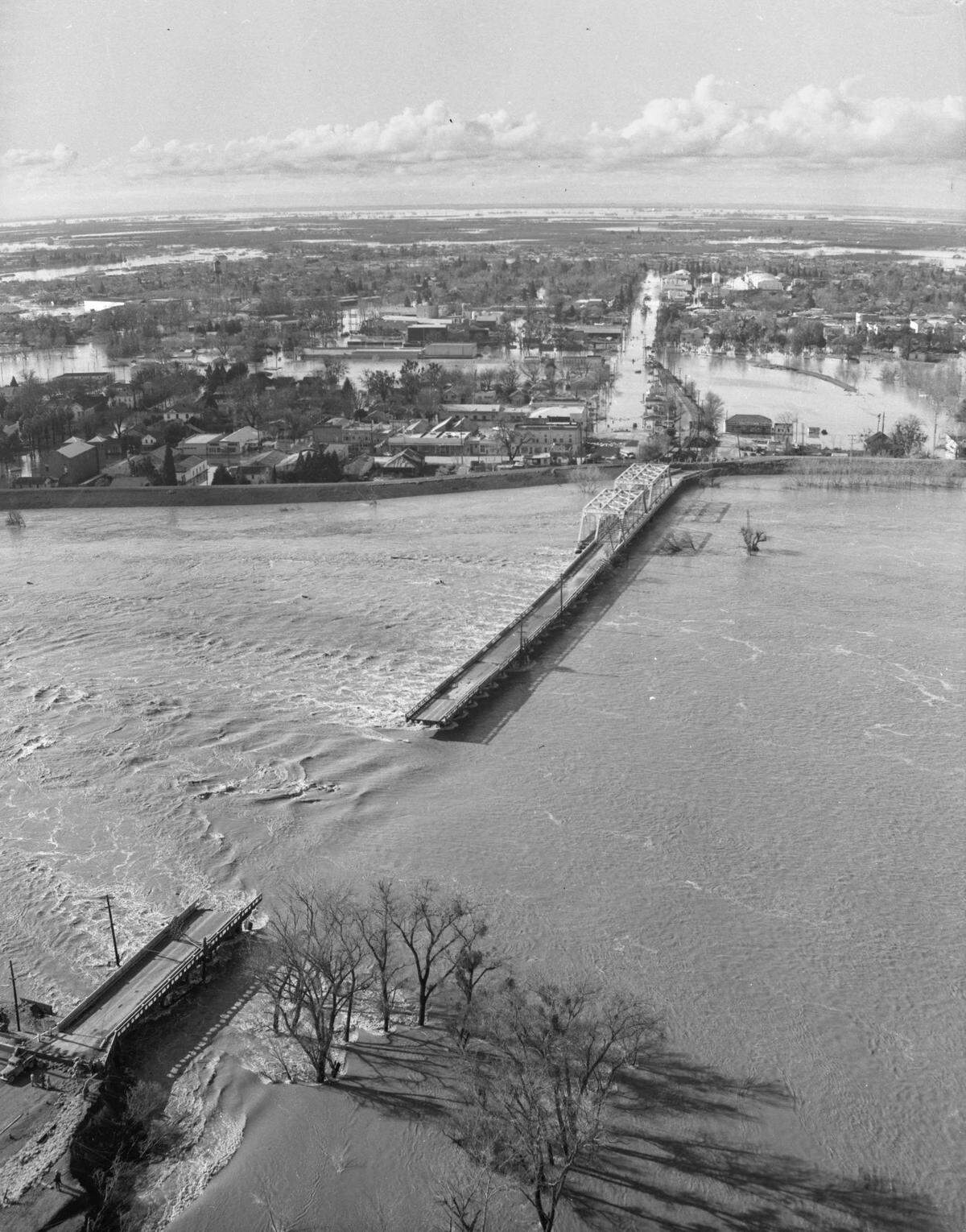
The two cities were then, as they are now, connected by the Tenth Street and Fifth Street bridges across the Feather River. Yuba City lies west and the Yuba River feeds into the Feather River south of Marysville. Downstream of that confluence the current makes a jagged curve at Shanghai Bend then continues dividing Sutter and Yuba counties on its way to Sacramento.
Boxed in by the two rivers, Marysville resembles an island of sorts, surrounded by a ring of levees. As rain fell over both cities and flowed through them from the north, Marysville was seen as the more likely to flood.
Consequently, officials on the morning before Christmas Eve issued evacuation orders for Marysville, and thousands of people trekked west across the Tenth Street Bridge. Many settled with friends or family in Yuba City to ride out whatever was to come. Historical accounts tell of people hauling their belongings from Marysville across the bridge, such as a car dealership that moved its inventory of vehicles for safekeeping.
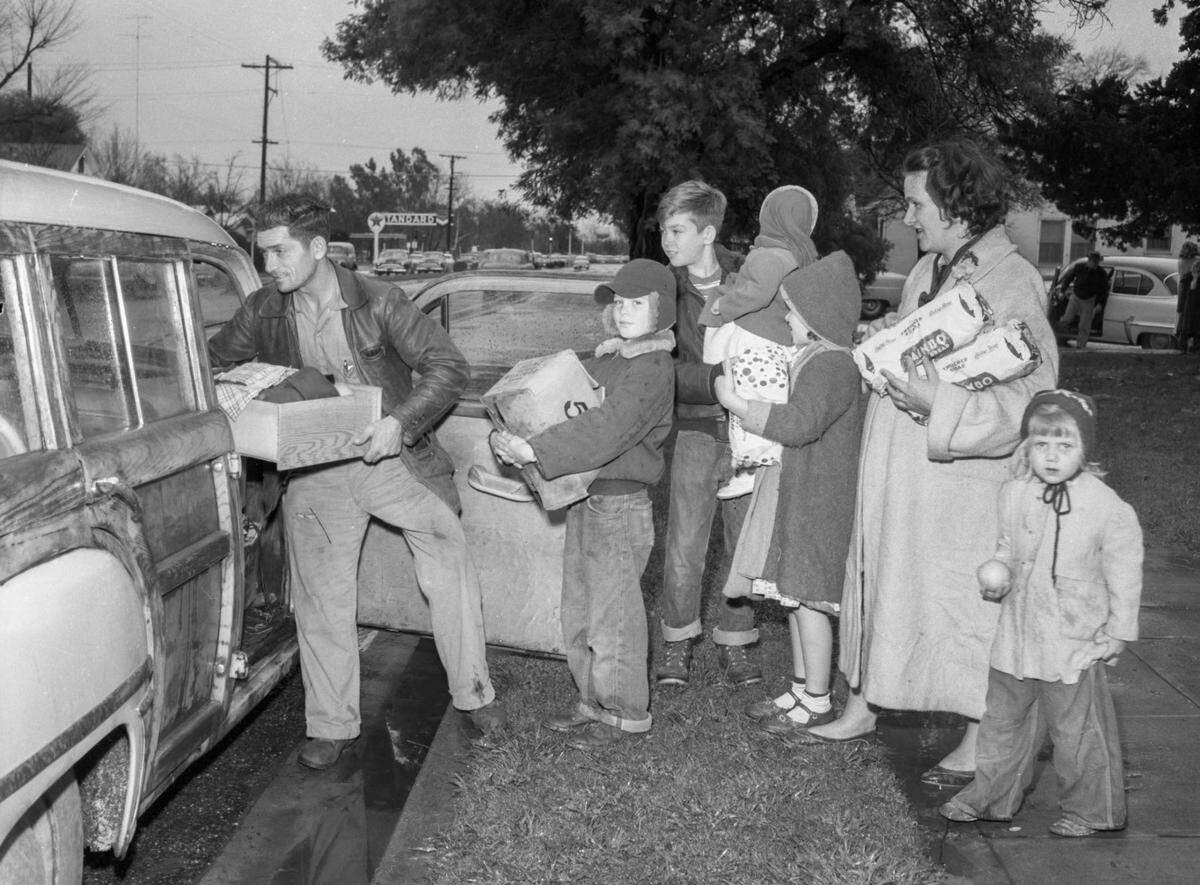
Foolish and costly in hindsight, the visual of thousands leaving a city that stayed dry and relocating to another flooded by the same river system puts a fine point on the conventional wisdom of the moment: Most everyone thought Marysville would flood and Yuba City would not.
That day was not particularly wet, but the continuous rain, combined with heavy snow melt from the mountains, overwhelmed reservoirs and caused rivers to rise.
By noon a message from several state agencies predicted flows higher than had ever been recorded.
“To repeat this is without doubt the greatest flood in the records of this river system,” said the notice from Division of Water Resources, the U.S. Army Corps of Engineers and the Weather Bureau.
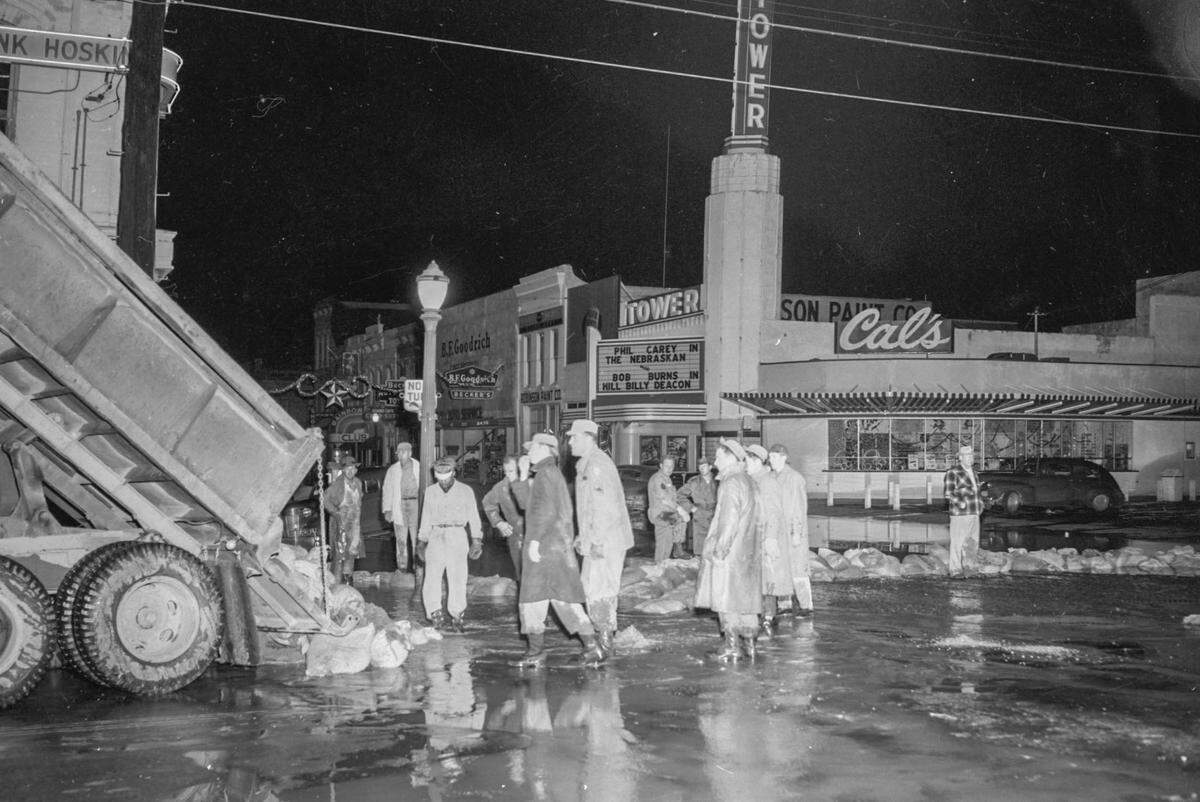
Hundreds of nearby Air Force members, workers and volunteers, loosely organized but in some instances highly effective, applied sandbags to levees surrounding Marysville throughout the day and night as the rivers rose. When a section of the Fifth Street Bridge collapsed that afternoon, the river took with it phone lines connecting a large part of Yuba City, adding to the communication problems that intensified into the night.
All the while, what began that morning as a warning sign of levees softening in Sutter County quietly grew into a mounting concern of which the public was unaware, including a set of newlyweds on their first day of married life.
Wedding-day rain
The promise Vern Hill gave the father of Phyllis, his soon-to-be bride, many years ago proved prophetic in unintended ways: “Come hell or high water we’re going to get married.”
That’s what Vern, now 97, remembers saying, a year before the wedding, to Army Master Sgt. Harley “Ted” Allen, who correctly pointed out that Vern had not known his daughter very long.
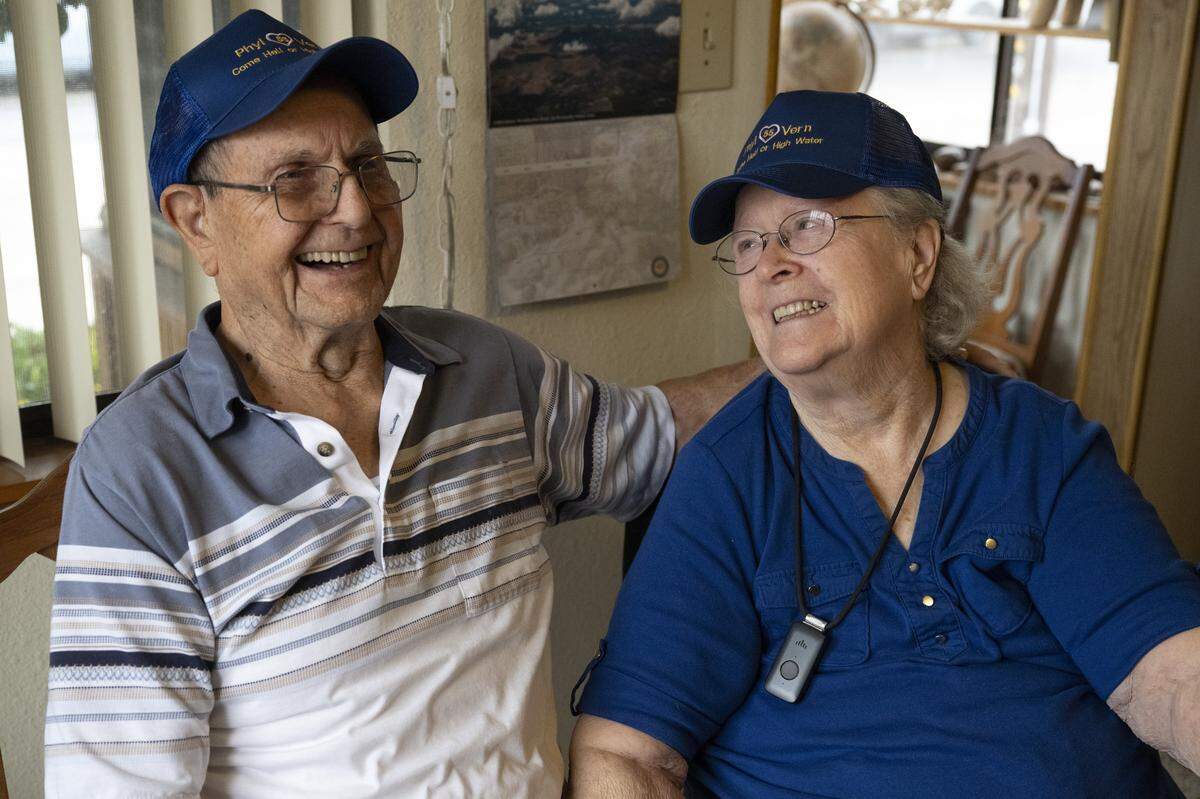
The sergeant was leaving soon for temporary duty in Alaska, and said he would approve of the wedding if the desire held by the time he returned.
That time came. In the days leading up to the wedding, Vern and Phyllis worried about the safe and timely travels of her father, whose voyage home was delayed due to the storms. Despite delays and a washed-out bridge, he arrived just in time.
True to Vern’s word, the marriage was official; the high water was next.
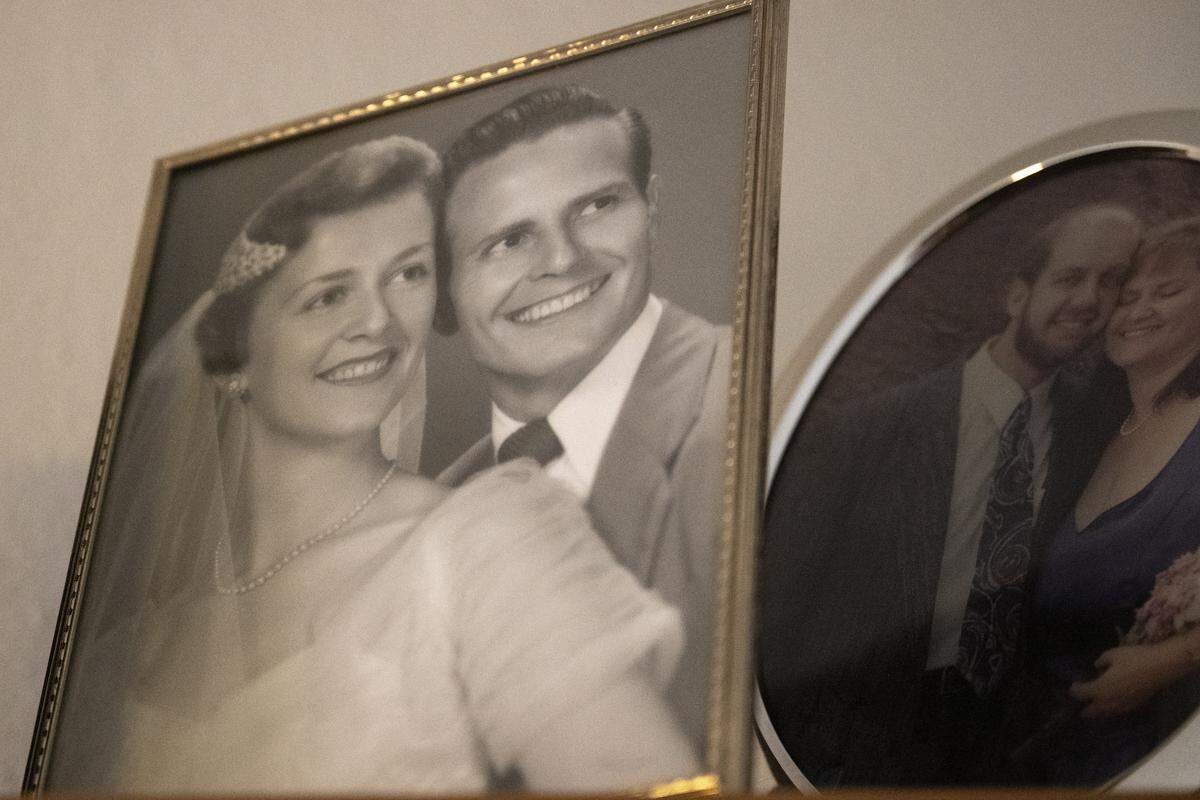
Vern and Phyllis remind each other now of names and details the way you would imagine from a couple together for 70 years. Of course, the Dec. 22 wedding anniversary, coinciding with the fatal flood, needs no reminder.
The morning after the wedding, Vern was asked to move school buses out of Marysville, and kept one in case he needed to help evacuate Yuba City. He and Phyllis shuttled to his aunt’s house on Chestnut Street, where they both live to this day.
He parked the bus on the street. Family and friends joined. They waited and boredom prevailed.

“Believe it or not, the drive-in theater was showing a movie that night,” Vern said.
Word of the water pooling inside a section of levee near Shanghai Bend slowly circulated throughout the day and night of Dec. 23, but reached the newlyweds, like many others, much too late.
Vern believes it was about 11 p.m. when he was at the drive-in and heard something on the radio that piqued his attention. A section of levee near Shanghai Bend was troubled, the unprecedented river swells predicted had arrived, and Yuba City and Sutter County officials had not ordered an evacuation.
However, people began to understand what they were not being told.
“I think it was before the radio announced to leave, because we heard undertones from voices, and the radio announcer was trying not to tell us to evacuate, because it wasn’t official, but he just knew we should,” Phyllis said. “The feeling came through the air.”
She and the rest of the people at the Chestnut Street house packed their cars and drove west. In the opposite direction, Vern started the school bus and headed into the neighborhoods of Yuba City.
When the levee breaks
The booming sound of the levee collapse near Shanghai Bend was akin to a starting gun for everybody within earshot: It popped and they ran.
Goodnight’s father, Bud Karstens, was working the levee with friends when the flow burst through the manmade wall. The river roared and he ran atop the levee toward a group from Beale Air Force Base. His friends took a different path down the levee embankment toward the road.
Karstens drove off with the airmen to their cars parked near the Sutter County Airport, and from there he raced the surge of water to his family’s home near Yuba City High School.
His friends were swept away as the 20-foot wave dispersed and began claiming its first victims.
“These were friends that things were happening to,” Goodnight said. “They could only help each other to a certain extent.”
The capriciousness of fate was not lost on Karstens and many of the survivors.
A left turn instead of a right may have saved lives. Staying put rather than evacuating was one person’s demise and another’s salvation. Many cars made it out of town while others stalled in the water, stranding their occupants. The fickleness of decisions relieved some and cursed others.
The radio in the household had not yet announced what Karsten knew. With the dog and Christmas gifts packed into the car, he raced his family west of town parallel to the growing line of headlights forming a makeshift evacuation route. Many hunkered down in the towns of Sutter and Meridian, or drove farther to Colusa or Williams.
“It was word of mouth then, because it had just broken, and people were afraid it was going to break,” Goodnight said.
As levee workers ran for their lives and more cars joined the lines fleeing Yuba City, government officials broadcasted an update: “Levee broken 3 miles south of Yuba City at Shanghai Bend. All evacuees to proceed to Sutter and Meridian.
“Yuba City in no danger.”
The message was transmitted again several minutes later. At 12:51 a.m. another message reiterated there being no threat to Yuba City, but gave precautionary evacuations for the southern part of town.
Water rushed through the nearly half-mile hole in the levee for more than an hour before officials issued evacuation orders at about 1:15 a.m.
The lack of communication, to the extent you could feel its absence — the sense that something was off — colored the atmosphere of growing concern. Reassurances messaged publicly belied word of mouth, and to an extent, common sense.
“People just stepped in to where they needed to be,” Goodnight said. “People just communicated with each other, and if there was a need somebody stepped in. Sometimes you can’t rely on government, you have to take the bull by the horns.”
Meanwhile, the threat of a flood some believed inevitable, and others improbable, had already begun.
Escape from Yuba City
Behind the wheel of a school bus, Vern patrolled the neighborhoods south of Highway 20, looking for lights in homes, flashlight beams and other signs of life.
He dropped the first group off at higher ground west of town and drove opposite of the evacuation line back into the city to look for more. Soon the streets became impassable.
“By that time, Bridge Street had a foot of water, and it was rising,” Vern said.
A radio series interviewing survivors of the flood in the months after has archived some of the most harrowing stories from the early morning hours after the levee broke.
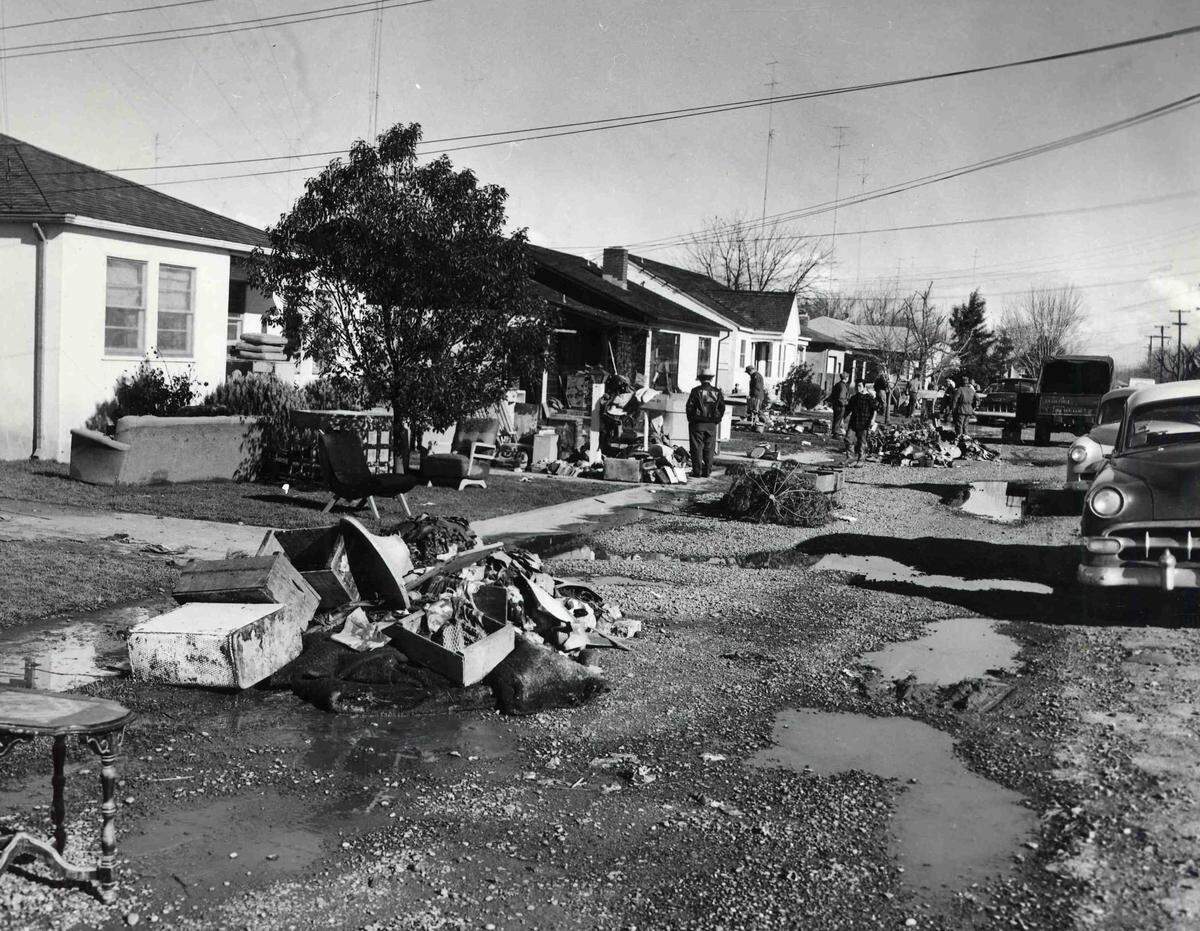
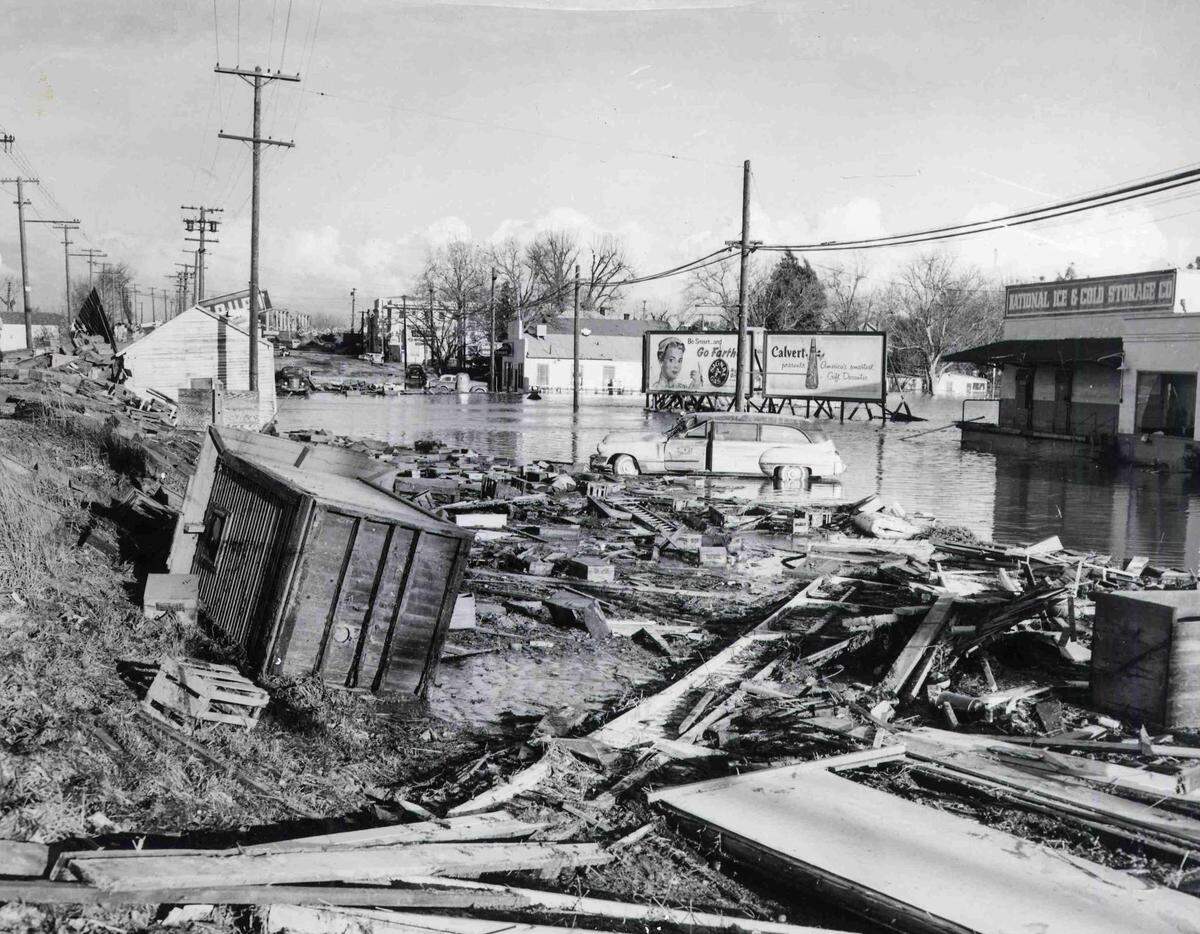
People clung to orchard trees and telephone poles, scaling higher as the water rose. Helicopter crews and search teams rescued about 600 from roofs, trees and the raging water. About 4,500 homes flooded. Water covered thousands of acres of farmland for weeks. The devastation took months to clean and years to recover.
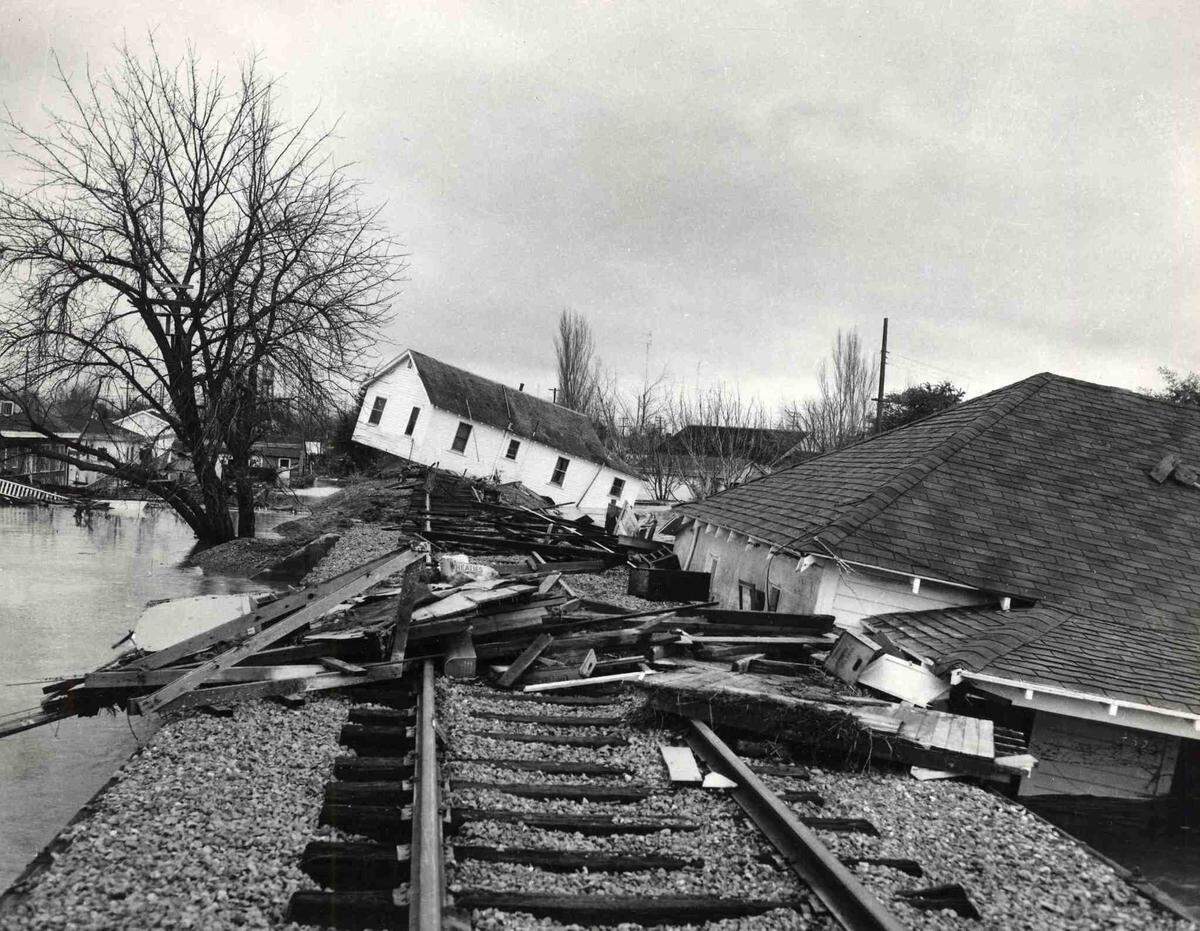
Hindsight affords a more complete sense of what happened as water rose and hope diminished for the ones left behind.
Each story is restricted to its first-person narrator. But the stories have no sense of heightened ego or inflated heroics. They’re cold and humble. Some feel detached, as if the shock still lingered, and the realization of survival despite the improbability had not set in.
All these years later, Vern remembers people acting orderly, evacuating at a measured pace, stopping to allow cars into the growing line of traffic out of Yuba City.
“I never thought that they should have said evacuate sooner,” Vern said. “They were as hopeful as everybody else that the water wouldn’t break our levees. It might break Marysville, but we didn’t think it would break Sutter County’s side.”
He and Phyllis both remember feeling confident and safe throughout the night, even as they separated so she could evacuate while he combed the city for people who needed help.
“Looking back, if we had lost anybody in the flood, would we feel the same way?” Phyllis said. “Would we say the government should have done more, the officials should have done more? It’s a little bit of a ‘what if.’”
Lost in the flood
Goodnight tagged along with her father and uncle on a small boat to check on their house after the sun rose on Christmas Eve. The low level of water covering its floors was minor compared to the devastation they floated past.
“There was water in the house but it wasn’t catastrophic,” Goodnight said. “The streets were like rivers, there was water on every street.”
From above, Marysville rarely looked so distinct: an island surrounded but not submerged by water, contained by the ring of levees that held strong. A similar aerial photo of the break at Shanghai Bend shows Yuba City, although you’d be hard-pressed to recognize it as such.
The flood toppled landmarks, sank cars and buried churches and schools. Most of the water receded from the city by Christmas Day and families were allowed to reenter their homes.
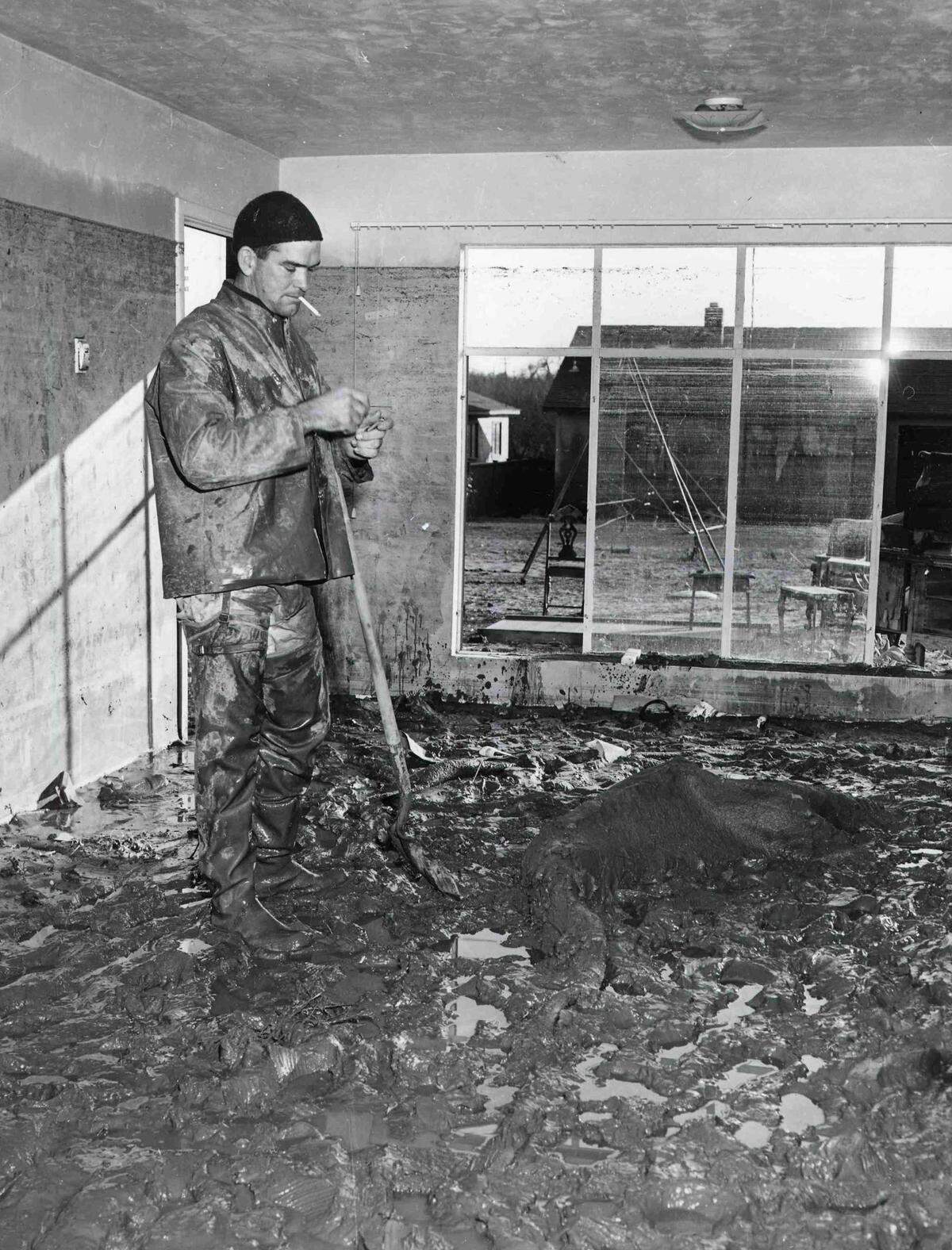
Disasters do not destroy equally. Fires burn and erase. Floods displace and confound, leaving reminders and confusion, even a sense of hope that what was lost may have just been swept away. Whether a wallet found in a distant orchard, or bodies not discovered until days after the water had cleared.
The flood destroyed Yuba City and paradoxically kept it intact.
A grand jury, convened to investigate what happened and why in the months following the flood, took sharp aim at public officials from nearly every level of local government, and some state and federal agencies.
When officials received information, they didn’t know what to do with it, the grand jury’s report concluded. By the time they figured it out, the information was often old or irrelevant.
Delay and indecision by community leaders created confusion and misinformation for the public.
The ignored warning signs near Shanghai Bend became clear. Two directors of Levee District No. 1 saw the boils forming sometime around 9 or 10 a.m. Dec. 23 at the toe of the levee, about 14 hours before its failure.
When a third director saw the wet spot later that afternoon, “a large lake” had formed around one boil, “shooting up in the air six feet high,” according to the report.
Sand boils form when flowing water contained by a levee pushes down on soil inside the levee with enough force to move water through its interior. The pressure causes water to burble at the surface of land inside the levee, and may spout when met with enough water and force.
The levee directors saw the boil, but never moved close enough to the spouting water to check if sand or other material was seeping through the leak, signs of the boil compromising the levee’s foundation.
Their sightings failed to muster enough concern to rise through the chain of public officials standing between new information and the public.
What went wrong
Blame was not limited to the local levee district.
The highest elected officials in Yuba City and Sutter County, some of whom were out of town at the time, received much of the blame for failing to communicate to the public the severity of the flood risk, with indications they actively misrepresented the level of danger while evacuating their own families.
“We prefer to believe that they did not commit perjury before us, yet it is difficult for us to reconcile their testimony with their actions,” the grand jury wrote, describing “an appalling lack of leadership and the eventual collapse of the city government.”
To put it plainly, the city chose not to evacuate residents despite knowledge of the state of emergency declaration, that the most water ever recorded moving down the river system was headed their way, that a levee in Nicolaus had already failed and that phone lines had been knocked out.
“Nothing whatsoever was done to prepare for the great catastrophe which was about to strike the community,” jurors wrote.
Officials communicated that people had nothing to worry about. Even when the levee broke at Gum Tree, the city said it was fine. It resulted in wading water, they had messaged, and later “corrected” themselves to say there had been no breach, according to the grand jury report.
“It appears to us miraculous that thousands of lives were not lost,” jurors wrote.
Criticism extended to state leaders as well, including those who sent a notice that effectively promised a flood, couched in jargon and technical language that blunted the message and rendered it illegible for some.
A state water department engineer told jurors that the water simply exceeded the water system’s capacity. Had the levee held at Shanghai Bend, he said, it would have collapsed elsewhere.
To many the flood proved the state’s water system was outdated and ineffective. And it compounded calls for a modernized dam and levee system with capacity to prevent another flood such as was seen in 1955.
Engineering against nature
Even then complaints of the slow speed of state projects drew criticism: decade-long plans that risked antiquation by the time of their completion. Redirecting such plans in a more modernly conducive way could take a decade of wading through bureaucracy and legislation.
Still, the extent of the 1955 flood energized calls for better flood protections, including new dams, larger reservoirs and bolstered levees.
The Oroville Dam, built in the 1960s, created a giant reservoir and checkpoint to regulate the Feather River before it flows downstream past Yuba City and Marysville. Not long after the 1955 flood, citizens in Yuba County voted to back a costly project to control the Yuba River, forming the Yuba Water Agency and leading to the completion of New Bullards Bar Dam in 1970.
Each dam adds a greater measure of protection. Levee upgrades at various parts of the systems have continued into the present.
But the rivers defining the history of each city still pose threats, and have resulted in major floods in 1986 and 1997 in Yuba County south of Marysville. Those floods caused extensive damage and led to subsequent improvements. More than 180,000 people evacuated from Yuba-Sutter and beyond when the Oroville Dam’s emergency spillway nearly failed in 2017.
Seventy years later, some survivors of the flood still live in Yuba City. Those who stayed the entirety of that time lived through more scares and close calls, but nothing quite like the big one on Christmas Eve, 1955. It’s fair to wonder why a person chooses to stay, and possibly rebuild, where the river endangered them and may threaten again.
“We put ourselves in the hands of politicians, and we expect them to do the best that they can, and maybe they did, and maybe they do,” Goodnight said. “But you see so many times when people just have to manage for themselves. You can’t really trust someone to take care of you, you have to do it yourself.”
The flood waters dried long ago, but what they revealed in their absence still lingers in the community’s collective memory, and in the individual minds of the few who were there and remain to this day.
This story was originally published December 23, 2025 at 5:00 AM.