
New Sacramento policy seeks to cut down on illegal dumping, deemed ‘epidemic’
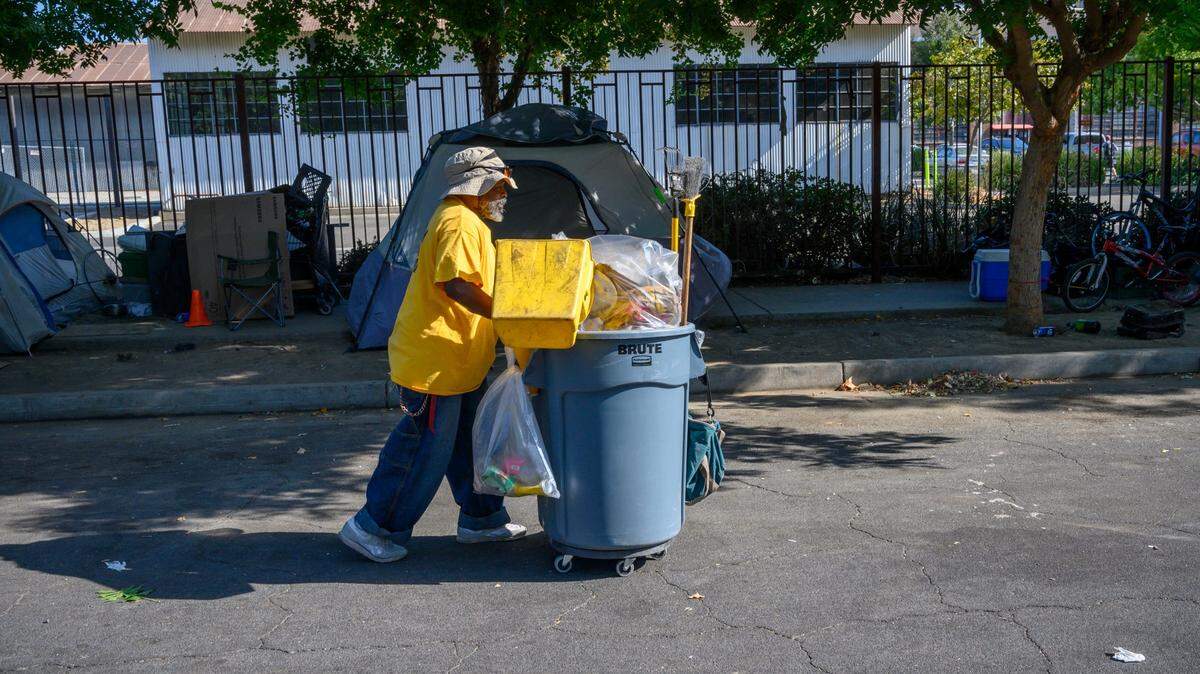
Sacramento’s illegal dumping problem is an “epidemic,” said one city council member. He and a group of elected officials hope to pass a new policy to address it.
The city’s budget and audit committee approved a motion Tuesday to explore the creation of a new policy that would find holes within Sacramento’s framework to address rampant littering in public spaces. Problems with illegal dumping were identified as far back as 2001, when local officials passed an ordinance making it a misdemeanor.
“In District 2, illegal dumping is an epidemic. Frankly, I view it as an insult,” said Councilmember Roger Dickinson, who represents Del Paso Heights, Hagginwood and Robla. “By those who engage in illegal dumping, they are insulting our neighborhoods. They’re insulting our businesses.”
The current strategies for addressing illegal dumping “lack the formal structure, enforcement consistency, and staff engagement necessary to create sustainable impact,” according to the new proposal.
“It’s not always as effective or as efficient as it can be,” Dickinson said.
The proposal, authored by Council members Dickinson, Caity Maple, Mai Vang and Eric Guerra, seeks to conduct an analysis to determine how illegal dumping is addressed by the city and then find ways to reduce it. The new policy hopes to use data to determine where unwanted items most often end up.
Trash clogs “vulnerable neighborhoods,” strains resources and undermines the public’s confidence in municipal services, according to the staff report.
A survey conducted by the city found about 52% of respondents were either “very dissatisfied” or “somewhat dissatisfied” with the city’s response to illegal dumping.
Additionally, 41% of respondents described the city as “somewhat effective” when cleaning up trash, according to the survey.
Often, code enforcement officers clean up an area but then return hours later to find litter in the same place, said Maple, who represents Oak Park and Curtis Park.
“We have to be looking beyond — not just how we respond in the moment, but what comes next and how we prevent it from happening,” she said.