
Boat crews wrap up key stage of Yuba River pipe burst cleanup ahead of schedule
The tow boat pushed a barge stacked with what looked like orange logs through a narrow canyon toward the spilling dam.
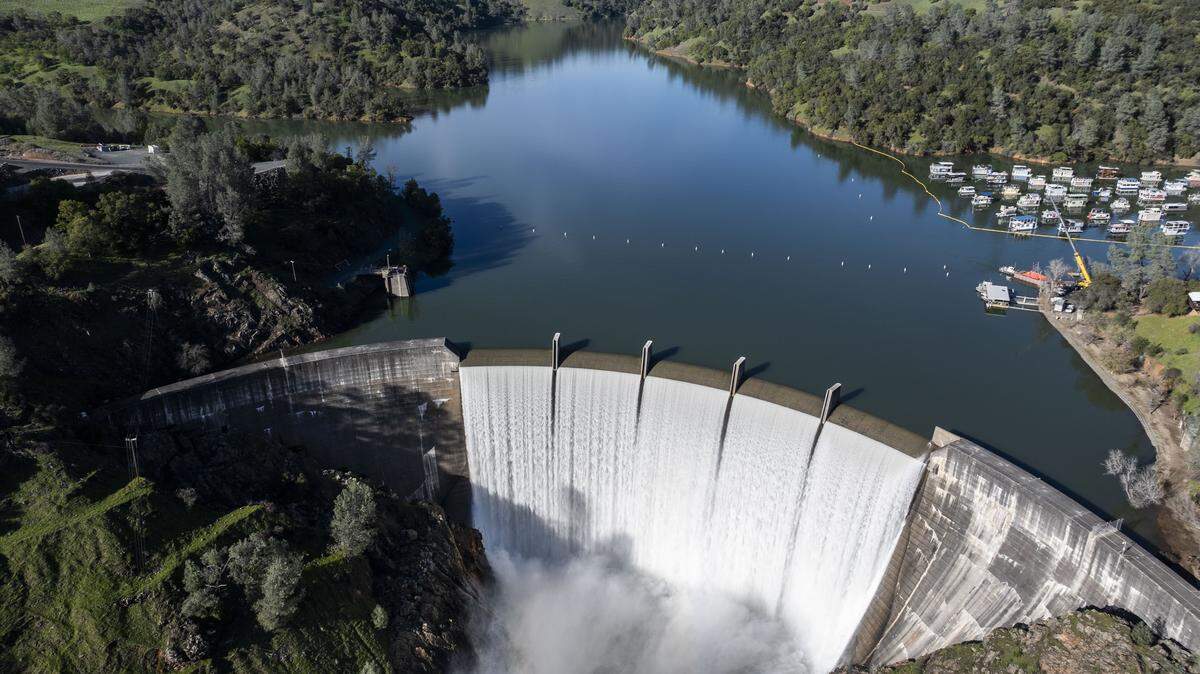
Navigating the subtle bends of the lake behind Englebright Dam, the vessel chugged across the otherwise still water, the late afternoon sun shimmering across the ripples in its wake.
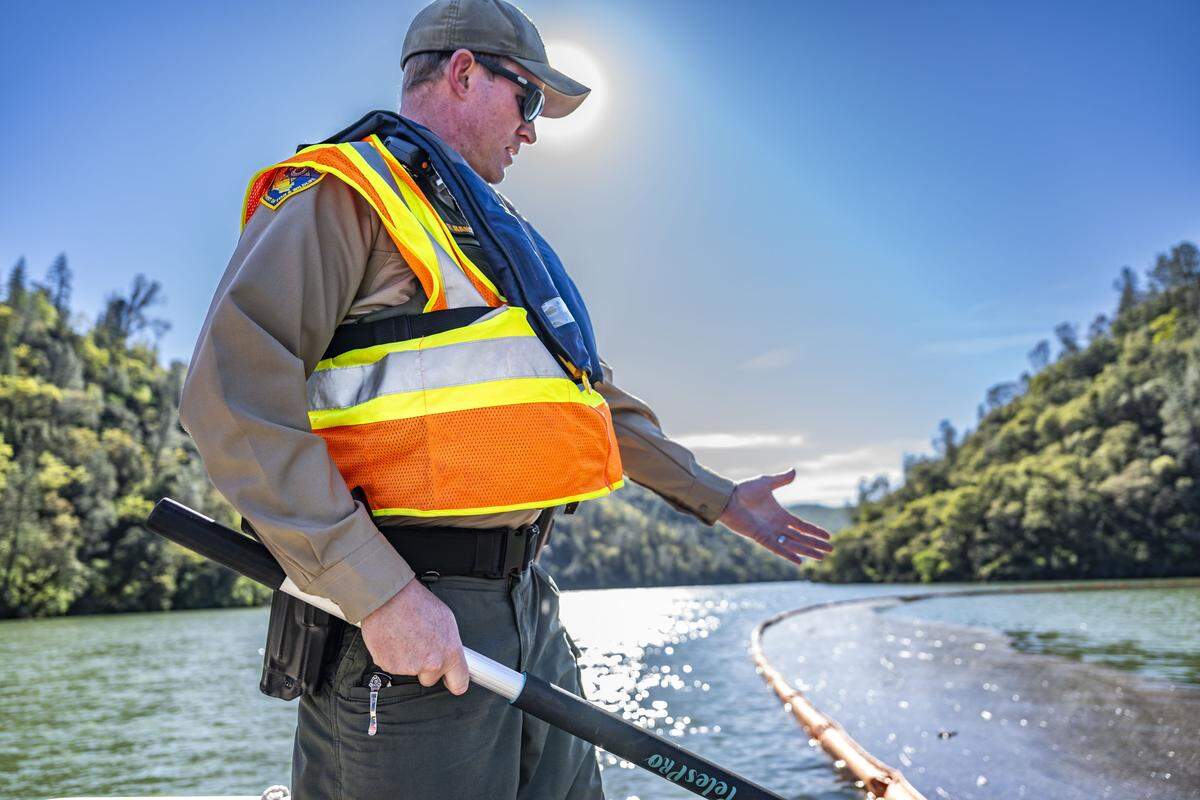
For the past couple of weeks that boat pushed barges several miles each way up and down the lake, bringing empty containers deep into the canyon and returning them to land full of oil-covered debris and refuse. The wreckage in the water had been flushed into the North Yuba River and stalled about a mile downstream at the mouth of Englebright Lake in mid-February after a ruptured pipe at New Colgate Powerhouse sent a deluge of water and hillside into the river.
The boat shuttled bins of waste through multiple storms, including the relatively rare occurrence of snow at that altitude of the foothills. But the stack of orange logs — hard booms that had stretched across the lake and formed a perimeter trapping large pieces of debris, including actual logs — marked the end of a project that those involved feared would take much more time.
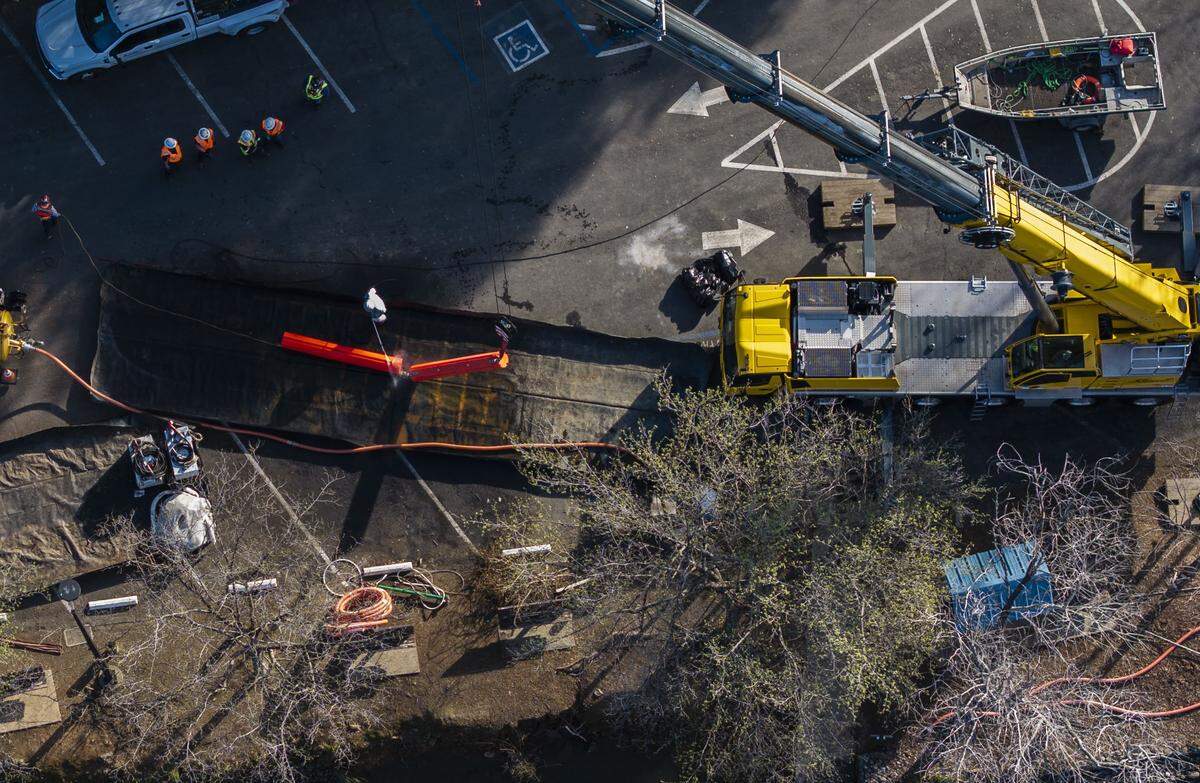
Approaching the steep dropoff of the overflowing dam, the barge was instead nudged into a nearby edge of shore, where a crane lifted the booms in two-piece sections onto land.
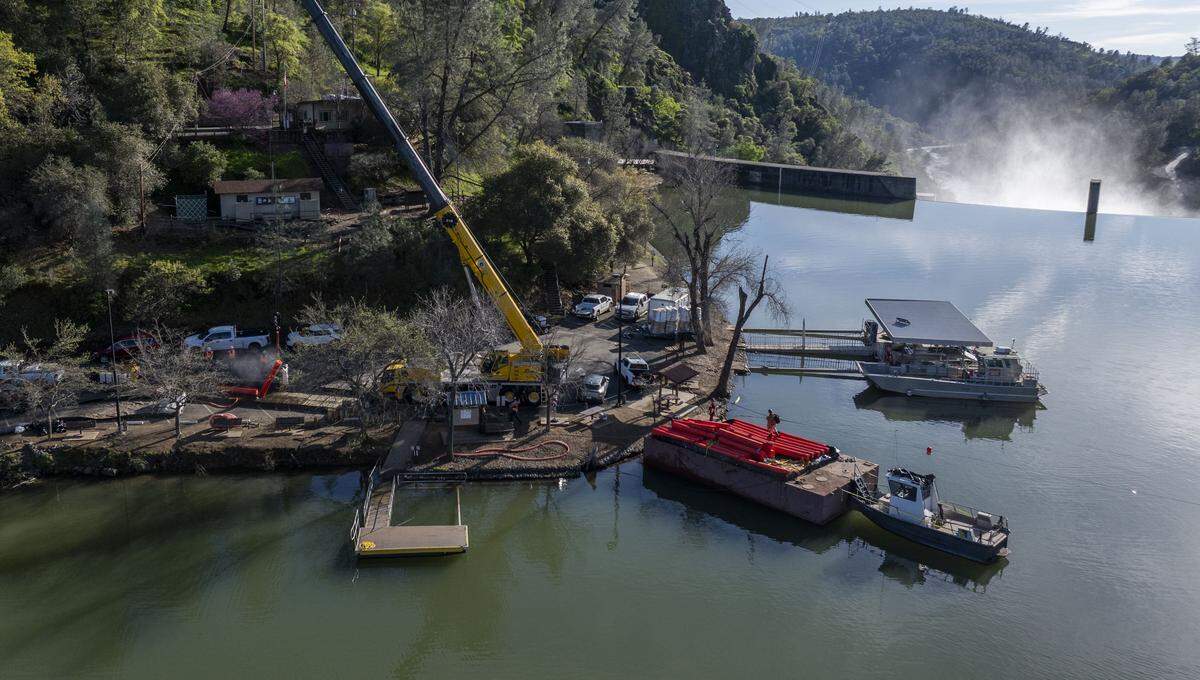
“That means the danger has passed,” said Kyle Watson, Global Diving and Salvage project manager, of the large debris booms returning to shore.
Environmental and Yuba Water Agency workers and contractors on Tuesday began wrapping up their efforts to remove debris and oil captured downstream of the powerhouse, and they expect to complete the job within days.
“Up to this point it’s been crisis mode,” said Ryan McNally, Yuba Water director of water resources and flood risk.
The roughly two-week endeavor, led by Yuba Water and the California Department of Fish and Wildlife’s Office of Spill Prevention and Response, addressed the most pressing priority in the aftermath of the pipe rupture that officials expect will take months to assess and years to fully recover from.
“There are a lot of things that are going to take years to resolve on the clean-up side, but the oil impact to the water was ultimately a small part of this incident,” said Lt. Ryan Hanson, with the Office of Spill Prevention and Response.
What happened?
The burst pipe, which had been under repair for months, conveyed water from a mountainous tunnel filled by New Bullards Bar Reservoir downhill into the hydroelectric station, operated by Yuba Water. Pacific Gas and Electric Co. infrastructure adjacent to the power station was also damaged.
The rush of water eroded an estimated 265,000 cubic yards of earth and debris from the hillside leading from the rupture to the power station, according to a water agency document sent to the Federal Energy Regulatory Commission. Much of it washed into the North Yuba River.
The extent of the environmental toll remains unknown, although water agency officials were encouraged by early samples tested throughout the river, which they said have been negative for concerning pollutants.
An estimated 685 gallons of mixed oils and solvents, 100 of which were from the PG&E station, washed into the river, along with a truck, according to the FERC report.
Workers using an excavator stationed on a barge filled more than 72 bins, each holding up to 20 cubic yards of waste, with debris from the water, much of which was doused in oil.
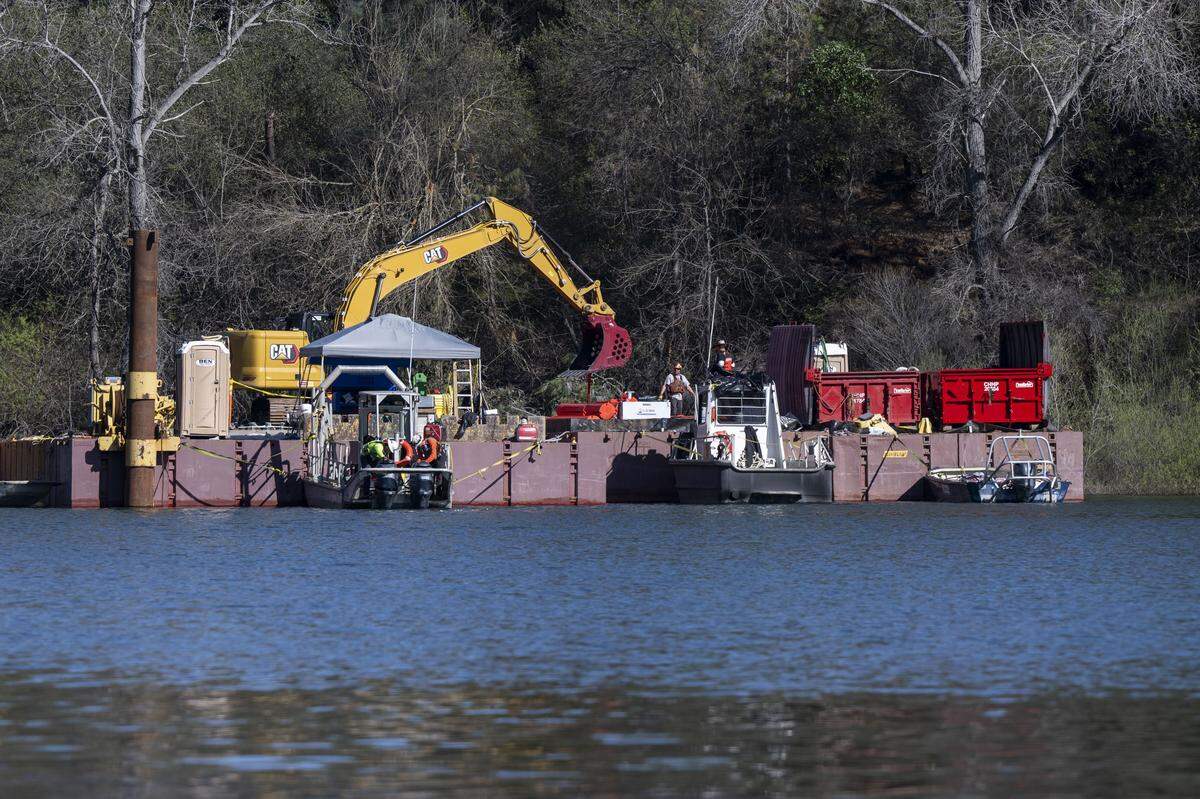
The lake is about 60 feet deep at the point the debris was trapped, in an area that stretched about 100 yards upstream and from shore to shore. Water agency and state wildlife officials worked with contractors Global Diving and Salvage and Clean Harbors to remove the refuse, chipping away at the surface-level mess.
The oily sheen visible on the water’s surface in the days and weeks after the incident had dissipated by Tuesday, leaving only fine layers of debris, which officials said appeared free of oil.
Ten workers were at the power station when the rupture occurred, five of whom were rescued by helicopter. One contractor hospitalized with serious injuries was recently released from the hospital and is expected to recover.
The power station could have had as many as 30 workers present had such an incident happened prior to last June, when the water agency opened a new office nearby where it relocated some of its workers, McNally said.
“No loss of life,” he added. “It could have been much, much worse.”
Understanding environmental effects
The powerhouse has equipment with related tanks holding “tens of thousands of gallons of oil,” Hanson said, and it took time to confirm it was not at risk of entering the river.
The instability of the hillside leading to the power station, made worse by a series of storms, prevented officials from accessing the power station to assess the damage for more than a week.
“The scope of that impact is huge,” Hanson said. “The amount of debris, the amount of damage to that facility, the infrastructure and power plant-related operations — heavily impacted.”
The oil and mixed solvents mostly came from a storage shed that was swept into the river. Some of the oil was still confined in containers when pulled from the water, Hanson said, mitigating how much oil may have entered the water itself.
“There was a lot of manmade material, pieces of equipment and things that got washed in the river and floated downstream,” he added.
The Office of Oil Spill Prevention and Response has not yet confirmed the extent of what went into the water nor quantified how much oil was removed through debris collection.
In these cases, an oil spill prevention specialist quantifies how much oil was removed. Only a small percentage of oil spilled into water is typically recovered. In a perfect scenario, the successful recovery of oil is up to 20-30%, Hanson said.
The water agency will continue long-term water quality monitoring throughout parts of the river in response to the incident. Immediate environmental effects became clear when the rupture caused the powerhouse to shut down, which cut power to two smaller stations that release water into the lower Yuba River below Englebright Dam.
When only one of the two pumps engaged its emergency bypass amid the outage, flows were drastically cut, killing as many as thousands of young Chinook salmon.
The incident has also raised questions among river conservationists about the status and management of California’s aging water infrastructure.
Englebright Lake is expected to reopen to the public in mid-March.
This story was originally published March 4, 2026 at 5:00 AM.