Enrollment struggles force John Adams Academy to close Lincoln high school program
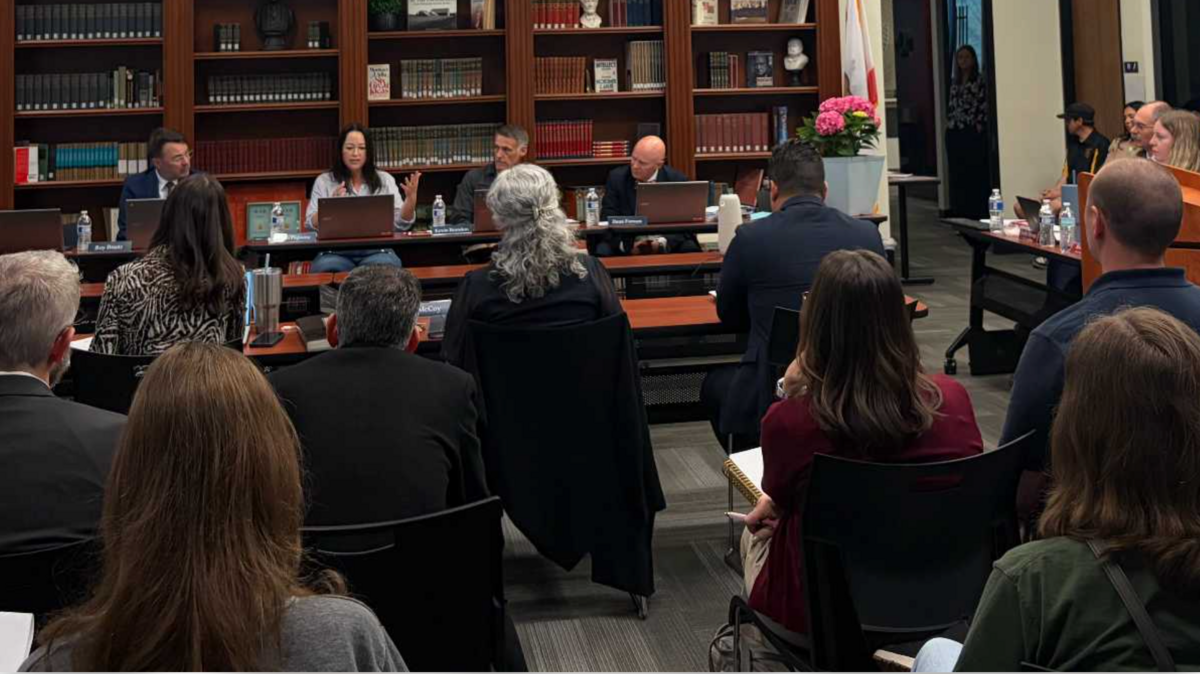
John Adams Academy will shut down its Lincoln secondary program at the end of the school year, forcing 124 high school students to transfer to the school’s Roseville campus about 10 miles away.
The decision was approved unanimously by the school’s board Thursday after officials said the Lincoln high school program has struggled with low enrollment and ongoing budget deficits.
John Adams Academy is a tuition-free charter school funded based on average daily attendance. Its in-person campuses are open to any California student in transitional kindergarten through 12th grade, space permitting. The school’s online program is available to families in Placer, Nevada, Sutter, Yuba, Sacramento and El Dorado counties.
School officials said during Thursday’s meeting that all current Lincoln high school students will be guaranteed seats at the Roseville campus.
During a slideshow presentation at last month’s board meeting, John Adams officials said the Lincoln campus had operated at a deficit for three years and was projecting a $950,000 shortfall for the upcoming school year.
The campus would have needed 101 additional high school students to move toward a positive financial position and avoid consolidation, according to the presentation. Officials said Lincoln’s TK-8 program had a waiting list of more than 600 students, while high school enrollment had stagnated.
Travis Keys, managing director of Academica, explained during Thursday night’s meeting that the problem was not primarily expenses but enrollment in the five-year-old high school program. Academica is a third-party charter school support organization that provides operational support while the school’s governing board maintains authority over academics, staffing and curriculum.
“There was a lot of discussion around expenses and what expenses could be modified or consolidated or cut,” he said. “At its core, this is not an expense issue. It is a scholar count issue, which really becomes a revenue issue.”
At the Lincoln campus, freshman classes in recent years averaged about 125 to 130 students, with total high school enrollment peaking at 282 in the 2023-24 school year.
Enrollment data reported to the state show the Lincoln campus struggled to retain students through graduation. Of the 128 freshmen enrolled in 2022-23, only 56 remained two years later as juniors.
The Lincoln campus remained significantly smaller than the academy’s Roseville campus, enrolling about 270 students in recent years compared with 426 students at the Roseville campus this year.
Keys said part of the challenge was attracting new high school students because of the academy’s rigorous curriculum.
“If you come in as a 10th grader into the academy, it makes it difficult to graduate,” Keys said. “They actually don’t accept 11th to 12th graders in general into the academy, because it’s almost impossible to graduate if you come in through the 12th grade.”
He said the school structure relied heavily on students continuing from middle school into high school.
“You basically have to retain 100% of your scholars from middle school to high school to make this work, which no school does unless they’re forced to,” he said.
Staffing also presented challenges. Elementary and middle school teachers can hold multi-subject credentials, but high school teachers must be credentialed in specific subjects.
“So, the needed staff to be able to produce this program is just a lot more,” Keys said.
Additional elective teachers and administrative support increase staffing costs, meaning the program requires higher enrollment to remain financially sustainable.
Keys said consolidating the Lincoln program into the Roseville campus was expected to save about $2.6 million in staffing costs.
He also said the merger could allow the school to enroll about 70 additional students in the first year, generating an estimated $1 million in additional annual revenue.
“That would bring the campus back to a positive financial position within the first year, starting in August,” Keys said.
Keys also addressed suggestions from parents about keeping the Lincoln high school open, including community fundraising.
He said fundraising would not provide a long-term solution.
However, he said the academy was exploring the possibility of purchasing land next to the current Lincoln campus to eventually build a high school using Proposition 2 grant funding.
Prop. 2, passed by voters in the November 2024 election, allows school districts to receive funding to build or renovate classrooms for transitional kindergarten and expand facilities such as gyms, multipurpose rooms, libraries and kitchens.
Keys said if the school received the grant, it could cover about half the cost of a future high school facility.
“The estimate on a high school, not including the land next door, is $44 million,” he said. “If we were to obtain the full grant, the grant would provide $22 million in funding.”
He said the school would require about 400 high school students to support the debt service for such a facility. The Lincoln campus currently has 124 high school students, according to Keys.
Board chairman and founder Dean Forman said building a future campus could be possible with strong community support.
He recalled that about 13 years ago, two mothers from El Dorado Hills approached the academy about opening a campus in their community. Forman said they were asked to return with 350 to 400 parent signatures indicating intent to enroll.
Two years later, they returned with the signatures and plans for the campus moved forward.
“I would throw that out to the Lincoln community,” Forman said. “If you want to have this back, it needs to be a community effort and we need to have the numbers that would take to be successful. It will take some visionary and forward thinking.”
Forman said if the Lincoln community is patient and works together, the program could eventually return stronger than before.
This story was originally published March 13, 2026 at 11:19 AM.