In Sacramento, tax auction ‘deals’ can come with surprises. Inside the process
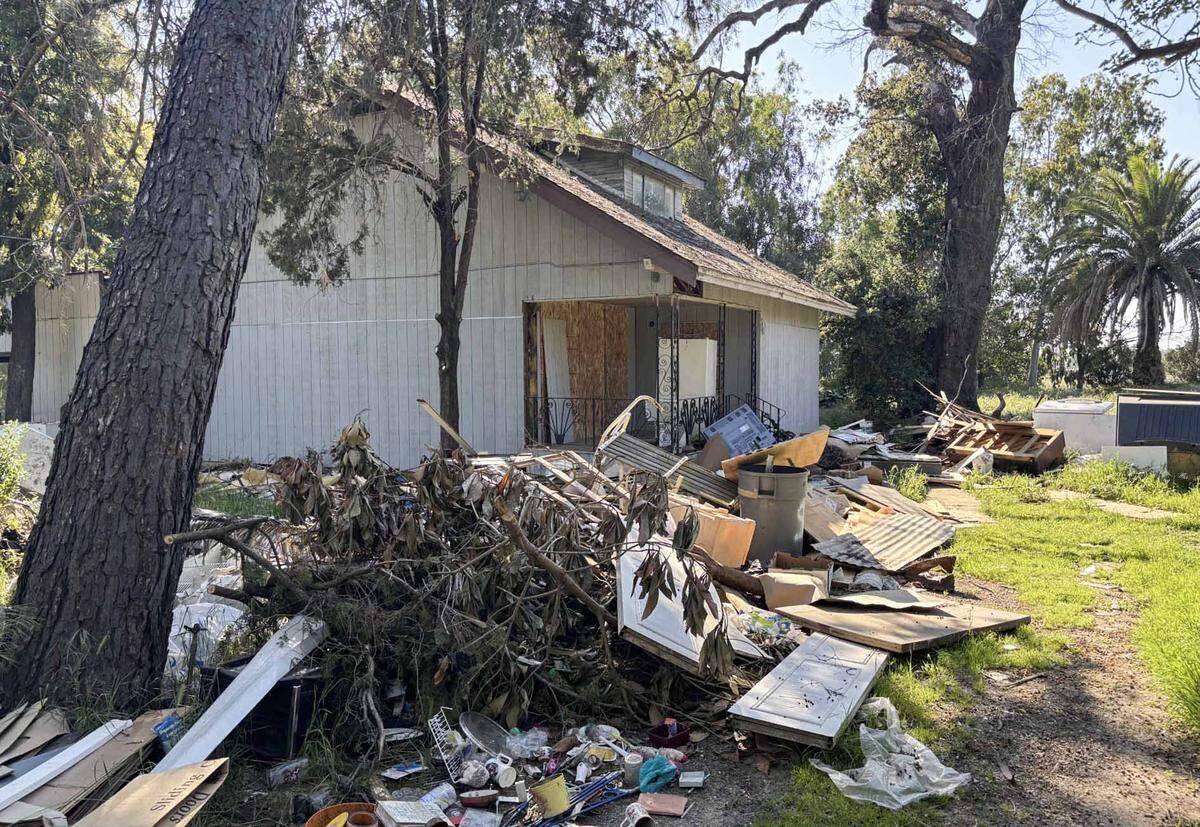
Diane Hill was deciding if it was worth it to her to clean the mess at 8932 Florin Road.
The south Sacramento property, which sold at tax auction in May 2025, was in a foul state as of March. Trash was strewn about the nearly 1-acre property. Inside a boarded-up and vacant house that dates to 1920, renovations were unfinished, the floors sanded but lacking polish.
Hill, who cleans properties professionally, said she might take the job. “I’m going to go over the pay with them again,” Hill said. “But yeah, it’s going to be a little more than what they offered.”
The latest bi-annual tax auction by the county of defaulted properties is scheduled to begin at 10 a.m. Monday. It was set as of Sunday evening to include five properties, though five others were removed in the time leading up to the sale.
Other properties that have been through the process in recent years, though, indicate that Hill’s experience wasn’t that unusual.
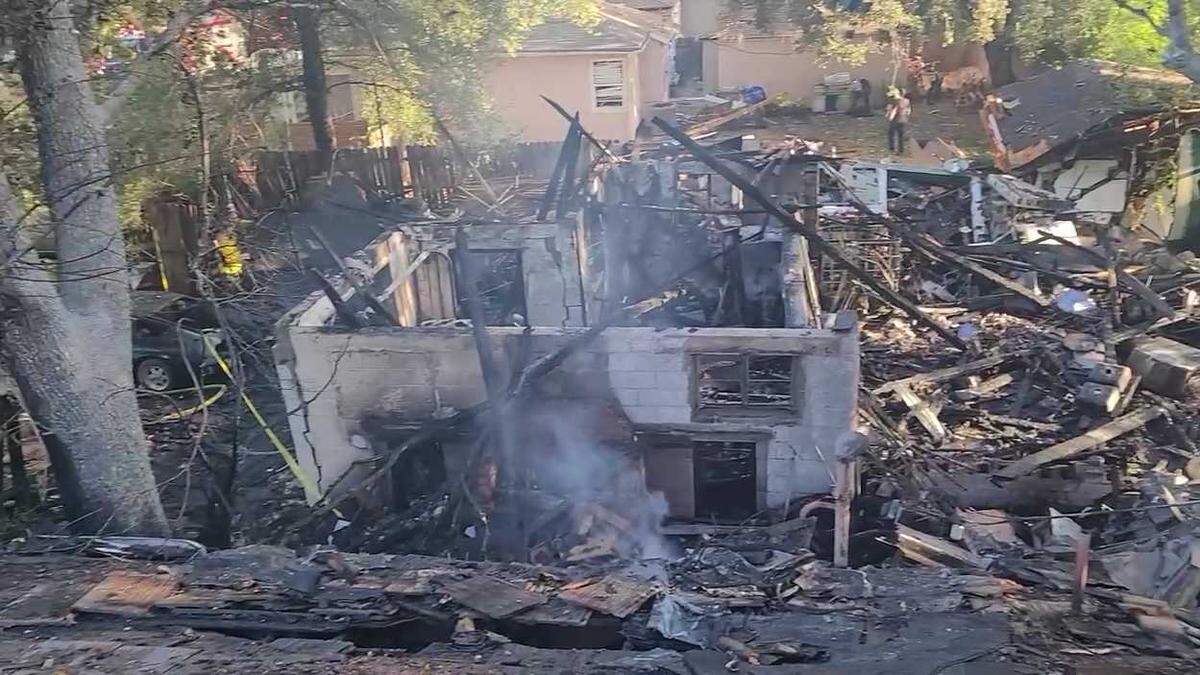
Tax auctions follow a years-long period of distress for local properties. One culminated last year with abject disaster, with Karl Lysinger detonating his Oak Park house and dying in the process, months after the home was auctioned.
An examination of the 32 properties sold at tax auction by Sacramento County from 2022 through 2025 found that even in situations where tax-auctioned property peacefully changed hands, it wasn’t the end of uncertainty for the parcels or their neighborhoods.
Some of the houses auctioned remain unoccupied and only a handful of new homes have built on auctioned land. Thirteen parcels remain vacant.
New owners run into the messy realities of unexpected occupants, legal complications and economic challenges that can keep the troubled parcels stuck in limbo and drag down surrounding neighborhoods.
What leads properties to tax auction
The county’s tax sale auctions are held in the last week of February each year, with follow-up sales in May or June, according to its FAQ. Potential buyers must make a deposit of $5,000 at least a week advance of the auction, plus a nonrefundable fee of $40.
At the most recently-held auction in February, three properties were sold
By the time an auction is held, the parcel has generally been in tax default for at least five years. A property can be auctioned after three years if it’s in a nuisance abatement program, though this is seemingly rare. Properties auctioned from 2022-25 in the county had been in default for about seven years on average.
A person has also often been through some kind of crisis by the time their property gets to auction.
They might be an elderly person who became unable to pay their property taxes. They could be a developer whose project has faltered. Or, in the case of Judith Matlock’s former neighbor, they might have come into possession of a parental property and been unprepared for the responsibility that followed.
Matlock lives in South Land Park, an uncommon area for properties to get auctioned in Sacramento County. Since 2022, her former neighbor’s property was the only one auctioned in South Land Park. There was one in Curtis Park and none in Land Park, East Sacramento or the central city.
More often, properties come up for auction in areas with low property values near the outer limits of the city or in unincorporated parts of the county.
Matlock’s former neighbor’s parents had once lived in the four-bedroom, two-bathroom house at 7419 Golden Oak Way. After they died, he stayed in the house. But he apparently couldn’t keep up with tax bills and the property racked up more than $37,000 in defaulted tax.
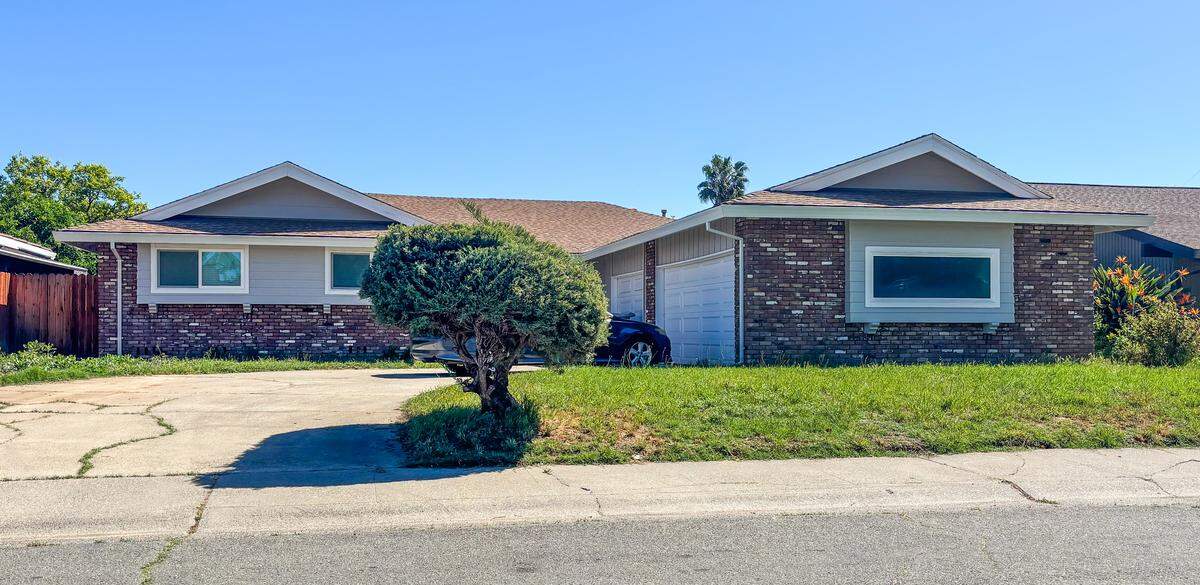
Amelia Garibay remembered her neighbor at 119 Saint Marie Circle in Sacramento’s Parkway neighborhood, which sold at auction in May 2024 for $321,600.
Garibay’s neighbor was a nice, elderly man who kept the property up. After he died, Garibay said that a member of his family took possession of the house and rented it out. Sex workers moved into a trailer outside the house, as she learned when a customer came to her door.
“I said, ‘You got the wrong place,’” Garibay said.
Because the county holds the auctions online, they can pass with little notice. And people who lose homes to the process don’t always tell neighbors what transpired.
Ronnie Robinson used to see his former neighbor work in her yard at 4124 Englewood St. in Sacramento’s Robla neighborhood. She was friendly and would wave. County records show she owed more than $29,000 in defaulted property taxes. The home sold at auction for $391,600 in February 2024.
“It was weird because I didn’t know if something happened to her,” Robinson said. “You can tell signs of life from a house, right? Lights, people moving, cars moving. And nothing moved for a while. So we were worried.”
The county’s most infamous recent tax auction involved Karl Lysinger, who lived at 3975 39th St.
Lysinger refused to pay years of city code violation fees that were folded into his property taxes and made the bill balloon. The house was auctioned for $151,266.65 in February 2025. Months later, on the day the Sacramento County Sheriff was to evict Lysinger, he made his final, explosive statement.
As for Matlock’s former neighbor, the end of his residency was uneventful. The South Land Park home was auctioned in February 2024 for $469,400. The house had been in disrepair with the grass sometimes overgrown, but the former neighbor kept to himself.
“I never noticed anything going on, no police presence or anything like that,” Matlock said. “It was just one day he was gone and the next day somebody was over there fixing it up.”
Who buys properties at tax auction
To the uninitiated, a county tax auction might seem like a place to get an unbelievable deal on a property.
The average minimum bid for the 32 properties auctioned from 2022 to 2025 was $37,646, with the minimum bid on three of the properties just $1,000 apiece. On average, each property, including vacant pieces of land and condominiums, sold for around $200,000. The average home value around Sacramento was $480,548 as of April 30, according to Zillow.
Tax auction properties could theoretically seem like a wonderful opportunity for an investor or first-time homebuyer to take on a fixer property and use sweat equity to affordably acquire a home or rental.
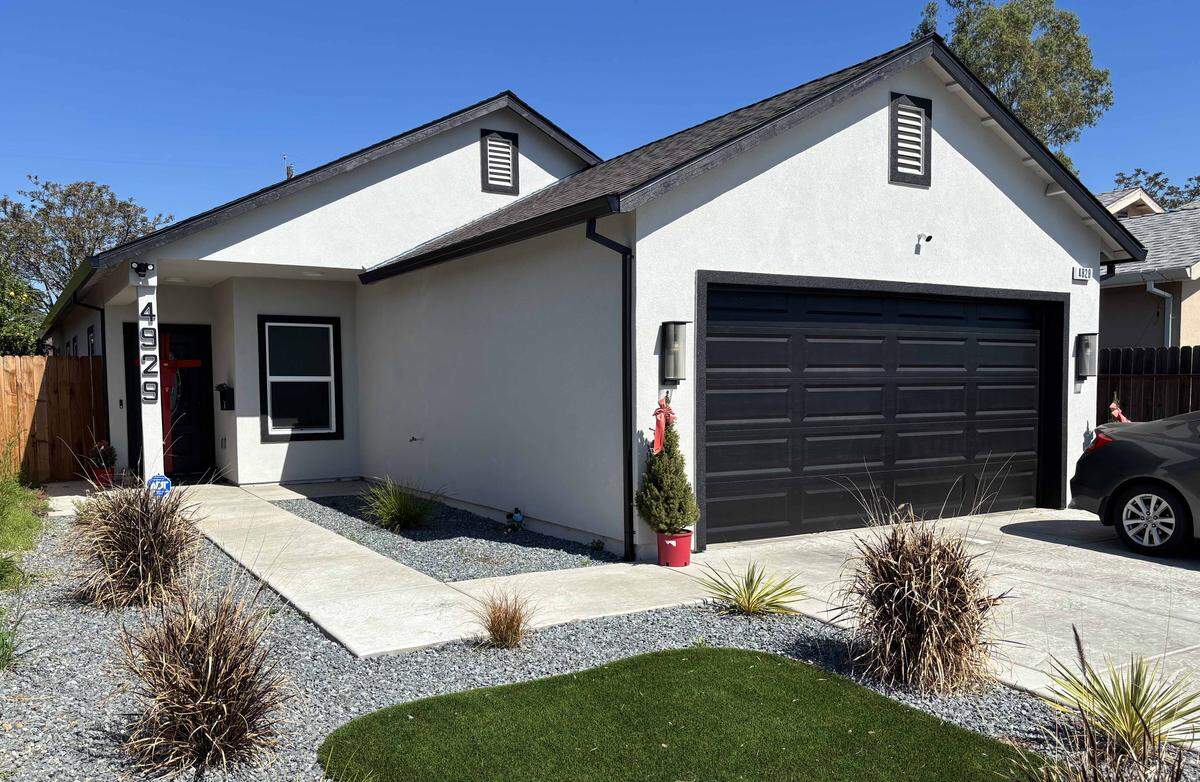
The auctions can also provide cheap land. For vacant parcels the county auctioned from 2022 through 2025, new homes were built at 4929 Baker Ave. and 2560 Princeton St., and a duplex was built at 3912 Elm St. The vacant parcels on average were auctioned for $92,337. The homes sold for an average of $499,850, while the duplex sold for $690,000.
Still, the opportunities the tax auctions present aren’t always what they seem.
The county offers a host of warnings about the properties it auctions: They are offered as buyer-beware sales, with the parcels potentially subject to additional liens. Code violations, hazardous contamination and tenants are potential issues.
Bay Area resident Afshin Sazegari paid $255,381.05 in the May 2022 tax auction for a house at 5633 44th St. in an unincorporated area of south Sacramento.
Sazegari got the house as an investment, hoping he would be able to rent it out, he said. Problems began almost immediately. Sazegari said there were people experiencing homelessness living at the property who he kicked out. They came back and there was a fire. The house remains fenced off and uninhabitable.
He considered the investment a waste of his time.
“I paid top dollar for a house that needed a lot of work and it wasn’t in a desirable neighborhood,” Sazegari said.
Sacramento County Supervisor Patrick Kennedy was unmoved when Sazegari appeared before the board in August 2024 and requested unsuccessfully that they waive thousands in fees that had accumulated with the property.
“Regardless of where you live, if you have a house in a neighborhood in Sacramento County, particularly a low-income neighborhood that’s trying to pull itself up, you have a heightened responsibility as a landowner,” Kennedy said from the dais.
Sazegari estimated he has purchased at least 30 or 40 properties at tax auctions in different areas. In general, frequent purchasers aren’t unusual at tax auctions. Six properties have been auctioned in Sacramento County since 2022 to Muhammad Iqbal and Rukhsana Tasneem, according to county records. Another four went to Flazer 17 LP, a business based in the Los Angeles area.
One prolific tax auction buyer who lives in the Sacramento region is Valeriy Kesov of Action Tree Low Income Housing Inc. He estimated he has purchased at least 50 properties at tax auctions in different areas.
“My motivation, of course, is to bring value to the market to make the country or the city better,” Kesov said. “When I acquire land, I don’t abandon it. I clean it, I make it look nice, really nice.”
For different reasons, this doesn’t always happen.
Why auctioned properties often sit vacant after
The county recommends that winners of tax auctions wait to make property improvements for one year, the period in which the previous owner or a lien holder can challenge the sale’s validity.
Other things can hinder land being improved after it’s sold at a tax auction.
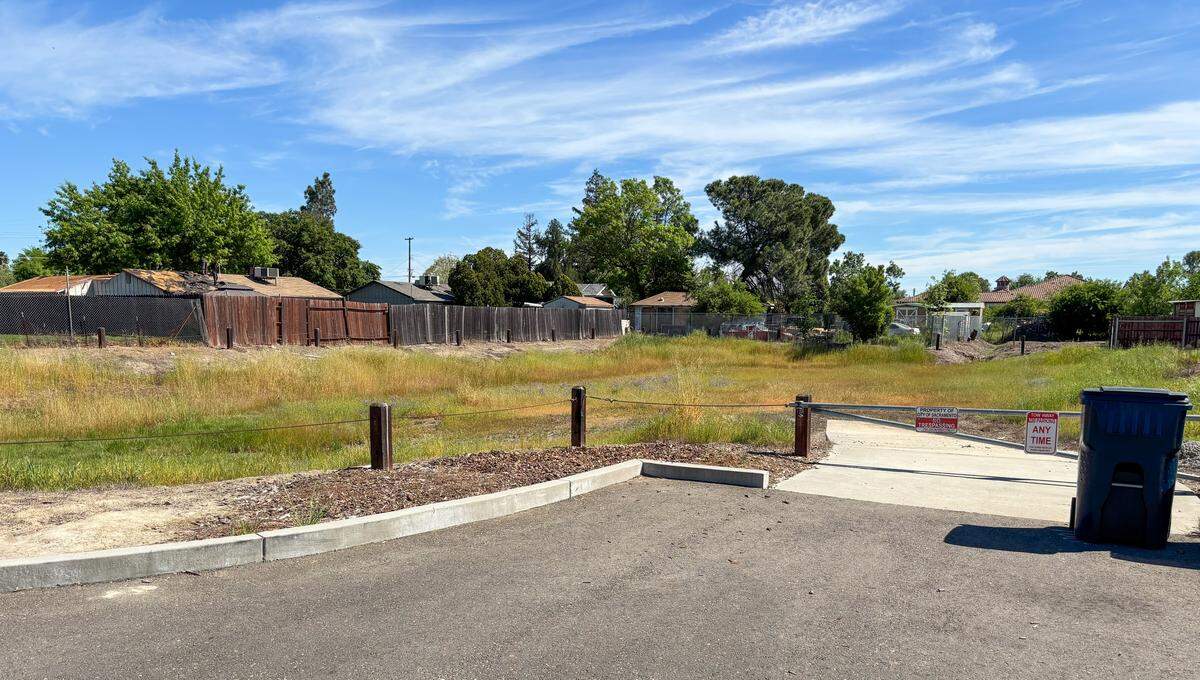
Sonya Banks lives near a Nali Court parcel in Sacramento’s Robla neighborhood that was auctioned in February 2024 to Kesov’s company for $60,400. The land was vacant, under city ownership and closed to the public as of March.
“I just came from the park,” Banks said. “It would have been very useful to have a park right here.”
The county rescinded the sale to Kesov’s company in August 2024. Chad Rinde, Sacramento County tax collector and director of finance, told the Board of Supervisors that a prior owner of the land, a developer, had dedicated it to the city years before for drainage use. The city didn’t take ownership then but was willing to now, Rinde told the board.
Kesov faulted the county for making the sale.
“All kinds of things happen because they didn’t do the homework,” Kesov told The Bee.
It’s not the only time in recent years that a tax sale has gone awry because it was allowed under questionable circumstances. After Karl Lysinger blew his Oak Park house up, it emerged that the structure had sat on two parcels, but that the county had only auctioned one.
His neighbor Ed Williams said that in the final week of Lysinger’s life, he’d attempted to move his belongings onto the parcel he still owned in a fruitless attempt to stay put.
Lysinger’s former land has sat vacant for months since.
Lysinger’s and Kesov’s stories are unusual examples of why properties that are tax-auctioned can wind up vacant more than a year after a sale. Any number of other factors, though, can hinder development.
Some of it is about the difficulty of making the economics work. Longtime Sacramento architect David Mogavero, who has made a career of sustainable projects, wasn’t surprised to learn that tax auctions form a ring around Sacramento’s outer areas and generally didn’t appear in more desirable neighborhoods.
“That’s exactly consistent with what the economics are for those various communities, what the value is per square foot of the existing housing,” Mogavero said.
Distressed properties and low property values don’t make the cost of infill development cheaper.
“It’s hard to do because the fundamental economics are problematic,” Mogavero said.
There is also the small, one-off nature of the vacant land sold at tax auction. Sotiris Kolokotronis is one of Sacramento’s best-known developers of infill housing. For Kolokotronis, projects are about scale and the people around him.
“What you need is to make sure you control enough land and … you need a good development team,” Kolokotronis said. “Those things don’t happen by themselves.”
There might be different approaches between the city and county on what level of involvement is appropriate for infill projects.
County officials declined to be interviewed for this story, though Rinde said via email that his office didn’t track what became of parcels that had been sold at tax auction.
“While a tax sale may provide an opportunity for a different or enhanced use of property in the future, those decisions on what to do with the property rests with the new property owner,” Rinde wrote.
Mogavero said the city of Sacramento was one of the best in California “when it comes to supporting infill.” Greta Soos, a senior planner for Sacramento, said the city held an incubator pilot for small developers. Soos said infill projects had increased in recent years.
“I think that the city has been a huge proponent of infill development for decades now and it’s really something that’s been like the guiding theory in our planning efforts for years,” Soos said.
City officials have discussed taxing vacant parcels in an effort to spur more infill development, but no action has been taken, according to Soos.
For now, Angel Stout waits. She lives in South Oak Park near 3645 18th Ave., a 7,600-square-foot parcel that last had a home on it in the early 2010s. The county auctioned the property in May 2022 for $63,870.40.
California’s Proposition 13 ensures that the assessed value of the land will stay low, barring sale or development. The purchase appeared to be, like many properties bought at tax auction, a long-term, speculative investment.
Stout has seen illegal dumping and people living illegally on this land. She would like something more for the lot. She envisioned a community garden or a park, somewhere her toddler-aged grandson could play.
“This is a great neighborhood to invest in,” Stout said.