Survivors recall Sacramento’s infamous Good Guys hostage crisis 35 years later
Gaye Lauritzen was working as a teacher one day about 35 years ago. It was several hours before she learned of her connection to Sacramento’s most infamous hostage crisis.
Lauritzen, a Roseville resident, was married to Chris Lauritzen. On April 4, 1991, four Vietnamese refugees took Chris and 40 other people hostage around 1:30 in the afternoon at a south Sacramento Good Guys electronics store. Chris Lauritzen was a manager at the store for the now-defunct electronics chain.
The crisis would end around 10 p.m. with three hostages and three hostage takers dead. A Sacramento County Sheriff’s Department sniper shot at one of the hostage takers and missed, which spurred a chaotic conclusion to the incident.
Gaye Lauritzen returned to her home around 6 p.m. that evening expecting her husband to be there. After she saw his car wasn’t in the garage, she noticed the answering machine for her landline phone.
“I saw the blinking and I hit the number and they said, ‘You have 11 messages,’” she said.
It would be years before she recovered.
How the Good Guys hostage crisis unfolded
Al Bodnar was by a computer near the front door of the Good Guys electronics store when he saw men out front putting on ski masks.
Bodnar, who is now 66 and lives in Folsom, was a Good Guys salesman. He had transferred about a month before the incident to the south Sacramento store. With him was his friend John Lee Fritz Jr., who’d worked with him at a Good Guys location in Citrus Heights.
The men outside the store were Loi Khac Nguyen, Long Khac Nguyen and Pham Khac Nguyen, brothers and a fourth man they knew, Cuong Tran. They ranged in age from 17 to 21. Loi Khac Nguyen had legally purchased firearms just before the incident.
When the men entered the store, Bodnar said, “They just started shooting up the place and yelling in Vietnamese.”
Approximately 40 people in the store at the time, including employees, were rounded up in the front, though there were exceptions.
Chris Lauritzen and a Good Guys salesperson fled into a locked closet where they would shelter for most of the incident. For nearly the entire time, they were on the phone with Leslie Beach, a dispatcher for the Sacramento County Sheriff’s Department.
“They were whispering information,” Beach said.
When the gunmen entered the store, Bodnar ducked behind a computer. Fritz saw him do it and ducked as well. They remained undetected until approximately an hour into the incident, when one of the gunmen saw Fritz’s foot sticking out.
John Fritz Jr. commuted to the store from Auburn, where he lived with his wife Gail Fritz, who he’d married in 1986.
“He was a terrific husband,” Gail Fritz, now 79, said in an interview. “He was a really good cook. He was a great shopper. He could go out and buy me a complete outfit.”
Just a week or two prior, they had been on the cover of the Auburn Journal after Gail Fritz’s son from a previous relationship returned from serving in Operation Desert Storm.
Gail Fritz’s daughter, was turning 18 the day after the hostage incident. John Fritz Jr. had a present for his stepdaughter in his locker at work. Gail Fritz was decorating a birthday cake when she received a phone call from her son’s friend, informing her of the hostage crisis and letting her know it was on TV.
It was 2 or 3 in the afternoon when she got the call, she remembered.

The view from the outside
The Good Guys store was at 7020 Stockton Blvd., technically an unincorporated part of Sacramento County that is contiguous with the city. Emergency response primarily fell to the sheriff’s department.
Jeff Boyes, then a 14-year veteran of the department, was a SWAT team member, which was sent on calls infrequently. He headed in a SWAT van to the Good Guys parking lot where his team took positions. Boyes was one of two SWAT team snipers on-hand. He positioned himself roughly 65 yards from the front of the store.
A seven-member SWAT team soon gained access to the Good Guys store through the building’s roof, with the team waiting quietly while the gunmen began to interact with a sheriff’s negotiator.
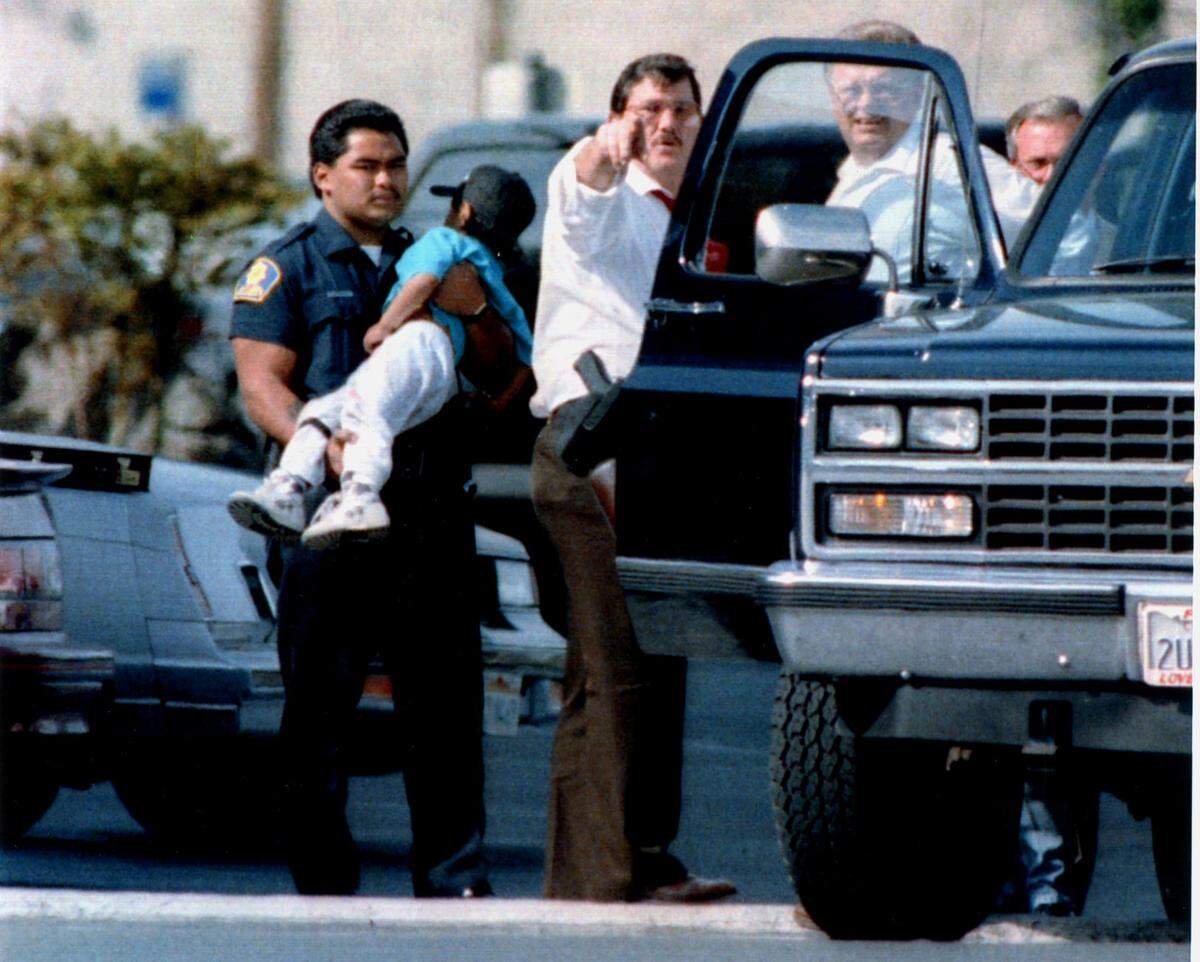
A call for service related to the hostage crisis initially led to Beach deeming it a robbery-in-progress. Boyes operated under a similar assumption until law enforcement began to glean more information.
“As they made contact with the people inside, we discovered it was less of a robbery and more of some sort of a harebrained political stunt,” Boyes said.
The young men, who had fled Vietnam as children, wished to return to Southeast Asia to serve as freedom fighters.
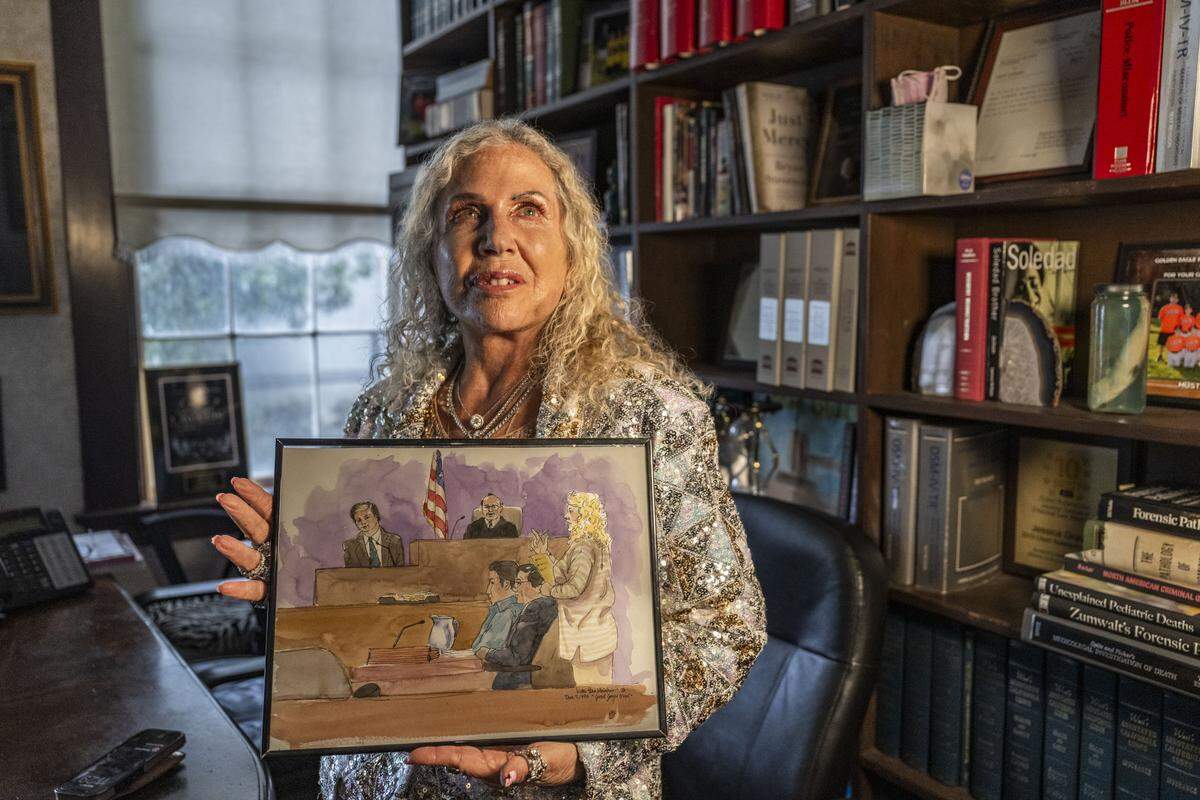
“It is truly a tragedy,” said Linda Parisi, a longtime Sacramento defense attorney who represented Loi Khac Nguyen. “These young people at cross purposes, wanting to do the right thing, to go back to their country to fight for democracy — I mean, those are wonderful things, but just a terrible plan of how to do it.”
The men sought bulletproof vests and safe passage to Asia, among other demands through the course of the incident. Their requests weren’t necessarily static.
“Every time they were on the phone, they couldn’t remember any of their demands,” Bodnar said.
At one point, the men raided candy and soda machines and distributed them to hostages. Bodnar got a Pepsi and nacho cheese Doritos.
The men let a small number of people go, including a store employee named Sean McIntyre who they shot in the leg and allowed to deliver a message to news cameras.
After McIntyre was shot, Boyes received a green light to shoot if he had a clear shot. That green light came after the hostage takers started to shoot people. It represented a shift to law enforcement.
“Obviously the game had changed entirely at that point,” Boyes said. “We knew that we were looking for an opportunity where we could use lethal force and get in to save as many people as we could.”
How the hostage crisis ended
Boyes said his green light to shoot “existed for quite a long period of time.” The challenge was that the glass doors were typically closed during the incident and hostages were often positioned close to hostage takers. Boyes didn’t want to risk shooting a hostage if a bullet’s path changed going through door glass.
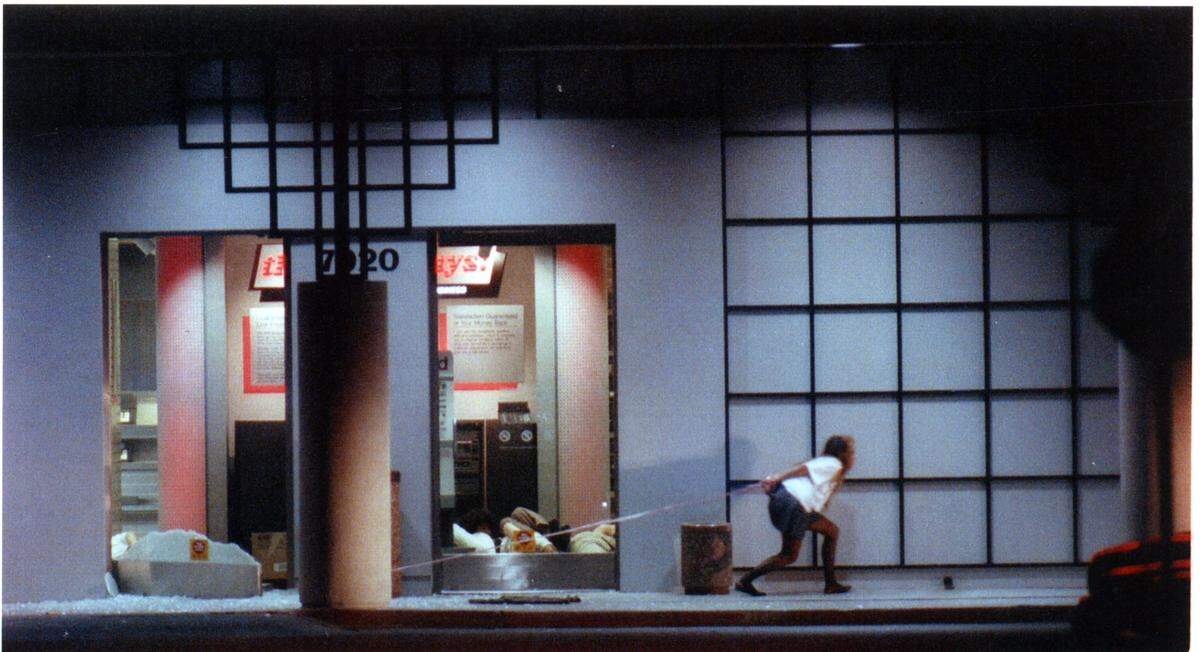
Finally, Boyes thought he had an opening when the hostage takers sent out a woman to collect body armor in front of the store.
“Because the glass was completely clear, I couldn’t see that the door was closing as I fired my shot,” Boyes said. “Instead of hitting the bad guy, it hit the door and it’s very, very thick structural glass, and it deflected the flight of the bullet.”
Boyes added, “The bad guy that I was aiming at got some glass in the face. He could be heard yelling on the recording, ‘Shot to face! Shot to face!”
The man who’d been hit by glass was Long Khac Nguyen, 17. His older brother Loi Khac Nguyen, 21, had legally purchased guns used in the incident in the weeks before. He had handled much of the negotiations during the crisis before Long, who was more violent, wrested control, according to news coverage at the time.
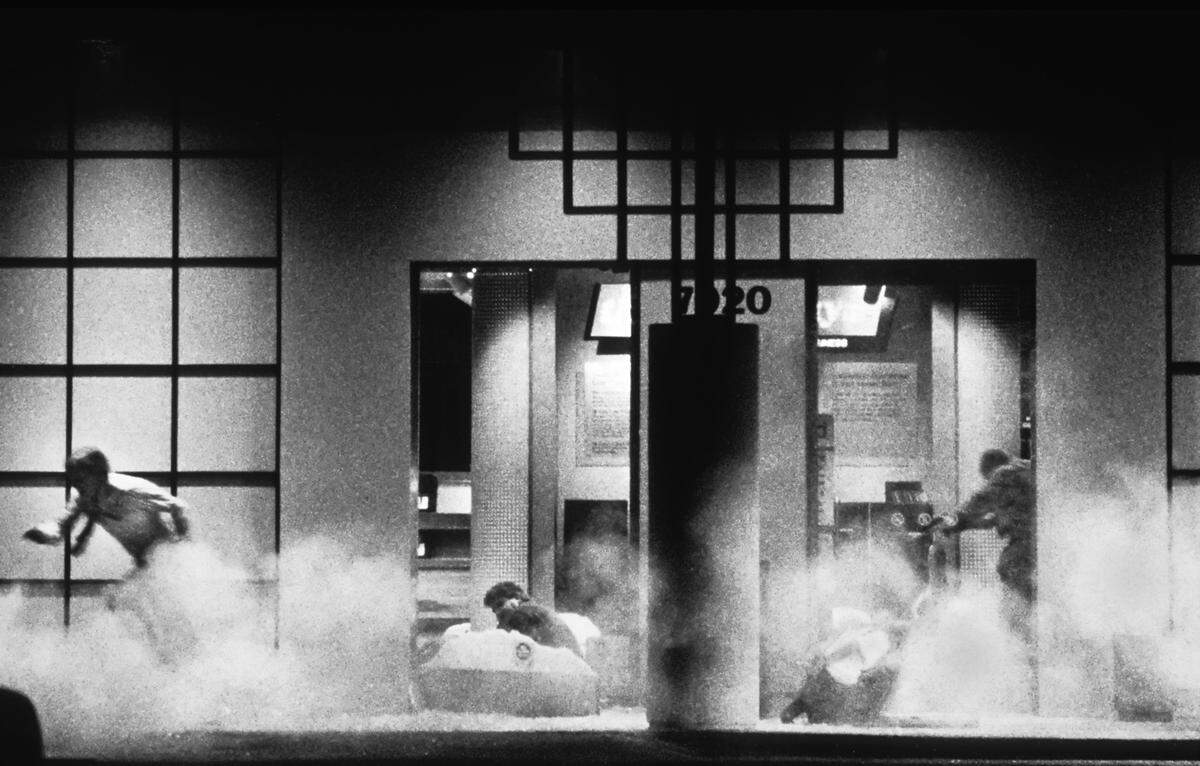
In a sickening moment broadcast live after Boyes’s shot missed, Long moved quickly about, shooting many hostages. Fritz, fellow store employee Kris Sohne and a customer, Fernando Gutierrez, would be killed. The Associated Press reported the day after the incident that 13 hostages and one of the gunmen were injured in the course of the crisis.
Father Dan Looney, a now-retired priest who led Gutierrez’s memorial service, said Gutierrez died shielding his niece from gunfire. Gutierrez had been held hostage alongside two of his nieces, one of whom was three months pregnant and subsequently miscarried.
Looney said Gutierrez, who was a member of his parish, had his infant son baptized a month before the hostage crisis.
The waiting SWAT unit entered the store once the shooting commenced. Bodnar said popping noises lasted for about 90 seconds. At the end, Long Khac Nguyen, Pham Khac Nguyen and Cuong Tran were dead.
Loi Khac Nguyen was injured seriously enough that he received last rites at UC Davis Medical Center according to attorney Parisi. He was arraigned while still hospitalized, according to news coverage then.
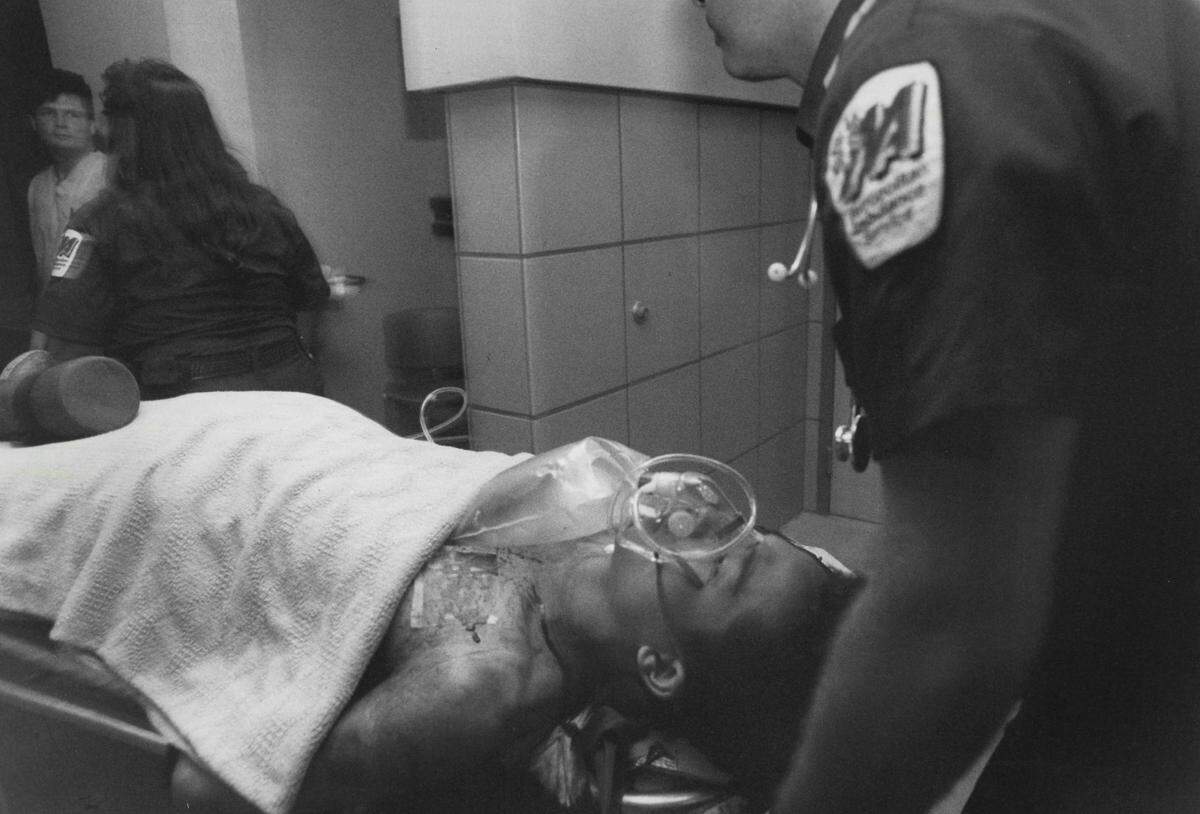
Boyes said if his shot had been a half-second sooner, he’d have hit Long Khac Nguyen in the head as he was aiming. He doesn’t know if that would have led to more fatalities.
“Let’s say that seeing their partner get blown up causes the other three people to be outraged and they all start shooting people on the ground,” said Boyes, who is now retired and living in Tennessee. “So now, instead of one person shooting on the ground you have three. Maybe the outcome would be worse. It’s not something you can really predict.”
How the incident ended has become an educational tool for law enforcement. Gail Fritz recalled a conversation she had with a Siskiyou County Sheriff’s officer.
“He told me that the film from the negotiations and whatnot is still being used by a lot of law enforcement officers or training sessions, which is because it was the first one like that,” she said.
The aftermath
After the incident ended, Al Bodnar faced assembled media and made a comment that underscored the faith he’d had since becoming a born-again Christian as a teenager: “It was a massacre. Thank God, by the grace of God I’m alive.”
Bodnar said he met his wife following the incident. Today, they share a 24-year-old daughter.
“God has a plan and a purpose for everything, everything,” Bodnar said. “Even though we may not understand it, there actually is a reason.”

The event left an imprint even on those who weren’t among the hostages, such as people like Beach working dispatch.
“It’s a big part of who I am,” said Beach, who is now retired and lives near Phoenix. “It’s hard to explain. But it’s always going to be with me.”
When Gail Fritz got the call from her son’s friend, she stopped decorating her daughter’s cake and immediately turned on her television. While some people made their way to the parking lot while the incident was underway, she remained in Auburn.
“My dad was a cop — had been a cop — and he always told me, ‘You don’t go mess with the scene of a fire or a police action. You don’t muck it up by going there,’” she said. “And so I did not go to Sacramento when I heard. I stayed home and watched.”
Eventually, after the crisis ended, unable to determine whether her husband was alive or dead, Gail Fritz went to the parking lot. There, an officer ushered her under yellow tape.
Today, she lives near Mount Shasta, in the area where she grew up. She is a grandmother and great-grandmother. She said the experience of her husband’s death bruised her but didn’t break her. She handled the trial as best as she could and even met Loi Khac Nguyen’s mom, who she felt “so sorry for.”
Loi Khac Nguyen was sentenced to 49 consecutive life terms in 1995, The Bee previously reported. He is now 56 and serving his sentence at Valley State Prison in Chowchilla, according to the California Department of Corrections and Rehabilitation. Parisi considers Loi Khac Nguyen an ideal candidate for elder parole. Gail Fritz is less sympathetic.
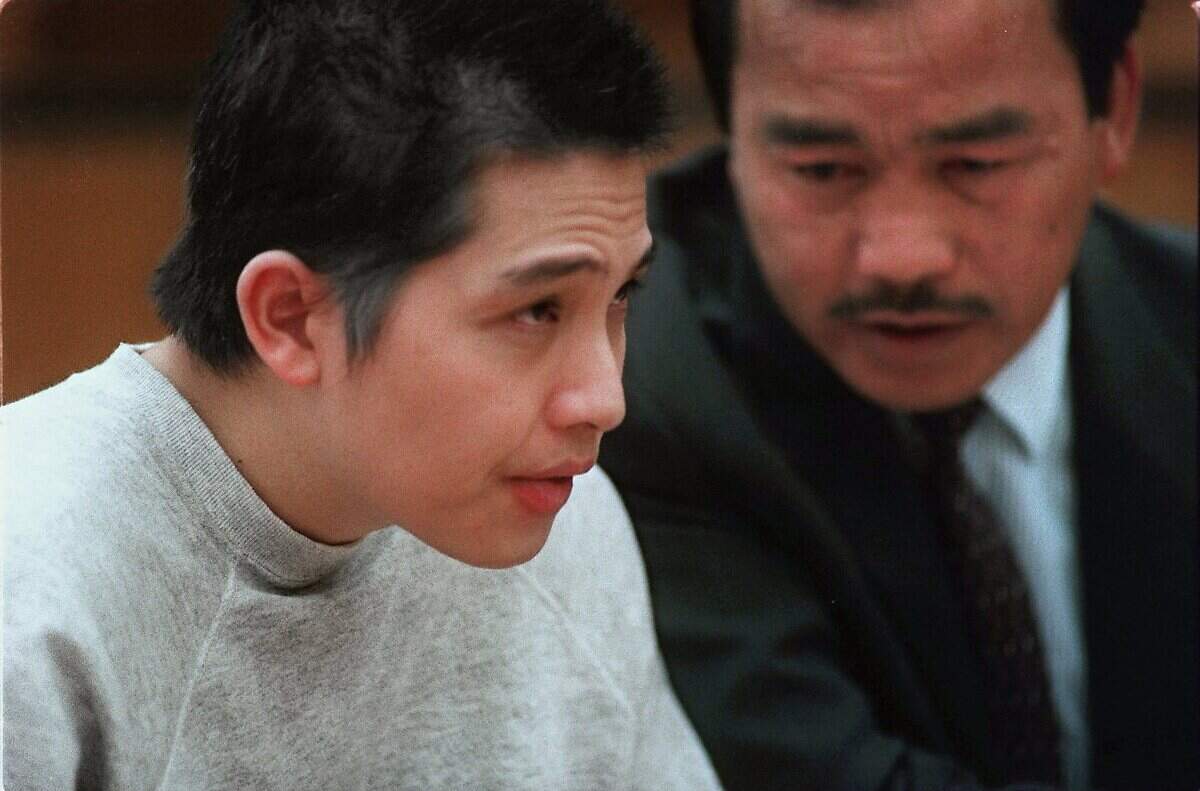
“I keep thinking, ‘Well, God, it would be so nice if I heard that he died before I die.’ But he won’t,” she said.
Gail Fritz’s husband is buried in Auburn. She arranged for a memorial bench, with the words “my good guy” inscribed for him.
“Women have been doing this since the beginning of time, living with their family and their loved ones dying,” she said.
The other Good Guys employee killed in the crisis, Kris Sohne, was remembered for his humor in a 1991 interview by his widow, then known as Mary Sohne. “No matter if I was having the worst day of my life, he could make me laugh,” she said. She couldn’t be reached for this story.
Gaye Lauritzen got to hug her husband after the crisis ended. But times weren’t always easy in the years that followed.
Chris Lauritzen worked at Good Guys for a few years thereafter before it became too much. He struggled with noises, once screaming when he was taking a shower and his wife accidentally bumped a hair dryer cord against a door. He also didn’t like to be “in places where he couldn’t see the exit,” Gaye Lauritzen said.
In time, the Lauritzens took Good Guys up on an offer of counseling.
“Once he got better, then I started feeling better,” Gaye Lauritzen said.
They would remain married, for a total of 45 years, until Chris Lauritzen died at 73 last year following a recurrence of lymphoma. Gaye Lauritzen noted that her husband was well-loved, with many people attending his memorial.
This story was originally published April 3, 2026 at 5:00 AM.