Too many cases, not enough judges. How immigration cases strain Sacramento court backlog
AI-generated summary reviewed by our newsroom.
- Just six judges serve a district of 8.5 million people.
- The district has been receiving nearly 1,000 habeas corpus petitions per month.
- Congressional disagreement has delayed authorization of additional judgeships.
The longstanding judicial emergency in the federal court district that includes Sacramento has grown dramatically worse in recent weeks, with an existing backlog of cases strained more by a flood of legal actions stemming from the Trump administration’s aggressive immigration enforcement.
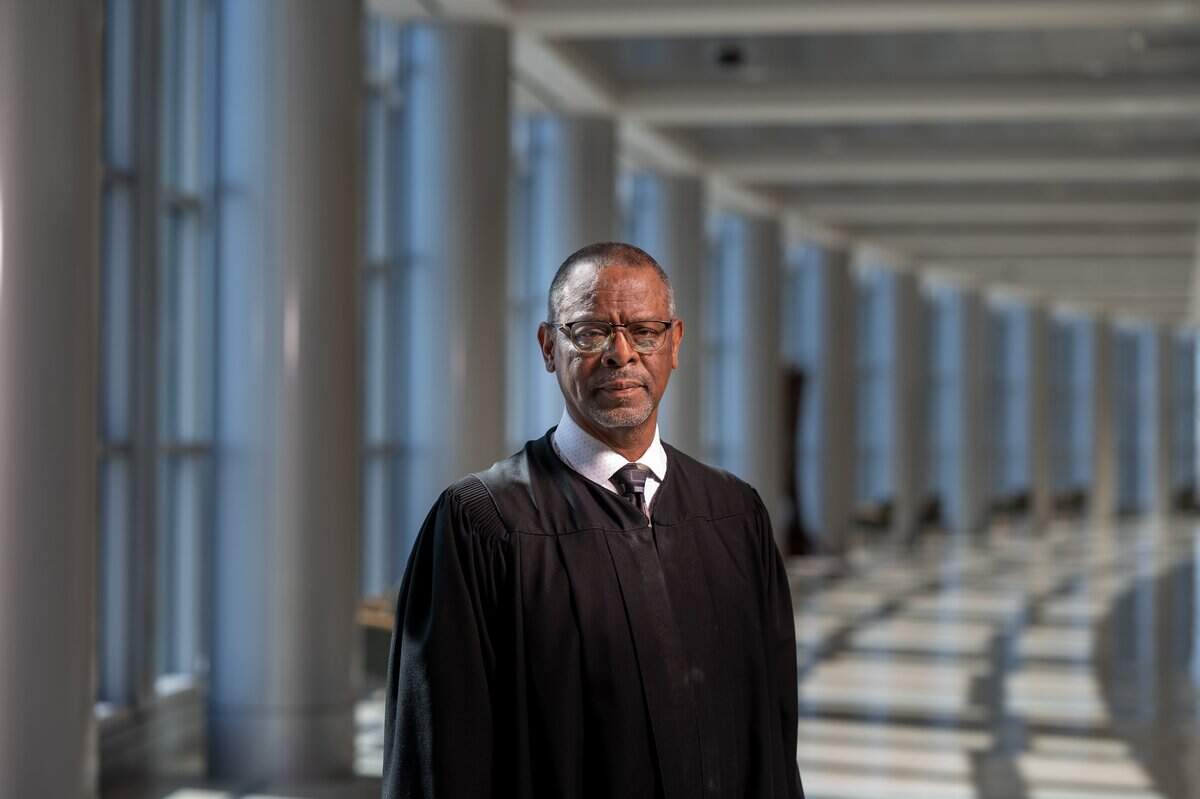
So few judges handle cases in the Eastern District of California that it takes up to five years for most civil litigation to be heard. Judges wake up in the middle of the night to handle the hundreds of time-sensitive cases being filed on behalf of immigrants being held in Central Valley detention facilities, Chief Judge Troy Nunley said in an interview with The Bee.
Just six judges handle cases in a district of 8.5 million people that stretches from Bakersfield to the Oregon border and includes most of non-coastal California. That’s the same number as were assigned in 1978, when just 2.5 million people lived in the entire district.
By comparison, the federal court district that includes San Francisco has 14 judges to handle an area with roughly the same population as the Eastern District has now.
The result is that many people with civil claims are effectively unable to use the court system to help with such complaints as an abusive work environment, racial discrimination, environmental violations, police brutality or other issues handled by the federal courts.
With fewer judges per capita in the Eastern District than in any other district in the country, the federal government’s failure to authorize more judges for the district is the single greatest challenge facing the court, Nunley said.
“It’s an issue of access to justice,” Nunley said. “We have just simply not had enough judges, and the judges that we’ve had in this district just simply don’t keep pace with the population.”
‘Getting those cases resolved is very difficult’
One example is the case of Anthony Cravotta, a mentally ill man who has been hospitalized with severe brain damage since he was attacked in the Sacramento County Jail in 2021. A lawsuit filed on his behalf is still in the preliminary or “pleadings” stages even though it was filed more than four years ago, court documents show.

Another, filed by the family of a Xander Mann, a 16-year-old who was shot and killed by a Stanislaus County sheriff’s deputy after a car chase, has been assigned to four different judges since it was filed in 2021, court documents show. It, too, is still in the preliminary stages.
“You have all these people who are injured and needy, who have good claims and need to get them satisfied in order to move on — to get the medical care that they need or whatever it is,” said Mark Merin, the attorney representing both families. “And getting those cases resolved is very difficult.”
The judges’ caseloads have been swamped even further with the arrival of nearly 1,000 new legal petitions per month challenging immigration detentions in the district, where a concentration of ICE facilities can house nearly 4,000 people at a time, Nunley said.
So many cases are flooding in that the U.S. Attorney’s office for the Eastern District has had to hire additional staff to respond on behalf of the government, creating an entire new unit focused on immigration detention, U.S. Attorney Eric Grant said in a court filing last week.
His prosecutors are so overworked that some are missing deadlines set by the court, Grant said in the April 16 pleading. One, Jonathan Yu, was sanctioned on April 15 by Nunley, prompting Grant to file a motion on his behalf saying that the problem was systemic, and caused by the more than 3,000 legal cases, known as habeas corpus petitions, that have been filed regarding people detained by ICE in the Central Valley.
The volume of these new habeas cases has so burdened the court’s six judges, as well as jurists from other districts who have been brought in to help, that the Eastern District flagged its five-year-old emergency on its website earlier this month as a way to let litigants and attorneys know that the already long delays are likely to get worse, said Keith Holland, clerk of the court.
A political stalemate over judges
Underlying both the shortage of judges and the crush of habeas cases is an unsurprising culprit — politics, said J. Clark Kelso, a judicial administration expert and professor at the University of the Pacific McGeorge School of Law in Sacramento.
Starting in the fraught politics of the 1960s and intensifying with the failed nomination of conservative Robert Bork to the Supreme Court in 1987, the appointment of new judges has been caught up in Washington power struggles for decades, Kelso said.
As a result, Congress, which must authorize any expansion of the federal judiciary, has been in a stalemate: Democratic lawmakers don’t want to authorize new judges if it means that a Republican president might get to appoint them, and Republican representatives feel the same way about Democrats, Nunley and Kelso said.
After years of wrangling, Congress did finally pass the Judges Act of 2024, which would have added 66 new federal judgeships, including several for the Eastern District. The bill, which passed with bipartisan support, addressed concerns about giving one party too much power by staggering the new authorizations out over a 0-year period.
But it was vetoed by former President Joe Biden, a Democrat, who criticized the Republican-led House of Representatives for passing it near the end of its session and said it did not clearly delineate how the new judgeships would be allocated.
.jpg "img-25-07-16-AC4D7 (1).jpg")
Immigration cases add to the strain
The crush of habeas corpus cases also grows out of politics, albeit of a different type, and is exacerbated by recent rulings by the Supreme Court, said Gabriel “Jack” Chin, a UC Davis law professor who specializes in immigration issues.
The Trump administration’s policy of aggressive immigration enforcement, along with a decision to detain migrants rather than allowing them to be released on a form of parole, has meant an increase in the number of people who are being incarcerated. Currently more than 60,000 immigrants are held in detention facilities across the U.S., according to ICE data released this month.
That’s three times the 20,000 detainees in ICE custody at the end of 2020, and up from the agency’s average before the pandemic of about 45,000.
Releasing such detainees from custody requires the intervention of a federal judge. Such efforts are not heard by the administrative judges who preside over what is commonly called immigration court, a special type of proceeding that is actually a division of the U.S. Department of Justice.
In April of last year, the Supreme Court ruled that the habeas corpus petitions required in such cases can only be filed individually, rather than in groups as part of a nationwide class action. In that case, Trump v J.G.G., the court also ruled that each petition must be filed in the district where the person is incarcerated.
For most of this year, the Central Valley’s three detention facilities have had about 3,700 beds for detainees. Any habeas corpus petitions on their behalf must be filed in the Eastern District. The result has been nearly 1,000 cases per month so far this year, more than any other court district except the Western District of Texas, with 13 authorized judgeships.
The number of detainees in the Central Valley is likely to increase in coming weeks because the federal government earlier this month began housing ICE detainees at a fourth facility in McFarland in Kern County. ICE has not yet said how many immigrants are being housed there, although facility itself is capable of holding up to 700 people, private prison operator The Geo Group says on its website.
“We’re been working on these cases around the clock — literally around the clock,” Nunley said.
Calls announcing two or more new cases come in at all hours, frequently after 10 p.m., Nunley said. He and his clerks begin work immediately because if they don’t act quickly, the detainees could be moved to a new location or even deported before the judge is able to weigh in.
The caseload is so heavy that nearby districts have agreed to send visiting jurists to help out, he said.
“We simply did not have the manpower to meet our mandate,” Nunley said.

Trying again in Congress
In Congress, the effort to create more judgeships continues, but it has broken down along party lines.
Republicans support a bill that would authorize 63 new positions nationwide and take effect immediately, giving President Donald Trump the ability to appoint the judges. Democrats are backing their own version, which would not become law until 2029, giving that power to an unnamed future president.
Both measures were introduced last year, and neither has had a hearing since March of 2025.
Still, Nunley remains hopeful that one version will pass. The day-to-day work of being a judge — adjudicating criminal cases, considering civil claims — is not political, he said.
“We don’t really care whether a person is Republican, Independent, Democrat, Green Party,” Nunley said. “We just need judges to do the work.”
This story was originally published April 24, 2026 at 5:00 AM.