
Carmichael woman, 91, survived Holocaust. Here’s why she still tells her story
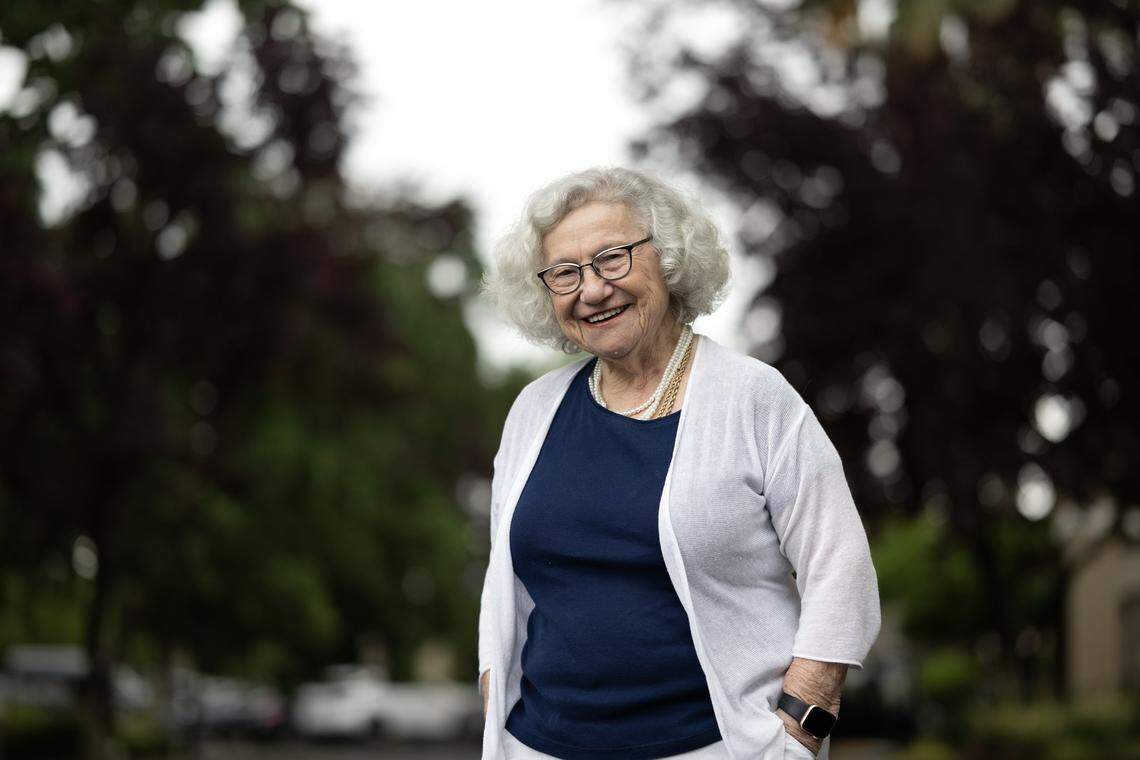
Liz Igra has been telling her story for more than 40 years.
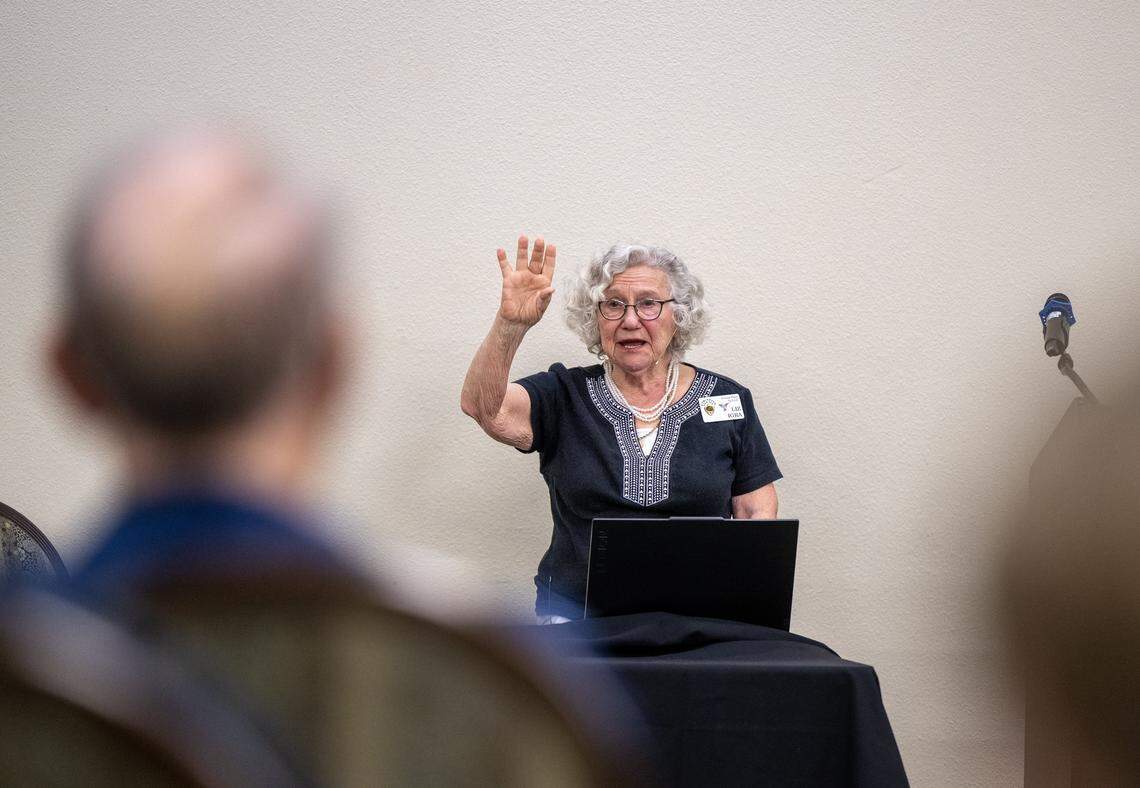
Igra, who is 91 and lives at Eskaton Carmichael, spoke to about 50 fellow residents about how she and her mother fled the Holocaust in the early 1940s.
Her roughly hour-long talk appeared to resonate.
“They seemed to want to hear more, so I guess I might have to fill in the gaps,” Igra said.
She spoke with The Bee in interviews between International Holocaust Remembrance Day in January and Israel’s observance on April 14.
When Igra began telling her story
The first time Igra is known to have granted an interview about surviving the Holocaust, for a 1983 story in The Sacramento Bee, she was hesitant to talk.
“It’s uncomfortable and I don’t know why,” Igra said then. “There’s this fear that if I share my experiences with anyone, that pain will decrease and I’m not sure I want to lose that.”
Igra has told her story repeatedly since that time. And the pain hasn’t been lost, which was evident during her March 24 talk at Eskaton when she discussed the death of her young cousin during the Holocaust. “I’m sorry,” Igra told the room. “This is a hard part for me.”
Igra encouraged other children of Holocaust survivors to speak up in a 2011 Bee story. “You are their voice, you are their stand-in,” Igra told them.
When she spoke to The Bee for the 1983 and 2011 stories, she was at Shalom School, which she cofounded in 1978. She founded the Central Valley Holocaust Educators’ Network, or CVHEN in 2009. Igra donated 1,700 books to help the network open a Holocaust library at Mosaic Law Congregation near Sacramento State in 2016.
“I want to mitigate the distortions and trivialization of this history – most of the time, it’s because people don’t know this history,” Igra told The Bee in 2021. “It compels me to do a better job teaching what we teach.”
The library, which is about the size of a classroom, now has over 4,000 books, including a copy of Adolf Hitler’s infamous 1925 autobiography, “Mein Kampf.” During a visit to the library in February, Igra opened the book to show its inscription. She noted that it was given as a wedding present in 1939.
“I’m a realist,” Igra said, when asked what it felt like to hold the book. “That’s what it was. I’m glad they kept such good records. So this is an artifact that I cherish. There are many others, but this one, I think, speaks volumes.”
‘The best-documented genocide’
A series of the horrors descended for Europe’s Jews in the 1930s, building to a systematic campaign of mass-murder in the 1940s that left millions dead.
Igra grew up in Poland, where about 90% of the country’s Jews died in the Holocaust. Estimates vary for how many people overall died in the Holocaust, though a commonly-reported figure is 11 million people, including 6 million Jews.
“This is the best-documented genocide,” Igra said during her Eskaton talk. “It was recorded as it happened, it was preserved and it is available.”
Firsthand accounts make the tragedy real and drive home the importance of preventing such an atrocity from ever happening again.
Around 200,000 Holocaust survivors are living worldwide, with around 70% expected to die in the next decade. Stories like Igra’s are uncommon in part because the Nazis killed many Jewish children who weren’t old enough to provide slave labor.
Igra was born in Krakow, Poland, in 1935.
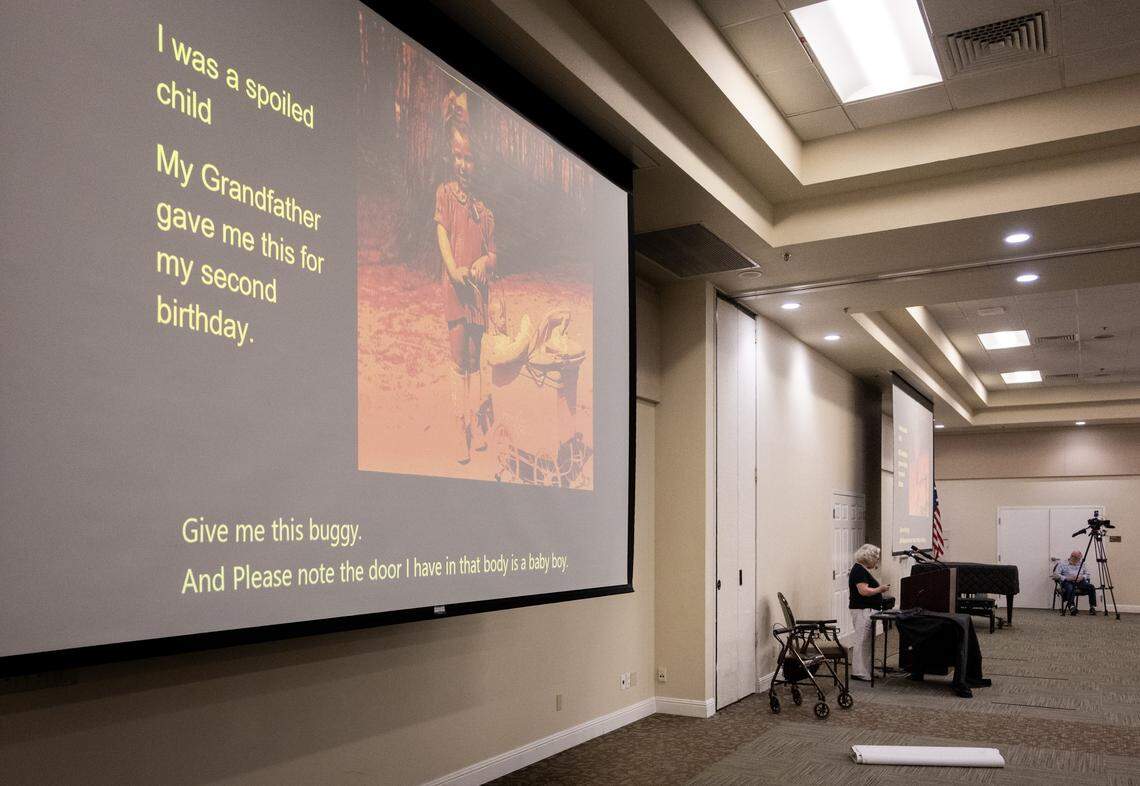
Her early life was one of comfort, with her father working as a surgeon and regional hospital director. Near the beginning of the war, they lived in a villa in Ukraine. Even after her family wound up in Czortkow ghetto, they had an apartment that looked beyond, as her father was allowed to continue his hospital work, for a time.
After the Nazis invaded, Jews were made to register. Igra said she remembered her parents telling her about what was going on, Igra replied, “There wasn’t time for telling,” Igra said. “Things were happening.”
In 1942, Igra’s father learned of an impending relocation of Jewish women and children in the area. He packed his wife and daughter off on a bus. “He was so handsome,” Igra said during her March 24 talk. “I was going to marry him when I grew up,” she added, drawing laughter from the room.
Her father learned, too late, that the relocation would also target Jewish men. He was deported, on the same day he saw his wife and daughter off, to Belzec, an extermination camp east of Krakow. He was killed upon arrival.
“There is a book that lists all the doctors that were murdered by the Nazis and that includes my father’s name,” Igra said during her Eskaton talk.
A journey on foot
Igra didn’t learn of her father’s death for some time and hadn’t been able to bring herself to check when she spoke to The Bee in 1983. As she and her mother began a journey that would take them to Hungary, Igra was under the impression they would reunite with her father.
After a series of brief moves and obtaining false papers, Igra and her mother started their journey on-foot in late 1942. They took a route that was known to inhabitants of the Krakow ghetto.
By night, Igra and her mother walked. They hid under low-hanging tree branches during the day. Her mother taught Igra poetry. She had her memorize family addresses on the chance her daughter survived but she didn’t. And she kept Igra alive with sugar cubes with alcohol drops on them.
“You can live a long time, just sugar cubes and alcohol,” Igra said during her talk. “There’re a lot of calories in that.”
There were close calls, with Igra and her mother being jailed near the Hungarian border after being betrayed by a guide.
“We arrived and they served us soup and that soup has become a legend, potato soup with caraway seeds,” Igra told the Eskaton crowd.
Igra added that a friend who traversed the route months later and wound up in the jail as well also remembered the soup and had been telling her children about it for years.
Jews in the jail faced deportation and death. Igra’s mother avoided this fate for herself and her daughter by convincing a Nazi at the jail that they were not Jewish. Her mother, Igra said, went so far as to slap the man, who quickly apologized.
They were taken to a Budapest jail and released after six months. Shortly thereafter, Igra was hospitalized with scarlet fever. She told the room that she was isolated and her mother had to see her through glass.
After Igra got out of the hospital, she and her mother found secret lodging in a summer home that a rich Hungarian man owned. Igra and her mother were still living there when Russian and Cossack forces liberated them, as Igra said during her Eskaton talk.
“One of the Cossacks came to the door and said to us, ‘Before I kill my first German I’m going to say something to him.’ And my mother said, ‘What will you say?’ And he started speaking Yiddish. My mother just hugged him, said, ‘We are all Jews here.’”
Why Igra continues to tell her story
Following the end of the war, Igra and her mother went to Australia along with an uncle who also survived the Holocaust.
Igra’s mother died of cancer in about 1954. A few years later, Igra married a fellow Holocaust survivor who had come to Australia, Dr. Jacob Igra. They had six children, with the family eventually coming to Sacramento where Dr. Igra took a neurology job with Kaiser Permanente. He died in 2015.
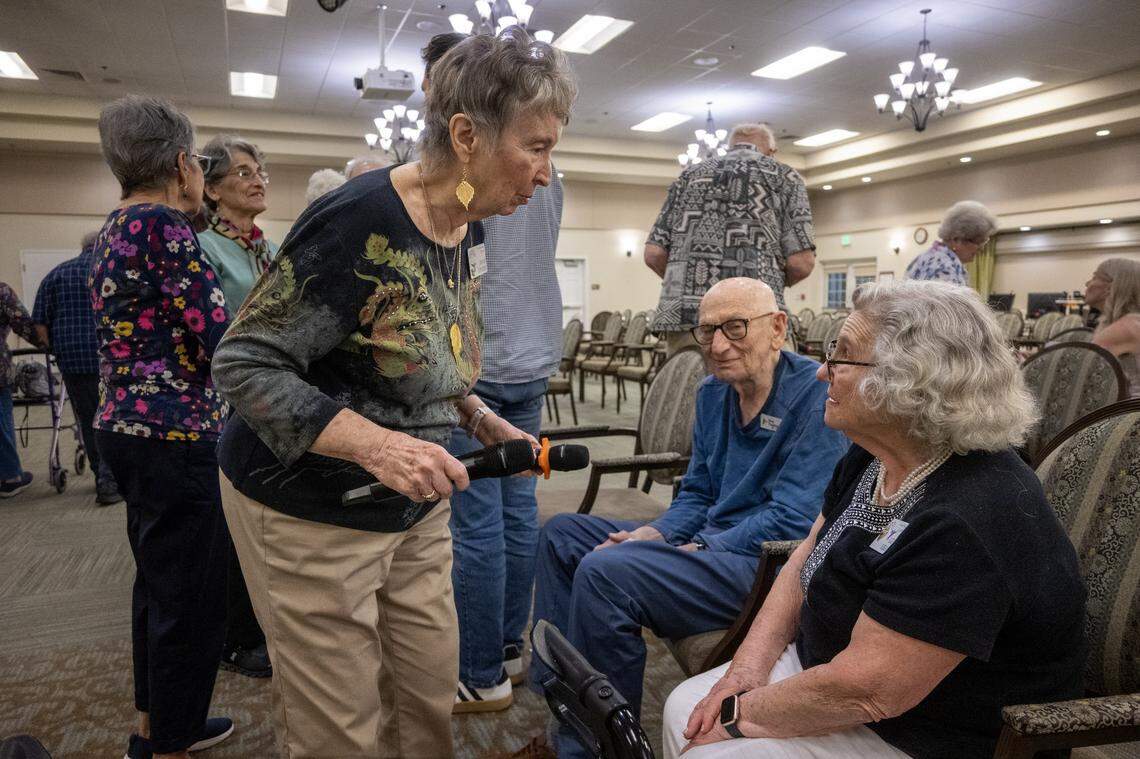
Some of the people who heard Liz Igra’s talk at Eskaton weren’t strangers. Linda Tochterman said she got to know her after coming to live at Eskaton 18 months before and that she’d been aware of her before, as Liz Igra is well-known in the Jewish community.
“It’s very moving,” Tochterman said of the talk. “I wish she would’ve had more time.”
Evie and Larry Lieb were also on hand. They have known Igra for more than half a century and, like her, have been members of Mosaic Law. The Eskaton talk still brought Evie Lieb to tears.
“It just doesn’t change,” Evie Lieb said. “It is moving and it’s terrible and it’s wonderful in each of its aspects.”
The talk was also enjoyed by non-Jewish residents of Eskaton such as Bert Donlon. “I thought it was interesting to find out what you had to do and the strategies of surviving,” Donlon said.
Igra’s message comes at a time of rising antisemitism after the Oct. 7, 2023, Hamas attack on Israel, and the nation’s response in Gaza, has divided political groups both on the left and right.
Criticism of Israel isn’t necessarily antisemitic.
“I think that there’s confusion between rising antisemitism and the support of the poor people of Gaza,” said Lynn Upchurch, an Eskaton resident who attended Igra’s talk. “You can’t help but feel empathy.”
Still, the current climate is being felt acutely by Jews. PBS News noted October the results of a survey by the American Jewish Committee finding that roughly 90% of Jewish people surveyed “said antisemitism in the U.S. had increased in the previous five years and since the Oct. 7 attacks.”
People like Evie Lieb hope Igra’s work can help counter antisemitism. “We have to help her to continue what she’s doing as long as she can,” Evie Lieb said.
Igra is active in protesting Donald Trump’s presidency and sees some parallels in the current moment.
“We are heading towards a dictatorship,” Igra said.
“What can I say?” she added. “I don’t predict, but I do see signs, things we should learn from history and I do what I can to mitigate it. History doesn’t repeat itself exactly the same way, but it certainly has lessons. And I think the Holocaust does have some lessons that we need to learn.”
Upchurch saw the relevance of Igra’s life story for today.
“She gets it, she’s lived it, she watched it,” Upchurch said. “If she could scream from the rooftops, I wish she would. The warnings are so clear.”
