
Swalwell election frustrates unrepresented north state still missing LaMalfa
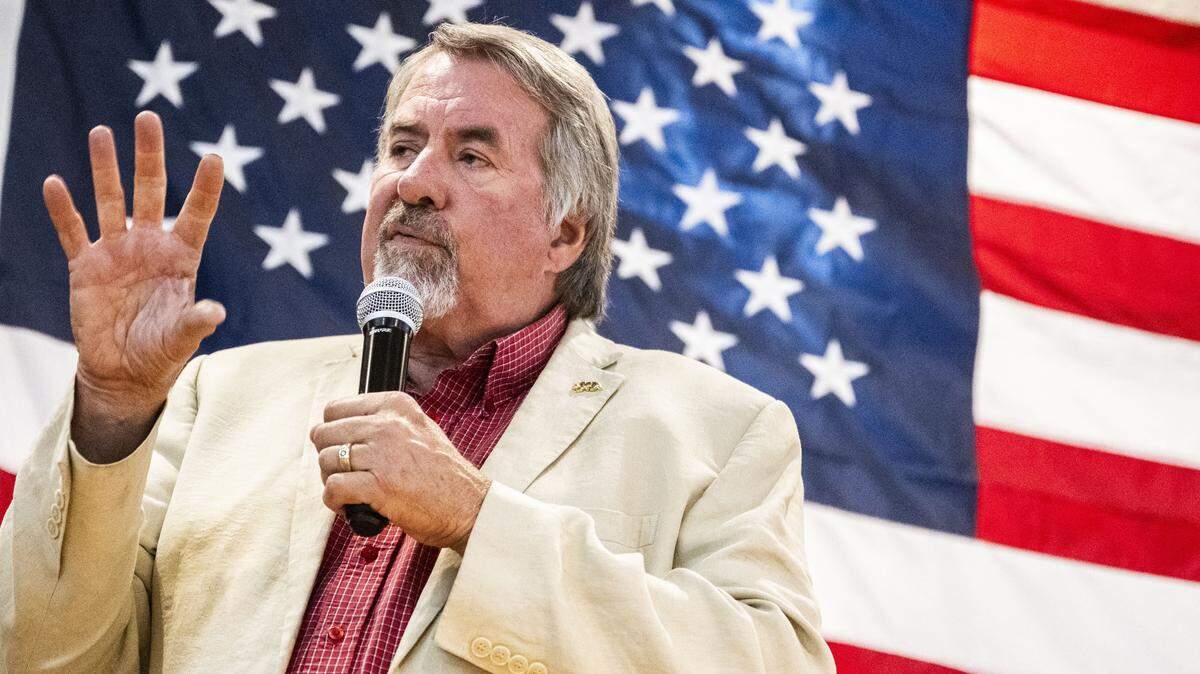
Gov. Gavin Newsom quickly called a special election to replace Rep. Eric Swalwell, a gubernatorial hopeful turned Democratic lightning rod who resigned this week from his post in Congress amid a wave of sexual assault allegations that derailed his campaign to lead California.
Swalwell’s constituents in District 14 will vote in a June 16 special primary election for a new representative, a roughly two-month wait from the time of his resignation.
Meanwhile, constituents of District 1, the north state district held by Rep. Doug LaMalfa, a Republican, will have waited nearly five months by the time they have a chance to choose a replacement for LaMalfa, who died in early January, in the June 2 primary election.
A candidate who wins a majority of the vote in June wins outright and will take office soon after. If necessary, a run-off election will take place Aug. 4 for LaMalfa and Aug. 18 for Swalwell.
With Swalwell’s vacancy arising this late in the election cycle, Newsom was not required to call an election to replace him. The election to replace Swalwell, who resigned too close to the June primary to consolidate the election, effectively marks the earliest it could take place under state law, while the election to replace LaMalfa was set at the far end of the allowable window.
That disparity was not lost on Sutter County supervisors, who have lobbied for Newsom to reconsider the far-flung special election date while the 11-county district has gone virtually the entire year without representation.
“Ensuring that Californians have fair and timely representation should not be subject to delay, nor should it vary based on geography or political considerations,” Sutter County supervisor Mike Ziegenmeyer wrote in a letter Wednesday.
No north state representation
Sutter County supervisors first wrote a letter in early February asking Newsom to set an earlier special election date, citing the need for the northern, largely rural district to have a voice in Congress.
Ziegenmeyer followed with another letter a few weeks later appealing for answers, then a third letter this week, decrying the discrepancy in responses between the rush to fill a presumed-Democratic seat while effectively delaying representation for a traditionally conservative district.
“Your decision to expedite the turnaround to fill that seat while our First District representation remains vacant is deeply concerning,” he wrote.
Sutter and other north state counties have been caught in the crosshairs of redistricting efforts solidified through the passage of Proposition 50. District 1, held by LaMalfa, was redrawn to include more Democratic voters from the coast, while primarily conservative counties, such as Sutter and Yuba, were booted into a primarily Democratic district.
The successor to LaMalfa would hold the remainder of his term, which runs through this year, before the new district lines take effect.
Swalwell’s fall
Swalwell cratered over the past week as reported sexual assault allegations snowballed, with more accusers coming forward, prompting the well-positioned candidate in the tightly-contested governor’s race to quickly lose support. The allegations were reported late last week, leading Swalwell to drop from the race Sunday and resign from Congress on Tuesday.
Swalwell has pushed back on the claims against him, denying allegations of criminal behavior. While announcing his resignation, he apologized for “mistakes in judgment I’ve made in my past.”
Newsom called the special election to fill Swalwell’s term the day of the congressman’s resignation.
“When vacancies occur, every district — regardless of whether it is urban or rural, or its perceived political alignment — deserves equal treatment and prompt action to ensure constituents are not left unheard,” Ziegenmeyer wrote. “Your actions continue to reflect governance driven by party preference rather than fairness and equal representation.”
This story was originally published April 16, 2026 at 10:30 AM.