California water managers raise 2026 deliveries as reservoirs remain near full
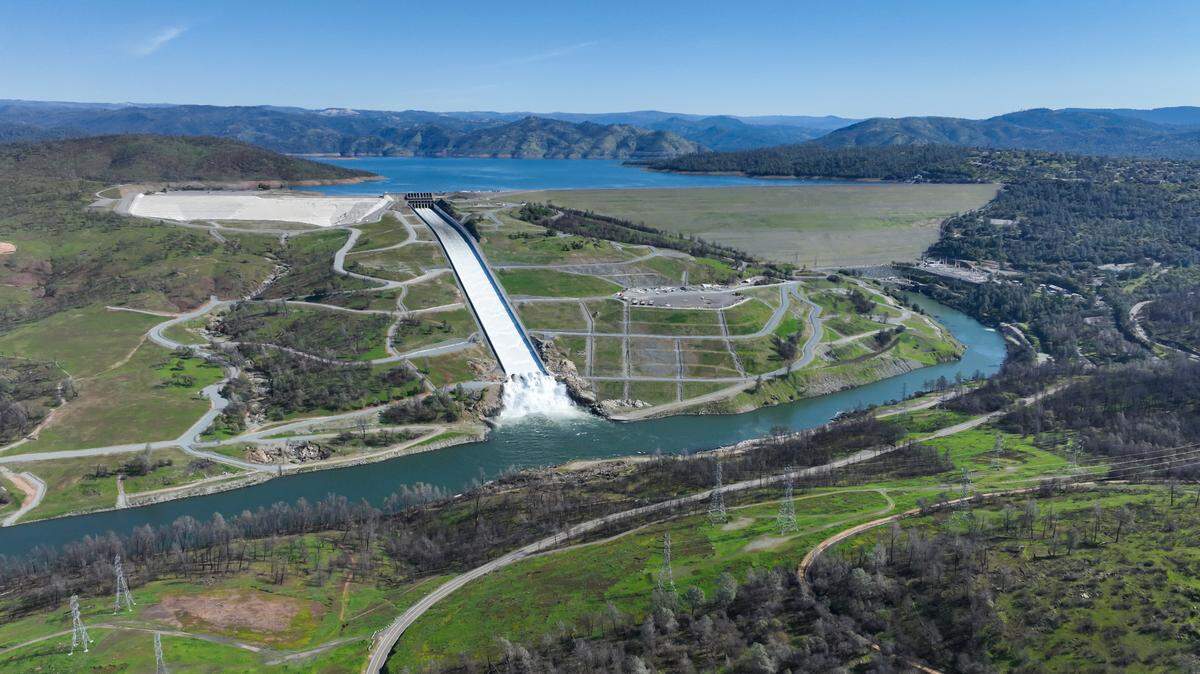
California officials announced Friday that the State Water Project will deliver more water than expected in 2026.
The Department of Water Resources increased the project’s water allocation to 45% from 30% of requested supplies. The allocation tells the state’s 29 public water agencies how much water they can expect to receive. Those agencies supply water to 27 million Californians and irrigate about 750,000 acres of farmland.
State officials base allocations on reservoir levels, snowpack and weather conditions. Although California saw record heat in March that melted snow early, rainstorms in April added more water to rivers and reservoirs. That helped the state capture more water without draining stored supplies.
Lake Oroville, the state’s largest reservoir, is now at 99% of capacity, according to the California Department of Water Resources. Across California, reservoirs are at 117% of average levels for this time of year.
Still, officials warned that the state’s snowpack is nearly gone. Snowpack, often called California’s “frozen reservoir,” is only 12% of average statewide. The snowpack reached its peak in mid-February and has mostly melted.
“California’s reservoirs are full, but most snowpack melted off weeks ago,” Department of Water Resources Director Karla Nemeth said. “We must use this stored water carefully because there’s no backfill until next season.”
The Department of Water Resources said water managers used flexible operations this year to help both communities and the environment, even though much of the precipitation fell as rain instead of snow.
Officials at Lake Oroville worked with the U.S. Army Corps of Engineers to store as much water as possible while still protecting downstream communities from flooding.
Those efforts added about 400,000 acre-feet of water to Lake Oroville’s storage. Officials said the extra water will help meet water needs this year and prepare for possible dry conditions next year.
The Department of Water Resources releases an initial State Water Project allocation each December based on water storage, expected supplies and demand. Allocations are updated throughout the season as officials review snowpack, rainfall and runoff data.
This season’s allocation started at 10% on Dec. 1, increased to 30% from 10% on Jan. 29 and rose again to 45% from 30% on Friday.
This story was originally published May 17, 2026 at 11:28 AM.