Sutter museum’s Black history exhibit wins national award. ‘Nobody knew those stories’
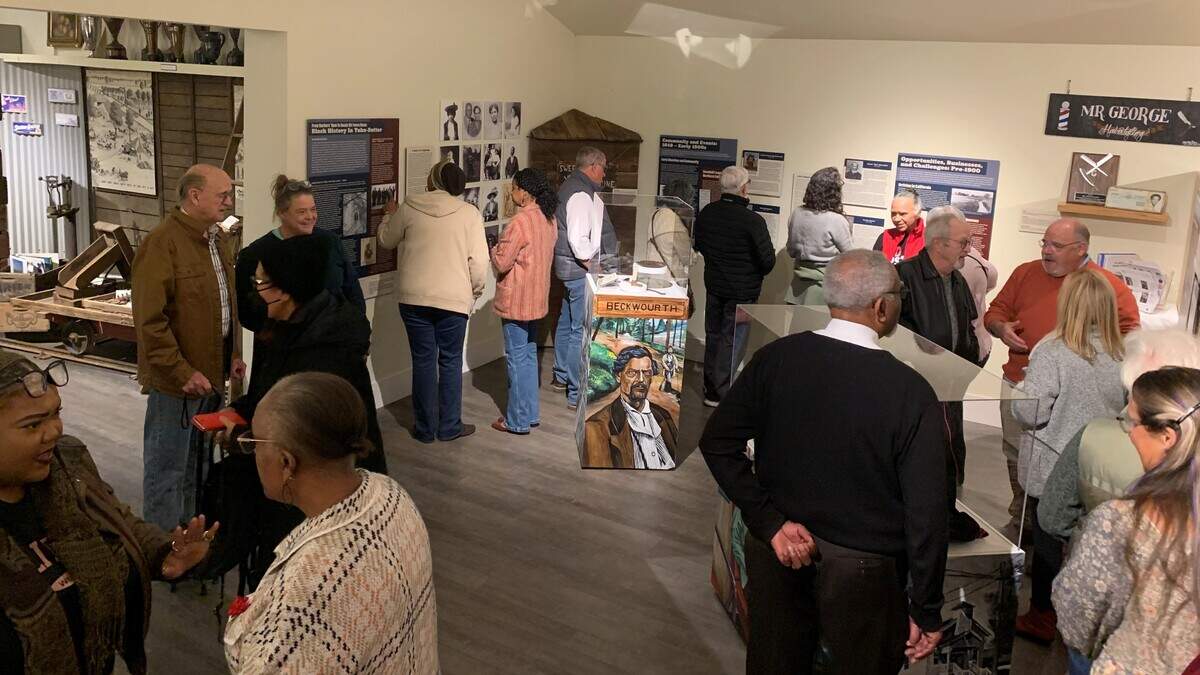
The Sutter County Museum on Friday received an Award of Excellence from the American Association for State and Local History for its exhibit on Black history in Sutter and Yuba counties, titled From Barbers’ Row to Beale Air Force Base: Black History in Yuba-Sutter.
The exhibit, which opened in November 2024, was the result of two years of work and 2,000 hours of research by museum staff, volunteers and community members. It examines the history of the region’s early Black pioneers, the California Gold Rush and the development of early Black communities, the establishment of Black businesses and the importance of barbershops to those communities, the Tuskegee Airmen and their connection to Yuba-Sutter, and the history of Beale Air Force Base.
“I think it just was really meaningful,” Molly Bloom, the museum director who led the project, said. “So many people were willing to take the time to share with us and discuss the stories they remembered, so that we could preserve as much as we could in the exhibit, but also in the museum’s collection for future generations.”
Museum staff conducted extensive community outreach, including oral history interviews with Yuba-Sutter residents whose stories helped researchers build a historical archive. The museum also hosted open houses to encourage residents to share family histories, photographs and artifacts.
The exhibit project dated to 2005, when the museum opened a new wing dedicated to exhibits highlighting the history of minority groups with a sizable presence in the Yuba-Sutter community.
“Space has been reserved since the very beginning for a Black History in Yuba-Sutter exhibit,” Bloom said.
Plans for the exhibit were delayed for years by the COVID-19 pandemic and funding challenges. After the museum connected with Gwen Ford, executive director of the nonprofit Connecting Cultures Collaborative, who became the exhibit’s project adviser and consultant, and received a $25,000 grant from California Humanitie, the project began moving forward, Bloom said.
A team of museum staff and local researchers began compiling information. Researching local history presented unique challenges, Bloom said.
“The hardest part was the first six months or so of getting started,” said Ford. “Who to talk to, where to go, being referred to different people.”
The team searched family history records, old newspaper articles and other historical sources to gather material.
Soon, however, the project had gained enough traction that people from outside the region began sending artifacts and sharing family histories. Ford recalled hearing from people living in San Francisco whose families had once lived in the Yuba-Sutter area.
“There were a lot of people who had artifacts and so forth that they didn’t think were important,” she said. “We were getting calls from everywhere, which was enlightening.”
Exhibit designed to grow with new discoveries
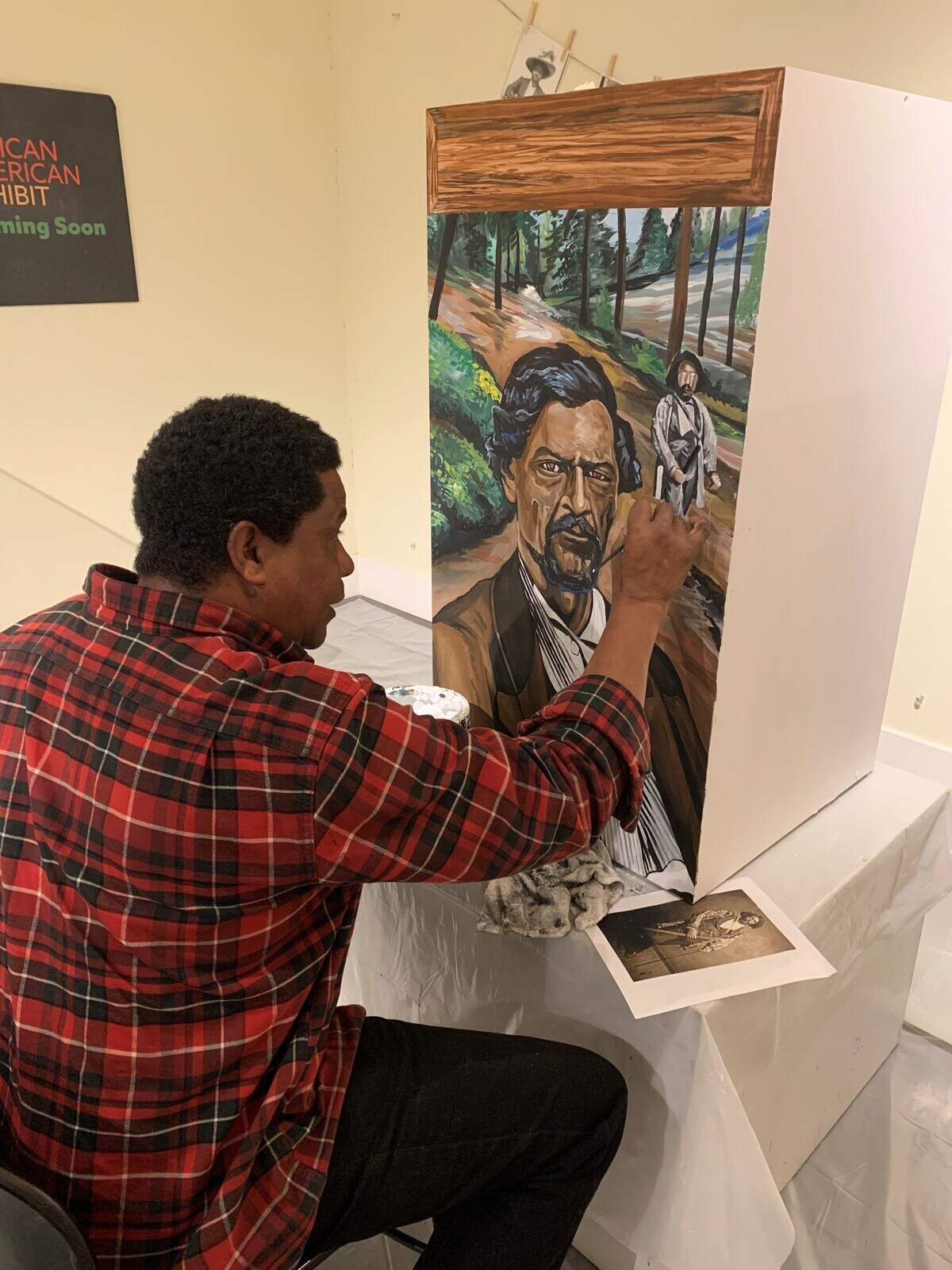
The exhibit covers about 150 square feet and opens with an introductory panel explaining the project and recognizing its contributors. Throughout the gallery, artifacts donated by area residents are displayed in glass cases atop blocks painted by local artist and muralist Louie Lethridge.
Among the artifacts are a commemorative Tuskegee Airman jacket, mining equipment including a candle holder and iron spoon, and an old cash register from Mr. George’s Barbershop.
Walking through the exhibit, visitors can read interpretive panels detailing the lives of key figures in Yuba-Sutter’s Black history. They include James Beckwourth, a fur trapper and explorer who discovered a key pass through the Sierra Nevada during the Gold Rush; George Jones, known as “Mr. George,” who operated Mr. George’s Barbershop on D Street in Marysville for 40 years; and George Iles, a U.S. Army Air Forces fighter pilot with the 332nd Fighter Group’s 99th Fighter Squadron, better known as the Tuskegee Airmen.
The cash register from Mr. George’s Barbershop was donated by Jones’ daughter.
“Everybody in the community remembered that cash register,” Ford said.
She remembered the ordeal of moving the register to the museum.
“It took two men to get it out of my trunk,” she said, laughing.
Another feature of the exhibit is a photo wall displaying portraits of members of the Black community in the Yuba-Sutter area, including baby photos, an unidentified family, women in feathered hats and blazers, and two young girls.
“We hope maybe someone might recognize someone that we don’t know who they are,” Bloom said.
There are also replicas of historical objects, including a wooden structure modeled after the facade of a mine, inspired by the history of Black-owned mines such as the Sweet Vengeance Mine, and 3D-printed replicas of mining tools.
Art brings history to life
Lethridge painted inside the museum while the exhibit was being assembled, attracting the curiosity of visitors. Using photographs and historical documents compiled by the research team as inspiration, he completed eight original works.
Lethridge said he felt a personal connection to the exhibit.
“It’s part of my own family history in there.”
One important consideration was the exhibit’s flexibility. Museum staff wanted to be able to add and replace displays as they uncovered more stories, information and artifacts. As a result, the exhibit was designed to be modular. Text panels were mounted using cleats so they can be easily replaced, and photographs can also be removed and updated.
It wasn’t just the museum team that learned more about the region’s history. As staff shared their findings with the community, they found many residents were hearing the stories for the first time.
Ford recalled telling visitors about Edward Parker Duplex, California’s first Black mayor, who also opened a barbershop on Barbers’ Row in Marysville and was a partner in the Sweet Vengeance Mine.
“Nobody knew those stories and it was very interesting to see people’s reactions to that,” she said.
The museum will celebrate the award and the exhibit with a free wine and cheese reception from 5 to 7 p.m. Friday, July 10. The reception is open to the public. The exhibit is permanent and will remain on display.