Sacramento to audit police after ACLU report alleges racially-biased traffic stops
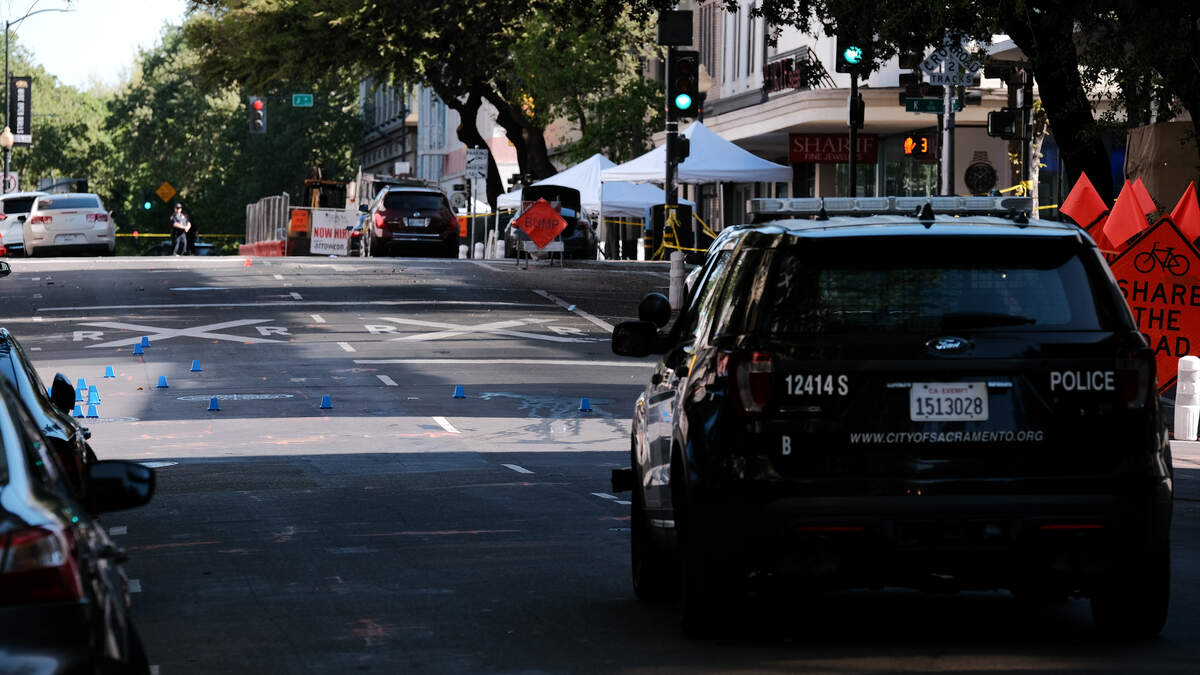
The Sacramento Police Department will be subject to a city audit after a nonprofit report found evidence of racially-biased traffic enforcement.
The report conducted by the American Civil Liberties Union of Northern California analyzed 2023-24 traffic stop data and found that Sacramento police disproportionately stopped Black drivers, often for minor vehicle equipment or non-moving violations. An organizer with the ACLU likened these traffic stops to a “stop-and-frisk,” a practice long criticized for its perpetuation of racial profiling.
Tuesday the city’s Budget and Audit Committee directed City Auditor Farishta Ahrary to prioritize the traffic stop investigation and to delay a requested audit into the police department’s use of overtime, which costs the city more than $15 million each year. Police overtime spending has been a point of frustration for community activists critical of the department’s growing budget.
“This audit is long overdue,” Councilmember Karina Talamantes said. “And the public has been demanding answers and feedback.”
The four committee members agreed that it was too much to ask the city auditor to conduct both time- and labor-intensive audits at once.
“It doesn’t mean that we won’t conclude or won’t produce the other audits,” Councilmember Eric Guerra said.
A spokesperson for the Sacramento Police Department did not respond to a request for comment regarding the city’s initiation of an audit, but said that the department was aware of the ACLU report.
“From the academy onward, our officers receive training on the practices of fair and principled policing. The department remains committed to providing high quality police services, while constantly reviewing policies and practices to support effective policing and maintaining public trust,” reads the statement.
In an interview, Ahrary said that the audit was initially planned to be conducted by the Office of Public Safety Accountability, but was presumably handed to her department after the city approved a budget slashing OPSA’s staff. Ahrary estimated that it would take about a year to complete the audit.
What the ACLU report found
“Driving While Black and Brown: The Case for Banning Racially Biased Traffic Stops in Sacramento” used data collected under California’s Racial and Identity Profiling Act and concluded that, similar to law enforcement agencies across the state, that Sacramento police were disproportionately stopping Black motorists.
Among the report’s key findings:
- Black residents made up 12% of Sacramento’s population but accounted for 33% of police traffic stops in 2023-24.
- Black drivers were 3.1 times more likely to be stopped than white drivers, and 70% of those stops were for equipment or non-moving violations — such as registration, plates or window obstruction — rather than urgent safety issues.
- Black drivers were searched at a 17% rate after stops, compared with 8% for white drivers and 12% for Latino drivers. Black drivers were 2.1 times more likely than white drivers to be searched.
- Latino drivers made up 38% of stops for window obstruction.
The report represents the second time in recent history that Sacramento police have faced allegations of racial bias in traffic enforcement. A 2023 OPSA audit found several instances in which Sacramento police appeared to violate the Fourth Amendment and act with racial bias.
The auditor ultimately recommended that the city adopt reforms aimed at preventing racially-biased stops.