See which Sacramento-area state historic parks are free in new pass program
Katrina Granados and Nick Mahedy didn’t mind paying $5 each for a visit to Sutter’s Fort on Thursday afternoon.
But they were also looking forward to a new program that started Friday that allows them to see the fort and other California State Historic Parks for free through the end of 2026.
On Wednesday, the state unveiled its special edition California State Historian Passport, which allows free admission for up to four people to over 30 historic parks, according to Gov. Gavin Newsom’s office. Several state historic parks in the greater Sacramento region are included on the list.
Granados and her boyfriend Mahedy, who are in their mid-20s, have lived in Sacramento for five years. As they stood in the fort’s central building, which dates to about 1840 and is Sacramento’s oldest building, she said they would definitely take advantage of the free pass program.
“They’re focusing on the historical parks which is really nice,” Granados said. “Now we get to see what is surrounding us, which I feel like I didn’t know.”
Which state historic parks in Sacramento area will be free
The passes, which are free to sign up for online through July 6, include several notable sites in the Sacramento region that capture key parts of the area’s history.
Aside from Sutter’s Fort, there is the State Indian Museum State Historic Park on the same Sacramento block. There is also the Folsom Powerhouse State Historic Park and the Marshall Gold Discovery State Historic Park, commemorating the location where gold was found on Jan. 24, 1848, spurring California’s Gold Rush.
Also within a 90-minute drive from Sacramento are the Empire Mine State Historic Park near Grass Valley, the Indian Grinding Rock State Historic Park in Amador County and the Benicia Capitol State Historic Park.
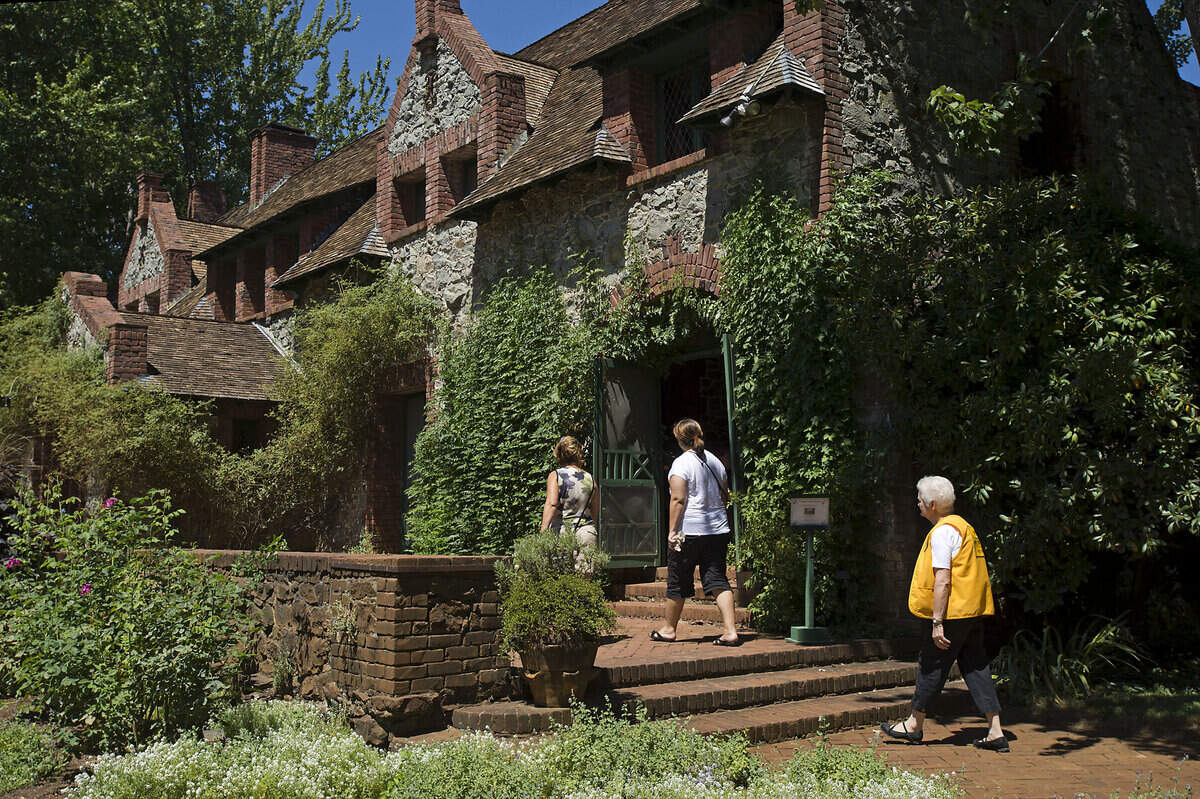
The pass is not accepted by the California State Railroad Museum in Old Sacramento.
The program comes amid a state effort to evolve how history is taught at places such as Sutter’s Fort. The fort played an important role in the development of Sacramento. But its owner also used coercion and violence against Native Americans, according to John Fraser, the Capitol District superintendent for California State Parks.
“I think it is an opportunity for people to get out to some of these places and see how they’ve probably changed since they were maybe on a fourth grade field trip or the last time the relatives were in town,” Fraser said.
Mahedy said he and Granados were using their off day “to go be history buffs.”
“We’re learning about how all the different parties weave into this tapestry that makes California so rich and interesting,” Mahedy said.
How popular the program could be
Sutter’s Fort was fairly quiet Thursday afternoon, which is partly a reflection of the COVID-19 pandemic’s effect on parks and museums according Jared Jones, a site supervisor for Sutter’s Fort and the Indian Museum.
“I would say that we’re still rebounding back to our pre-pandemic numbers,” Jones said. “Over half of our visitors are elementary school kids on field trips.”
Things could change with the new state program.
“We just had Secretary Wade Crowfoot of the California Natural Resources Agency here this morning,” Jones said. “And he said that there was already over 80,000 people signed up.”
When the state unveiled the pass program, the Governor’s Office noted that the Trump administration had ended free admission to national parks on Martin Luther King Jr. Day and Juneteenth. “California doesn’t hide from hard truths and uncomfortable history – in fact, we embrace it and learn from it,” Newsom said in a statement.
Fraser noted the timing of the state’s program, just ahead of the 250th anniversary of the signing of the Declaration of Independence on July 4.
“This is a great opportunity within California and locally within the region to go out and rekindle some curiosity in these places,” Fraser said.