Meet Buster, a robot dog now helping Sacramento deputies respond to dangerous calls
The Sacramento County Sheriff’s Office has a new member: a robot dog nicknamed “Buster” by deputies.
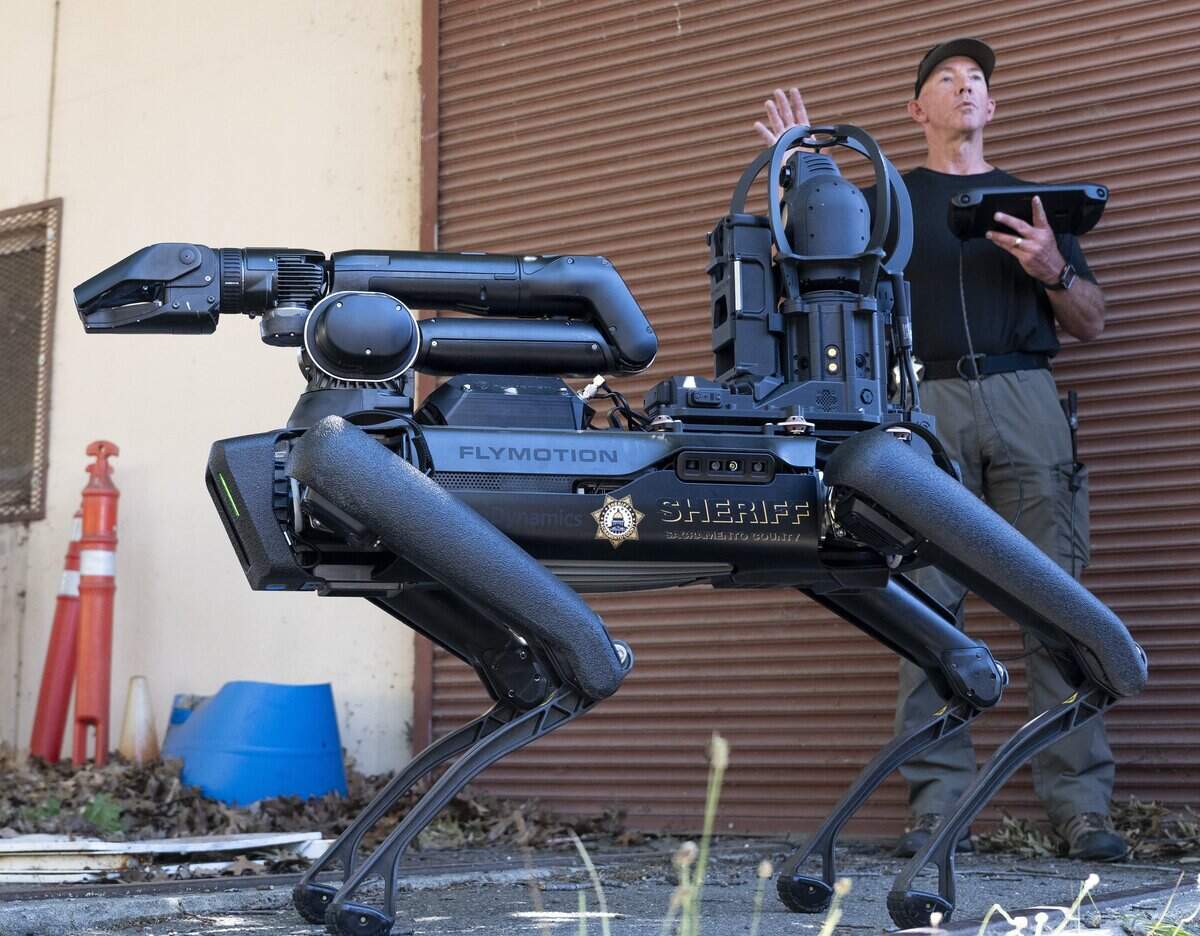
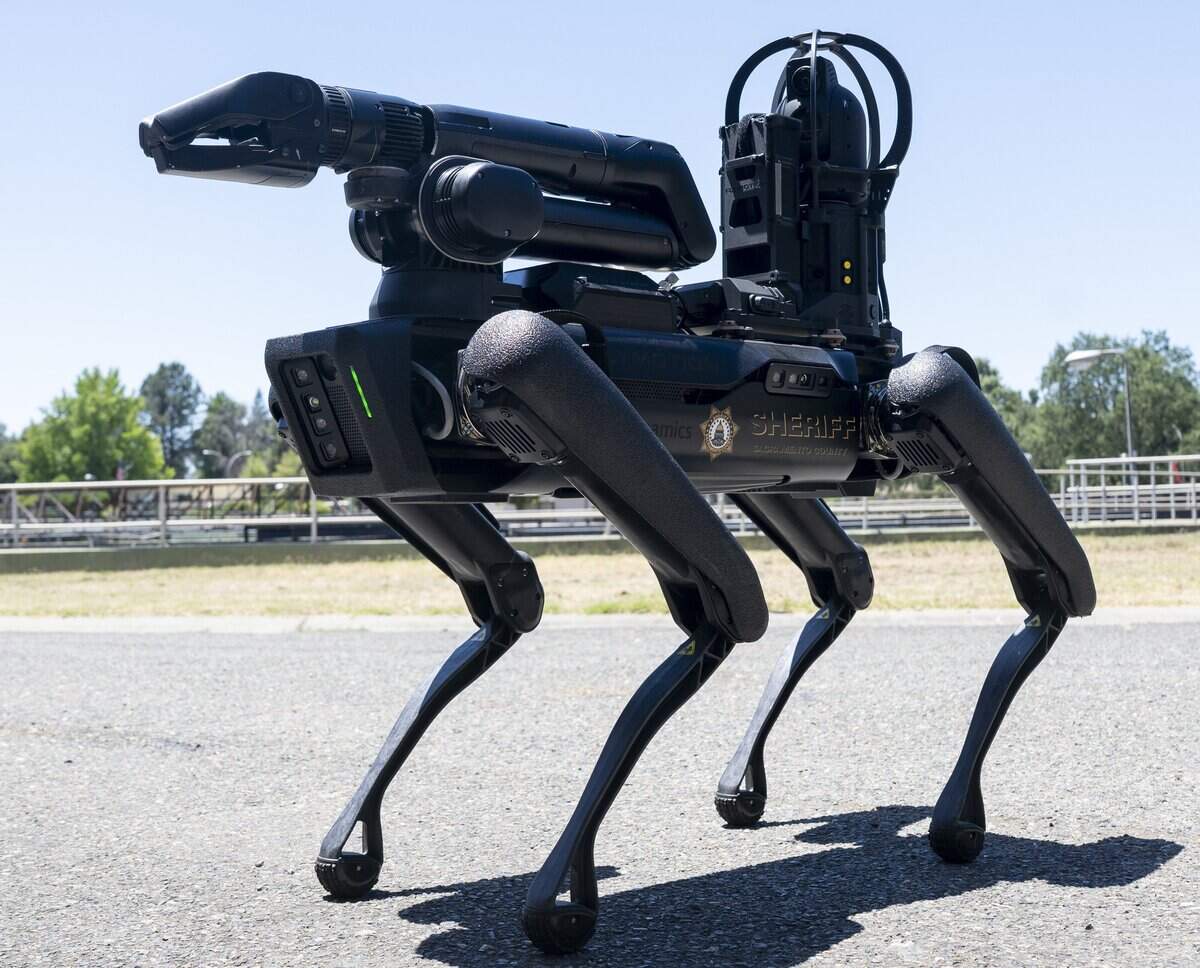
Designed by Boston Dynamics and outfitted for public safety by FlyMotion, Buster recently completed its first deployment during a standoff in which officers ultimately disarmed an armed suspect, according to the Sheriff’s Office. The robotic canine was purchased through a federal grant and recently certified for use.
“It’s state-of-the-art technology,” said Lt. Tom McCue, one of Buster’s operators. “It’s a fantastic addition to the Sheriff’s Office.”
Buster’s arrival reflects a growing trend among law enforcement agencies across the country to adopt robotic technology for public safety — a shift that has also raised concerns about police surveillance and oversight.
In 2022, San Francisco abandoned a proposal to authorize police to use lethal, remote-controlled robots in some emergency situations after significant public opposition, according to a 2024 University of Michigan white paper about the technology.
The Sacramento County Sheriff’s Office now joins agencies including the New York and Los Angeles police departments in using a robotic dog.
“It’s not a toy, but it’s not a weapon, either,” McCue said. “It’s unlike any other robotic platform. Its versatility is second to none.”
The quest for Buster
McCue was one of three deputies who applied for a federal grant two years ago to acquire Boston Dynamics’ “Spot,” a lightweight, dog-like robot commonly used for structural inspections.
After a multiyear application process, the Sheriff’s Office received the robot through a $357,000 federal grant and named it Buster.
Buster is the second robot owned by the department. The sheriff’s office also has a Remotec Andros robot, an explosive ordnance disposal robot, purchased about 15 years ago through another federal grant.
Buster’s arrival comes as Sacramento County faces budget pressures tied to a long-term structural deficit and anticipated impacts from last year’s House spending bill known as House Resolution 1 or the “One, Big, Beautiful Bill Act.”
“I think the community and the county is deserving of equipment like this, but I also don’t want to take money from them,” McCue said. “We worked really hard on this grant. Not one dime came from the county, it didn’t impact our budget at all.”
Robot canine capabilities
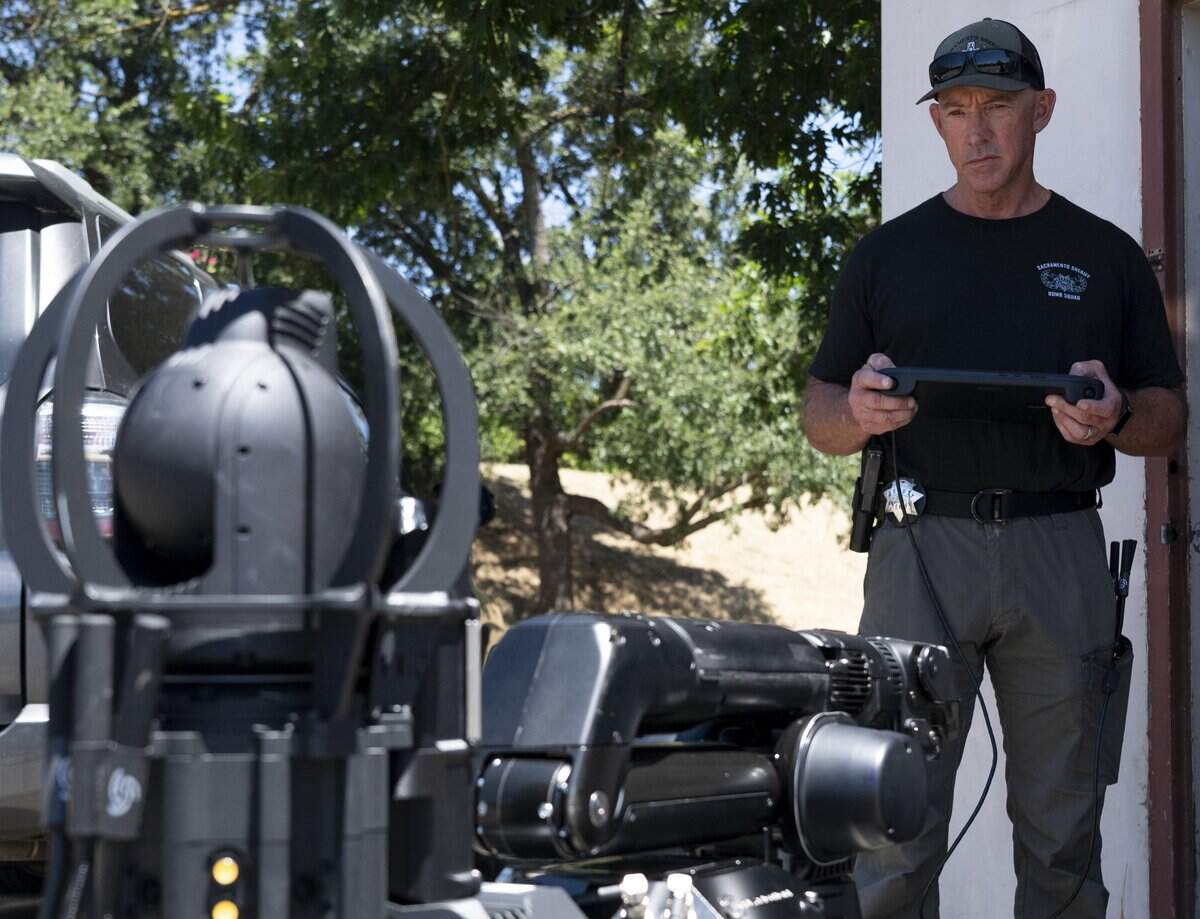
At the Sheriff’s Office Training Academy, McCue demonstrated how Buster is controlled with a handheld device and can open doors, climb stairs and navigate rough terrain.
The 100-pound robotic canine is equipped with two-way radio communications, multiple cameras, thermal imaging, X-ray equipment, grippers and lights. It has an operating range of about one-half mile, and deputies have developed a two-battery rotation system that allows it to remain in service around the clock, McCue said.
Compared with the department’s 400-pound Andros robot, which is designed for precision bomb disposal, Buster is “much faster, much more agile” when searching buildings, McCue said.
During last week’s standoff, Buster surveyed the scene, communicated with the suspect and moved obstacles so deputies could safely enter a confined residence, according to McCue. For now, the sheriff’s office plans to limit the robot’s use to the bomb squad.
Buster is intended to help deputies keep their distance from dangerous situations, including armed suspects and explosive devices. The department also plans to use it during active shooter incidents to help locate victims more quickly, McCue said.
“Regionally, we are the busiest bomb squads we’ve seen,” McCue explained. Buster thus serves as a “regional asset” that may be deployed to other departments in the capital region with Sacramento sheriff’s operators, McCue said.
Surveillance concerns
Asked about privacy concerns surrounding robotic policing technology, McCue said the Sheriff’s Office plans to be transparent about how Buster is used.
“This dog is not to spy on you, it’s not to hurt you, or anything like that, it’s literally to help you, to help your neighbors, and the community,” McCue said.
Deputies plan to conduct demonstrations at schools and community events to familiarize the public with the technology, McCue said.
Researchers studying the Spot devices and similar robotic platforms have called for stronger public oversight of police surveillance technology as robot dogs become more common in law enforcement, according to University of Michigan researchers.