Are toll lanes coming to Sacramento’s I-5? Regional agencies approve next steps
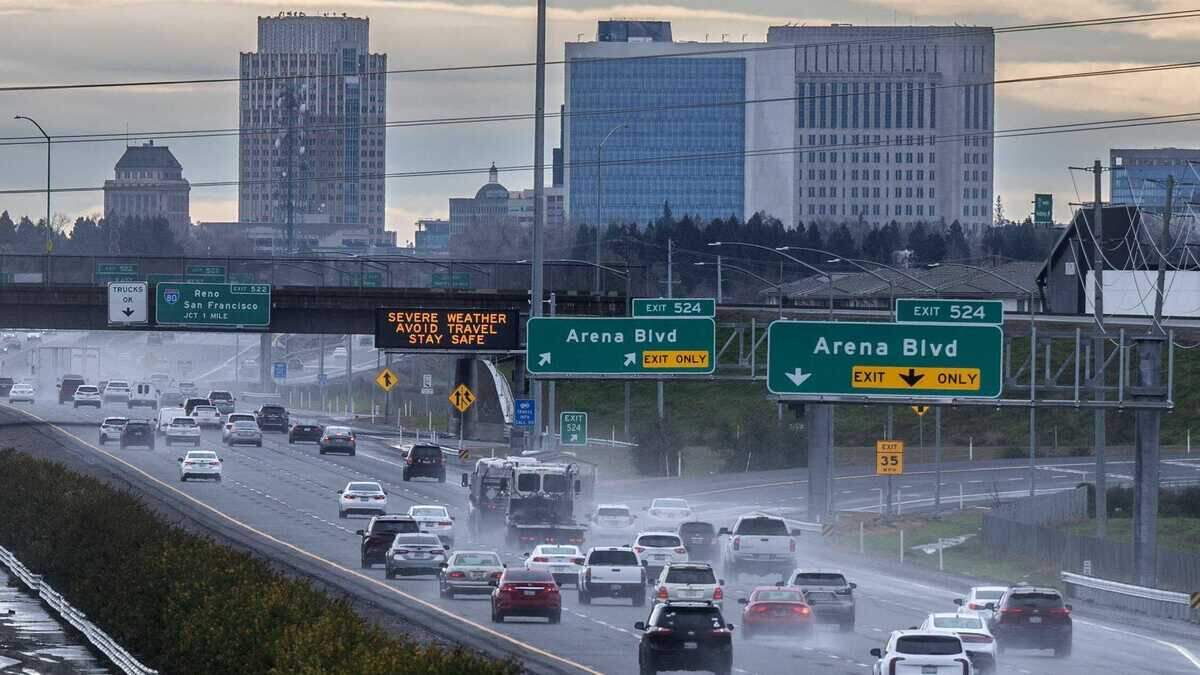
Toll lanes could be coming to a major stretch of Interstate 5 through Sacramento if regional transportation officials move forward with a proposal selected by local agencies.
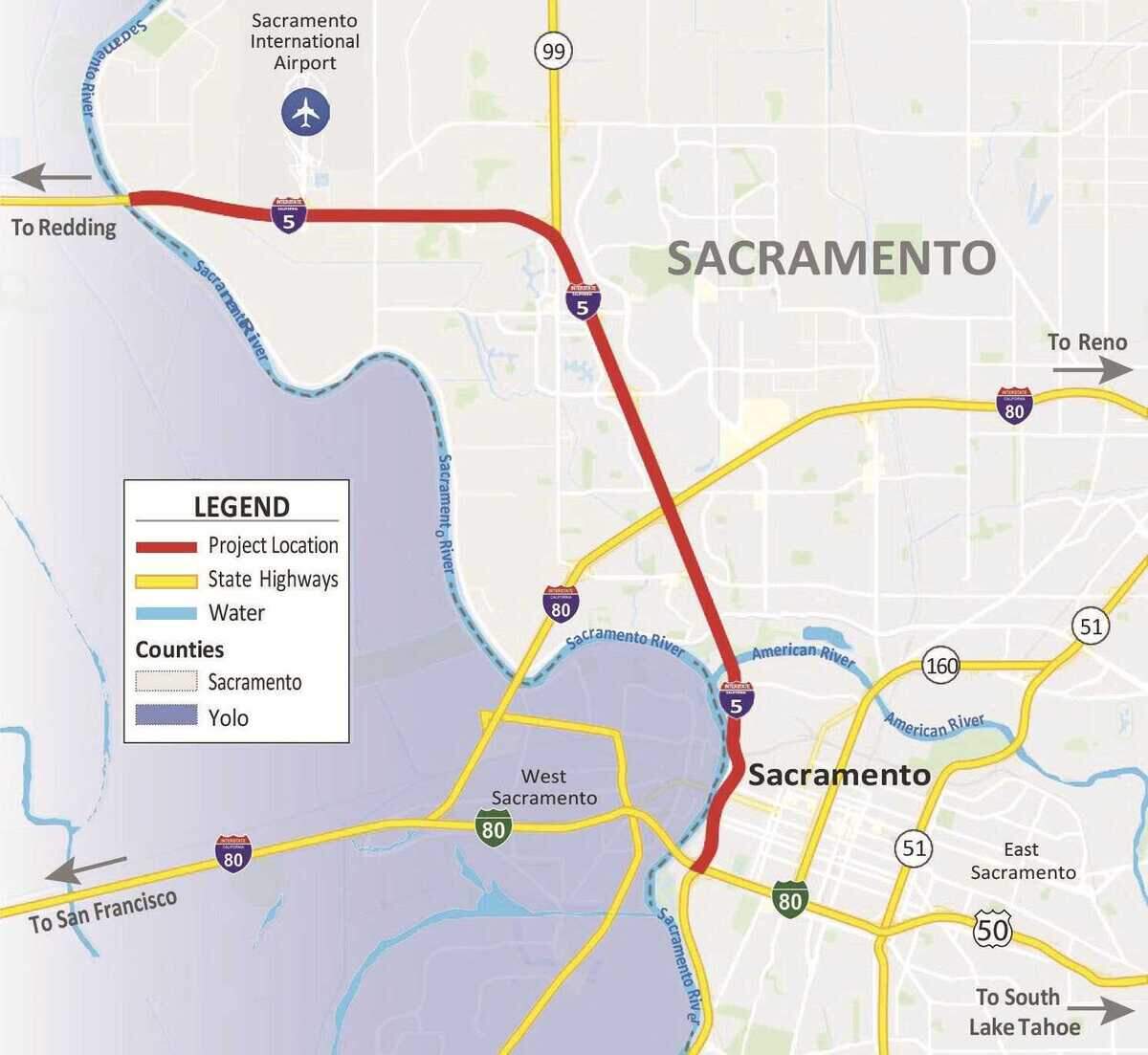
The I-5 expansion project, which would widen about a 12-mile section of the freeway, is moving forward with plans for high-occupancy toll, or HOT, lanes following a series of approvals last week from the boards of directors for the Sacramento Transportation Authority, which allocates and assists with project funding, and the Capital Area Regional Tolling Authority.
The toll would apply to one new lanes constructed in each directions of the freeway from the Highway 50 interchange downtown to Sacramento International Airport. New southbound lanes would likely open first, and northbound lanes would be phased in as funding allows, STA Executive Director Kevin Bewsey said.
The toll lanes would be built alongside existing lanes, making some sections four lanes wide and others three lanes, with the goal of reducing traffic congestion.
The HOT 3+ lanes would require motorists traveling with two or fewer occupants to pay a fee that has not yet been determined. All other lanes would remain free, and HOV lanes outside the project area would not be converted to toll lanes under the expansion project.
Toll revenue would go to CARTA to operate the lanes. Any remaining revenue after operating costs would be used for additional improvements along the Interstate 5 corridor, Bewsey said during the agency’s board meeting last week.
The 12-member STA board, on a 10-0 vote, authorized $880,000 for CARTA to complete a traffic and revenue study, review Caltrans plans and prepare its application for tolling authority. The board also approved $400,000 for a contract with the consulting firm Drago Vantage to seek grants for the project, which is estimated to cost $450 million to $500 million, according to an STA staff report.
CARTA’s board approved the funding agreement with STA and awarded a contract to C&M Associates for the traffic and revenue study.
The approvals allow the project to advance to its next phase. Several additional studies and approvals are required before construction is expected to begin in fall 2029, according to a CARTA presentation.
The toll lanes are expected to open as early as spring 2032.
There were nine alternatives for the I-5 expansion project, which is funded in part by Measure A, Sacramento County’s half-cent sales tax for transportation infrastructure approved by voters in the 1980s. Alternatives included an express lane requiring all drivers to pay a toll, HOV 2+ lanes in both directions, transit-only lanes in both directions and converting existing lanes to HOT lanes.
Bewsey said the selected plan offers several benefits, including allowing motorists the option of paying to bypass congestion rather than risking a citation for improperly using an HOV lane. He said the primary reason for selecting an HOT 3+ lane was that it aligns with plans adopted by Caltrans, the project’s lead agency, and the Sacramento Area Council of Governments’ 2025 Blueprint. Without that consistency, the project could face challenges securing state and federal grant funding.
Sacramento City Councilmember Karina Talamantes, an STA board member, shared negative public comments about the toll lanes and stressed the importance of clearly explaining how they would work for commuters. Talamantes, who represents South Natomas, also serves as a non-voting member of CARTA’s board.
Toll lanes are expected to expand throughout the capital region in the years ahead — SACOG has already identified about 200 miles of “managed lanes” by 2050, according to the blueprint. That includes the Interstate 80 toll lanes project in Yolo County and a section of Interstate 5 south of the Highway 50 interchange.
The expansion is partly a response to limited transportation funding, according to SACOG, including expected declines in gas tax revenue as more drivers switch to electric vehicles.
STA board member Roger Dickinson, who also represents North Sacramento on the City Council, said HOT lanes provide flexibility by creating an additional revenue source without requiring everyone to pay beyond existing taxes.
“I think (HOT lanes) are a good mechanism for encouraging people to ... carpool,” Dickinson said later. “Of course, we’d love to see fewer vehicles, but I also think that HOT lanes serve as a way to allow those people who are willing to pay the cost to have an ability to move more quickly.”
STA board member Caity Maple, a Sacramento City Council member representing Oak Park and other parts of south Sacramento, abstained from the vote. She said she understands frustration with freeway congestion but opposes managed lane projects.
“In my view, they are often used to justify freeway expansion, and decades of transportation research have shown that expanding freeway capacity does not reduce congestion over the long term and can actually increase vehicle trips and demand,” Maple said in a statement. She added that she wants active transportation and public transit to be prioritized in transportation investments.