
Flood board approves new levee fences despite Sacramento plan for mixed-use trail
New permanent fences could soon be placed across a long-planned levee trail in Sacramento after the permit applications of two property owners were approved Friday by state board.
Some local residents voiced opposition at the meeting of the California Central Valley Flood Protection Board, saying cross-levee fences conflict with the city’s vision for a mixed-use trail along the levee. Nevertheless, the board adopted the staff recommendation to approve construction on the basis that it will not hinder flood control.
“The standard for us and the only standard for us is the effect on the flood performance of the levee,” said board secretary Brian Johnson after the meeting.
Others say the decision interferes with the planned Sacramento River Parkway. The proposed 17-mile multi-use trail, which would run south along the Sacramento River from its confluence with the American River to the community of Freeport, was envisioned in a 1975 master plan.
“The flood board shouldn’t be making it harder for the city to complete the project,” said Pocket resident Richard Markuson.
In October 2025, the Sacramento City Council approved a plan to close the longest gap in the parkway. According to this plan, the city will construct a four-mile paved trail between Garcia Bend and Zacharias parks. Local residents filed an environmental lawsuit challenging the decision.
One of the newly-approved fences, requested by Gail Nadal on Clipper Way, is within that stretch of levee. The other — requested by James Silva, Karen Silva and the Riverside Village Improvement Association — is in the Little Pocket neighborhood.
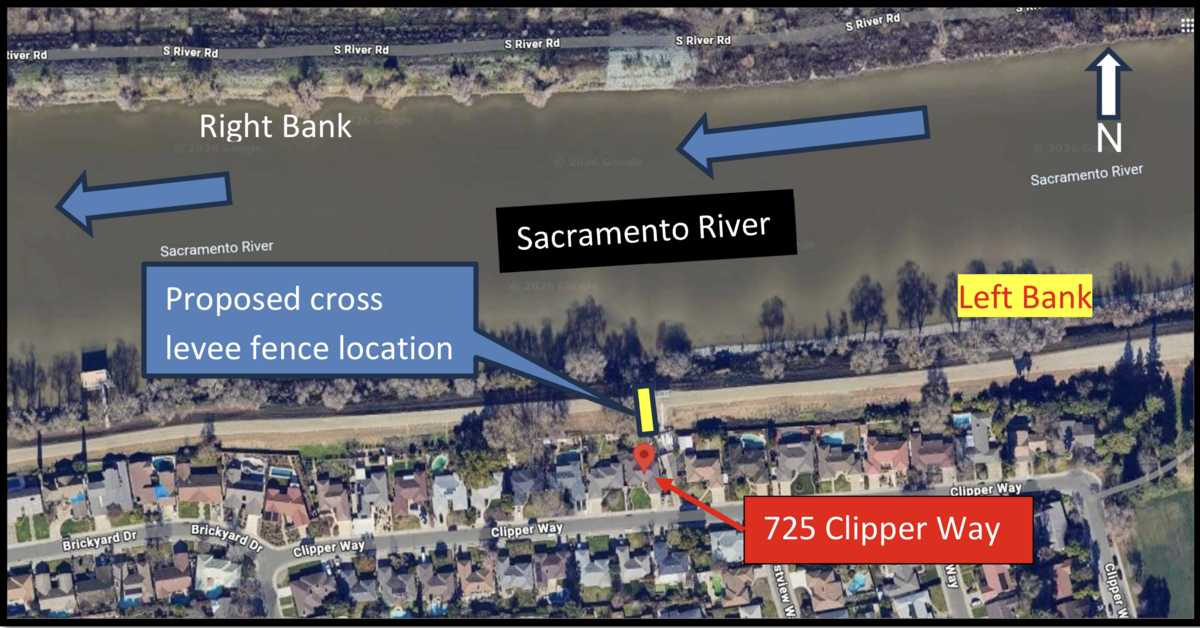
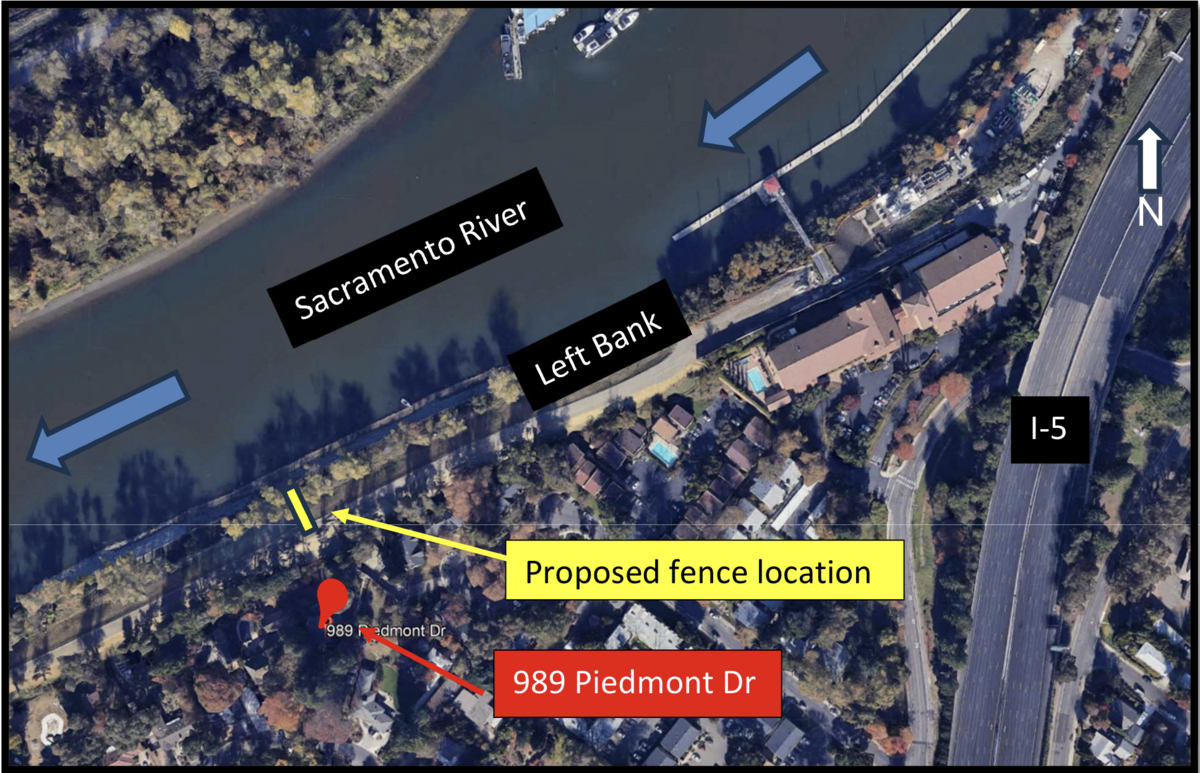
The city submitted an official letter of protest to the flood board on June 24, arguing the permits would compromise the shared-use trail and block public access at that location.
In an effort to work with the city, board staff developed two special conditions:
• The recipient of the permit must acknowledge their project may interfere with future authorized projects requiring access to the levee, and, upon written notice from the board, remove the fence. This removal must come at the property owner’s expense, restore the levee to a pre-project condition and take place within 30 days.
• If property rights change from private to public access in a way that affects the projects, the board may revoke or modify the permit as it sees fit.
“We want … to be sure that we wouldn’t be in the way of that trail when the city does acquire the rights to it,” Johnson said.
The cross-levee fence projects were deemed permissible by the U.S. Army Corps of Engineers, and were endorsed by the local maintenance agency, according to board staff member Travis Comstock.
The board previously approved temporary cross-levee fence applications, which required an extension every four months. The new applications are permanent.
Desmond Law Firm attorney Brian Manning, who represented Nadal’s application for a fence, said the portion of the levee in question belongs to riverside landowners — it is not public property.
“They have the right of privacy,” he said of the riverside landowners. “Unless and until that right is taken from them, they retain those rights just like you do in your own backyard.”
Pocket resident Hal Sterrett spoke against the new fences.
“There’s about 40 of us, and we really would like to see the completion of this river trail,” she said on behalf of the Pocket Greenhaven Bicycle Club. “This river trail … will really be something in the public good.”
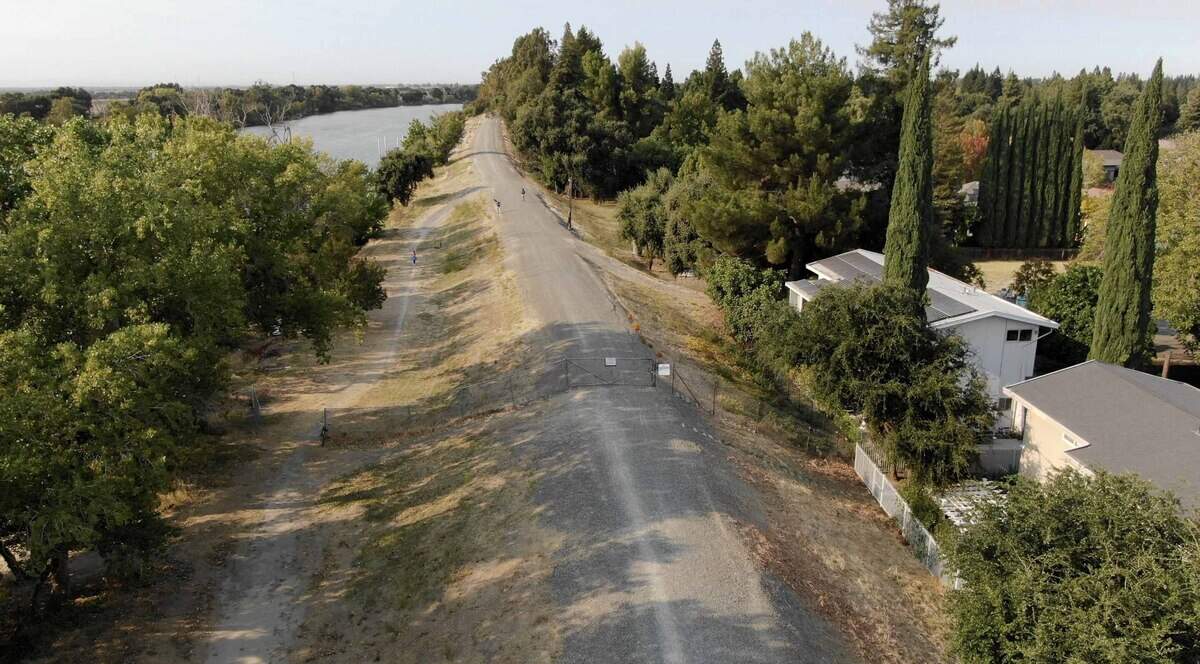
Ryan Bogle — who lives just south of the proposed fence — said in a public comment that he and his neighbors are “vilified” for simply asserting their private property rights. He expressed belief that the city is years away and millions of dollars short of the necessary easements for this section of the levee.
“For them to object because they have the plan to complete their project on some unknown date in the future is putting the cart before the horse,” he said.
Markuson, who also spoke during public comment, pushed back on the idea that the permit applications should be considered in isolation. Instead, he argued the board should question whether individual decisions, taken together, will gradually foreclose future options.
The board also acted outside its jurisdiction, according to Markuson. In his view, its role is merely to maintain the levees for flood protection.
“I don’t think the state of California should be authorizing permanent construction when the practical effect is to delay Sacramento’s plan,” he continued.
Because the levee is maintained by taxpayer funds, Markuson noted, it should be a public amenity.
“I don’t understand why the concerns of individual landowners who have the good fortune of living adjacent to the river should be able to control traffic along the top of the levee that is maintained by tax dollars,” he said.
Markuson, who has lived in Pocket for 40 years, added that he enjoys riding and walking on the portions of the levee that are open to the public. He used to ride his bike to work, he said, but had to descend the levee and ride on service streets to get around cross-levee fences. Markuson described the fences as “a source of frustration,” to himself and other local residents.
The board acknowledged the concerns of Markuson and others. Board member Andrews said she understood their perspective, having ridden many miles along the Sacramento River in her lifetime and “enjoyed it mightily.”
According to Johnson, the members answered a “pretty narrow question” in approving the permits: Will the fence projects impact the flood performance of the levee? “No.”
“We’re evaluating these on a case-by-case basis, and we’re a neutral party,” said board staff member Greg Harvey. “We’re not opposing fences, we’re not pro fences. We’re looking at these in a flood control aspect.”
This story was originally published June 30, 2026 at 6:30 AM.