CA organ donor registry surpasses 20 million. Why more donors are still needed
Nine in 10 Americans say they support organ donation. Far fewer sign up to become donors, while more than 100,000 people nationwide are waiting for lifesaving transplants.
Donor Network West and other organ donation organizations across the country have spent years trying to close that gap through outreach at hospitals, schools, DMV offices and community events.
In June, California crossed a historic threshold: More than 20 million people were registered as organ donors, according to the Donate Life California Donor Registry.
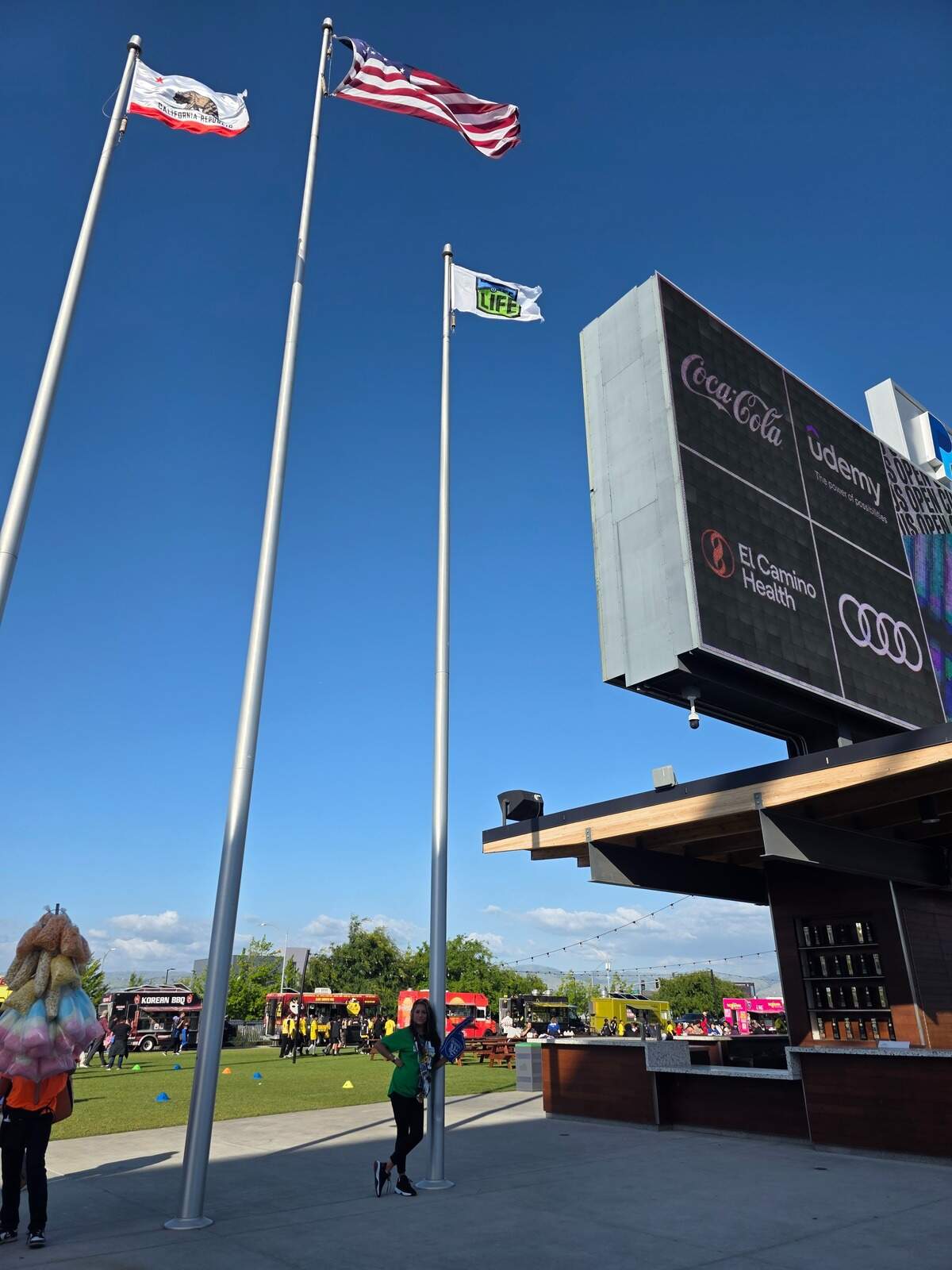
The milestone followed National Donate Life Month in April, an annual campaign observed since 2003 that encourages people to register as organ donors. This year, it was capped off with a Donate Life flag-raising ceremony at PayPal Park in San Jose, held in partnership with the San Jose Earthquakes before the team’s U.S. Open Cup match on April 28.
For Delia Sanchez, a kidney and liver transplant recipient, the growing number of registered donors is personal.
Sanchez was 28 when her doctor told her she needed both a kidney and liver transplant. At the time, she didn’t know what an organ transplant was. Since receiving the transplants, Sanchez has worked with Donor Network West as a Donate Life ambassador, educating the public about organ donation.
“It’s very heartwarming and it really brings a tear to my eye just knowing that there’s people out there who are just that passionate about helping people that they don’t even know,” Sanchez said of people registering to become donors.
During April, Donate Network West, a nonprofit organization that supports organ donation, organized outreach and educational events across Northern California and Nevada. Working with hospitals, DMV offices and schools, the organization coordinated 110 events and 18 flag-raising ceremonies featuring the Donate Life flag.
Janice F. Whaley, the nonprofit’s CEO, recalled a flag-raising ceremony held in partnership with the San Jose Earthquakes.
“It was a huge moment,” Whaley said. “We brought awareness to a stadium full of people.”
Sanchez, who also attended the event, recalled becoming emotional as she watched the crowd.
“It was another tear-jerker,” she said. “You got all these people who don’t know you, but they’re all supporting.”
Sanchez also volunteered at an event in Napa Valley, where families painted rocks with encouraging messages related to organ donation. “We must have painted 300 rocks,” she said.
E’Tiffany Jones, Donor Network West’s vice president of marketing and communications, said the nonprofit began planning the month’s events in February and distributed an educational toolkit containing information and templates to hospitals, transplant centers and the organization’s partners.
“It’s a tall order,” Jones said, adding that the need for organ donors remained urgent.
Across the country, another person is added to the transplant waiting list every eight minutes, according to the federal Health Resources and Services Administration. Seventeen people die every day waiting for an organ transplant, Jones said. “Whether it’s a neighbor that’s a friend, that’s a loved one, you know, a daughter, a mother and a father.”
Although 90% of U.S. adults support organ donation, 60% are registered as donors, according to a 2019 national survey cited by HRSA. In California, 45% of residents are registered organ donors, according to Donate Life California.
More than 21,000 Californians need organ transplants, and more than 90% of those on the waiting list need kidneys, according to Donate Life California.
The number of people waiting for transplants far exceeds the number of organs available, in part because registering as an organ donor does not guarantee a person will be able to donate after death. Only about 3 in 1,000 people die in circumstances that allow for deceased organ donation, according to HRSA.
Jones said myths and misconceptions were among the reasons people chose not to register as organ donors. One common misconception is that doctors will not try as hard to save a person’s life if the person is registered as an organ donor.
This belief “we know isn’t true because the hospital and the OPO are two independent groups,” said Jones, referring to the organ procurement organization, which coordinates the recovery and transplantation of donated organs.
Another reason potential donors hesitate to register is medical mistrust, Jones said. “In our communities, particularly in communities of color, you know, I mean, it’s kind of been deep-rooted.”
Jones also cited the media as playing a role in creating fear among potential donors.
“When there’s conversation or dialogue, you know, about cases or situations, sometimes that put the fear in people,” she said.
Those concerns sometimes surface in Sanchez’s conversations with people about organ donation.
Sanchez said she encountered one woman’s fears while wearing a pin encouraging organ donation at a deli. A woman approached her and said she would not donate a kidney because she was scared.
“You don’t have to be scared about saving someone else’s life,” Sanchez recalled responding.
Jones encouraged people to let loved ones know their decisions about donating organs, even if they aren’t registered. Family members who must decide whether to donate a relative’s organs often decline “out of fear of doing the wrong thing,” Jones said.
Increasing the number of registered donors can also improve the chances of finding compatible matches for patients from different racial and ethnic backgrounds. Donors and recipients do not have to share the same ethnicity, but the genetic markers used to match them are inherited. People with rare markers can be more likely to match with donors from similar racial or ethnic backgrounds, according to HRSA.
Donor Network West’s long-term goal is to have 75% of Californians registered as organ donors. In the short term, CEO Whaley said the organization will continue working to dispel misconceptions and educate people about organ donation and transplantation.
More than 48,000 transplants were performed in the United States in 2024, according to HRSA. A single organ donor can save as many as eight lives, while tissue donation can improve the lives of more than 75 others.
For Sanchez, however, the shortage of donated organs remains an immediate concern.
Six years ago, Sanchez was told that her kidney was in rejection and she would need another kidney transplant. She has been on the national organ transplant waiting list ever since.
“There’s a chance I might not even get a third,” she said. “But I am very excited to hear that there are people register and become donors because it just gives me a chance.”
Sanchez encouraged people waiting for organ transplants to stay hopeful.
“Never lose hope, because there are people registering to become organ donors every day, and those people are saving lives,” she said. “So don’t ever give up. Always stay strong and always be positive.”
As of Friday, the number of registered donors was 20,008,817.
Californians can register as organ, eye and tissue donors or check their registration status through the Donate Life California Donor Registry at donatelifecalifornia.org.