
Millions of mosquitos will be released in this Sacramento neighborhood. Here’s why
One hundred and forty-four thousand sterile male mosquitos took to the sky Tuesday as part of an effort by the Sacramento-Yolo Mosquito and Vector Control District to reduce the invasive Aedes aegypti population. The release, which took place in Rosemont, marked the launch of the sterile insect technique program.
This program uses an environmentally friendly method to interrupt the reproduction cycle of invasive mosquitos. It comes in response to the continued spread of the invasive Aedes aegypti population throughout the region. The moquitoes can transmit diseases such as dengue, Zika and chikungunya.
“This is a new innovative way to try and reduce the mosquito populations and protect public households,” district spokesperson Luz Maria Robles said.
On Tuesdays and Thursdays for 16 weeks, a total of 3.2 million mosquitoes will be released to mate with wild females, which will then lay unfertilized eggs. This technique represents a sustainable alternative to chemical pesticides, and poses no risk to wildlife, livestock, or people in the area, according to the U.S. Environmental Protection Agency. It targets only the invasive Aedes aegypti population, leaving the 26 other mosquito species in Rosemont unaffected.
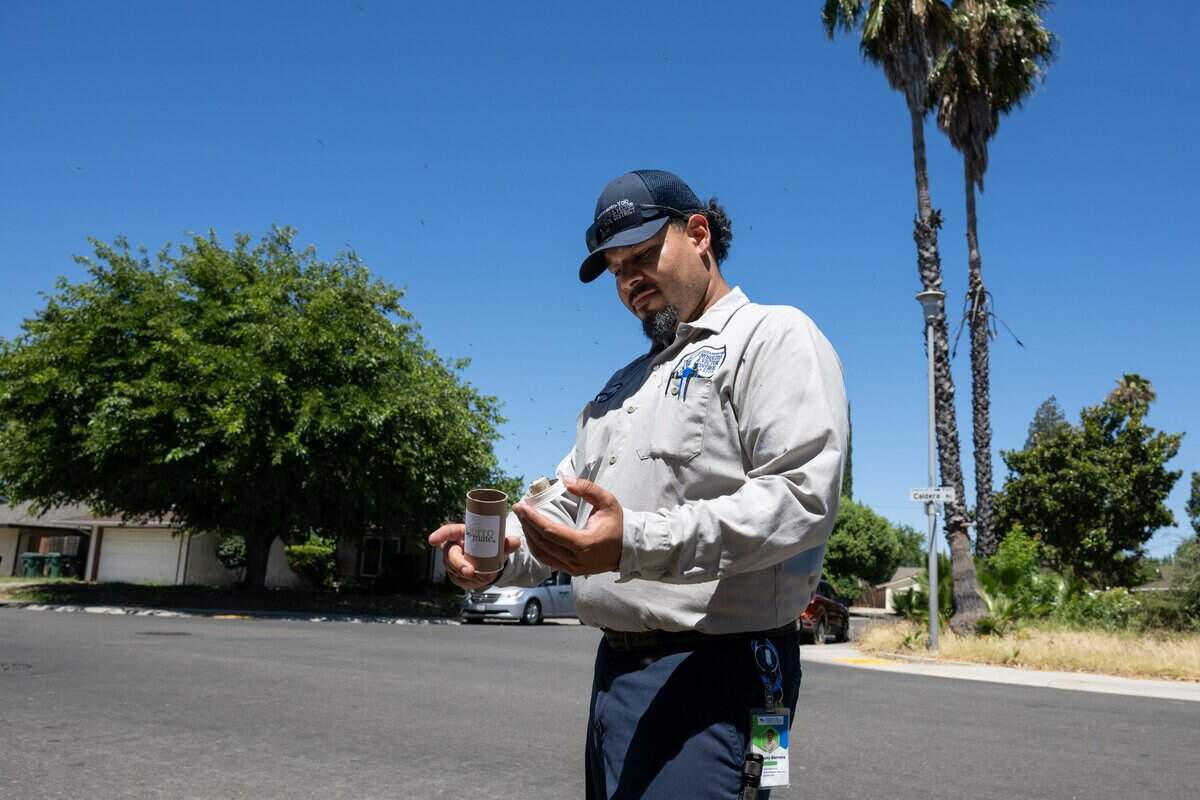
While the number of mosquitos that will be released may seem large, Robles explained the district must release ten sterile males to outcompete each wild male. The mosquitos only live for about one week, so the district must release the insects frequently and consistently. Because Aedes aegypti populations peak in the fall, the district launched the program in summer to cut mosquito numbers beforehand.
The district launched a pilot program last year in South Natomas, where it was able to reduce the invasive mosquito population by up to 40%. Based on those results, the district decided to expand the method to Rosemont. The Natomas program encompassed 25 acres, while this year’s program encompasses 120 acres.
Once the four-month program is complete, the next steps will be to evaluate its effectiveness and, if deemed successful, expand the program into other areas. Robles called this outcome likely.
The district chose Rosemont for the program location because it has seen a steady increase in mosquito populations, according to Robles. David Smith, who supervises the district’s aedes crew, said his team has received an increasing number of service requests for day-biting mosquitoes within the neighborhood.
He added that although people may see more mosquitoes in Rosemont over the next few months, they should not feel concerned because the sterile male mosquitos do not bite — they are completely harmless.
Even with the program, Robles said the public plays an important role in mosquito control. She encouraged residents to dump and drain standing water around their homes, use insect repellent and wear protective clothing and report unusual mosquito activity.
“It’s important for people to also understand that (mosquitos) can grow in a very small area of water in your yard, so draining all sorts of stagnant water will go a long way in reducing the population,” she said.
Even a teaspoon of water is sufficient for Aedes aegypti to reproduce, according to Robles.
“Mosquito control is a community effort, so we rely on people to do their part to stay safe,” she continued.
District staff said the program is only one part of their larger efforts to combat invasive mosquito populations.
“This is one item in the tool chest, and we’re always looking to expand our tool chest,” said Brian Wagner, a district supervisor.
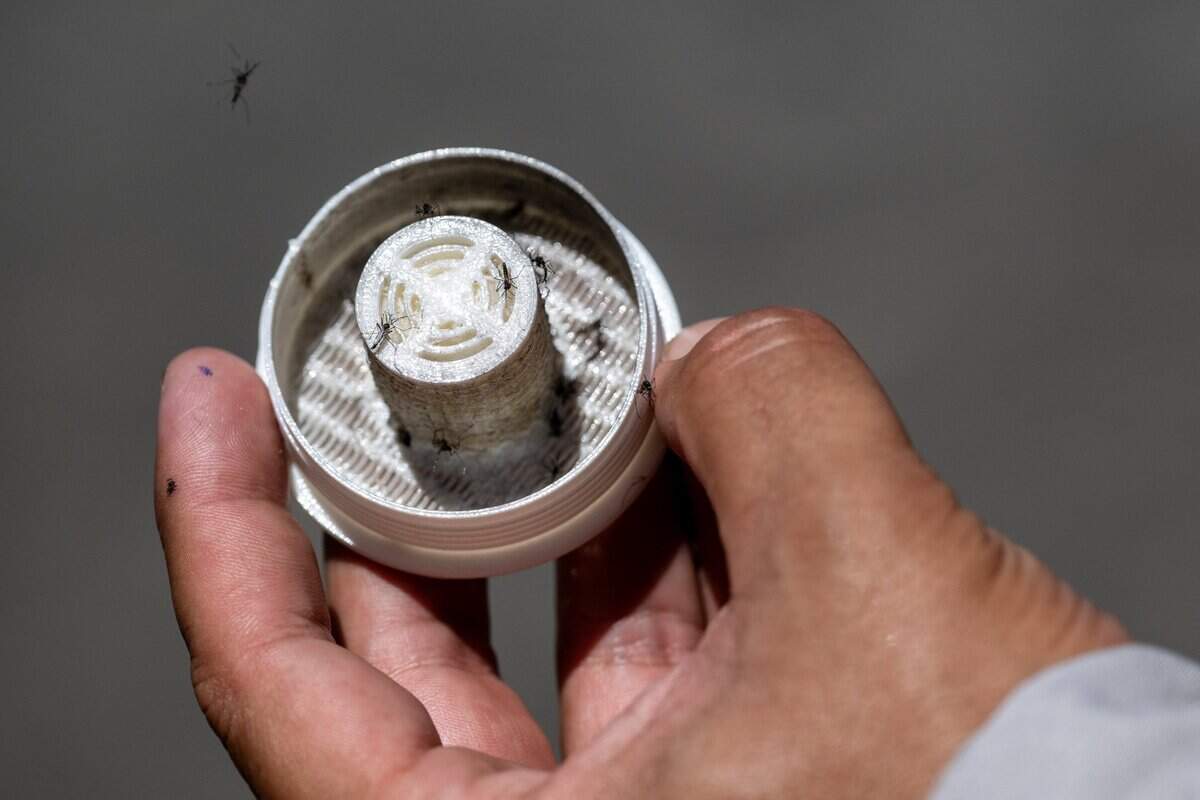
There are limited mosquito insecticides options in California, he explained, and users must apply the products to the source. Using sterile insects, on the other hand, enables release from a center point — in this case, Dolores Park in Rosemont.
Of the three main sterile treatment methods, the district chose the Wolbachia approach.
Wolbachia is a naturally occurring bacterium found in many insects, though not Aedes aegypti. Male mosquitoes infected with Wolbachia are effectively sterile because when they mate with female mosquitos without Wolbachia, or with another type of Wolbachia, the eggs do not hatch.
The district receives the Wolbachia-infected mosquitoes from the University of Kentucky.
Irradiation and genetic modification are two other methods of sterile treatment. Genetic modification is not approved for use in California. The district chose the Wolbachia approach due to its strong track record, according to Robles.
Robles emphasized the district’s commitment to protecting residents from the health threat invasive mosquitoes pose.
“It’s important that as a public health entity, we do everything that we can to reduce mosquito populations and reduce that threat to the residents that we serve,” Robles said.