This Folsom puppy ate a death cap mushroom. How quick thinking saved her life
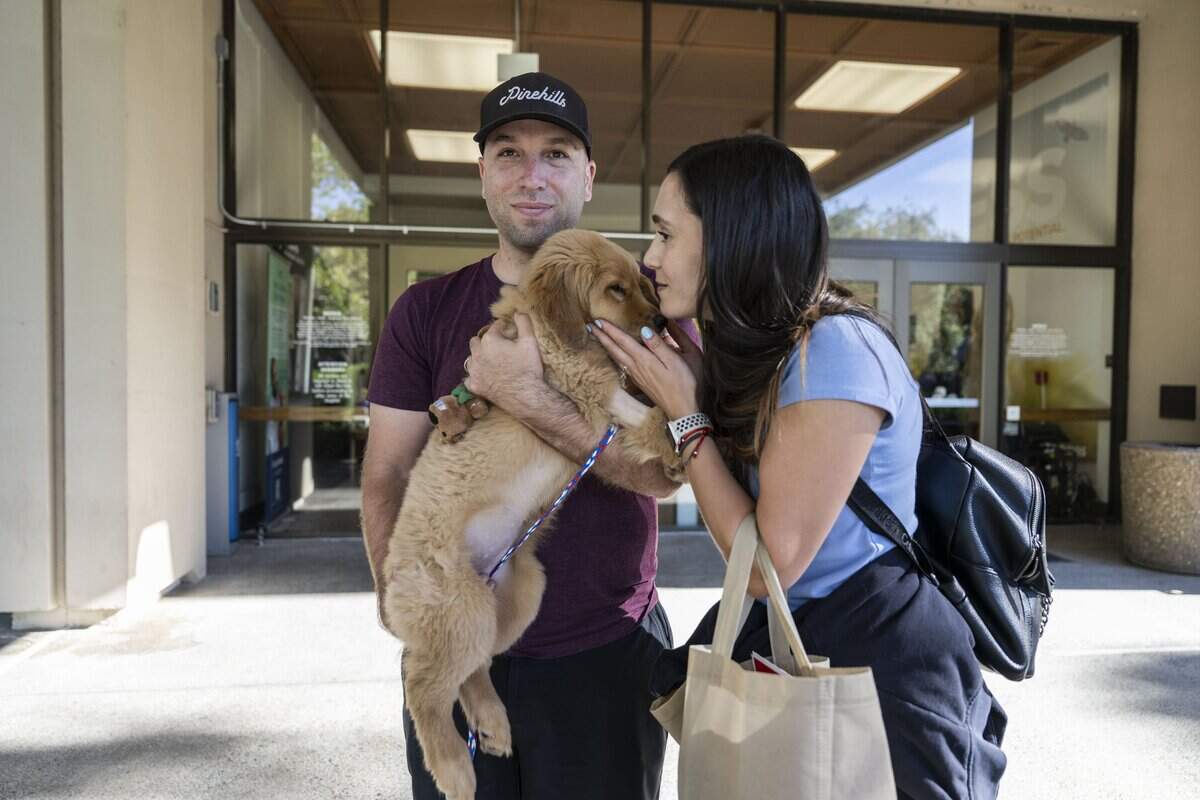
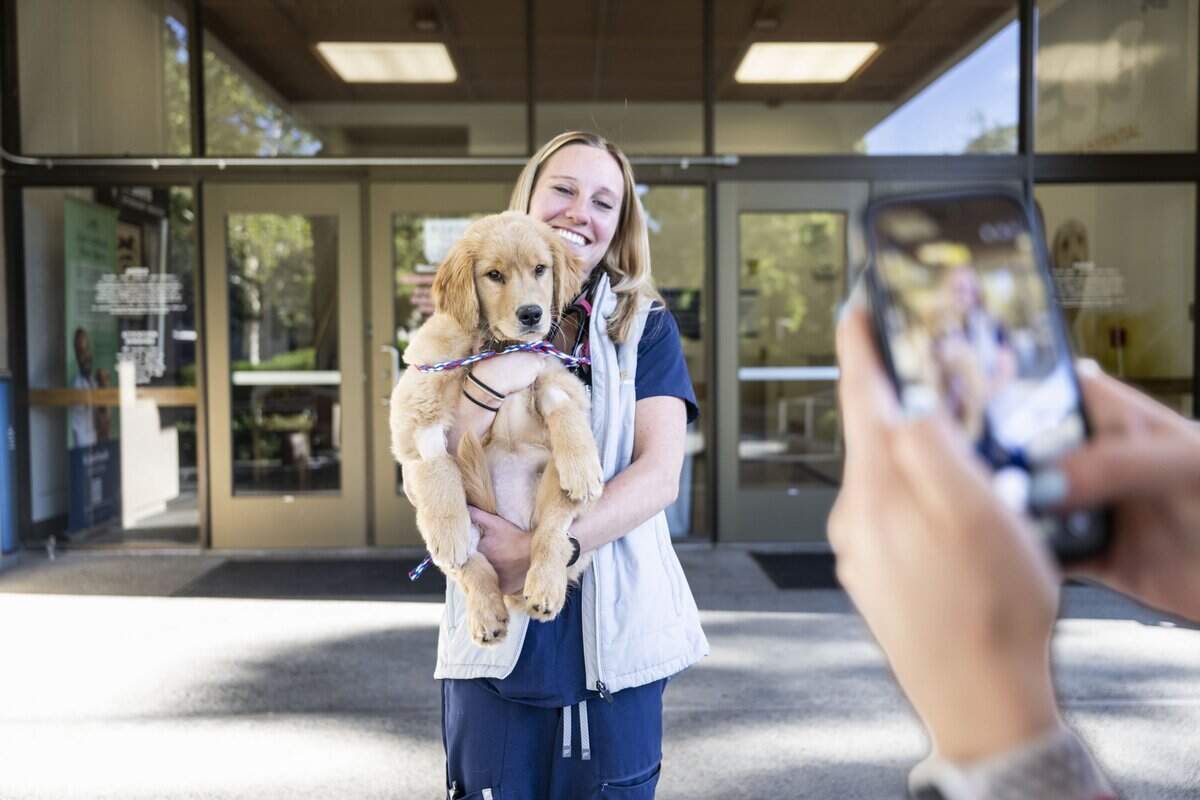
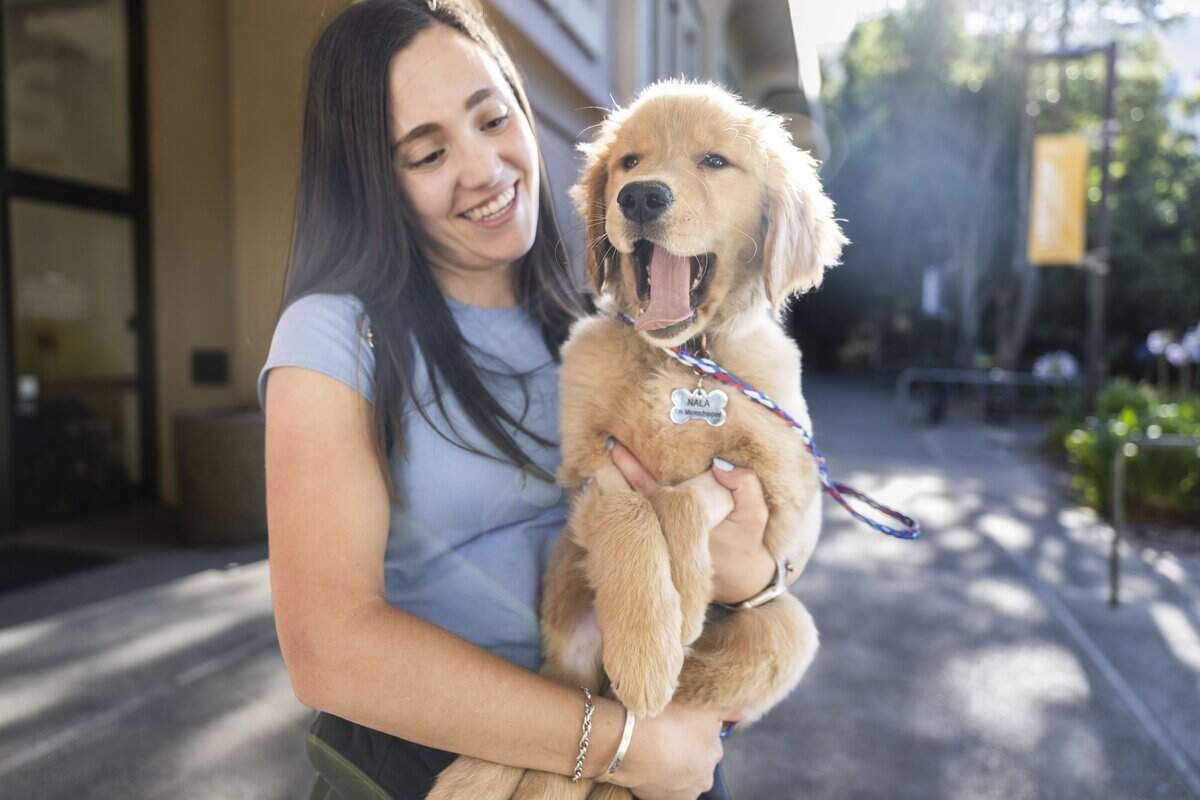
After four nights in the UC Davis Veterinary Hospital, a golden retriever puppy who had ingested one of the world’s deadliest mushrooms five days earlier wriggled in her owner’s arms Tuesday evening as she was successfully discharged.
“She seems to have recovered perfectly, which most dogs aren’t that lucky,” said Brittney Sanfacon, a resident veterinarian in the emergency room of the hospital who handled the puppy’s case.
Rick and Julieta Nielsen, who moved to Folsom in January, were celebrating Argentina’s World Cup win against Cabo Verde on Friday when Rick noticed that Nala, their eleven-week-old golden retriever puppy who had been running around the yard, was eating something near their neighbor’s fence.
“She started just chowing down on something, and she usually doesn’t do that,” said Rick.
After picking Nala up to investigate, he realized that she had been eating mushrooms and went inside to call Julieta, who uploaded a picture of the mushroom to an AI chatbot. The mushroom was identified by the chatbot as a death cap mushroom. The couple then called the Sacramento SPCA, who instructed them to post a picture of the mushroom on an emergency mushroom and plant identification Facebook group of mycologists.
“I posted it there, and I had like maybe 15 people responding, and they all said the same thing: ‘They’re like this is the death cap and you need to go to the ER immediately,’” Rick recalled.
Dangerous mushroom is not uncommon
Amanita phalloides, more commonly known as the death cap mushroom, is one of the most poisonous of all known mushrooms, and can be found throughout Northern California.
If ingested, death caps can be fatal even in small quantities. The mushrooms release toxins which prevent cells from functioning, causing widespread cell death which may result in liver failure in as little as within 24 hours.
According to Sanfacon, it’s not always easy to tell that something is wrong in the early stages. “Most people don’t witness the mushroom ingestion, so most patients we don’t see until they’re already hit the kind of very sick liver failure stage.”
After that, Sanfacon said that vets often have to do some investigating to figure out what exactly an animal ingested. The deadly mushroom is often a “top suspicion.”
Death cap mushrooms are also highly poisonous to humans.
Since November 2025, the Northern California and Central Coast regions have experienced an increase in mushroom poisoning cases. According to the California Department of Public Health in an update to a January health advisory, the California Poison Control System had received 47 reports of mushroom poisonings as of May 11, resulting in four deaths and several liver transplants.
“Fifty patients in one year is really an extraordinary number,” said Dr. Rais Vohra, a medical director at the California Poison Control System. “That’s never happened in California state history before.”
California typically reports less than five cases of mushroom poisonings per year.
Because death cap mushrooms and western destroying angel mushrooms, both extremely dangerous, can be easily mistaken for other varieties of edible mushrooms at different stages in their growth, the California Department of Public Health encourages individuals to avoid foraging and consuming wild mushrooms while the risk of poisoning was high.
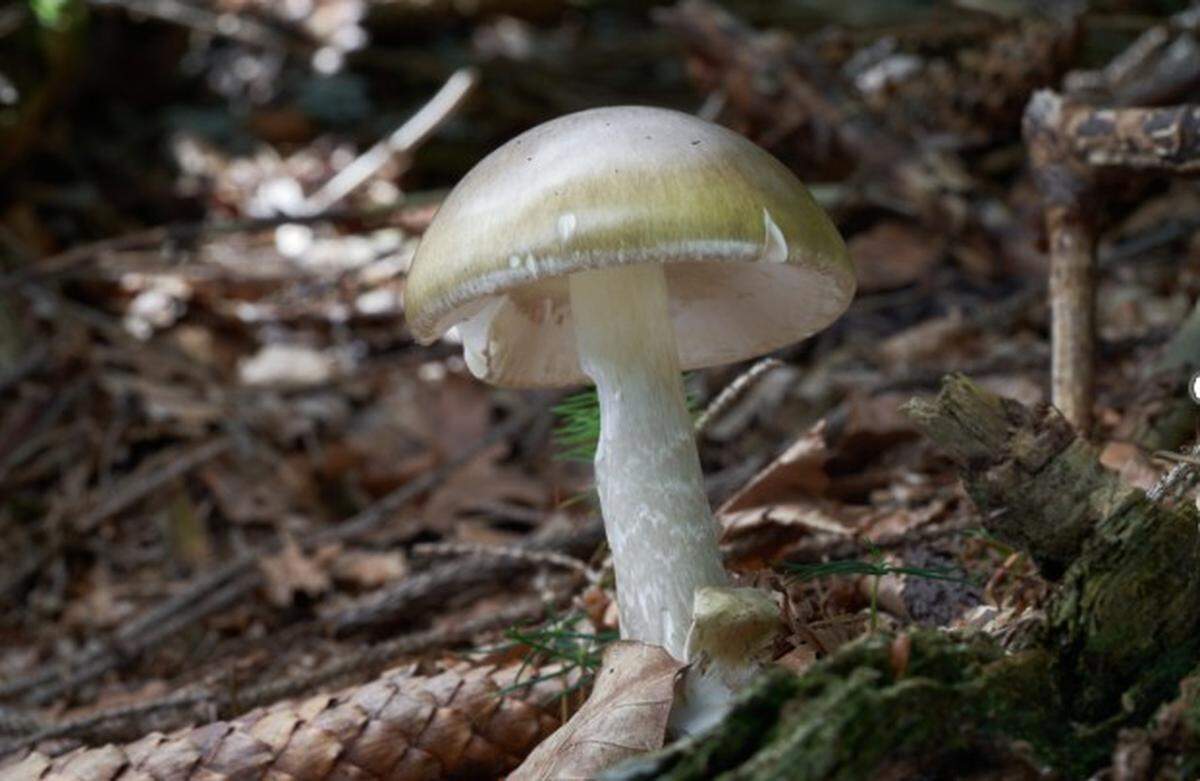
“Even very experienced mushroom foragers have made mistakes out there,” said Vohra. “It’s very easy to make mistakes, and this is a very costly mistake.”
The toxins in the fungi, called amatoxins, cannot be removed by boiling, cooking or drying the mushrooms, and can result in liver failure and death if consumed.
“The safest thing is just don’t pick your mushrooms out in the wild and go to a grocery store if you want to eat mushrooms,” said Vohra.
As with pets and animals, the symptoms of ingesting deadly mushrooms typically don’t manifest until around six to twelve hours after consumption, when the toxin has already spread to a patient’s tissues. After that, it can be much more difficult for doctors to effectively treat patients, Vohra said.
A happy outcome
Rick and Julieta brought Nala to VEG, an emergency veterinary hospital in Folsom, where Dr. Megan Cannizzo induced vomiting and gave the puppy activated charcoal, which absorbs toxins from a dog’s digestive system. The couple was then redirected to UC Davis.
“We drove straight here as fast as we could without getting a ticket,” said Rick.
For the next four days, Rick and Julieta were anxious. Rick took time off of work and did his own research online. “I read all sorts of PubMed articles online,” he said. “There’s not a lot of studies of dogs that had induced vomiting within an hour online and recovered, so that’s what really scared me.”
Rick said he’s grateful that Nala had recovered successfully, but worries that it could happen again. “It’s like a silent killer,” he said. “People just don’t realize until it’s too late.”
As Nala played on a blanket spread on the sidewalk, he encouraged other dog owners to keep a careful eye on their pets. “Watch your dog and what they’re consuming,” he said. “I feel like if I didn’t see her eating this, it would be a different story.”
This story was originally published July 8, 2026 at 3:47 PM.