New report finds racial disparities in Sacramento PD’s use of force, stops and searches
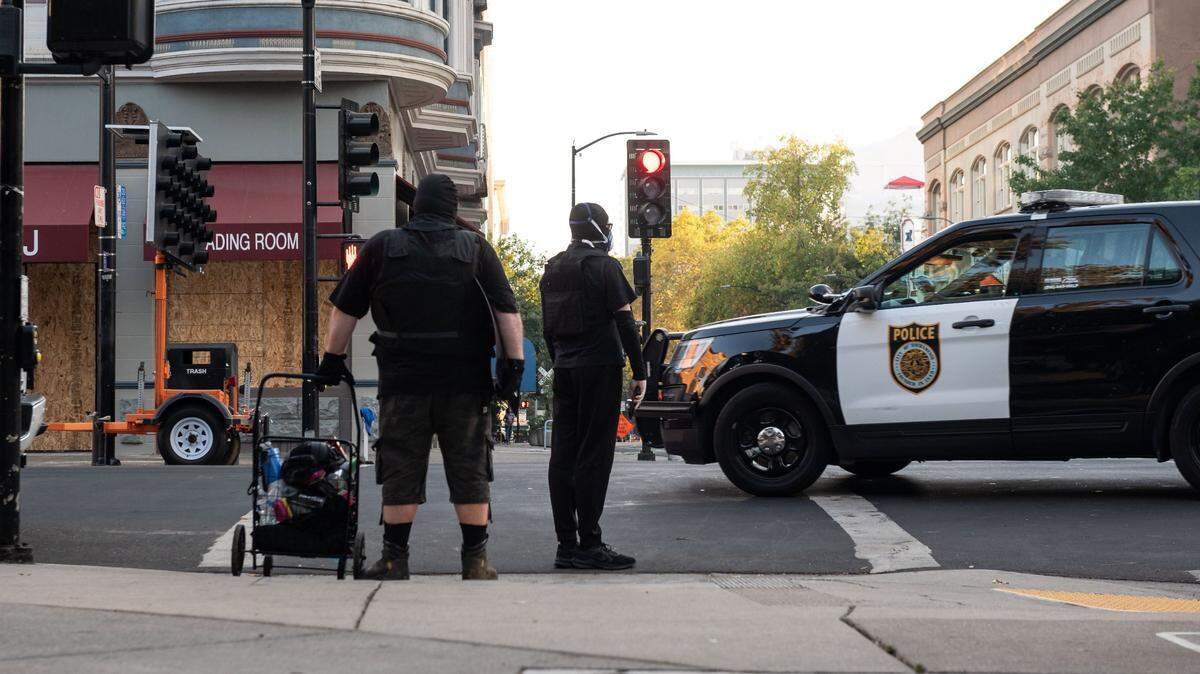
A new report by the Center for Policing Equity revealed that the Sacramento Police Department has used force disproportionately against Black residents compared to white residents in recent years, and was significantly more likely to stop and search Black residents than white residents.
The report also found disparities between police treatment of Latino residents and white residents.
The Sacramento Police Department commissioned the report in 2019 in an attempt to identify “any racial disparities in our department’s interactions with those we serve,” said Sacramento Police Chief Daniel Hahn in a Tuesday news release.
The Center for Policing Equity works with police departments across the country, using data to analyze potential racial biases within the department, in an initiative called the National Justice Database.
The report’s findings are based on data from 2014 to 2019. The center released the report on July 7, and the Police Department released its response on Tuesday.
What did the report find?
The report examined three action categories — non-traffic stops, traffic stops and use of force. In all three of the categories, the report found the police department acted disproportionately against Black populations compared to equivalent white populations.
The center classified non-traffic stops as all stops made for reasonable suspicion; parole or probation violation; warrant, truancy or consent search or a stop for any other non-traffic reason.
After controlling for factors such as crime rates, poverty rates and neighborhood demographics, the report found that Black people experienced non-traffic stops 6.3 times as often as white people. During these stops, Black people were 59.7% more likely to be searched than white people, though these searches produced contraband more rarely than searches of white people.
Latino people experienced non-traffic stops 1.3 times as often as white people, and were 21.5% more likely to be searched. These searches also produced contraband more rarely than searches of white people.
When examining stops for traffic violations, the report found that Black people accounted for 38% of traffic stops between 2014 and 2019, despite making up just 13.1% of the Sacramento population. Latino people, who make up 28.3% of the Sacramento population, accounted for 23% of all traffic stops. White people, who make up 33.1% of the population, accounted for 29% of all traffic stops.
During routine traffic stops, Black people were searched 2.7 times as often as white people. Latino people were 87% more likely to be searched than white people.
The use of force by the police department decreased by 27.4% between 2014 and 2019. But use of force disproportionately affected Black residents throughout that time. Black people experienced force at the hands of the police department 4.5 times more often than white people, accounting for population size. When the data was controlled for crime rates, poverty rates and neighborhood demographics, Black residents were still subjected to force 4.1 times as often as their white counterparts.
Latino residents were subjected to police force at approximately the same rate as white residents.
Sacramento Police Department’s response
“CPE did find racial disparities in our department’s data that we provided to them,” Hahn, the police chief, said in a video statement accompanying the release of the report. “These disparities were similar to the disparities found in the other cities they studied as part of their larger national database project.
“The question we all should be asking is what is the cause of these disparities, and what needs to be done to make real change in our city?”
Hahn said the equity report identified several potential causes including department culture and policy; the relationship between the Police Department and the Sacramento community; and homelessness.
The police chief said these factors have the strongest negative impact in “particular neighborhoods in our city” — including those with high percentages of residents living beneath the poverty line, those with the lowest median incomes and those with the highest percentage of people with less than a high school diploma and otherwise limited educational resources. Hahn cited Del Paso Heights and Oak Park as examples.
The Police Department on Tuesday also released a 53-page “contextual information and response” document.
The document said officers’ contacts with suspects “nearly mirror the demographics of suspects as described by victims and witnesses.”
The report said Black people made up 47% of non-traffic stops and white people 22%; Black people made up 38% of traffic stops and white people made up 29%. A chart from the Police Department showed the suspect’s ethnicity was described as Black or African American in 37% of all police reports analyzed by the CPE, and as Caucasian or white in 25%.
The Police Department also noted that more than half of searches conducted from 2014 to 2019 were due to parole status. The department cited California Department of Corrections and Rehabilitation statistics showing Black men make up 45% of the city’s male parolees, followed by white men at 25% and Latino men at 20%.
This story was originally published July 28, 2021 at 11:01 AM.