Sacramento police gun buyback event was successful, but is it an effective strategy?
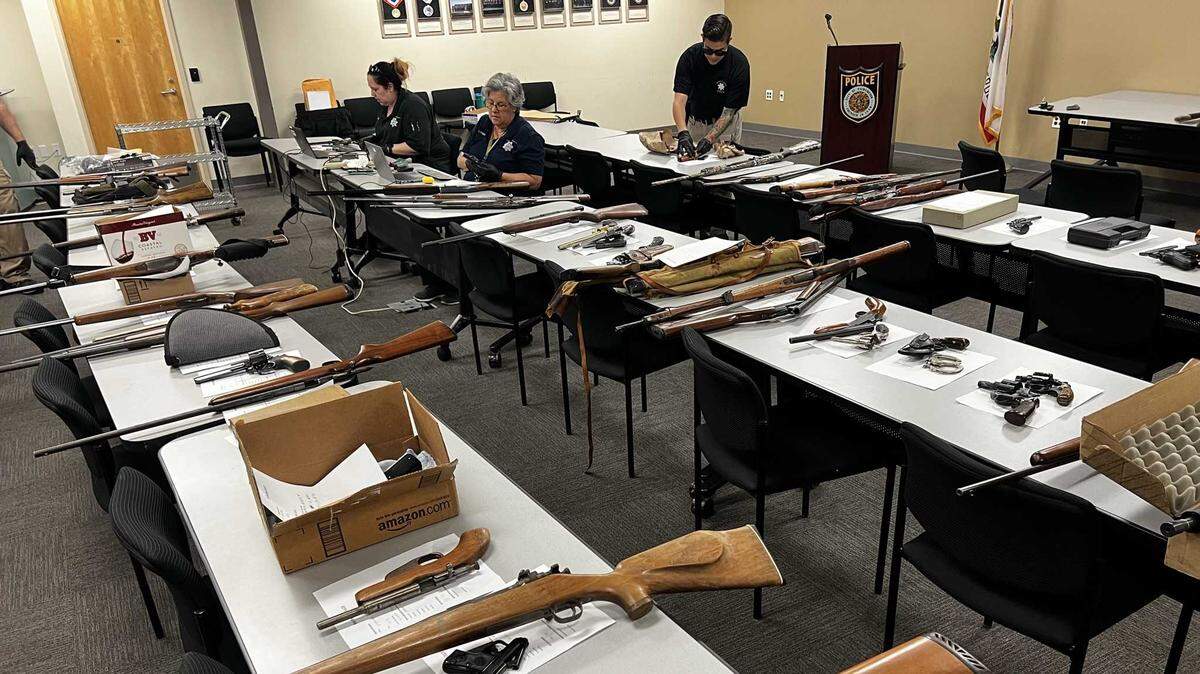
They drove into the Sacramento Police Department parking lot on Freeport Boulevard last month; more than a 100 people with guns in the trunks of their vehicles. They didn’t want the firearms anymore.
Police collected 134 firearms during the May 21 event to reduce gun violence. There were plenty of old hunting rifles, revolvers and shotguns turned in, even a “pirate-looking musket,” said Officer Chad Lewis, a Sacramento police spokesman.
“But there were a lot of real deal guns in there too,” Lewis told The Sacramento Bee.
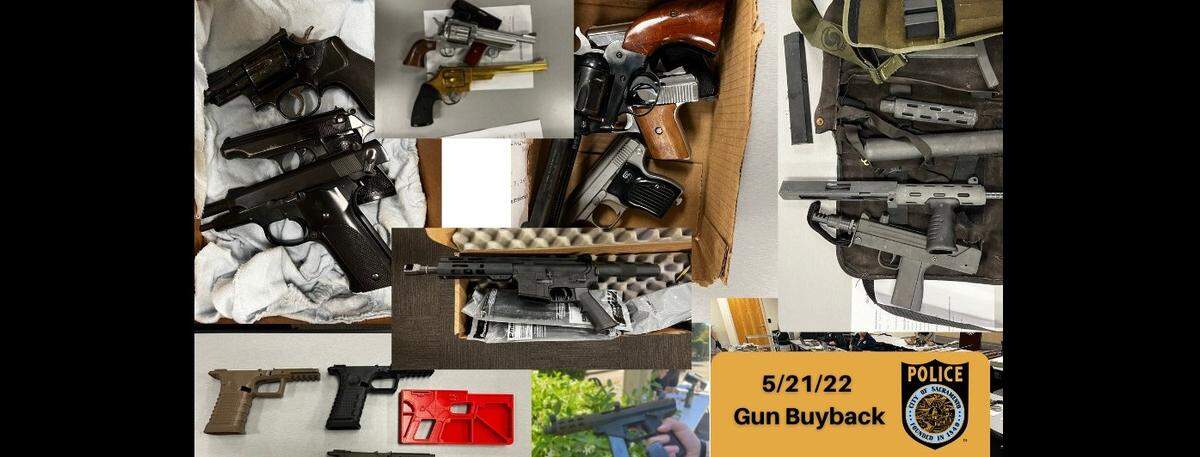
He said there was at least one short-barrel AR-15-style assault weapon, a MAC-10 machine pistol/submachine gun, and a Tech-9 semiautomatic pistol handed over, each in exchange for a $50 gas gift card.
It was the first time the department had held a gun buyback event in nearly 30 years — and Sacramento Police Chief Kathy Lester called the event “hugely successful,” as she unveiled a broad strategy this month to turn back a rising tide of gun violence in the capital city.
But are these gun buybacks effective in creating significant reductions in gun crimes? Not alone, they’re not, says one expert on gun violence with longstanding work on its underlying causes.
People who have guns for criminal purposes are not going to participate in a buyback, said Dr. Garen Wintemute, an emergency room physician at UC Davis Medical Center and director of the university’s Violence Prevention Research Program.
Guns in California households
There are about 400 million guns in circulation in the United States, Wintemute said, and 25% of all households in California have at least one gun. He said gun buyback programs will not significantly reduce the number of guns in circulation or the number of gun crimes.
But Wintemute said gun buyback events can increase community engagement in anti-gun violence efforts, which could lead to further collaborations in community-based intervention. He said residents look to elected leaders to find solutions, but participating in gun buyback events allows the public to play a role in these solutions.
“The purposes are to get some guns out of circulation, but also to give individual people and communities a sense that this isn’t somebody else’s problem to fix,” Wintemute told The Bee. “The spirit of the time here is people have had it with gun violence and are willing to step up and do what they can to help be part of the solution and not just sit on the sidelines and watch the train wreck.”
The last time Sacramento residents were offered a gun buyback program was in August 1993, when 127 people turned in firearms to police in exchange for Sacramento Kings basketball game tickets. It was Wintemute and his research program that conducted an evaluation of that 1993 buyback event, which was published in Injury Prevention in September 1998.
Nearly half of the 1993 participants said they were worried children might find and use the gun, and 41% had no gun in their household after the Sacramento gun buyback event.
But Wintemute used to be a skeptic of gun buyback events, saying they had to produce significant drops in gun violence rates to prove their effectiveness. Now, he says that’s an “unrealistic standard,” and there are plenty of things people can do on an individual basis to reduce violence.
Gun buyback events have changed
Wintemute said gun buyback events have changed, previously offering the same gift incentive for all guns, whether it was a broken pistol or a fully functional assault rifle. These days, police will take the broken guns, but they won’t give you anything in return. The type of guns turned in also have changed.
“They have, over time, come more to resemble guns that are used in crime,” said Wintemute, who has conducted and published findings on gun accessibility and connections between gun ownership and violence.
Along with the handguns, the submachine gun and the assault weapon handed over to Sacramento police last month, officers collected the lower portions of kits to make privately manufactured guns, commonly known as ghost guns.
“There were a lot of handguns in there,” said Sacramento police Sgt. Zach Eaton. “The assault weapons alone, you’re talking about guns that can do a lot of damage in a very short amount of time.”
Wintemute said he is not surprised parts of ghost gun kits were turned in, since California law now makes it illegal to possess a gun without a serial number.
“It’s a crime for me to continue to possess that gun without a serial number,” Wintemute said. “Maybe the thing I’m just gonna do is give it up and not produce a firearm out of it.”
Preventing suicides or school shootings?
Wintemute said gun buyback events could provide a preventative solution for parents worried their teenagers might hurt themselves or somebody else. A parent turning in their guns could prevent youth suicides or school shootings.
“I can change that whole equation if I get the guns out of the house.” Wintemute said. “We know that most kids who commit school shootings get the guns from home. Most kids who commit suicide get the guns from home.”
Police said most of last month’s gun buyback participants said they wanted to turn in their firearms because of their lack of experience or knowledge of guns, their lack of knowledge of the legality of the firearms or their inability to safely store the firearm.
Eaton said child safety is a huge concern, and storing guns improperly can lead to a tragic outcome. There also is the concern of home burglaries that can lead to more stolen guns on the street.
At the scene of the April 3 gang-related shootout in downtown Sacramento that killed six people and wounded 12 others, one of the handguns police recovered had been stolen and “converted to a weapon capable of automatic gunfire,” according to authorities.
Part of broad anti-gun violence strategy
Eaton said the gun buyback in May was not organized in response to the downtown mass shooting. He said the department had plans for the event earlier in the year as part of the police chief’s strategy to reduce gun violence with intelligence-driven enforcement and partnerships with community groups to work on the root cause of crime.
“The point of it was we’re trying to use any and all ideas to remove unwanted guns and illegal guns off our streets,” Eaton told The Bee. “So the idea behind the buyback is you have people in the community who have these guns that they don’t want anymore. We don’t want those guns getting in the hands of somebody who’s prohibited from having them.”
He said the guns collected at last month’s event will be destroyed, just like seized firearms collected as evidence and no longer needed after a criminal case has ended in a conviction.
Eaton said the department is looking to have more gun buyback events since they ran out of gas gift cards to hand out within the first 90-minutes of what was supposed to be a 5-hour event. He said they would consider hosting an event in other areas of the city after receiving inquiries from one community group in North Sacramento.
Police accepted some guns that were no longer functioning, but those participants were not given a gift card. Eaton said the department just needs to secure grant funding to buy the gift cards and arrange the logistics before scheduling another event.
Gun safety at event
The participants followed the safety rules in last month’s gun buyback event: Bring the guns unloaded in the trunks or cargo area of their vehicles and stay in their vehicles as officers approached to make the exchange.
“We don’t want people walking up with guns in their hands when officers are out there,” Eaton said. “That creates a situation that’s just not good.”
Sacramento Mayor Darrell Steinberg said they don’t know if one of the guns handed over to police last month would’ve later been used in a crime or in a suicide. He called the 134 guns turned in a “good start,” and he’s going to continue to work with the department on anti-gun violence efforts.
“There’s way too many guns, and the Police Department is trying to get as many guns off the streets as they can,” Steinberg told The Bee. “This will continue to elevate the issue of gun safety and gun violence.”