First Placer fentanyl murder case ends with victim’s family in court: ‘I want my son back’
On her drive to work from her home in Grass Valley, Elizabeth Dillender passes by the cemetery grave site where her son was laid to rest three years ago.
And each time she remembers how they placed her son, Kade Kristopher Webb, inside the coffin wearing a camouflage jacket she helped him pick out before either knew he would die at the age of 20. He was laid to rest with his skateboard placed on his chest, and he still sporting the fresh haircut he had received to attend his cousin’s wedding.
“These are the images that go through my mind as I robotically drive to work by the Newcastle cemetery,” Dillender explained in court Thursday moments before her son’s friend was sentenced to prison for selling him the fentanyl that killed him.
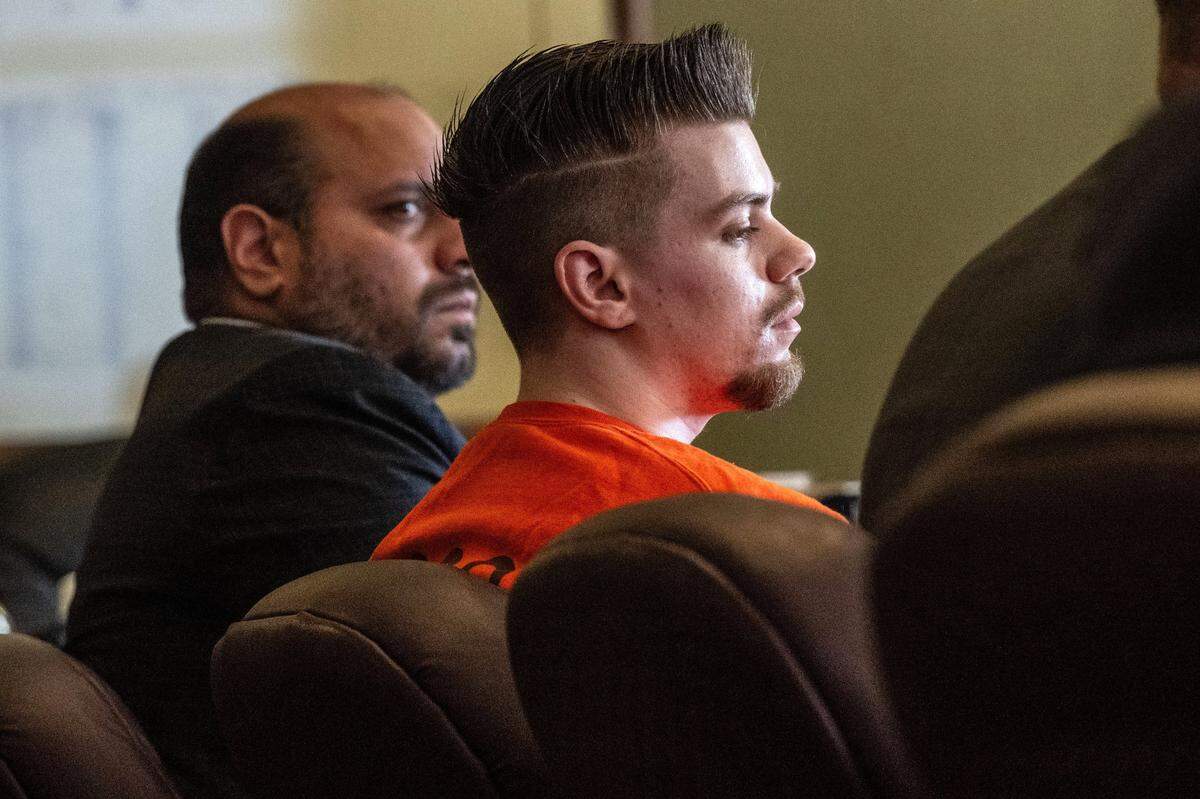
Placer Superior Court Judge Michael Jones sentenced 23-year-old Carson David Schewe to serve 20 years to life in prison for Webb’s December 2021 fentanyl death. Webb ingested a lethal dose of the addictive synthetic opioid.
Prosecutors said Schewe sold the fentanyl to Webb, who died shortly after from an overdose in the bathroom of a Roseville Safeway.
Webb had just been released from a drug rehab facility after completing treatment for addiction and was planning to attend the wedding of his cousin, Major League Baseball player Logan Webb.
The San Francisco Giants pitcher attended Thursday’s sentencing hearing at the Historic Courthouse in Auburn. He said he wanted to honor his cousin, who he considered a brother, and speak about the dangers of fentanyl.
“When I received that call on that terrible day, I was actually preparing for the happiest day of my life. I was getting married two days later,” Logan Webb said at a news conference about the moment he learned his cousin was dead. “With my family’s blessing, I got married. And a couple days later, I was a pallbearer for my cousin.”
In September, a jury found Schewe guilty of second-degree murder in Kade Webb’s death. He also was convicted of two felony counts of possessing drugs for sale. The judge gave Schewe the maximum sentence: 15 years to life for the murder charge, along with an additional five years in prison for the drug charges.
Victim impact statements
Webb’s family was given a chance to speak in court about the impact of his death before the judge sentenced Schewe.
His mother said her son knew he was about to become a father when he was released from drug rehab. She said he never had the chance to meet his daughter, now 2-year-old Indigo Kade Webb. His siblings have struggled with grief for the past three years.
“I want my son back so badly,” Dillender told the judge.
Fentanyl is a powerful and potentially addictive drug that is up to 50 times stronger than heroin. The California Department of Justice has said two milligrams of the opioid can result in overdose and potentially death.
The grieving mother said her son was left to die alone on the cold floor of that bathroom without anyone there to hold him. She said Schewe sold fentanyl pills to her son and his other friends knowing how deadly they were.
“(Schewe) did this so he could have a constant stream of income from his addicted community and friends,” Dillender said in court.
Kurt Webb, the victim’s father, called Schewe a “sociopath and a menace to society.” He said it’s been “unbearable” each time he tries to sit down and process the manner of his son’s death, remembering the crime scene as his son’s body lay underneath a yellow tarp.
“You knew he had a drug habit, and he was just out of rehab and trying to make a new start,” the father told Schewe sitting a few feet away in the courtroom.
His family also read in court a letter Kade Webb had written to himself as an exercise as he neared the completion of his drug rehab treatment. He spoke about his “impulsive decisions to self-medicate” that led to his addiction.
“I’ve personally never felt this great in a long time,” he wrote in the letter. “Nothing feels greater than taking control of your life and this horrible addiction.”
He reassured himself is was okay to feel this great; that it was normal and how it should. He was confident he could head out into the world and avoid “relapse,” which would only lead to negative outcomes. He wrote that he was motivated, because he was going to have a little girl who would look up to him and a girlfriend who would care for him.
The Placer County murder trial
Two years ago, Schewe was the first defendant in Placer County to be charged with murder in a fentanyl death. His murder case was the first in the county to make it to trial and left for a jury to decide the outcome.
Deputy District Attorney Devan Portillo, the prosecutor in the criminal case, told the jury that Schewe had two other friends die from fentanyl overdoses, along with an ex-girlfriend who died in a bed next to him a few months before Kade Webb died.
Portillo told the jury that Schewe sold a fentanyl-laced pill to his friend, Webb, moments before Webb walked into that bathroom on Dec. 3, 2021, crushed the pill and snorted it. The prosecutor said Webb died within minutes; emergency responders found his body face down in the bathroom about five hours later.
Webb had been released from a drug rehab facility six days before he died. Portillo said Schewe made a video not long before meeting Webb the day he died; the video shows pills in a small plastic food storage bags containing the fentanyl that killed Webb.
“Carson Schewe knowingly sold fentanyl to Kade Webb in conscious disregard for Kade’s life along with all the other lives already lost,” Portillo wrote in a Nov. 21 sentencing briefing. “As such, the maximum sentence the law allows is appropriate to provide some justice to the family and friends Kade Webb leaves behind, including his young daughter who was brought into this world shortly after Kade was taken from it.”
Brad Whatcott, one of Schewe’s defense attorneys, asked the judge for “mercy,” since this was not a case about “malicious intent and violence.” He said his client also was struggling with drug addiction, since he was 15 years old, and selling drugs to financially support his own habit.
“I do not wish to minimize the tragedy of this case,” Whatcott said in court. “Carson did not wish for anyone to be harmed.”
The defense attorney said life prison sentences is not the best way to combat opioid overdoses, and this case should be an opportunity for “restoration and reform.”
Five fentanyl murder cases
Including Schewe, the Placer County District Attorney’s Office has filed murder charges against five defendants accused of selling fentanyl to people who later died from the drug.
Placer County District Attorney Morgan Gire and other prosecutors in California have taken a new approach to fentanyl deaths: filing murder charges against people who sell or provide fentanyl to someone who later dies from ingesting the drugs.
In August, James Scott Teahan Jr., 34, became the fifth person in Placer County to be charged with murder in connection with a fentanyl death. Teahan is accused in the April 24 death of Stephen Windham.
Three other men, all in their 20s, have agreed to plea deals with Placer County prosecutors. Each were convicted of homicide in connection with a fentanyl death.
Schewe’s first trial ended abruptly March 1, four days after it began, because a lab failed to provide the prosecution and the defense a report detailing a summary of results from Webb’s blood tests. Placer Superior Court Judge Michael Jones was forced to declare a mistrial, and he ordered a second trial for Schewe with a new jury.
Schewe’s second trial began Aug. 26 with jury selection. For nearly three weeks, jurors heard testimony and viewed evidence presented in the case. The jury deliberated for a few days before returning to the courtroom with their verdict.
Schewe has remained in custody at the Placer County Jail since his February 2022 arrest. He will receive 1,037 days of credit for time already served in jail. He later will be transferred to a prison.
This story was originally published December 5, 2024 at 2:41 PM.