Life sentences for two Aryan Brotherhood members at Sacramento-area prison in federal court
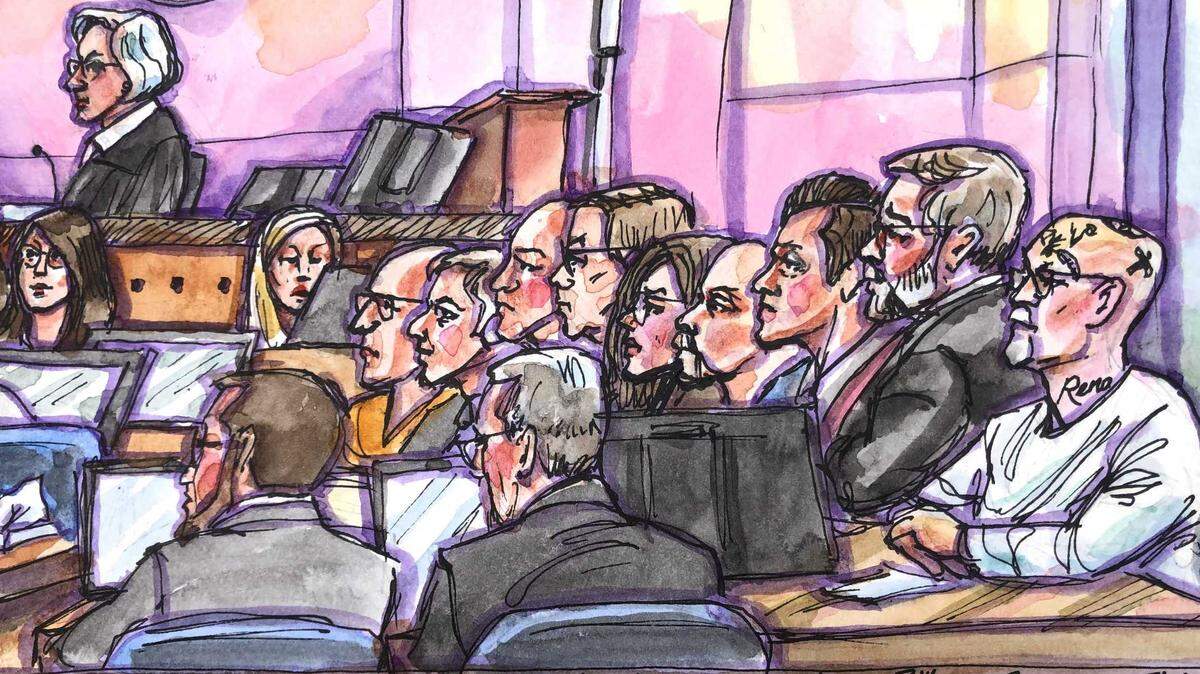
Two Aryan Brotherhood prison gang members were each sentenced in Sacramento federal court on Wednesday to consecutive life sentences for racketeering, conspiracy to commit murder and drug trafficking, all conducted while incarcerated.
Ronald Yandell was sentenced to two life terms plus 50 years in federal prison by U.S. District Court Kimberly J. Mueller. William “Billy” Sylvester was sentenced to two life terms. A third defendant, Daniel Troxell, is scheduled to be sentenced on Feb. 18, court records show.
The three were convicted in April in a sprawling case that relied heavily on testimony from other inmates, guards and video of bloody prison yard attacks.
Yandell, 62, was found guilty of 15 counts including racketeering and conspiracy to commit murder, distribution of methamphetamine and heroin, and murder in aid of racketeering in the 2015 slaying of inmate Hugo Pinell.
Sylvester, 56, was found guilty of the racketeering conspiracy as well as murder in aid of racketeering and drug charges, and was found guilty of conspiracy to conduct racketeering and conspiracy to murder in aid of racketeering.
The case is part of a broader effort by Sacramento U.S. Attorney Phillip Talbert to crack down on the Aryan Brotherhood prison gang and its activities within California correctional facilities. It began in February in federal court in Sacramento after five years of legal wrangling.
“The Aryan Brotherhood controlled its members, associates, and others both inside and outside prison walls, ordered multiple murders and running a drug trafficking operation that spanned counties and states,” Talbert said when the three were convicted.
Yandell is currently serving a sentence of 65 years to life for murder and voluntary manslaughter in California State Prison, Sacramento, commonly known as New Folsom.
He is also under investigation for allegedly attacking two prison guards who were escorting him to an appointment last month. Officials at the California Department of Corrections and Rehabilitation said he drew an improvised knife on the guards, who then subdued him with pepper spray.
Yandell rose to address Mueller before she pronounced his sentence, standing at the defense table wearing an orange jail jumpsuit and displaying a dark green shamrock tattoo on the back of his shaved head that prosecutors say is a symbol of membership in the white supremacist prison gang.
He denied orchestrating the attempted murder and other crimes. He said he had been targeted for retaliation by prison officials after participating in a 2013 hunger strike at the state’s notorious Pelican Bay solitary confinement unit.
Yandell also complained about Mueller’s rulings in the case on several motions that his defense had made.
“They did an outstanding job,” he said of his attorneys, “but it’s impossible to win when every single motion is denied over and over.”
During the trial, Yandell’s attorneys also argued that the prosecution was motivated in part by his and Troxell’s participation in the Pelican Bay hunger strike.
They quoted an email — which Yandell also cited in court on Wednesday — in which a federal Drug Enforcement agent wrote that upon learning of Yandell’s participation in the hunger strike, “I want to crush him so bad, my teeth hurt.”
Yandell’s attorney, Steven Kalar, said he planned to appeal both the verdict and the sentence against his client.
In a statement to Mueller before the sentencing, Kalar said that Yandell displayed integrity “in his milieu,” and that it had been an honor to represent him. He successfully urged Mueller not to sentence Yandell as a high-level leader in the case of the murder conspiracy.
Sylvester, who is serving a sentence of life without parole at California State Prison, Sacramento, did not address the court.
Officials said during the hearing that they did not know when or whether the two men would be moved to a federal prison.