Ethics and costs led one California DA to commute death sentences. Will Sacramento follow?
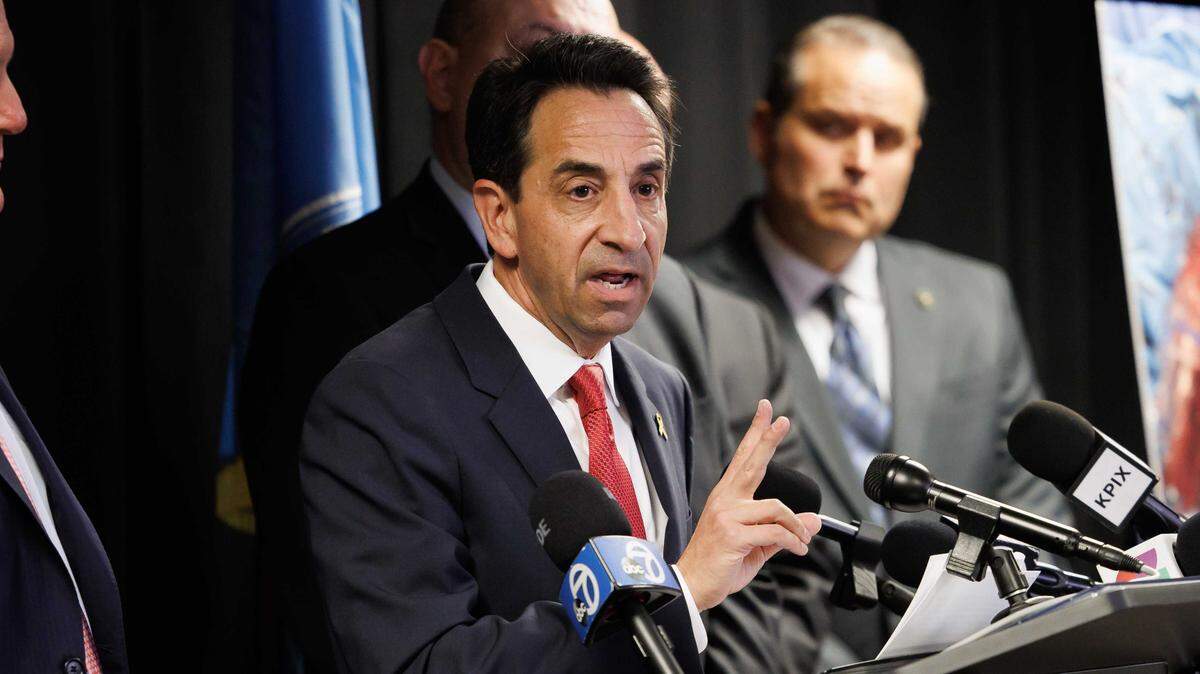
The murderers sentenced to death over the past half-century by juries in Santa Clara County are far from sympathetic characters.
Richard Farley killed seven people in a 1988 mass shooting in Sunnyvale. Mark Crew shot his wife in 1982, while an accomplice severed her head.
But it had already cost the county millions of dollars to fight the seemingly endless stream of appeals they are entitled to. And considering that in California no one has been executed since 2006 and the death chamber has been dismantled amid a moratorium on executions, District Attorney Jeff Rosen had little reason to believe the sentences would be carried out.
He had also come to doubt the morality of sentencing people to death in a system where studies have shown penalties are harsher depending on the race of the victim and perpetrator, and about 4% of convictions are believed to be flawed.
Which is why Rosen in March will appear before a judge and ask that Farley’s sentence be commuted to life in prison without the possibility of parole, the latest in more than a dozen such cases he has successfully brought over the past few months. The change in Crew’s sentence was approved in August.
“I’m trying to end, for my county, the resources that we’re spending every day, every week on litigation in these cases,” Rosen said. “And then being able to have those resources spent investigating and prosecuting rapes, murders, burglaries and holding those offenders accountable.”
It’s a change unlikely to happen any time soon in Sacramento, where District Attorney Thien Ho said he would consider commuting death sentences for inmates believed to be innocent, even as he continues to seek capital punishment in some cases. Next door in Yolo County, District Attorney Jeff Reisig, said he would never undertake a move like Rosen’s.
The three prosecutors’ approaches are illustrative of the tensions and political climate surrounding the death penalty in California and elsewhere, said political scientist Austin Sarat, a death penalty opponent who has studied the issue at Amherst College in Massachusetts.
All three are acting at a time when public opinion about the death penalty is in transition, Sarat said, along with views about appropriate sentences for other crimes. But as a society, Sarat contends many still disagree about whether, how and when to impose it.
“We are in a period of national reconsideration of capital punishment,” Sarat said. “I expect variation in the way in which people, prosecutors, governors, legislators, respond to the situation of the death penalty in the United States.”
Could Newsom follow in Biden’s footsteps?
Last month, after President Joe Biden commuted the sentences of all but three federal death row inmates to life without the possibility of parole, California Gov. Gavin Newsom said he was considering a similar move for California’s condemned inmates, though he did not indicate that he would take such an action any time soon. Newsom imposed the state’s death penalty moratorium in 2019, but a new governor in 2027 could lift the ban.
In the late 1990s, U.S. juries were sending as many as 300 people per year to death row, Sarat said. Last year, that number dropped to around 25. In California, 3 people were sentenced to death in 2023, down from 41 people in 1996, state data showed.
Two dozen men are under sentences of death sought by Sacramento County prosecutors and imposed by local juries, state data shows, and another two were tried in Yolo County. The oldest case dates back to 1981, when a Sacramento jury sent Joe Edward Johnson, now 74 years old, to death row for murder.
Ho, in a statement from his office, cited checks and balances in the judicial system when the death penalty is considered and imposed, and indicated that it would be unlikely for him to deviate from the existing process. Ho is currently seeking capital punishment for Adel Ramos, who in August pleaded guilty in the ambush murder and shootout that took the life of 26-year-old Sacramento police rookie Tara O’Sullivan.
“The decision to seek a death sentence is never taken lightly,” Ho’s office said. “Once imposed, death sentences are then automatically appealed. Any decision to alter from this path would require compelling circumstances.”
Still, Ho said, that if the department was presented with credible evidence that the inmate was not guilty, “we would not hesitate to revisit the issue.”
‘Voters have been pretty unequivocal’
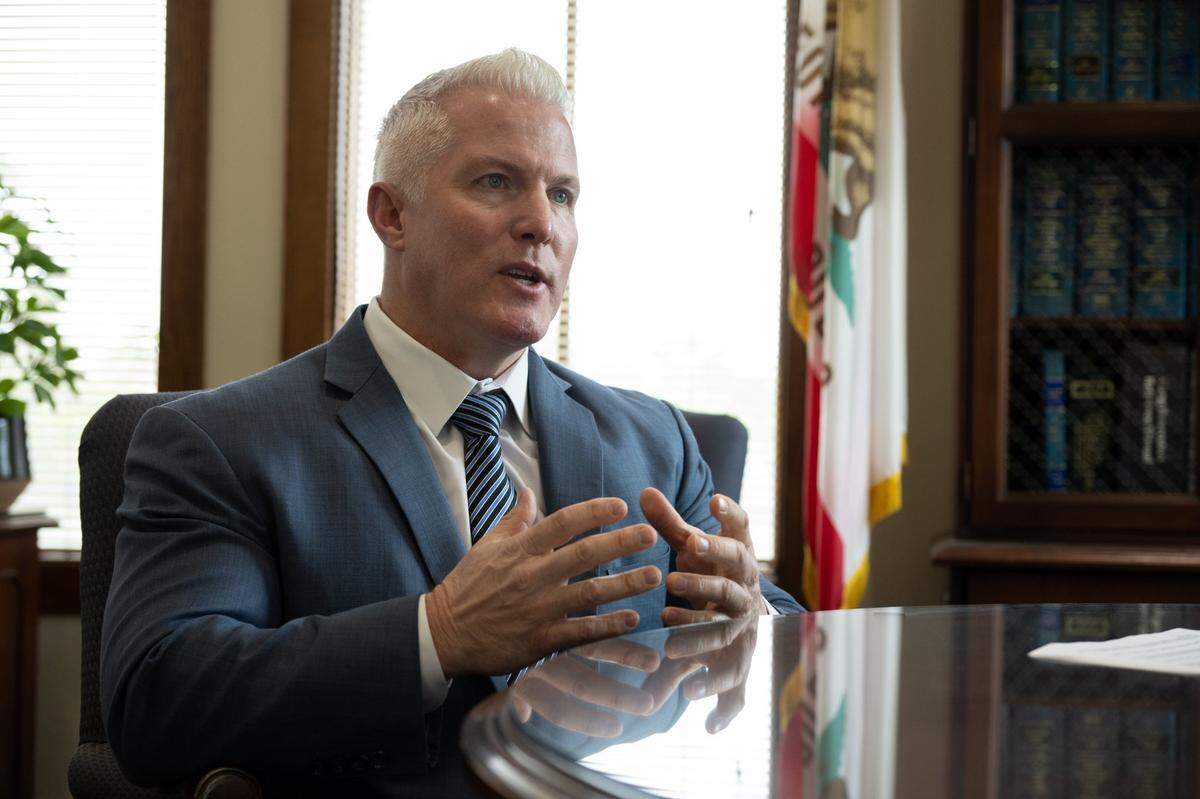
In Yolo County, Reisig was one of the first prosecutors in the state to reconsider sentences in nonviolent cases, moving to reduce terms for people serving time for offenses that under today’s laws would not be treated as harshly. But resentencing death penalty cases was going too far, he said.
“I would never consider doing that,” Reisig said. California voters have twice rejected ballot initiatives that would have eliminated the death penalty, Reisig noted, and it remains in law as an acceptable punishment for the worst crimes.
“The voters have been pretty unequivocal in California on the issue,” Reisig said. “That is the root of my view on why I would never consider it.”
California juries have sentenced nearly 1,000 defendants to die since 1978, when capital punishment was reimposed after it was temporarily ruled unconstitutional. But just 13 California inmates have been executed since, state data shows. Of the rest, 117 have died of natural causes, 21 have committed suicide and eight have died of drug toxicity or overdose.
The state declined to provide data on the number of inmates whose initial death sentences were eventually overturned or stayed by the courts. But Sarat and other experts said that even if a death case gets through the decades of appeals, fewer than one in six are actually carried out.
State records show 582 men and 19 women are currently on death row in California.
Death penalty trials, appeals process costly
None of the three district attorneys said he had calculated the cost at the county level of pursuing death sentences or handling decades of appeals. But Rosen cited studies showing that each death penalty case cost at least $1 million, and a recent analysis by The Sacramento Bee showed that the legal costs for seeking and appealing death sentences in California was about $72 million per year.
There are only 36 lawyers in the state qualified to handle certain state-level appeals, forcing some inmates to wait 30 years or more just to obtain counsel. More than 360 condemned inmates lack an attorney to handle these habeas corpus appeals, and about 125 of them have been waiting for more than two decades.
The value of that free legal representation — even if it’s a long time coming — is such that four of the men whose sentences Rosen sought to commute refused the help. Instead, they wanted to continue their appeals in the hope of winning a better sentence than life without parole or being exonerated.
“In California, obviously, you’re more likely to die of old age than to be executed,” said Sarat.