
Dominguez ‘ambushed’ victims in serial Davis attacks, say prosecutors in closing
Carlos Reales Dominguez deliberately ambushed his victims — one then another in separate Davis city parks — before nearly killing a third person inside a streetside tent, a Yolo County prosecutor told jurors Friday in closing arguments at the former UC Davis student’s murder trial.
Dominguez, 22, has schizophrenia, prosecutor Matt DeMoura acknowledged, but argued to the jury that the defendant was fully aware of his actions when he fatally stabbed David Breaux and Karim Abou Najm in Davis’ Central and Sycamore parks. Days later, Dominguez severely wounded Kimberlee Guillory in what authorities described as a random but targeted spree of violence that terrorized Davis residents in April and May 2023.
The courtroom phase determining Dominguez’s guilt came to its conclusion Friday in Yolo Superior Court in Woodland after five weeks of testimony before Judge Samuel McAdam. Dominguez has pleaded not guilty and not guilty by reason of insanity to the murders of Breaux, 50, and Najm, 20, and to attempted murder in the May 1 attack that nearly claimed the life of Guillory, then 64.
Jurors will first decide whether Dominguez is guilty of the charges before moving on to a second phase to determine whether he was sane at the time of the attacks. McAdam instructed that jurors may also consider a lesser charge of involuntary manslaughter if they do not find Dominguez guilty of murder.
During the trial, jurors heard from Dominguez’s attorney, Daniel Hutchinson, as well as from Dominguez’s friends and a former girlfriend. Dominguez himself also testified. Together, they described a rapid mental decline in which Dominguez experienced auditory and visual hallucinations, believed he was under threat, and was ultimately diagnosed with schizophrenia. The defense emphasized Dominguez’s deteriorating condition, including reports that he stared at walls and saw shapes and shadowy figures before the attacks.
Hutchinson, in his summation Friday afternoon, asked jurors to find Dominguez guilty of involuntary manslaughter for the acts of violence Dominguez committed — and not the murder and attempted murder charges prosecutors seek.
On the stand, Dominguez testified that he believed he was attacking these hallucinated figures — “shape-shifters,” as he called them — when he used a combat knife to stab Breaux, Najm, and Guillory. The knife had been purchased in the months leading up to the attacks.
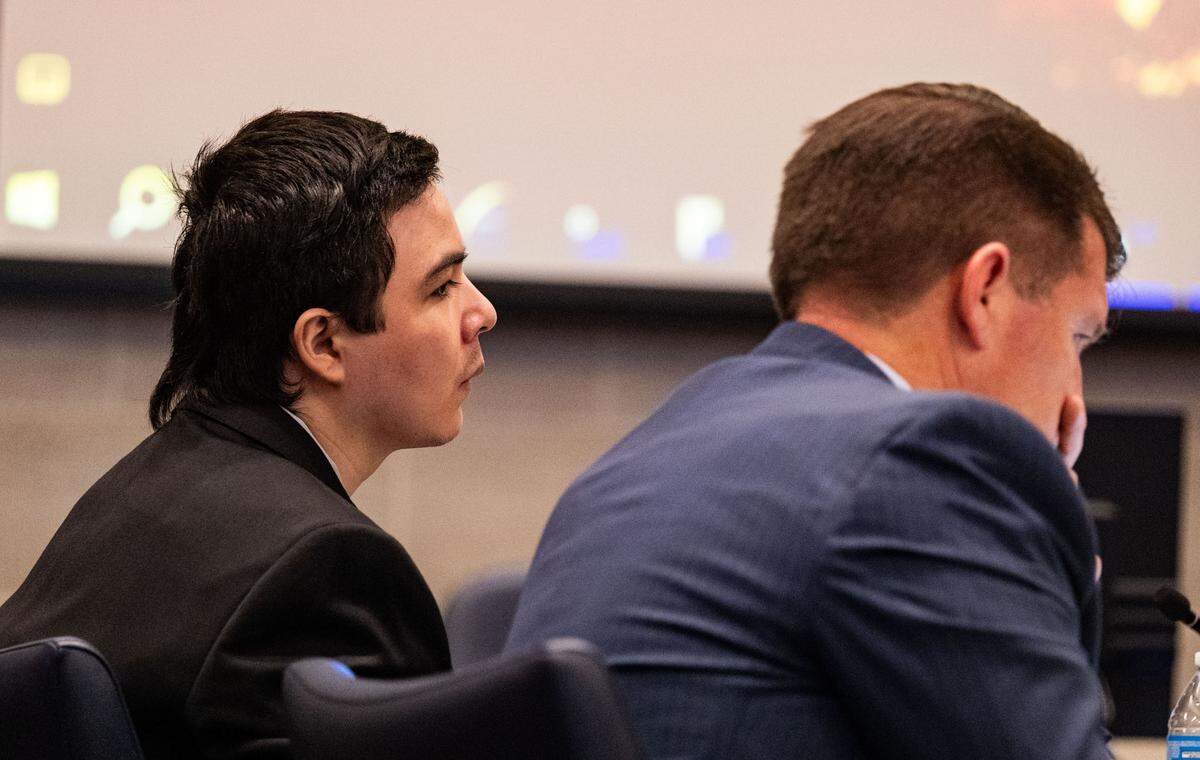
DeMoura told jurors that Breaux was stabbed 31 times and Najm 52 times. Guillory survived the attack, which occurred near 2nd and L streets in downtown Davis. “She was slightly more fortunate,” DeMoura said. “She lived.”
Dominguez testified that it wasn’t until he was in custody at Atascadero State Hospital, after his arrest, that he came to understand that the figures he believed he was attacking were real people.
In a closing argument that spanned the morning and continued into the afternoon, DeMoura challenged the reliability of Dominguez’s account. He pointed instead to growing frustration and rage in Dominguez’s personal life — including his academic struggles at UC Davis and a failed romantic relationship — as motivating the violence. Dominguez had recently been notified of his dismissal from the university.
The prosecutor described Dominguez as quick to anger and increasingly erratic, citing an incident in which Dominguez punched a wall after failing a placement exam and another in which he broke a toilet in the home he shared with roommates. DeMoura said Dominguez exhibited possessive behavior toward his girlfriend and wrote song lyrics containing violent imagery following their breakup — lyrics that referenced knives and stabbing.
“He’s schizophrenic, but he’s also lucid. He’s able to attack, stab and kill,” DeMoura told jurors. “Despite his schizophrenia, he is able to develop an intense anger for these three innocent people. They didn’t threaten Mr. Dominguez. They simply existed. They fought for their lives until they were no longer able to.”
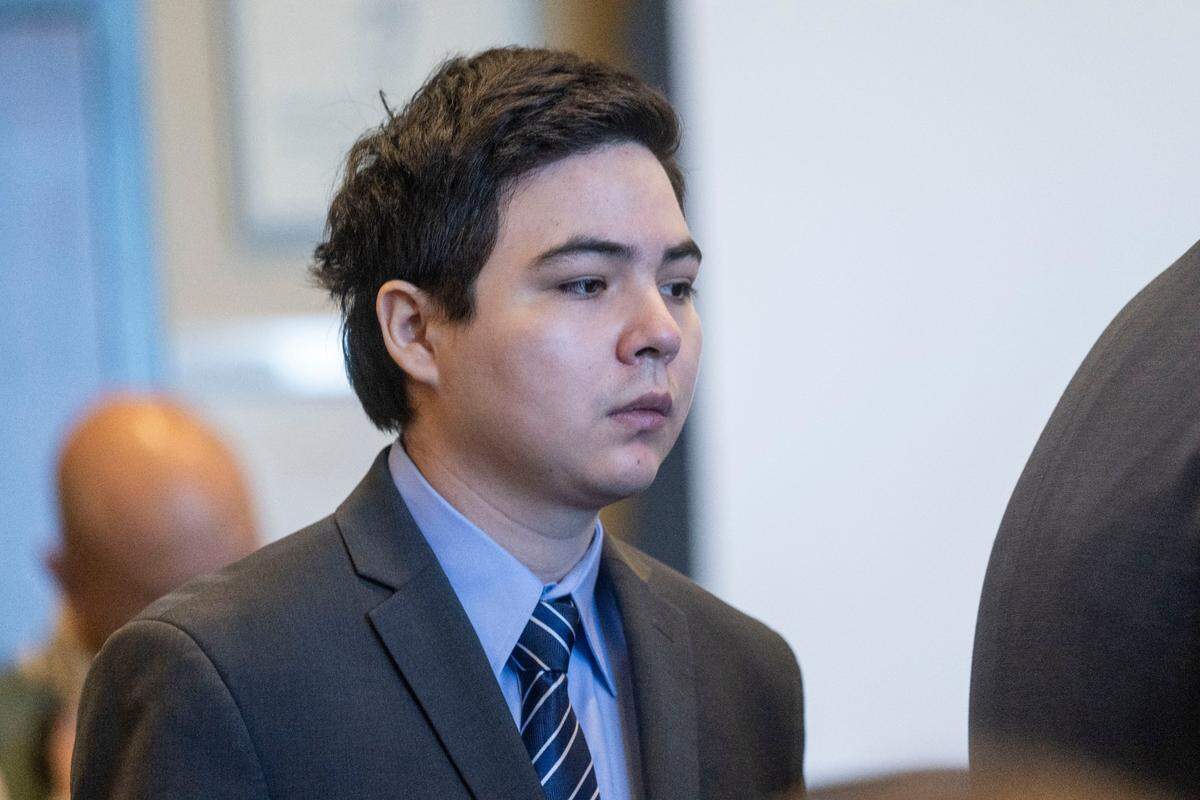
Hutchinson, Yolo County deputy public defender, pointedly characterized the prosecution’s case and the Davis police detectives who investigated it as “juvenile amateur hour” in a withering closing statement that questioned the voracity of prosecutors’ evidence, witnesses’ statements and tactics employed by detectives during their marathon interview with Dominguez after his arrest.
Hutchinson went on to list more than 20 “falsehoods” that he argued prosecutors DeMoura and Frits Van Den Hoek presented at trial from crime scene details to blood evidence and testimony.
“Because these victims were so innocent, because the case is so heartbreaking, they think you won’t care,” Hutchinson told jurors. “This young man has been called a liar over and over again at this trial, but he’s telling the truth.”
Hutchinson derided prosecutors’ assertions that anger, not Dominguez’s documented schizophrenia, triggered the violence, arguing that prosecuting attorneys believe schizophrenia “is not a real disease.”
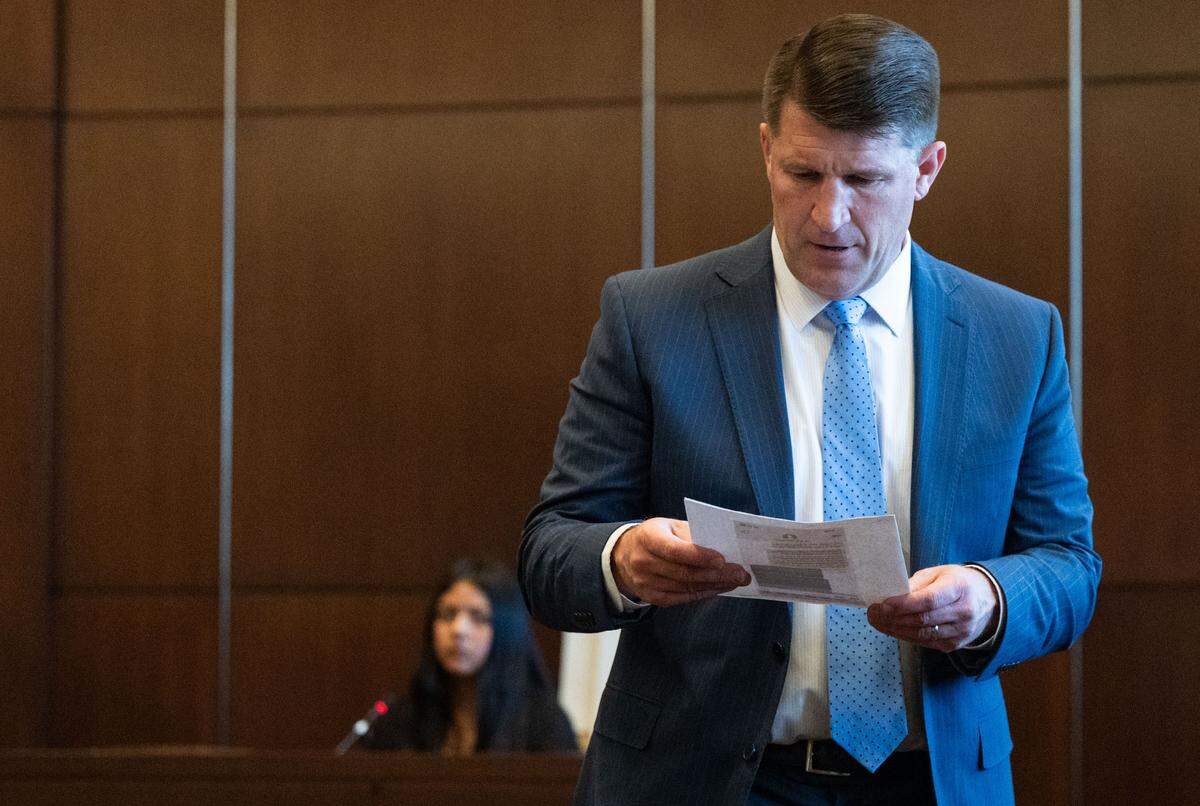
“We’re dealing with someone whose mind has been ravaged by disease,” Hutchinson said. “Their case is based on the conclusion that the diagnosis of schizophrenia was a hoax,” he said, calling prosecutors’ questioning of mental health experts “incoherent, incomprehensible, ineffective, ignorant — and a complete waste of time.”
Hutchinson concluded by showing YouTube footage of a videocast Dominguez shot in his early days at UC Davis before the mental crisis that Hutchinson said led to the 2023 stabbings. A jovial Dominguez held court, joking with friends between classes.
“That young man is gone and is never coming back,” Hutchinson said. “It is the disease that took the lives of David Breaux and Karim Abou Najm.”
Jurors — eight women and six men — are now left to determine Dominguez’s guilt or innocence in the attacks. Deliberations begin Monday.
This story was originally published June 6, 2025 at 2:14 PM.
.JPG)