Exclusive: Yolo DA says more charges loom in Esparto case, which was passed over by feds
AI-generated summary reviewed by our newsroom.
- Grand jury indicted eight people, including five men accused of second-degree murder.
- Jeff Reisig asked federal and state offices to get involved and they declined.
- Kenneth Chee was arrested in a coordinated operation with marshals at Disney World.
Minutes after announcing sweeping grand jury indictments Friday in the Esparto fireworks explosion case, Yolo County District Attorney Jeff Reisig sat down with The Sacramento Bee for an exclusive interview.
In the conversation, Reisig detailed his reliance on the grand jury process, described a coordinated operation involving a SWAT team and U.S. Marshals to arrest Devastating Pyrotechnics owner Kenneth Chee at Walt Disney World in Florida, and said additional charges are likely as the investigation continues.
Reisig also said for the first time that he had asked the U.S. Department of Justice in July — through the U.S. Attorney’s Office in Sacramento — to take over the case, but the request was declined. Reisig and Yolo County leaders made a similar request to state Attorney General Rob Bonta’s office and were declined.
Prosecutors will return to court Monday afternoon in Woodland for the formal arraignments of former sheriff’s Lt. Sam Machado and his wife, Tammy — owners of the compound where Devastating Pyrotechnics and BlackStar Fireworks stored imported fireworks — along with Craig Cutright, Jack Lee and Doug Tollefsen.
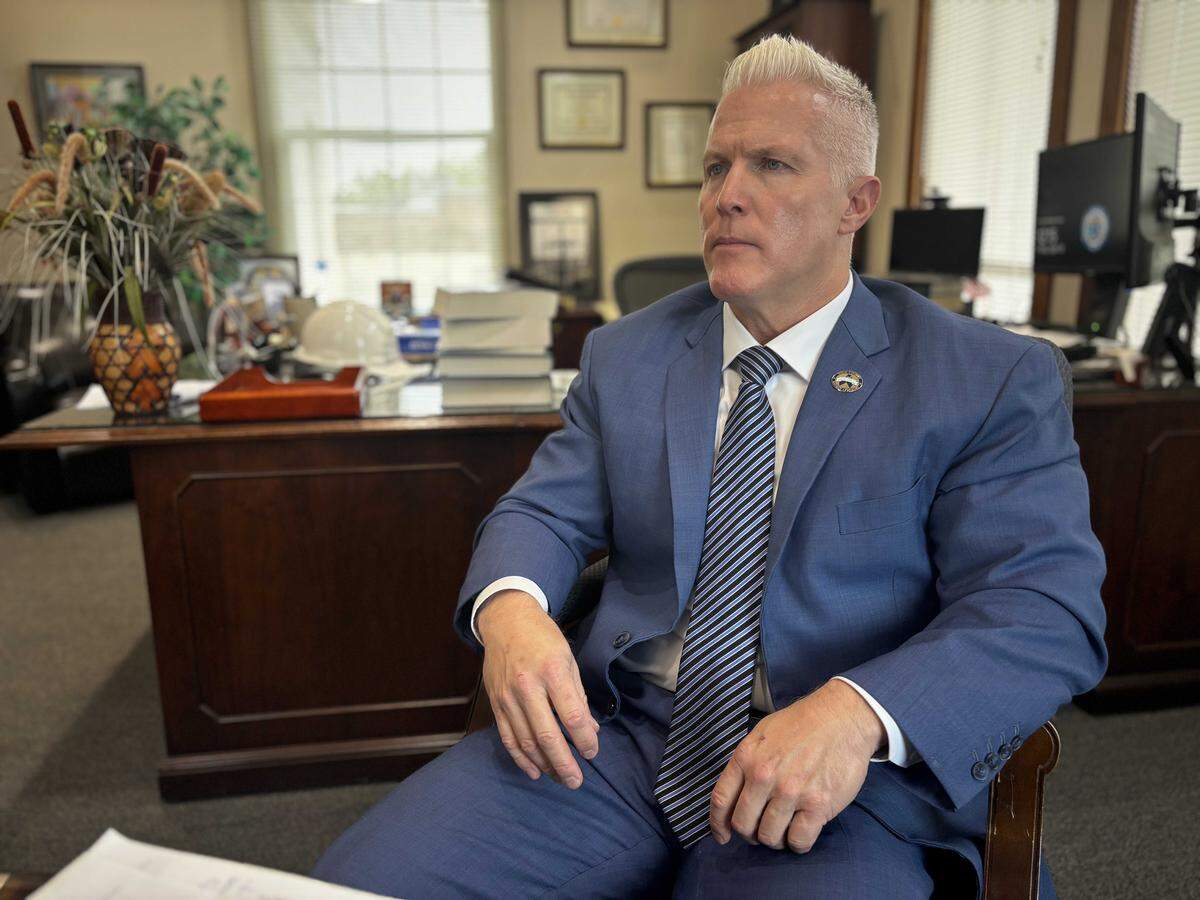
The interview took place shortly after prosecutors outlined charges against eight people, including five men accused of second-degree murder in the deaths of seven workers killed in the July 1, 2025, explosion. The conversation was edited for length and clarity.
Question: It was a big decision to levy so many murder charges. At what point did you decide that the conduct actually equated to murder, and not some kind of gross negligence, or labor code issue?
Answer: The grand jury indicted on murder after they heard the evidence. In a criminal case, they are given the law. So they’re given the instructions for homicide. Here’s what a murder is, here’s what a manslaughter is, here’s what an involuntary manslaughter is, and then they make the decision on what the charges are. And so the answer to your question is, a Yolo County special criminal grand jury indicted for murder after hearing the evidence. ... When you’re looking at a homicide — you’re trying to figure out, is it a murder or is it manslaughter? ... With a murder, you can get there through a couple of ways. One, intent to kill, right? That’s murder. Intent to kill somebody who’s dead is murder. Or, you act with a depraved heart, meaning you engage in conduct that is so dangerous to human life that you should know better.
Q: Still, the district attorney plays a huge role in deciding, ‘this is at least what we believe the conduct of these charges amounts to.’ What was it about this that made you feel that it rose to the level of seven counts of murder against multiple defendants?
A: My goal in this case was to make sure that we presented all of the facts to an independent grand jury for them to make a decision because — and I’ll tell you why I’m dead serious on this — I’ve learned this over all these years as a D.A., I’ve participated in 40 or 50 grand juries, which is a lot for a state prosecutor. The feds use it all the time but most state prosecutors, I’d say, 99% have never presented evidence to a grand jury. But what I’ve learned over the years is when you have a case of significance, you want to check in with the conscience of the community. How are the people of Yolo County? How they see this? It might be different than if you’re in another county. (The grand jury’s function in an indictment) is the conscience of the community. They’re speaking for the people as to how they see the facts and the evidence. That’s what I was seeking. That’s what I wanted. I didn’t know how it was going to come out. ... I think the grand jury spoke — they heard the evidence. That’s their decision. I agree with them.
Q: What was it like for you to go through that process with these members of the community?
A: I take the grand jury process very seriously. They’re truly independent, they don’t work for anybody. And you’ve seen it sometimes — you’ll see grand juries that will not indict at all. ... We’ve all heard that statement before, “a grand jury will indict a ham sandwich.” In my experience, it’s not true.
Q: There are so many local officials tied up in what’s going on. Does the decision to impanel a grand jury relates to that idea of rebuilding community trust?
A: I mean, you just hit the bull’s-eye. That’s a huge reason for the grand jury, is it is about engaging the community in a process where they can independently reach a decision that I do believe is trusted more by the community. Especially in a situation where you have allegations of public corruption, those are usually very ripe for the grand jury.
Q: Will the victims’ families be given any information about what caused the explosion before the end of the trial?
A: Our victim advocates have met with them. Victims do have a right, subject to our discretion, to read certain reports, like the coroner’s report, and so they can come in and they can read some of those materials under our supervision.
Q: So if the surviving families wanted to know what sparked the fire through getting access to Cal Fire’s report, which hasn’t been made public, is that something they could ask you, and you would be up to your discretion whether you let them know or made them wait until after there was a verdict?
A: For our victim advocacy program, we have two people. There is Estella Morales, who’s our advocate, and then Jonathan Raven. He was a former director of victim services for Jerry Brown when he was the governor. He was the chief deputy here for 20 years. He’s really good, and I’ve brought him on as a special prosecutor to help navigate those issues. And I think if you asked (Raven) that, he would tell you exactly what I’m telling you, which is, it’s possible, it’s something that we take on a case by case basis, depending on the sensitivity of the information. Right now the Cal Fire report is probably locked down for the time being.
Q: Why is it so sensitive?
A: All of the criminal reports, anything having to do with key elements, are locked down. ... You know the cause of death was the explosion, and that’s not the secret. And, some people want to read the details on that, some of the family members. That’s their right, I think that’s their right to know.
Q: Can you tell us more about how Chee came to be arrested at Disney World in Florida?
A: U.S. Marshals were assisting in locating him because they wanted to arrest him at the same time to minimize flight risk. So that was a massive operation. They had teams. ... I mean, they had a SWAT team in Disney World. ... I don’t know the details about when they went into the park because I wasn’t there, but I just know that he was there with his family.
Q: Did they arrest him inside the park?
A: I’m 99% sure of that. But, simultaneously, there were these covert teams in San Jose and a SWAT team from Yuba and Contra Costa counties, there were all these teams executing, and it happened quickly.
Q: Were there any challenging situations they encountered?
A: No, it was all pretty smooth. It was just the fact that there were so many targets. I’ll just say it again — you know, I sound like a broken record — but I asked the (state Attorney General’s Office) from day one to get involved and help us and they didn’t.
Q: Did you have any conversations with the U.S. Department of Justice about this case?
A: Generally, whenever there’s an allegation of public corruption, I take it very seriously. It’s the worst thing when that is suspected, because it undermines public confidence. The feds do a great job in a lot of public corruption. They’re usually the first call. And I talked to the feds in this case early on, tried to get them engaged, for a whole variety of reasons. But same response.
Q: There’s been some speculation that there’s a parallel federal case going on. To your knowledge that’s not happening?
A: I honestly can’t answer as to whether there’s something they’re doing. I don’t know. I just know they wouldn’t take this. ... I’ve been around long enough to just be like, ‘alright, I’m going to make my best pitch’. And we’ll do our job.
Q: In some ways it’s hard to imagine they would have done a more thorough job, with such a vast indictment here, but when it comes to looking at how Esparto links with the San Jose fire or the big seizure of fireworks in Southern California in Commerce, is that where you are thinking the feds could have played a role?
A: When you have any criminal investigation that starts going well outside the county jurisdiction and involves complexity, that’s what the AG does. That’s what the U.S. attorney does, especially if you cross state lines.
Q: Is there still a role here for a state and federal investigation?
A: I don’t want to speak for them, but I think there’s still plenty to look at.
Q: Are you concerned that, because there’s a lot to look at, there could be another Esparto out there, that something else like this could happen?
A: Well, Sen. Christopher Cabaldon’s bill, it’s really important that the Legislature act promptly to close some of these loopholes. So, until that happens, there’s absolutely a chance, I don’t think in Yolo County.
Q: The Fourth of July is around the corner. That’s when these incidents seem to happen. Can’t they do things quicker? Would you call on them to get it enacted?
A: Yeah, Sen. Cabaldon should, I don’t know. Why don’t you guys ask him?
Q: But you feel that they should?
A: They absolutely should. Yeah, they could have emergency legislation. And Cabaldon is a respected senator, he could do it. I love Chris. He’s great. I just don’t know what’s on his plate and how important he thinks this is. But I would welcome you calling him and asking him.
Q: Do you think Gov. Gavin Newsom should want this to happen?
A: I would think he would. I mean, seven people died in an industry that’s very dangerous and prolific. ... But Cabaldon is great. He’s well-respected, he’s smart, he knows the issue. I think he could do it. I would certainly support Cabaldon in any kind of urgency legislation. I just haven’t heard that that’s happening.
Q: What have we left out that’s important?
A: I would just say making the clear distinction between what the civil grand jury did and what the criminal grand jury did is very important so that the public understands that they’re not the same thing. There are no similar parties. This indictment encapsulates behavior of these individuals that was way outside the bounds of the law. And the civil grand jury’s work, which I was not involved in, is a completely different animal.
Q: Did you like the civil grand jury report?
A: I always respect the grand jury report. But it was not relevant to what we were doing. It could have been, but it wasn’t.
Q: Is it likely that we’ll see charges against other people?
A: We’re not done. The investigation is still hot. There’s still people that are out there and I feel comfortable saying that it’s likely.
This story was originally published April 13, 2026 at 5:00 AM.