
UC Davis student group highlights the backlash it has faced in supporting Hong Kong
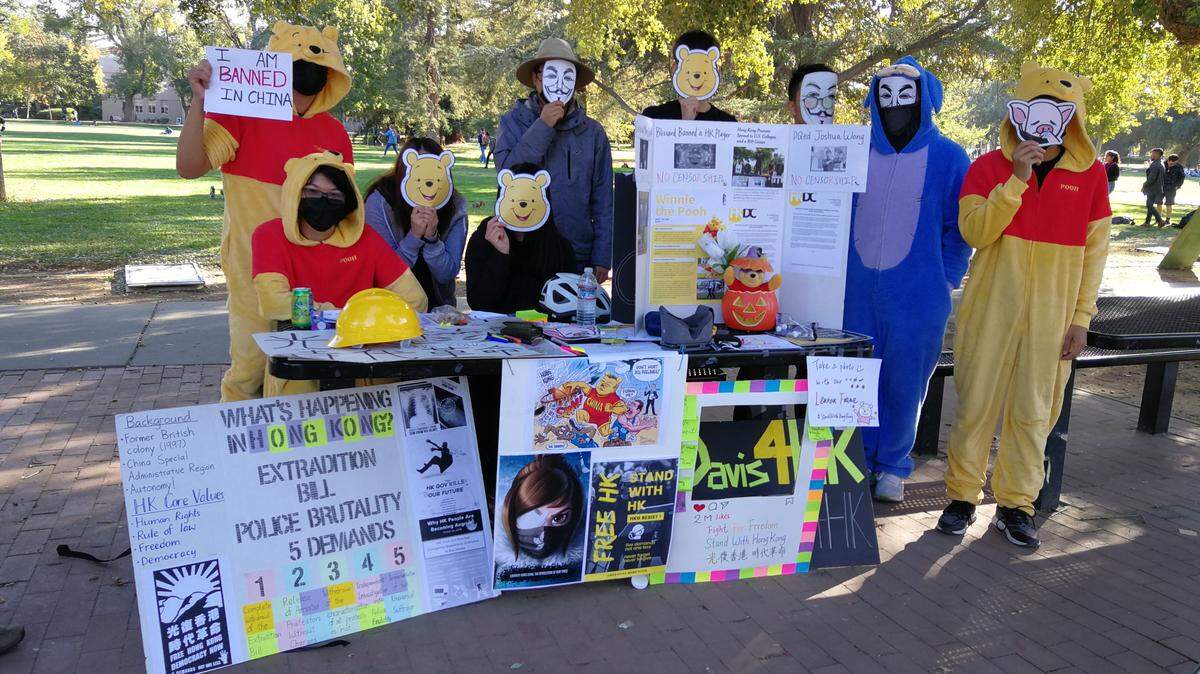
A student group at the University of California, Davis, has dealt with backlash and opposition over its support of events happening on the other side of the world.
The group, called “Davis4HK”, advocates for genuine universal suffrage in Hong Kong. It consists of around 40 students, and about half of them are from Hong Kong. Similar events have occurred at other UC campuses, including Berkeley to UCLA.
At UC Davis on Oct. 30, a student’s phone was snatched and dropped to the ground after a confrontation amid a series of harassment at on-campus events ran by Davis4HK in solidarity for the pro-democracy protests in Hong Kong.
The pro-democracy protests in Hong Kong have been going for five months. The protesters’ call for an independent committee to investigate police brutality and misconduct remained unheard, among other demands. The citizens’ trust in the government and the police has reached an all-point low, local reports show.
UC Davis affirmed the right of freedom of expression within their community, said Melissa Blouin, the university’s director of news and media relations, in a response to The Sacramento Bee’s inquiry. The safety and well-being of students remains a priority, she added.
According to Davis4HK, the Oct. 30 event was meant to bring awareness to the censorship issues in China and Hong Kong. Nearing Halloween, organizers were dressed in Winnie the Pooh costumes to go along with the popular light-hearted way to mock Chinese President Xi Jinping on social media.
A woman approached the table and told students they were tricked by the U.S. media, said Benjamin, sophomore and organizer with Davis4HK who requested to only be identified with his first name to prevent his family from being tracked.
Benjamin started recording video on his phone. The woman grabbed his phone and tried to throw it on the ground, but a group member’s intervention sent it onto a nearby bench instead. As a result, the device has multiple cracks on its surface.
A staff member from the university’s Division of Student Affairs passed the students a phone number if in need for assistance, before leaving to attend a meeting, Blouin said.
The staff member returned an hour later after receiving a call from a student and found them “engaged in intense conversation.”
One student had pushed another, snatched a phone away to try to delete a video, some students reported, according to Blouin.
The police took a report instead of filing a case, because they couldn’t see any crimes committed after reviewing the video and spoken to the two parties, said Andy Fell, UD Davis news and media relations specialist.
Benjamin said he is fine with the outcome.
“She (the student) was much more calmer than many of the other people we dealt with,” he said.
The student group experienced more conflicts on campus in earlier events. On Oct. 16, a two students came to the group’s “Stand With Hong Kong” protest and started yelling vulgar language in Mandarin toward the group. They left minutes later after the disruption.
Two days earlier, the group sought petition signatures to persuade Congress members, including Rep. John Garamendi, D-Walnut Grove, to co-sponsor the Hong Kong Democracy and Human Rights Act (H.R. 3289), which has passed the House in mid-October. The act imposes economic sanctions on politicians and officials responsible for human rights violations in Hong Kong.
Some students came over to the group’s table, looked at the letters and ripped the unsigned ones before leaving the scene, Benjamin said.
“We took all signed papers and stored them in a box and a bag just in case they come to rip them again,” he said.
On Oct. 13, a female student has ripped down a black flag bearing a pro-democracy slogan at the student group’s table, Benjamin recalled, with the pole then bent into two. She then tore the flag from the pole and threw it in the trash before yelling “This is Rubbish!” and “Hong Kong is a part of China.” Davis4HK members filed a police report on vandalism, but officials had not responded as of midweek.
On Oct 10, the California Davis Chinese Student and Scholar Association condemned the acts of those who support the Hong Kong “riots” on campus and promote “separatism,” according to a Chinese news release on its official account on the social media app WeChat. The group has reported the situation to the consulate general of the People’s Republic of China in San Francisco for a “solution.”
Another organizer of Davis4HK, who also asked to remain anonymous due to fears of retaliation by the Chinese government, said organizers always wear masks to protect themselves at events on campus, citing incidents when some students have suddenly approached their table with a camera, took a photo and left in haste.
Despite the backlash, the anonymous organizer was glad students came and stood with the Hong Kong protesters.
“Davis is a more quiet area, but some students have approached us and asked what they could do to help,” the organizer said. “Many students who used to read about Hong Kong in national newspaper likes The New York Times but didn’t know the details now seem to begin to understand what is going on in Hong Kong.”
The anonymous organizer recalled a student asking him why the U.S. should support Hong Kong.
“My answer is: think the NBA and Blizzard censorship incidents,” he said. “The Chinese government would not just censor a particular place. It can censor any country as long as it has economic power there. Hong Kong is just on the front line facing this crisis.”
The organizer added the U.S. government may also face setbacks if the situation worsens. The U.S. foreign direct investment in Hong Kong stock was $82.5 billion in the special administrative region last year. As of 2018, there are approximately 85,000 American residents in the city.
The sharing of several UC Davis students from Hong Kong who went to the protests back home compelled Benjamin to take action.
“Once you talked to the protesters, you understand their emotions, that they were willing to do anything to save their homes, and that they have to keep doing it because there is no future if they stop,” he said.
Davis4HK was established a little more than a month, after a Reddit video that shows students ripping down Hong Kong posters at a coffee house on campus has gone viral. Around that time, a new wall at UC Davis filled with post-it notes compiled into the words “Free Hong Kong” – to imitate the Lennon Wall in Hong Kong – was ripped apart. A Davis4HK member called for volunteers for those who wanted to do something for Hong Kong. This was how Benjamin, along with the anonymous organizer and several other American and Hong Kong students, came together.
The group shared news footage of Hong Kong besides organizing solidarity events and gained 898 followers on Twitter in just a month’s time. Members are planning to host more awareness events in the next quarter.
The Hong Kong Democracy and Human Rights Act is now placed on the Senate legislative calendar to be voted on. Davis4HK members are going to reach out to Sen. Kamala Harris, who has co-sponsored the bill in hopes of discussing the issues in Hong Kong with her in person, the anonymous organizer said. The student group has passed a portion of 900 petition letters to Sen. Dianne Feinstein on Oct. 25 to urge her to co-sponsor the bill.
The organizer said he will continue his work to support the movement in Hong Kong.
“When I saw the front-line protesters putting their lives at risk to fight for Hong Kong, it dawned on to me that there are things that you still have to do, even when chances of succeeding are low,” he said. “I keep asking myself, ‘What is the best I can do here in Davis?’ That is what kept me going.”
This story was originally published November 16, 2019 at 1:06 PM.