
Back to basics: The unusual challenges facing California students as schools reopen
Summer school teachers noticed their students turned in daily journals filled with errors and asked how to spell even basic words. High school teachers noticed their students’ Advanced Placement test results came back lower than in previous years.
The loss of learning opportunities during the past 18 months has been profound.
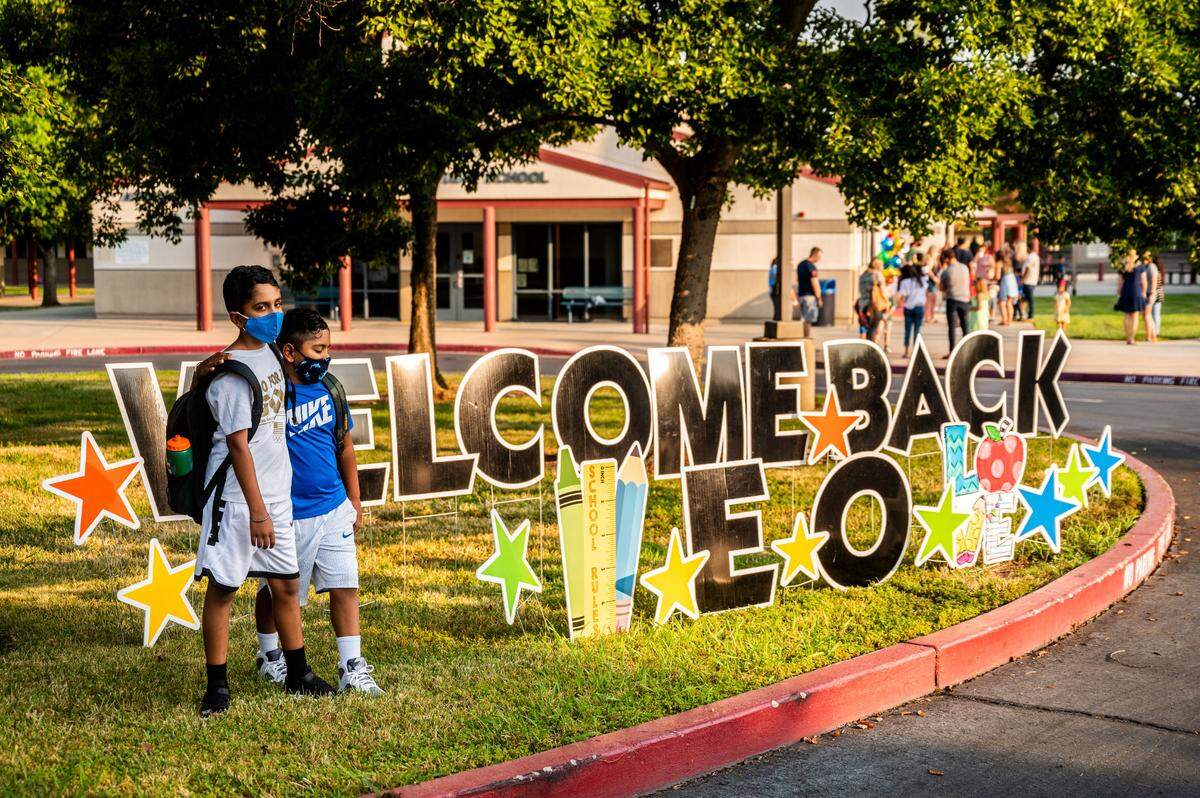
That loss won’t be limited to the classroom. Thousands of students in California are returning to school campuses this fall, many of whom had limited or no time on campus during the turbulent 2020-21 academic year. That means they must learn the seemingly routine elements of being at school, such as how to behave at recess or eat in a cafeteria.
Even though many of the challenges associated with bringing students back on campus may be academic, teaching children simple tasks like how to hold a pencil or how to socialize is just as important, educators say.
“We noticed when (students) came back, getting them in the classroom, getting them to talk to each other … it’s different,” said Tammy Null, an Elk Grove teacher. “In Zoom, you are passively listening, not the same way you are listening in the classroom. I am working on helping children communicate and helping with any learning loss.”
Null, who taught at Florence Markofer Elementary School’s summer camp and was just named the Elk Grove Unified Teacher of the Year, said there will certainly be a learning curve for many students returning to campus.
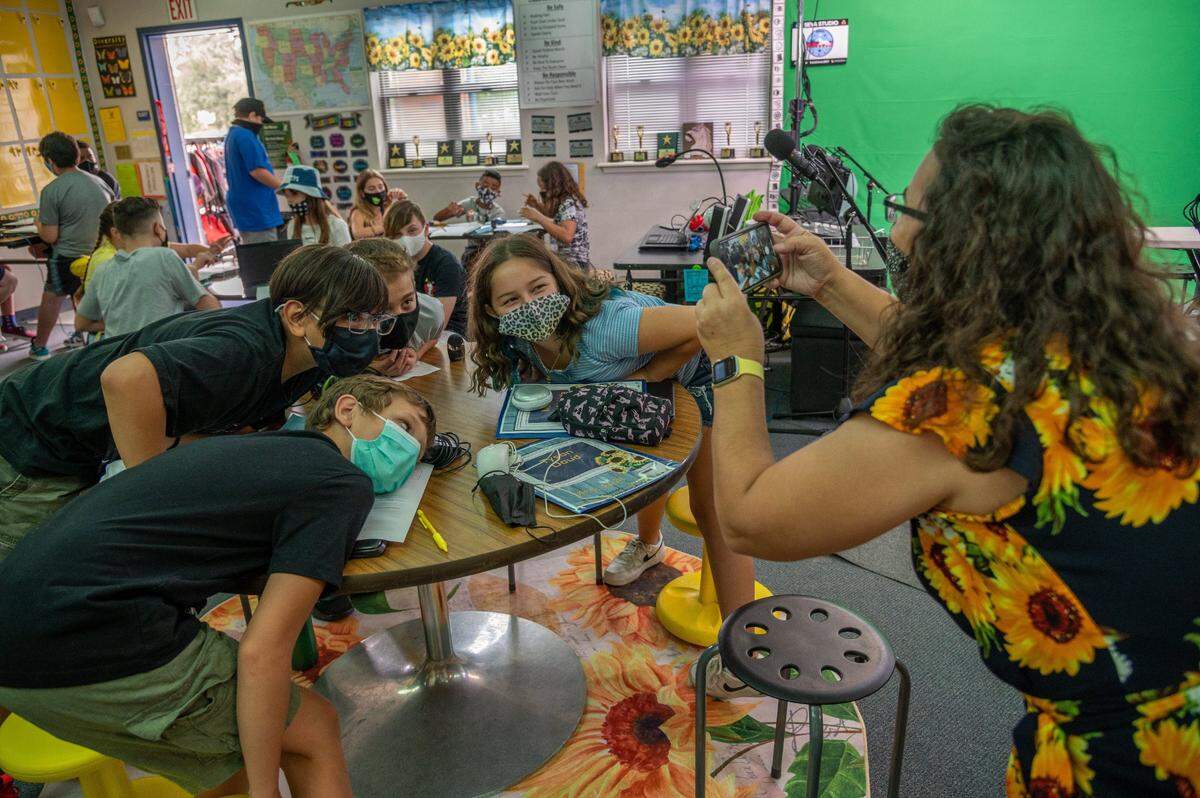
“We had lots of younger kids who chose to stay home last year come to summer camp unaware of school rules and structure,” she said. “Some would ask, ‘Can you go up the slide?’”
For the first time in a year and a half, most students in the Sacramento region will return to school with a degree of normalcy resembling pre-COVID times. Schools are open five days a week for full-day instruction. Children will be eating lunch on campus. Many will have field trips for the first time in two years.
Still, the rapid spread of the delta variant and increasing COVID-19 case rates are creating a sense of unease. Vaccination and testing requirements are common for California school staff. Masks will be required for just about anyone stepping foot on campus, although that issue has become politicized and, in some cases, has led to violence.
Through it all, educators are trying to create supportive environments.
“Learning is so much easier when there are relationships built,” Null said. “You need to have relationships, know their likes and dislikes, their cultural beliefs, and you incorporate all of that into your classroom to engage with them.”
Online learning made it difficult to foster those relationships. As students return to campuses, “all that learning falls right into place,” Null said.
In Folsom, Courtney Bhardwaj’s fourth grader and seventh grader are experiencing first week of school jitters as they return for full days of instruction. Bhardwaj’s older daughter excelled in distance learning, but her younger daughter struggled with the shortened in-person schedule last year. Bhardwaj said she thought classes were too laid back for her daughters.
“It was survival mode,” she said. “I don’t think my daughter going into fourth grade is prepared at all.”
Teachers change their approach
Laura Hatheway, a private instructional coach who supports teachers through her company Learning with Laura 123, taught young elementary school students in a summer program. She said it was evident the pandemic had a profound effect on the loss of learning opportunities.
Hatheway noticed students’ penmanship needed improvement. Their reading stamina — the number of minutes a child reads independently — was low. Hatheway estimates that at the beginning of second grade, a student should be able to read for 15 minutes independently. That number should jump to 35 minutes by the end of second grade. But many children aren’t there yet.
“Usually reading stamina is built in the classroom,” Hatheway said. “It’s hard for a child to read independently at home. You have to train them and teach them to do so. Students have spent so much time away from the classroom and with various types of caregivers overseeing their instruction.”
School districts and teachers are doing more to ensure their students are at the proper grade level this year. More than 80% of school districts are expanding learning acceleration programs, including tutoring opportunities, according to the state.
Hatheway recommends teachers spend more time reviewing core standards and checking in with teachers from previous grade levels to identify which standards were met and which standards teachers were unable to get to during the pandemic.
Amy Rasin, who is entering her 11th year of teaching at Cosumnes Oaks High School, praised her students for their Advanced Placement economics test results, which were higher than the national average. About 70% of her AP economics students passed their exams, giving them college credit.
But Rasin’s passing rate over the years has been as high as 95%. She was aiming for 80% this year. The pandemic forced her AP students to take most of her class through distance learning.
“I figured, with a pandemic, it’s comparable,” she said. “It was not the same learning environment.”
What health experts say about the school year
Dr. Dean Blumberg, chief of pediatric infectious disease at the University of California Davis Children’s Hospital, recently said the hospital has seen an influx of young COVID-19 patients since July.
“I think we need to be prepared that we might have some setbacks,” Blumberg said. “But I am hopeful with proper protocols in place, we will have limited transmissions in school settings.”
The U.S. Centers for Disease Control and Prevention recommends that teachers, staff and students at K-12 schools wear masks indoors, regardless of vaccination status.
Some students across the region have already quarantined for short periods of time since the start of the school year, according to school district dashboards. And some classes, according to Folsom Cordova Unified, may see students quarantined as a “precautionary measure while waiting for official verification.”
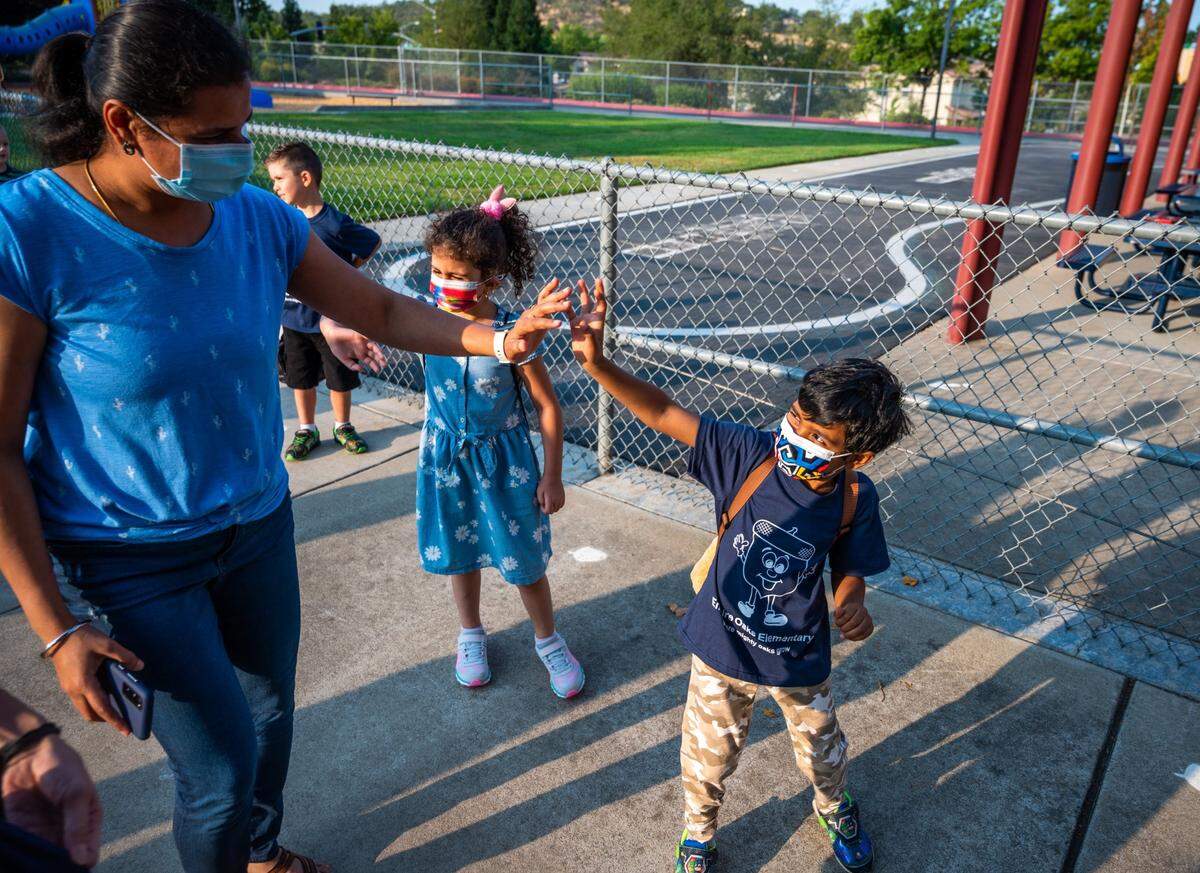
Because teachers are no longer teaching both in-person and online, some students who are sent home to quarantine may be left wondering how they can access their in-person classroom.
Jessica Harrison’s son is quarantining after being sent home from Folsom’s Sutter Middle School with a cough.
Harrison said that when she picked up her sixth grader just hours after his first day of middle school began, several students were being sent home after displaying COVID-like symptoms. Harrison’s son’s quarantine highlights a nationwide problem: Thousands of students could be sent home for possible COVID exposure or illness, and they won’t have online classes to log into.
“He is such an easygoing kid, but he is so discouraged,” Harrison said of her son. “He is missing out and has to deal with so much catching up.”
Harrison’s son has since tested negative for COVID-19.
District officials said they will work on providing remote access to students who are at home.
Blumberg said the vast majority of children are not getting COVID-19 from child-to-child transmission but from adult-to-child transmission at home, and he stressed the importance of parents and caregivers being vaccinated.
Several children were hospitalized in Sacramento County with COVID-19 in July, according to local health officials, who say the average age of virus patients has been lower during the delta variant surge compared to earlier in the pandemic.
A recent report by the American Academy of Pediatrics and the Children’s Hospitalization Association found that COVID-19 cases among children and adolescents under 18 increased 421% from early June to late July in California.
At least five people who were hospitalized last month were 17 or younger, according to Sacramento County health officer Dr. Olivia Kasirye. Health officials say the data is incomplete, and those numbers could be even higher.
But while there is an increase in cases, Blumberg said it is important for students’ physical and mental health that they participate in group activities, while wearing masks and physically distancing themselves as much as possible.
“I saw firsthand how many suicide attempts, cutting, drug overdoses and experimentation among teenagers there were” during the pandemic, said Bhardwaj, a pediatric nurse at UC Davis Health. “Kids were lonely.”
The importance of social, emotional connections
Several teachers said that the return to a normal year on campus should focus on students’ social and emotional needs, as many students have experienced isolation for months.
At Cosumnes Oaks High in Elk Grove, Rasin said her campus is collectively focusing on community building before hitting the books.
“Seniors who are going into their fourth year on campus, who should know the lay of the land, have been on campus less than two full years,” Rasin said. “Some of our sophomores and all of our freshmen have never stepped foot on campus. Kids really need to connect. Without community, learning doesn’t happen as well.”
Rasin said building connections through distance learning was challenging. She has learned to understand her students through the work they turn in, their assessments and their body language as they enter her classroom.
“As a teacher, I would recognize the need for that moment as a human being to just take a break for a minute,” Rasin said. Online, sometimes that meant a student’s camera would turn off. In class, it could mean a student puts their head on the desk.
“But in the classroom, I can walk over and ask if everything is OK and connect with them after class,” she said. “That’s the teacher I have always been. We owe it to students to have authentic moments. We need to remind them of the power of in-person education.”
About 95% of school districts reported expanding mental health and wellness services, according to the state.
Teachers like Null said it’s evident children need emotional support no matter the age.
“The older the child, the more they need you,” said Null. “Once they get to sixth grade, some parents think they are not needed — that their child is independent and grown. No, they need you more.”
Null created a carpet space in her classroom where she reads to her sixth-grade class daily. It’s one of the ways she fosters a connection with them.
How parents can help students
While many parents may feel angst as the school year begins, teachers stress the importance of creating as much normalcy for children as possible and working with teachers to improve academic success.
Hatheway said many children will need more help with homework and reading this year.
“Have a child read at home,” she said. “That’s a battle that needs to be chosen.”
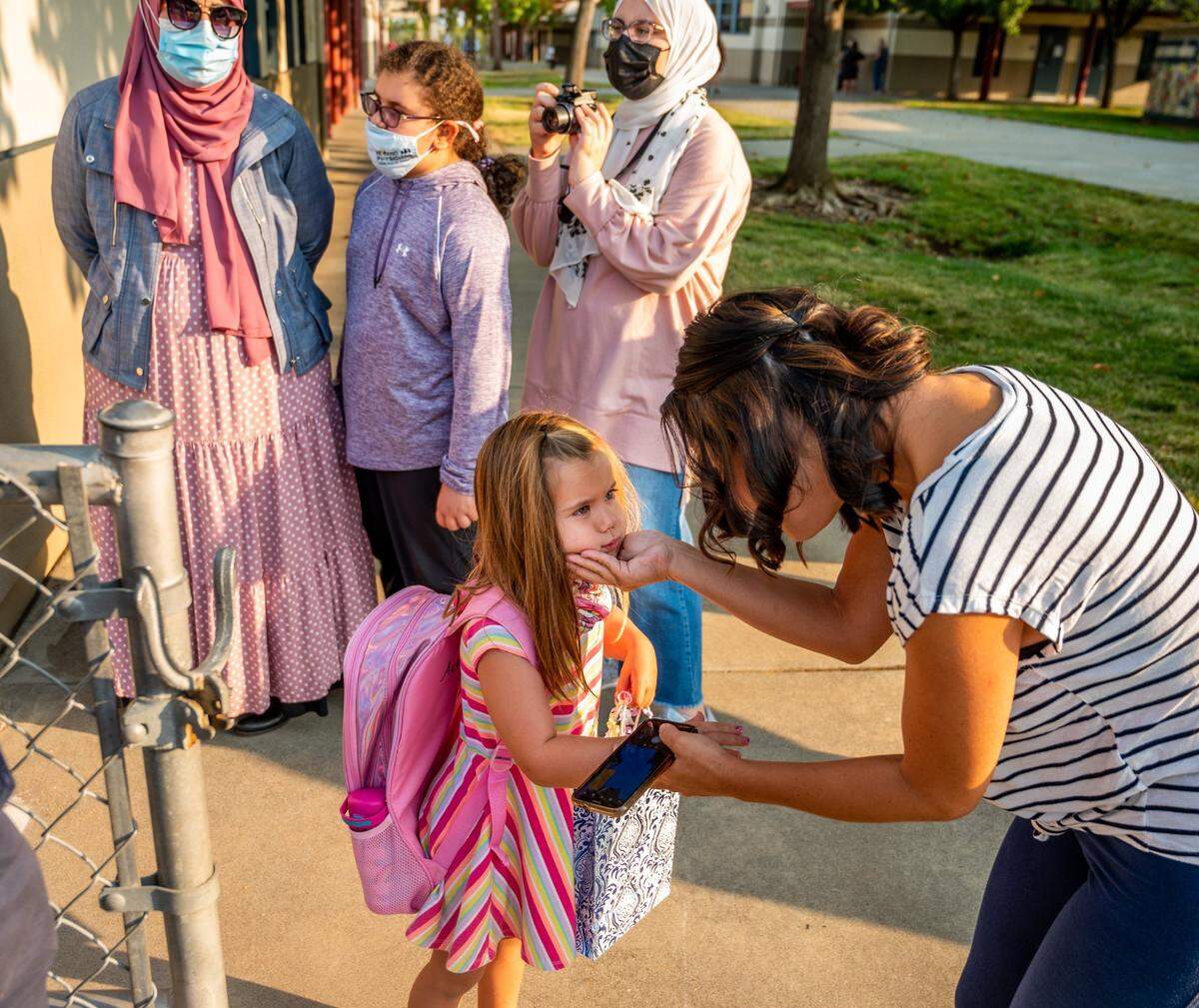
Hatheway suggests parents and caregivers pick up books and read at the same time as their children are reading, to emulate the silent group reading in classrooms.
“That’s why children can build reading stamina in classrooms, because everyone else is reading around them,” she said. “Don’t do any house duties. The best thing to do is pick up an actual book and sit in the same room as them.”
Hatheway suggested parents can also implement creative and fun writing opportunities in their children’s routines. Children can make grocery lists, make a list of their morning routine, write a letter to their grandparents, keep a journal or write a five-sentence summary of a television show they just watched.
Teachers said that while academic goals are important for this coming school year, ensuring children are safe, healthy and loved is essential.
“Being isolated for so long, we need human contact,” Null said. “If I could tell parents one thing, it would be to stay connected to your child even if it’s just reading with them at night, going on a walk, climbing a tree or sitting at the kitchen table and talking about your day. Even if you get one-word answers, it’s OK.”
This story was originally published August 18, 2021 at 5:00 AM.