
The return of in-person class: How college students can reduce stress and anxiety
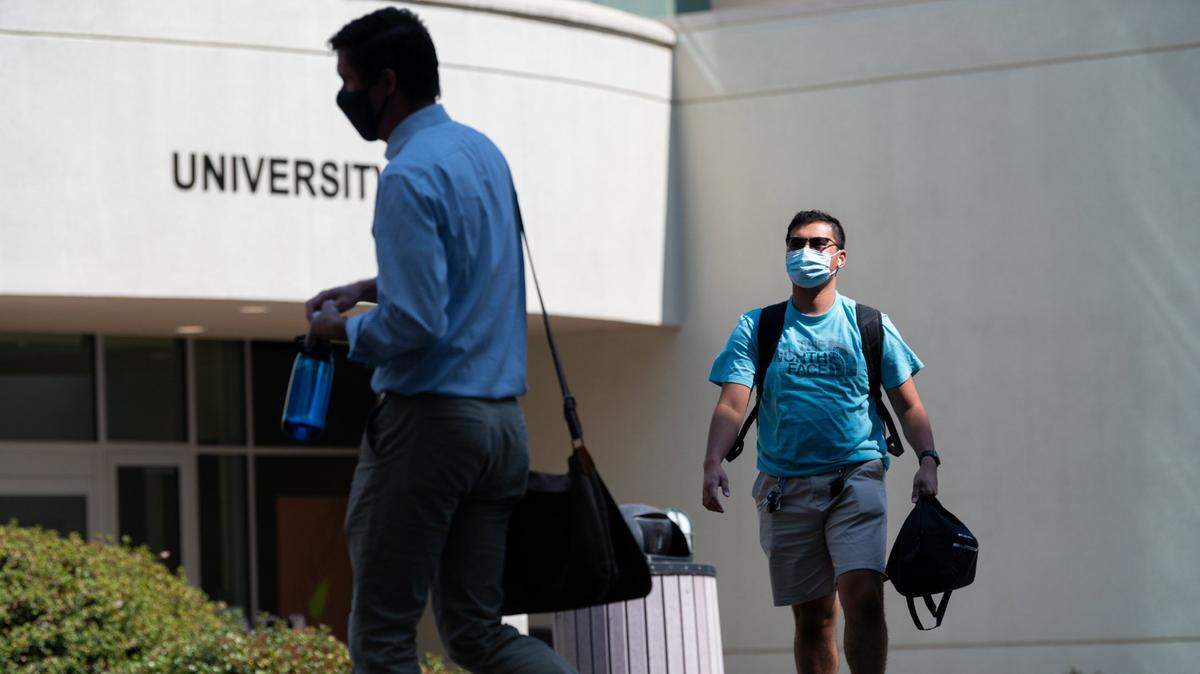
After having to adjust to virtual learning, college students have a new hurdle to overcome: getting used to in-person classes in the era of COVID-19.
University of California schools, Cal State University campuses and some community colleges are opening their doors to students with social distancing guidelines and vaccine and testing requirements.
But even with these rules to mitigate the spread of the coronavirus, some students still feel nervous.
“I do feel myself getting anxious about being in a room with a lot of people, even though we do regulate the amount of people that’s in a classroom,” said Brittany Maier, a senior at Sacramento State, where more than 19,000 students are enrolled in at least one on-campus class.
Maier, who is taking three in-person classes this semester, said she often wonders during her lectures whether someone went out without a mask over the weekend and if someone has COVID but is still attending class.
She said she feels as though she is “suffering from a little bit of anxiety” from what she can’t control. “I can control me wearing a mask, my actions, who I hang out with, but I can’t say the same for everyone else,” she said.
Ron Lutz, the director of counseling services at Sacramento State, said that worrying about the virus is normal for students and that it’s going to be an adjustment for many. School counselors at Sacramento State saw a lot of students who needed help with the transition from virtual to in-person learning at the start of the first week of instruction, he said.
Anita Fitzhugh, the public information officer at Sacramento State, said the school plans to add three more mental health counselors by the first week of October, with a total of 11 professionals, to help students.
Lutz adds that students may also be experiencing social anxiety and depression due to having to isolate during quarantine. “It might take a while to get back into the flow of things,” he said, adding that it can be difficult, awkward and stressful for some students to have to begin commuting to school again and for others to live communally in residence halls.
Alfredo Arzola Ibarra, a fourth-year design student at the University of California, Davis, said that he was excited for his first day of in-person learning.
“I just used to worry about my top half when it was virtual. Now I get to worry about my shoes or what backpack am I bringing,” Ibarra said on the phone Wednesday, while he walked to his first class of the quarter in an olive green button-up and green Puma sneakers. “I feel like a freshman again.”
But even with the excitement, Ibarra said he’s still worried. “My social meter has definitely decreased over the pandemic, especially with virtual learning where I feel like we got accustomed to minimal socialization.”
He added that his attention span has also decreased.
Lutz offered some tips for students who are feeling anxious about being on campus or need help with adjusting to their new, new norm.
“Go slow”
Students may notice that they are not entirely as productive as they used to be when they were studying remotely. Lutz said it will take a while to get back into the swing of things and that students need to be patient.
“Go slow,” he said. “Don’t expect as much from yourself.”
“Pay attention to the fundamentals”
Lutz said students will likely be more tired than they normally would be now that they are attending classes on campus throughout the day. This may cause stress or can tire one out.
To remedy this, he recommends that students try to stay on a regular sleep schedule, get plenty of sleep and make sure they are eating well.
“Don’t get too wrapped up in the news and social media”
News stories can make students anxious, Lutz said. He advises them to take some time for themselves, instead, and reflect on what they are feeling and what they are concerned about.
“Talking is really good”
“If counseling is not available, talk to friends, socialize, go out, talk to people you feel safe and comfortable with,” Lutz said.
By doing this, people can avoid holding onto and internalizing unwanted feelings and emotions.
“I think a lot of healing comes from social interaction and being with each other,” he said. “And kind of realizing you’re not alone in the things you’re struggling with. Other people are too. That helps so you don’t feel quite so isolated.”