
Is California’s free K-12 meals program working? Sacramento parents, schools call it lifeline
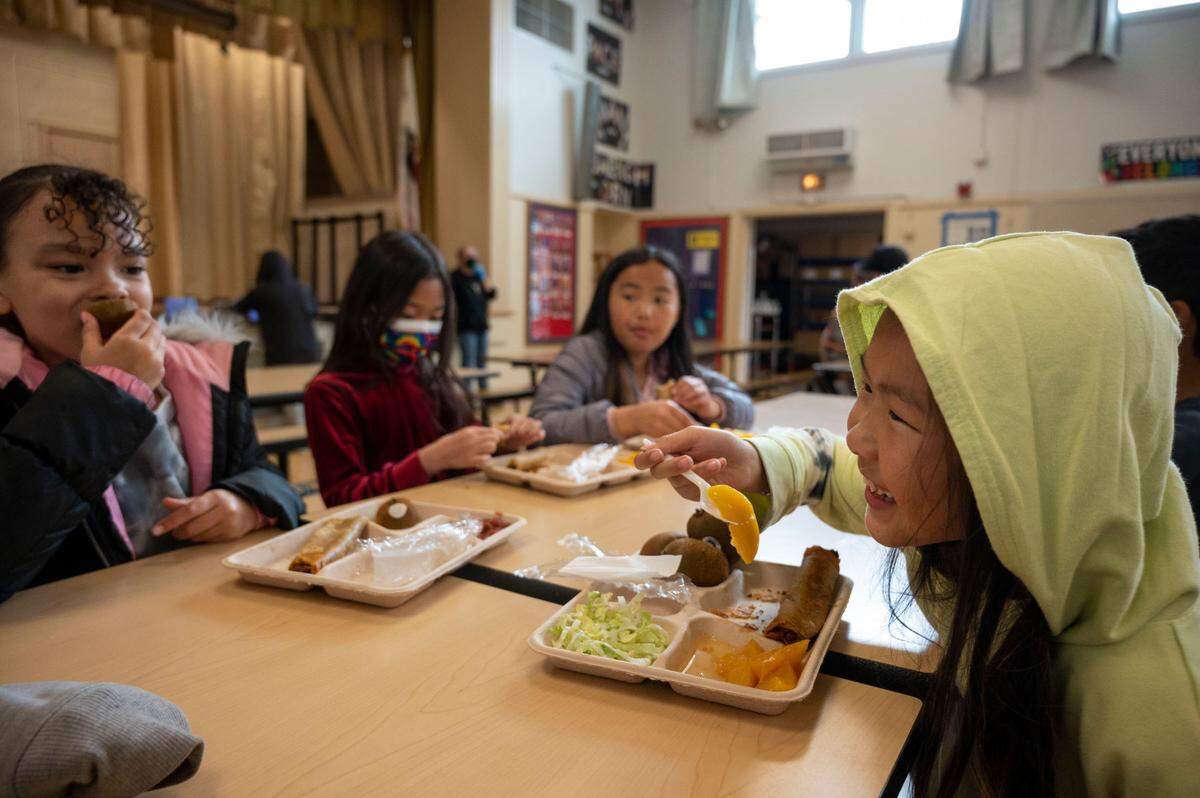
Sara Goncalves arrives at work at A.M. Winn Elementary, watching children quickly dashing into the cafeteria for breakfast.
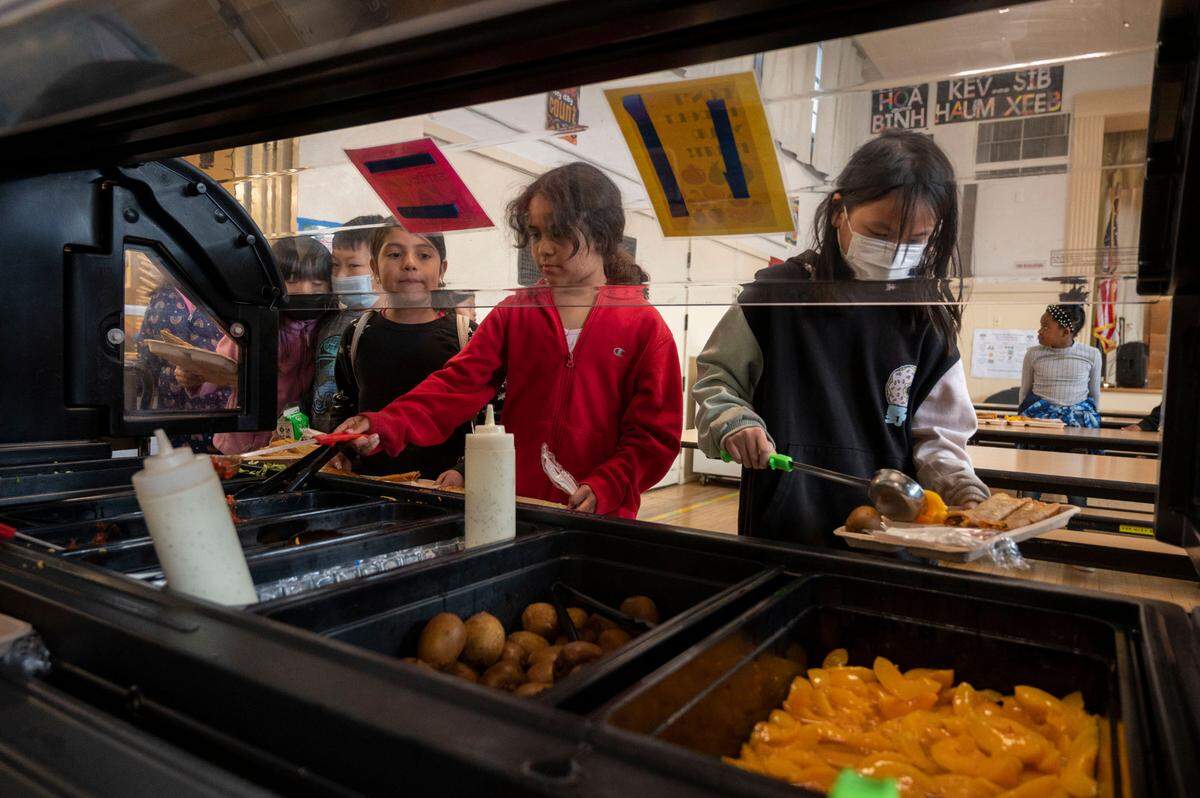
Breakfast burritos are a favorite among the Rancho Cordova students. Salads at lunch stir excitement in children standing in line for meals.
“Kids are excited to see rose apples,” Goncalves said. “For some, this is the only place where they eat greens too. It’s so cute, but it’s also so heartbreaking.”
Goncalves, a teacher’s aide, knows that for some students, it’s also the first time they have eaten since they were in the cafeteria the day before.
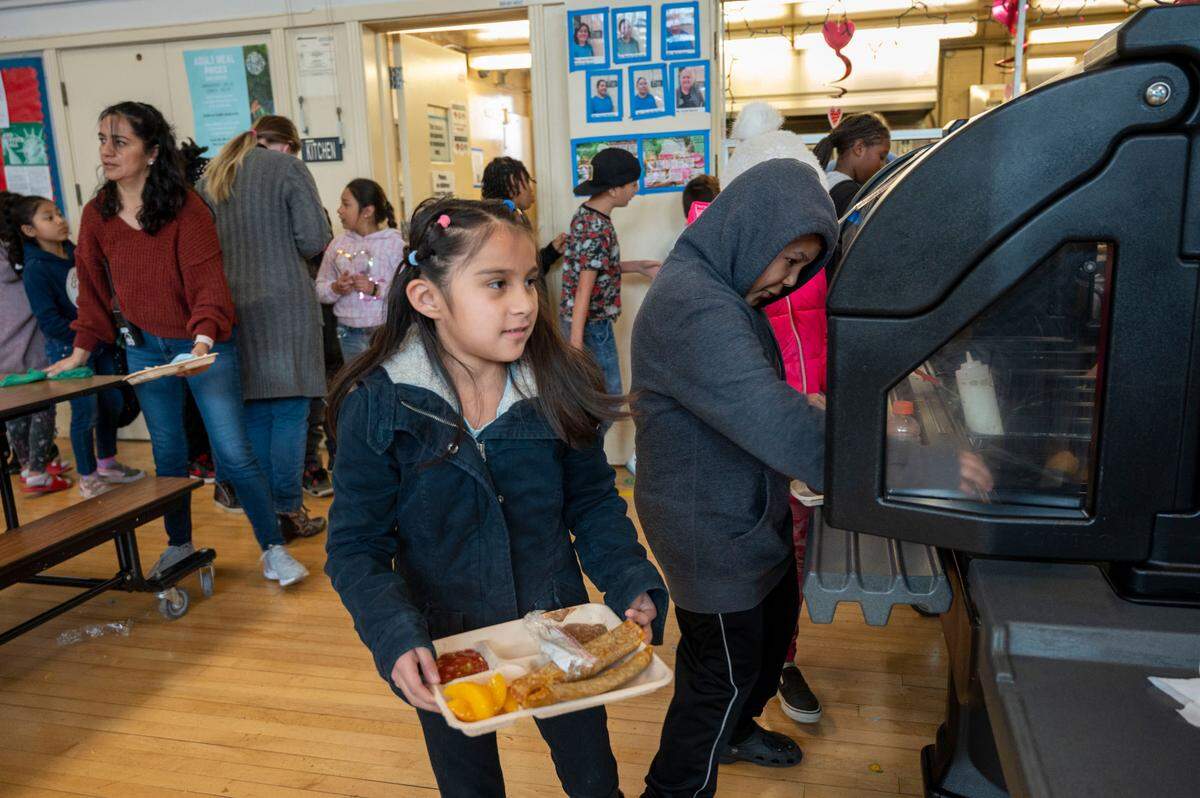
A.M. Winn Elementary, in the Sacramento City Unified School District, serves about 8,300 breakfasts and 23,000 lunches each day, according to district officials. Some of the district’s roughly 40,000 students also eat supper if they are in after-school programs.
California Universal Meals is the first of its kind in the country. Since the start of this meal program last year, children no longer need to pay for their lunches using cash, tickets or punching in their student identification. Breakfast and lunch are free at all California schools — no application is required.
It’s an important step to ensuring children are healthy, fed and ready to learn.
Research shows that receiving free or reduced school meals “reduces food insecurity, obesity rates, and poor health,” according to the Food Research and Action Center. Providing healthy options to students also has an impact on what students choose to consume, especially when it comes to fruits and vegetables.
California pioneered in free meal programs
Prior to the universal meal program, California already had a free and reduced meal program that was based on household size and income. More than 60% of California students qualified for that program.
But that program barely accounted for factors including the high cost of living throughout the state and the real food insecurities that many middle-class families were facing.
When the coronavirus pandemic hit in 2020, and campuses were shuttered, school districts began offering meals for families to pick up.
The need was there.
State Sen. Nancy Skinner, D-Berkeley, introduced the bill to make it free for all K-12 public school students, stating that “Schools needn’t be in the business of deciding who gets lunch and who doesn’t. It’s costly and contrary to the basic purpose of free education.”
Gov. Gavin Newsom signed Skinner’s legislation in 2022 that established a universal meal program for all K-12 public school students.
The law stated California schools must offer two free meals to students regardless of their eligibility. It removed barriers for families who weren’t poor enough to qualify, and reduced the stress and stigma associated with receiving free lunch at school, and possibly being identified as a student in need.
For Goncalves that came as a relief. Like many middle-class families, she never qualified for government assistance or for the original free and reduced lunch program.
But because groceries were so expensive and bills were piling up, she sometimes had to choose between buying groceries and paying for a field trip before dipping into her savings.
Goncalves’ autoimmune diseases complicated matters for her family, too. Her restrictive diet meant that her home had to remain gluten-free. As a result, her children were unable to consume certain foods that she had at home, such as some types of bread.
“I have money in savings for emergencies, but because of my health problems, I need to make sure I have a couple of months’ pay to live off of.”
Lunch at school relieved her. She saves about $150 a week in groceries now that her third and sixth-grade daughters eat breakfast, lunch and snack at school.
“It really adds up to have a substantive meal with meat in it,” she said. “And for them to have two meals per day at school makes a huge difference for me.”
Karen Imhof, who works as an instructional aide at Washington Elementary in midtown Sacramento, said the free lunch program saves so many families from worrying that their children would starve.
During the pandemic, she worked as a nutritional food service assistant where she would serve students their meals curbside.
“So many families are one bill away from not being able to eat or even be able to afford to get to work,” Imhof said. “I know parents and even ourselves would forgo eating so their kids would have lunch. But they do not qualify for any kind of aid.”
Imhof said the free lunch program also helped keep her own three boys fed when they didn’t have enough money for lunch. Imhof and her husband make just over the cap for free and reduced lunch so they didn’t qualify.
Other states take notice, federal program expires
Since the establishment of California Universal Meals, Maine and Colorado followed suit with similar programs. Plus, a handful of other states passed free school meal programs for just the 2022-23 school year.
Nearly two dozen more state legislatures are currently drafting some type of free meal program.
Free school meals were also extended to all students across the country in a similar federal government program that was tied to the coronavirus pandemic relief funding. And while Congress extended the program, there was much back-and-forth on how long to keep such programs due to Republican opposition.
That national program, which fed nearly 30 million students, has since expired, scaling back to providing free meals to students who qualify. Republicans argued it the program met the needs of students during the coronavirus pandemic, and should not be extended any further.
The number of students receiving free lunches across the country through the national program decreased by about a third, according to the latest data from October 2022, causing residents in some states like Minnesota to worry about school meals again.
About 70 of the 80 Sacramento City Unified schools qualify for free federal meals, according to Diana Flores, Sacramento City Unified’s executive director of Nutrition Services and Central Kitchen & Distribution Services.
Flores said free meals eliminate concern for thousands of California families who can’t afford meals for their children.
And like Goncalves, Flores said many families do not qualify for the federal USDA free and reduced program based on a national eligibility scale, no matter where they live in the United States.
“Yet it costs more to live in California and families have less leftover to pay for school meals,” she said.
But while there has been an increase in the number of breakfasts distributed this year, there has been a decline in the number of lunches distributed at Sacramento City Unified. School officials say declining enrollment plays a part.
Flores said she has been concerned about the program’s life span since the beginning, especially as inflation continues to rise and federal dollars for the program dwindle.
“Starting no-cost meals for every family then stopping it would hurt families who have grown accustomed and budgeted accordingly,” Flores said. “If the state of California does start to consider cutting this program there are other options that should be considered and (are) still beneficial for School Nutrition Programs and for families.”
Flores said there could be other alternatives if the state does end the program. That could include offering free meals using an income eligibility scale similar to the federal program or investing in the quality of the meals rather than expanding free meals for families.
There are no hints of an end to the California Universal Meals program.
Goncalves said the need goes further than just financial. A child should be fed regardless of economic status, she said.
“Some of the kids who are the most hungry have parents who are ill. It should never be based on poverty. Maybe mom can’t get out of bed,” she said.
This story was originally published March 1, 2023 at 5:00 AM.