
Folsom Cordova Unified considers splitting into 2 school districts. Here’s how that’s possible
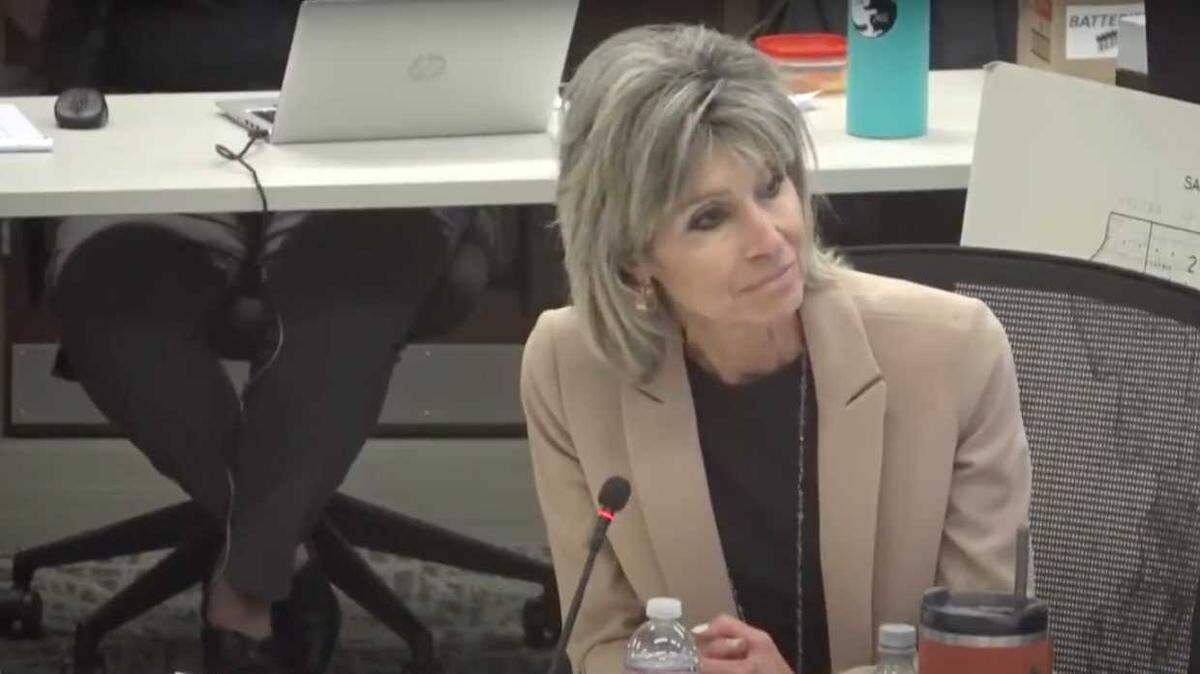
The Folsom Cordova Unified School District board is considering a $72,000 feasibility study into the possibility of splitting its 34 schools into two smaller districts: one for Folsom and one for Rancho Cordova.
A special joint meeting between the school board and the two suburban cities on June 8 was the culmination so far of a new effort to separate the district of 21,000 enrolled students. The effort was launched by board members in January. The board voted 4-1 in a motion Thursday to table possible approval of a $72,000 feasibility study until August when school is in session.
There was an attempt in 2002 to divide the district — which was formed in 1949 in Folsom and expanded to the former Mather Air Force Base in the 1960s — but it did not meet certain criteria required by a Sacramento County reorganization committee, according to representatives from School Services of California.
“I truly believe in the educational programs that FCUSD provides, but I do think it’s starkly obvious that there is disparity of equality between Rancho and Folsom,” said Ria Srivastava, a student board member, as she spoke in favor of the feasibility study. “Whether it be facilities to staff support to even just the way the community perceives our schools, it is entirely clear that there is a lack in Rancho Cordova.”
Madelaine Sanderson said she grew up in the district, has lived in Rancho Cordova her whole life and works for the Folsom Cordova Community Partnership, a nonprofit that helps families have safe, self-sufficient homes.
She took the podium Thursday night to discuss the disparity between the schools in Folsom and Rancho Cordova, and how she thinks a feasibility study might combat that.
“I serve families on both sides, and I can tell you on both sides the communities are having different experiences,” Sanderson said. “(On the) Rancho Cordova side, just think of facilities. The upkeep in Folsom is different than the upkeep here in Rancho Cordova. I know that I’ve been up here many times to share that.”
Sanderson said at one point she was able to get district staff out to inspect mold in a wall at Rancho Cordova Elementary.
“That’s not having good upkeep,” she said. “At least check the data for the students in Rancho Cordova and Folsom.”
David Reid, the board’s president, said he likes the district the way it is, “but at the same time, I truly don’t feel I necessarily have the right to tell folks in another city that they can’t control their own destiny.”
Sarah Koligian, the district’s superintendent, said the $72,000 feasibility study would be an agenda item at this Thursday’s school board meeting.
What does district reorganization take?
There are nine statutory criteria for a division petition to move forward, according to Brianna García, the vice president of the School Services of California. Among them: Each reorganized district must have an adequate number of pupils enrolled, each district have substantial community identity, there must be an equitable division of property and facilities and there must be no racial or ethnic discrimination or segregation.
Additional criteria also maintain that there should be no substantial increase in state cost or to school facilities costs, both districts must have sound education programs and performances, there must be purposes for reorganization other than to significantly increase property values and the proposed reorganization must promote fiscal management.
In 2002, the Sacramento County reorganization committee determined that there would be racial or ethnic discrimination or segregation and did not approve a proposed reorganization because of it and other factors regarding finances and education performance.
Should the county committee approve or disapprove of a reorganization, the petition would then be seen by the State Board of Education. Upon its approval, a reorganization would then be put before voters in a ballot initiative.
This story was originally published June 10, 2023 at 5:00 AM.