
Can every Sacramento County school offer professional mental health help? Here’s the plan
The dreams of Ethel I. Baker Elementary School fourth-grade students ranged in depth and complexity when shared aloud during a Thursday morning discussion: One boy sought to end world violence, while another simply wished his mother could get more work.
In a neighboring fifth-grade class, a slide projected emojis depicting different emotions, and children discussed what activities wasted their time in a roundtable conversation.
Each morning activity — practiced just as classes began — was the first step in a three-tiered program by the Sacramento County Office of Education to integrate professional mental health services onto school campuses. Student’s mental health dramatically receded during the COVID-19 pandemic, and county education officials said they hope this program increases access to mental health services and breaks its stigma.
The first step is every class having discussions akin to Ethel I. Baker Elementary School’s fourth- and fifth-grade students. The second step targets specific students’ mental health needs, and the third allows children ultimately to visit clinicians. There are 50 mental health professionals placed at more than 33 schools so far, according to the county education office, which hosted a news conference last week about its program.
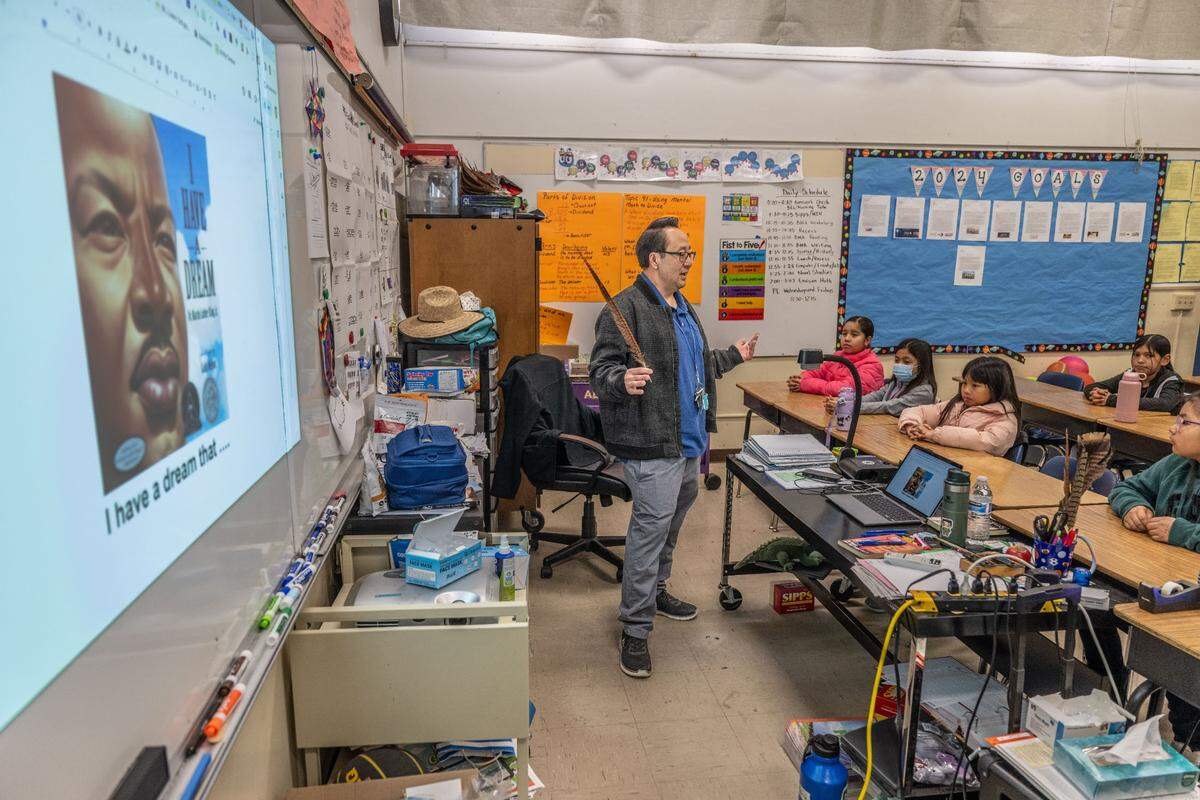
“It’s not just that a clinician is in a school,” Ethel I. Baker Elementary School Principal Nate McGill said. “It’s a part of the programming, the fabric, the culture.”
A team including McGill, assistant principal Cristina Kosakowski, a social worker and mental health and wellness clinician Elizabeth Kirby will determine what a student needs if mental health struggles arise.
Teachers can flag a students’ problems and the team will determine what services are needed, McGill said.
“Anybody that is referred to us, they’re probably already on our radar,” he added. “So, we try to have a good sense of it.”
The goal is to also catch children’s mental health needs early, so the issue doesn’t worsen, said David Gordon, superintendent for the county Office of Education.
There’s a cultural shift around the topic of mental health services, McGill said. In the four years since the program’s implementation, he’s seen students now ask to speak with a clinician because they’ve seen friends seek out services, he said.
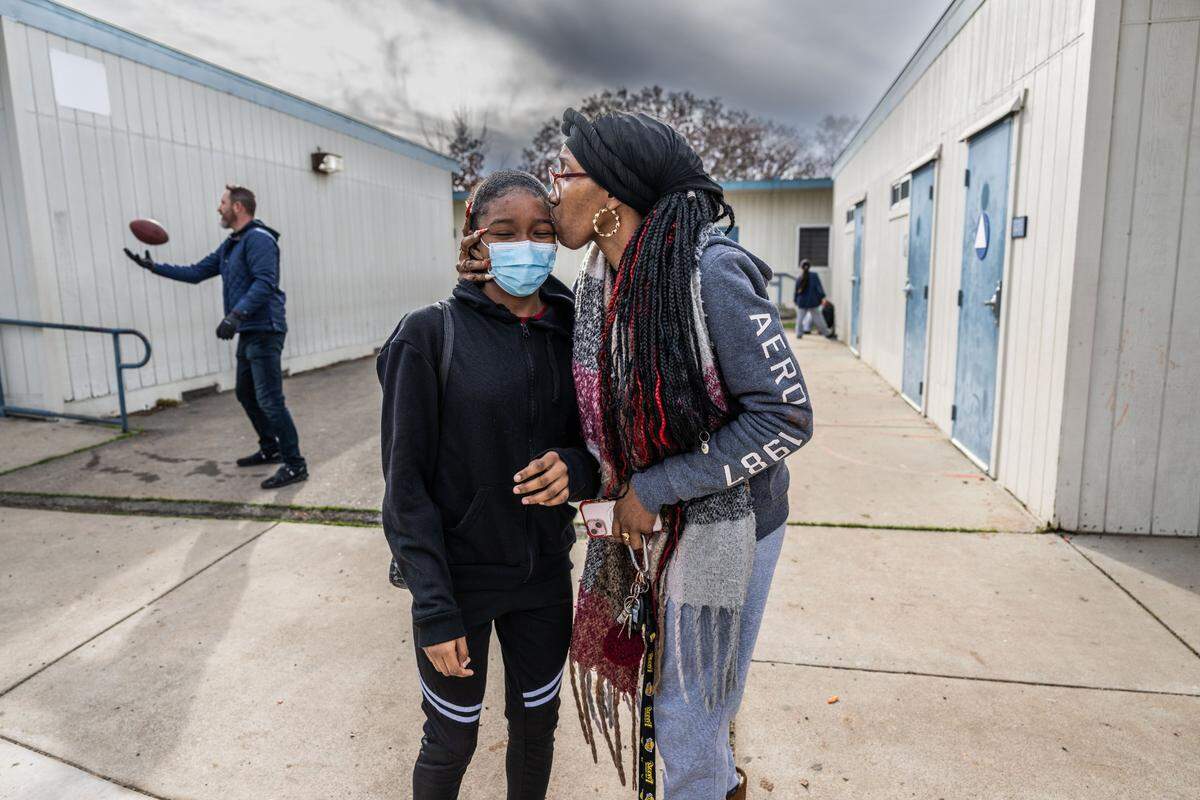
Many students’ tendencies to break rules may stem from unprocessed trauma. The elementary school has moved away from swiftly suspending a child and instead tried other methods to teach the pupil of consequences, McGill said.
Parents at first didn’t understand why a student was not being suspended, said Kosakowski, the assistant principal. It took time to explain how there’s other ways to ensure students learn from their harmful actions but don’t miss out on school time.
“We don’t even say ‘discipline,’” McGill added. “That’s not a word we use.”
Money from the state Department of Health Care Services, the county Office of Education and school districts pays for the Centers of Wellness and clinicians, said Christopher Williams, the county executive director of School-Based Mental Health and Wellness.
An equity index decided which schools would get clinicians in the early stages. Campuses were ranked based on attendance behaviors, suspensions and the percentage of students that qualify for free and reduced lunches, Williams said.
The goal is to place clinicians across every campus under the county Office of Education, amounting to 300, he added.
This story was originally published January 23, 2024 at 5:00 AM.
CORRECTION: A previous version of this story incorrectly identified the California Department of Health Care Services as the “Department of Human Services.” A photo caption incorrectly identified La’anadi Gillett.