Folsom school district will have 42 fewer bus stops in the fall. What students are affected?
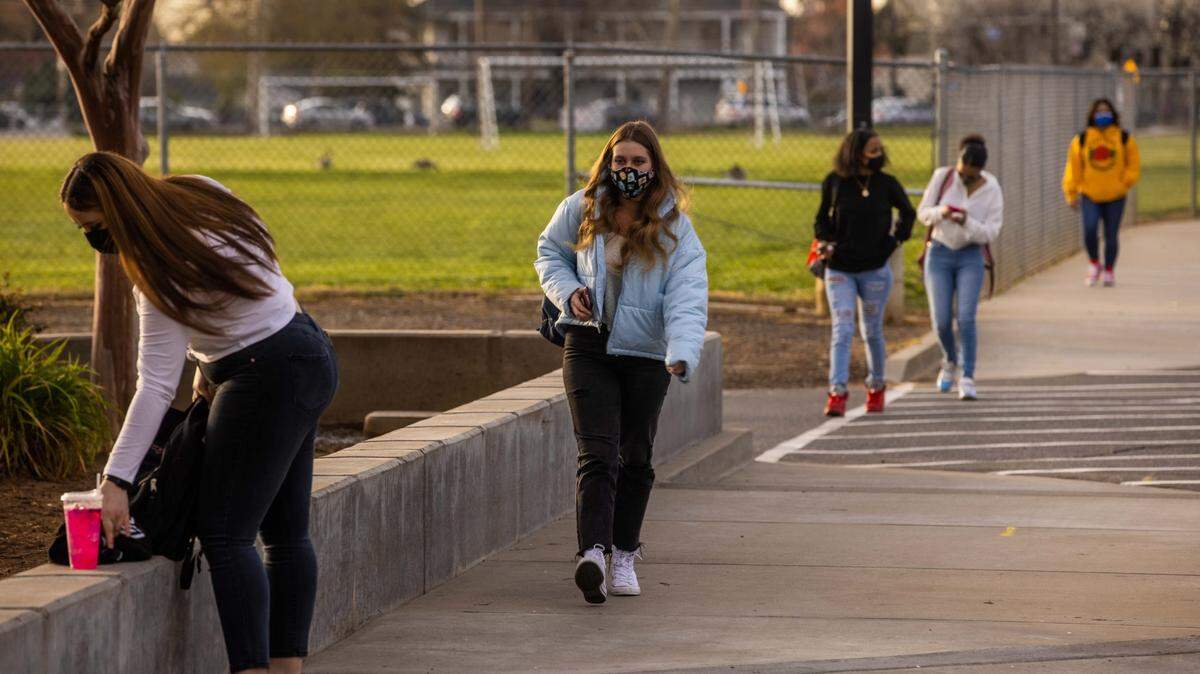
Folsom Cordova Unified School District families are scrambling to figure out how they will get their children to campus after the district board voted to eliminate 42 bus stops ahead of the school year. Administrators have cited economic issues and a lack of bus drivers as the major factors leading to the decision.
A district spokesperson did not share how many students will be affected by the change. The removed bus stops primarily affect families at Folsom Middle, Sutter Middle and Vista del Lago High.
The school board voted to enforce minimum distance requirements that were previously outlined, but not followed. Families who are not eligible for bus services include those with elementary students living within three-quarters of a mile of their school, middle school students within a three miles radius and high school students within a four mile radius.
School officials say that the distance from school was measured this way because route complexities make it “impractical to calculate driving distances for each bus stop.”
The distances do not reflect the length of driving routes, but of a straight line extending from the school, or “as the crow flies.”
Special education students who have required transportation in their Individual Education Plans will continue to receive services despite where they live. These students made up 22% of ridership in the program last school year.
“Our first priority has to be special education,” said Sean Martin, the district’s Associate Superintendent of Business Services.
National bus shortage affects local transportation
Although ridership has increased in the last several years, the national school bus driver shortage has made it impossible for the district to staff all 54 of its routes.
By the end of last school year, the transportation department was short 15 drivers, which meant long ride times for students, overreliance on transportation office administrators to drive routes and limited availability to provide transportation for field trips and rides to sporting events. Most student athletes going to games had to coordinate third-party shuttles or rides from parents.
The shortage has resulted in long ride times and more time spent on campus before and after school. The longest route offered last year was an hour and half one way. At several campuses routes were scheduled so students arrived 40 minutes early and were picked up 30 minutes after classes ended. A district spokesperson said that special education students were often most affected by long ride times.
Nationwide bus driver employment is far below pre-pandemic levels. The job has historically offered a low wage and part-time employment due to the split shift between the morning and afternoon. Companies in the private sector have also faced staffing shortages and are often willing to offer higher wages with more desirable hours.
To address the shortage, the district has offered paid training programs to recruit workers, extra hours doing other jobs within the district to create a full time position, summer work hours and a pay range boosted by two dollars to $23-28 per hour depending on experience, according to Martin. However, other districts within the same county are offering more — Elk Grove Unified School District’s wage ranges from $21-31 per hour and Sacramento City Unified School District offers $24-36, according to listings on EdJoin.org.
Effects on Folsom Cordova families
Families affected by the changes were notified via email June 28 and the guidelines were posted to the district website July 17.
Several Folsom Cordova Unified families have taken to Facebook groups to air their grievances, coordinate carpooling for the coming year and float a possible boycott of the first day of school.
The previous service was not free — an annual pass for the bus was $360.
“My gut feeling is that we’re going to have some problems, and I suspect that we won’t be having these problems until late July when all of the sudden a great number of parents are going to realize that they no longer have transportation available to their students even though they haven’t moved and their students are attending the same school,” board member David Reid said.
This story was originally published July 19, 2024 at 12:00 AM.