Woodland parent fights school district to get special ed services. She’s not the only one
Several months into fifth-grade, Meagen Reveles Kuntz realized her daughter, who requires special education services, had stagnated and even regressed in her academic progress.
For over a year since, Reveles Kuntz has been battling Woodland Joint Unified School District to compel them to provide the special ed services outlined in her daughter’s individualized educational plan (IEP).
Every American special ed student has an IEP, a collaborative legal document that details a child’s needs, their educational goals and the accommodations (including things like speech therapy and individualized instruction) they need to reach those goals. These are not suggestions: failing to provide these services as written in the IEP is a violation of the Individuals with Disabilities Education Act.
But Reveles Kuntz, a 34 year-old mother of three children, is one of many local parents exhausting her options to secure her daughter the education to which she is legally entitled.
At a November 2023 parent teacher conference, her daughter’s teacher handed Reveles Kuntz about seven pieces of paper. He told her that this was all the work her daughter had completed so far that school year.
“I’m like, ‘what do you mean? She could do this in two minutes,’” she said. “So I start asking questions.”
It didn’t take long to figure out that Reveles Kuntz’s daughter was not receiving the education outlined in her IEP, thus commencing a yearlong battle to get her education back on track. Multiple follow-ups, fruitless meetings, a new teacher, one formal complaint and a legal settlement later, Reveles Kuntz is still fighting the district for services.
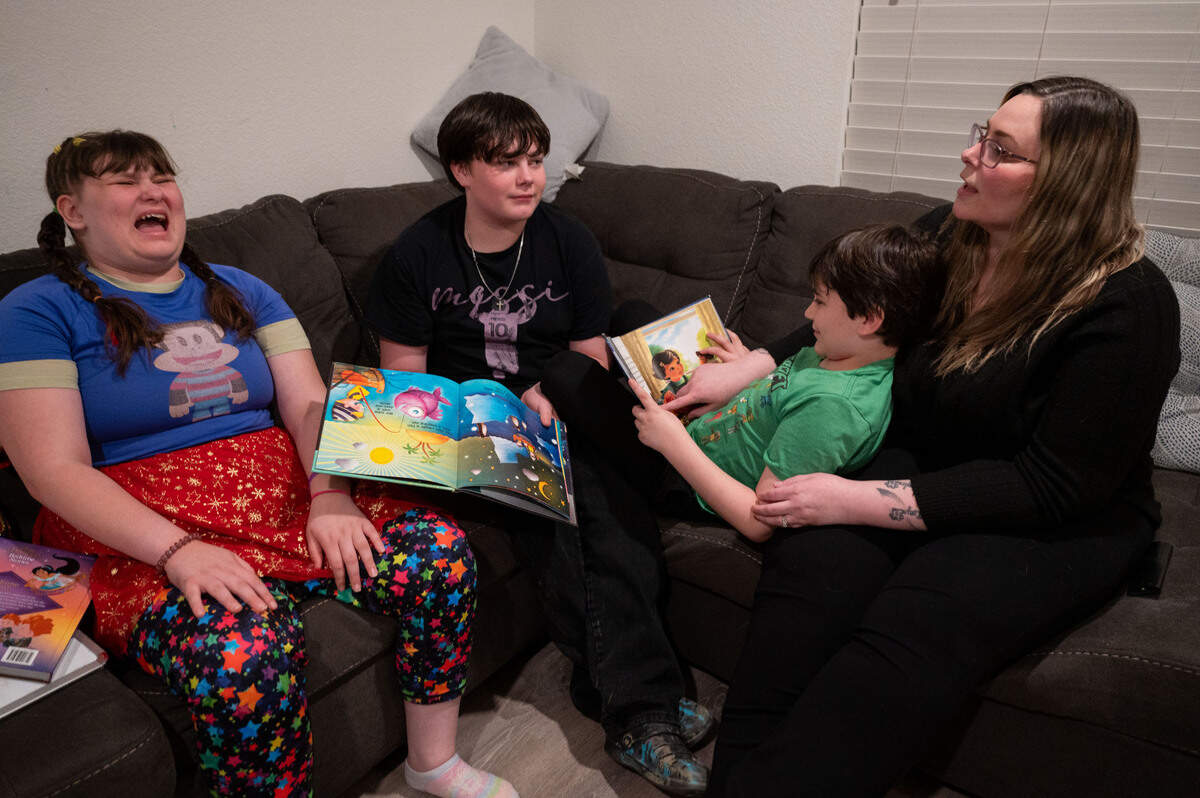
Most recently Reveles Kuntz sought the support of Dave Gaines, the CEO of a local nonprofit that helps families advocate for their disabled children’s access to education. His organization, the Sacramento Autistic Spectrum and Special Needs Alliance, advocates for students across the region.
With Gaines’ help, Reveles Kuntz filed a complaint with the California Department of Education, alleging that Woodland Joint Unified is violating special education laws by not following the terms of their settlement agreement that was supposed to compel the district to provide certain services. CDE officially launched an investigation into the district Dec. 10.
A spokesperson from the school district declined to comment on the investigation, but made a general statement about its special ed program.
“At Woodland Joint Unified School District, we remain deeply committed to providing high-quality education and upholding the rights of all students, including our special education students and their families,” spokesperson Jerry Jimenez said.
Mom of autistic child takes on Woodland Joint Unified
In the couple years prior to entering fifth-grade, Reveles Kuntz said that her autistic and minimally verbal daughter was behind grade level, but steadily making up ground with the help of a caring, attentive teacher from first through third grade.
As soon as her daughter was placed in a new class for fifth-grade, the conflict began. Reveles Kuntz was not allowed to visit her daughter in the classroom, which had never been an issue. Then came the parent conference with a lack of answers about what her daughter was doing in class. Seeking help from site administrators was futile, as was escalating it to district leadership.
The following January’s annual IEP meeting illuminated the magnitude of the situation. Reveles Kuntz’s daughter’s teacher hadn’t collected any data on the student’s progress toward her existing goals (an essential part of the IEP process) nor had they added new goals for the academic year.
The teacher was also violating the student’s IEP in other ways. Reveles Kuntz calls her daughter’s dolls an extension of her — allowing the use of her doll was written into her IEP because it helps her communicate and gives her the confidence to try new things or transition to different tasks, a key area of difficulty for her. Her fifth-grade teacher took them away.
“My daughter (previously had) a teacher that used the doll as a support system for her. The doll that she took to school had a spot at circle time. The doll had a pencil and would sit at the desk and pretend to complete a worksheet that my daughter’s working on,” Reveles Kuntz said. “My daughter went from that to a teacher taking away her dolls because they were ‘distracting.’”
At a follow-up IEP meeting, Reveles Kuntz said that the teacher fell asleep several times as the group discussed her daughter’s academic regression.
“This isn’t just your job, this is about my daughter’s life, and you don’t seem to care that you have not only not contributed to her having any knowledge growth, so you’ve actually taken her a step backwards,” she said in an interview. “My daughter was basically coming to school for daycare. Nothing was happening.”
Not long after that meeting, Reveles Kuntz was informed that the teacher would no longer be working for the school. A spokesperson with the Woodland Joint Unified School District confirmed that the teacher is no longer an employee of the district, but they did not share the circumstances that led to their departure.
But the problems didn’t end with the problematic teacher gone. Reveles Kuntz also found out that her daughter hadn’t been receiving the appropriate speech services, and that she was behind 20 speech hours by February.
“There were months that (the speech teacher) said sessions were happening, but there was no record of it,” Reveles Kuntz said. When she asked what happened, she was told the teacher was assigned to 82 students in addition to her daughter.
It is illegal to deny a student services written in their IEP because of a lack of staff.
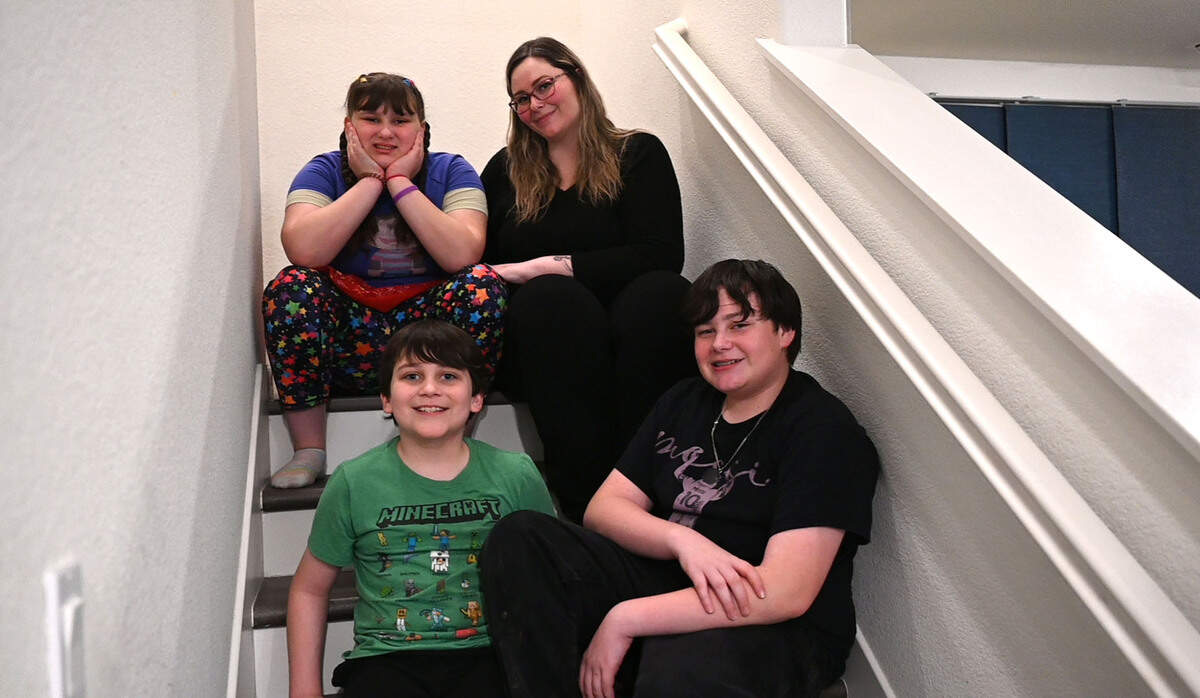
Through most of the school year, Reveles Kuntz exhausted herself trying to communicate with Gibson Elementary special education staff, then school site leadership and district administrators about the issues she was having with her daughter’s teacher and her overall education.
After the classroom teacher’s departure, she thought that she and school administrators had finally reached common ground.
“We were on the same page that my daughter had not been given what she should have that year, that she had moved behind, and we came up with a settlement agreement that would work to resolve everything,” Reveles Kuntz said.
The settlement was signed in the summer, with its terms meant to go into effect in September. Neither Reveles Kuntz nor Gaines can speak to the specific terms of the settlement due to a nondisclosure agreement (a practice that some legislators have sought to ban).
Settlement didn’t provide resolution for Woodland mom
Things are certainly better now that Reveles Kuntz’s daughter is progressing under a new teacher, but the fight continues. It wasn’t long into the new school year that she realized the terms of the settlement were not being met, facing with the reality that a year’s worth of labor didn’t ensure that her child received the education she is entitled to.
“This is a contract between me and the school, and it’s supposed to be followed but it’s not,” she said. “I feel like no matter what I do, I keep hitting a wall each way I turn.”
At this point she reached out to Gaines, who helped her file the complaint with the state Department of Education.
Gaines says that the number of families approaching him from Woodland Joint Unified has shot up in the last year, and that this complaint is one of a number of processes in the works to compel Woodland Joint Unified to comply with special education law.
Reveles Kuntz has been emotionally drained from over a year of following up with school personnel who would not provide answers. She was exasperated by the process of communicating with what she felt were indifferent school administrators.
“These people who work in education need to care about the children’s education, and I don’t feel like that is happening,” Reveles Kuntz said. “I know I’m not alone — it’s just extremely heartbreaking that the effort is not being put in.”
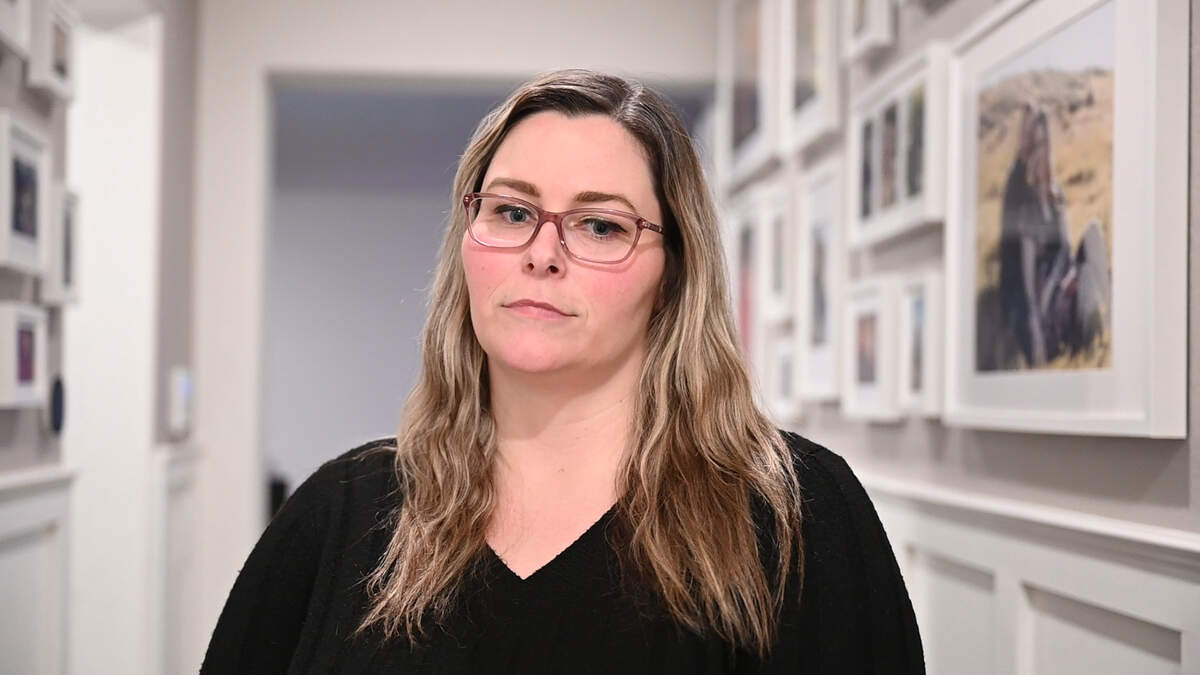
Gaines, who has been working in the field for a decade, believes the blame lies beyond individual actors. He sees the problems with special education as systemic, and likens a school administrator to someone who needs to feed 50 people with 30 pieces of bread.
He contends that although state and federal laws maintain an edifice of protection for disabled students’ rights to an education, a lack of resources (primarily the profound shortage of special education staff both locally and nationwide) prevents government agencies from actually enforcing these laws. Educational scholars say that the low supply of special education teachers has imperiled students with disabilities’ opportunity to receive the education they’re legally entitled to.
Woodland Joint Unified, which serves around 9,500 students, is currently hiring five resource specialist teachers, three special day class teachers, 10 paraprofessionals and two speech pathology assistants according to EdJoin.
While failing to enforce special ed laws at the state level is a violation of federal law, Gaines argues that there is an implicit understanding throughout the system that local educational agencies simply don’t have the staff or resources to provide all students with the services their IEPs call for, and that enforcement is ultimately lax. In 2023, the US Department of Education reported that fewer than half of states were in compliance with federal special education law that academic year.
Take Sacramento City Unified School District, Gaines said, a district that has been reprimanded by local and state agencies for continuing to “fail its most vulnerable students.” The state Department of Education has found the district out of compliance for several years, but it has not faced any formal repercussions.
“You have seen how many notices and how much time has passed with the Sac City violations,” he said. “I think the CDE probably gives them a lot of time and lenience because the only enforcement mechanism is the withholding of federal funds.”
Instead, educational experts and even local school board members agree: the best way to improve special education for your child is to sue. However, as is evident in Reveles Kuntz’s case, that can only take one so far.
This story was originally published December 20, 2024 at 5:00 AM.