
UC Davis scientist contributes to Japanese agricultural research in new study
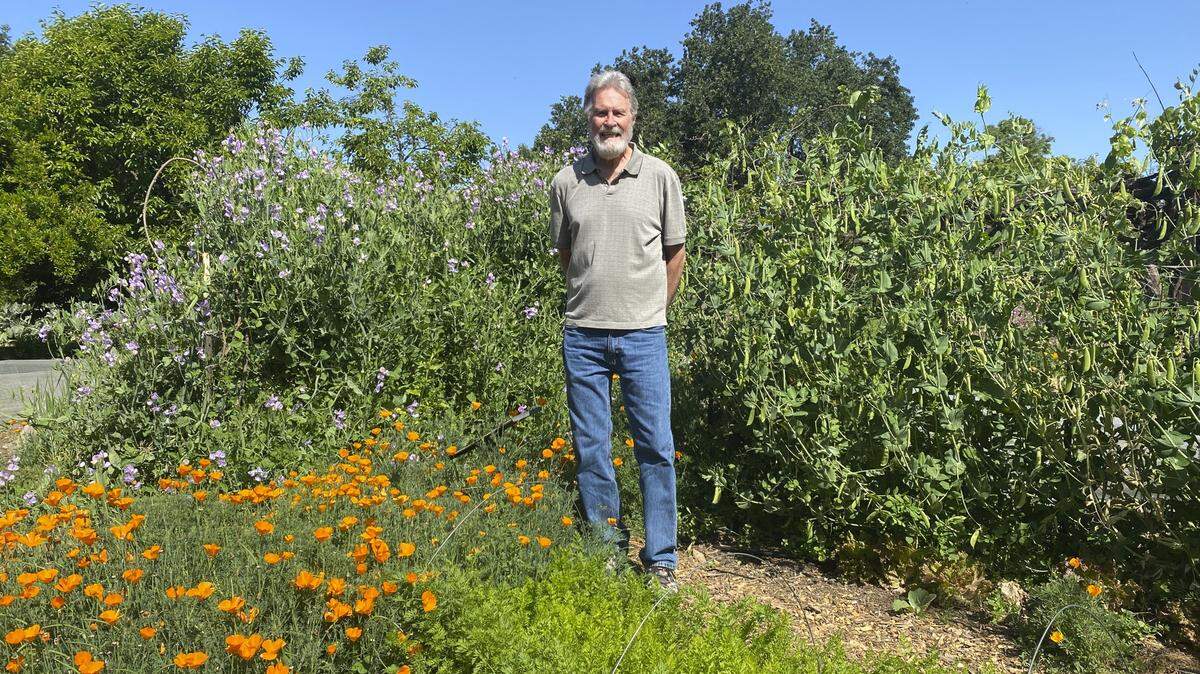
A UC Davis professor’s research and counseling contributed to understanding a new biological mechanism that may result in higher crop yields and increased food security.
Professor Emeritus Kent Bradford is listed as a coauthor of a May 2025 study that has received attention among the scientific community. Lead author Ryushiro Kasahara and his team at Nagoya University managed to increase the size of rice seeds by 9%, which may correspond to larger harvests.
The collaboration revived Bradford’s decades-long interest in callose, the sugar that controls the flow of nutrients from a mother plant to a seed.
In the 1980s, Bradford and his team at UC Davis hypothesized that callose compounds surrounding muskmelon seeds formed a semi-permeable barrier. This selective gate allowed water to travel in and out of the seed without letting solid nutrients escape.
Bradford did not realize callose barriers required fertilization to open until a chance encounter with the scientists from Nagoya. In 2023, he attended a conference hosted by the International Society for Seed Science, where Kasahara presented his research on the new mechanism.
Excited by this development, Bradford sent Kasahara his previous work as a reference and eventually helped the team edit the recently published study.
“That’s the way science works,” Bradford said when asked about the collaborative process.
Kasahara and his team had discovered a rabbit-shaped mass of callose that forms a gate at the end of a tube connecting seeds to the mother plant. This tube is responsible for nutrient flow. As they learned, the gate can only open after fertilization produces an enzyme that degrades callose.
“Plants are fairly cautious,” Bradford said. The gate mechanism prevents plants from wasting resources on unfertilized seeds.
The more nutrients a fertilized seed receives, the larger it can grow. By overexpressing the gene that produces the callose-degrading enzyme, Kasahara and his team managed to widen the gate and allow more nutrients into the seeds.
The scientists’ successful enlargement of rice seeds and cress, a weedy plant used as a model in scientific experiments, suggests that the process could be applied to other seeded crops, such as beans and other grains.
This story was originally published June 5, 2025 at 1:31 PM.