Fundamental change or mission expansion? Inside Jesuit High’s inclusion of girls
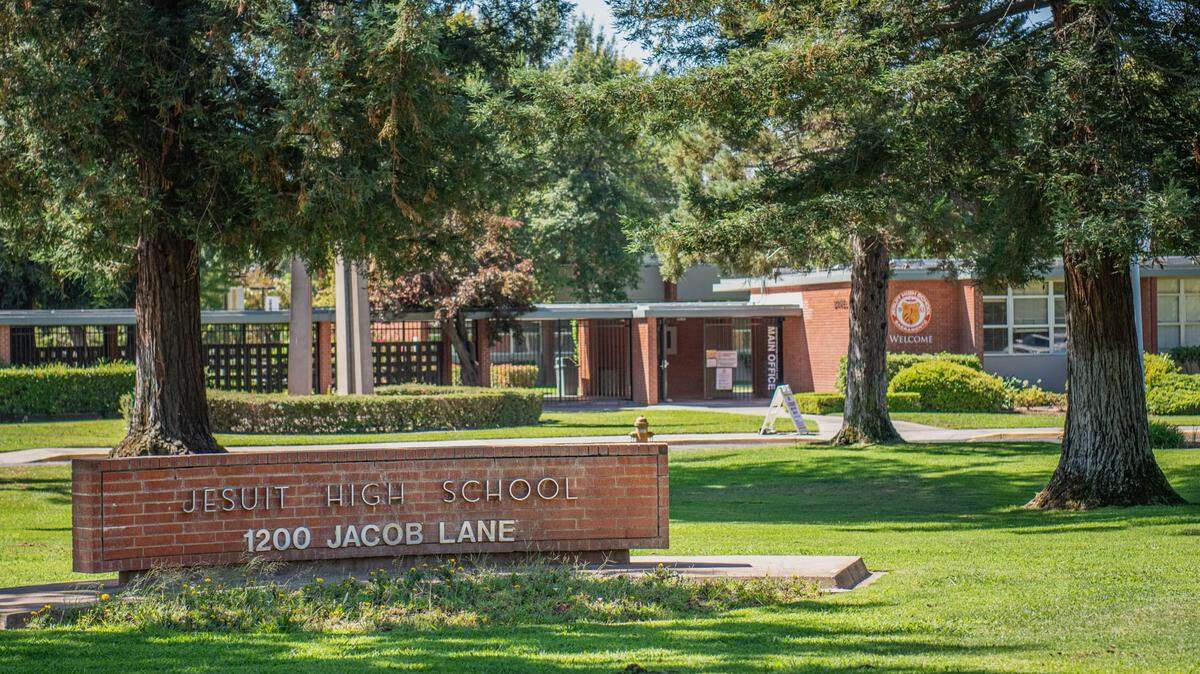
After Jesuit High School in Carmichael announced that it would start to accept girls in fall 2027, many current parents and alumni are voicing their resistance to the news that their historically all-boys school will be changing.
The change comes amid years of strategic planning as enrollment has lowered, regional demographics have shifted and costs have skyrocketed. Jesuit High School President Chris Alling said all of these data points were the catalyst for what he calls an expansion and “deepening” of the Catholic school’s mission.
“I really believe that this program, and what we get to do in Jesuit education has the potential to impact lives, and also impact families, the neighborhood they live in and cities they live in, the businesses they end up running and working at — and that means changing the world,” Alling said.
Rather than moving to a standard coed model employed by the majority of public and private schools in the country, Jesuit High will go to a co-divisional model. This means that boys and girls would have separate standard classes but share campus during passing periods and lunch. Most co-curricular activities, like arts and leadership programs, would be shared, but spiritual programming and retreats would remain separate.
While this change will make Jesuit California’s only co-divisional high school, its leaders did not invent the concept. Other Catholic schools in the United States have moved from single-sex to a co-divisional model in the past several years.
In an interview, Alling went into more detail about the board’s decision to change in the coming years. He said that the school’s enrollment has declined over the past decade, despite their use permit by Sacramento County increasing by 10%. Enrollment was at its lowest for at least a decade by the end of the 2024-25 school year.
Alling is also aware of the ways that economic challenges are affecting the educational choices families make.
“We’re definitely feeling that anxiety around a rising tuition cost and trying to take care of families that want to send their kids to what we think is an incredible and rich educational experience, but for so many of them now, it just feels out of expense,” he said.
Annual tuition at Jesuit is $19,325 for the 2025-26 school year.
Parents reaction to new model
Many current and former parents think that the introduction of girls to the Jesuit campus represents a loss of the traditional structure that they say benefited generations of young men. Some are casting the move as political — a parent alumnus and conservative influencer wrote that the school has embraced a “woke agenda” in the past five years.
Other parents, while disappointed, are planning to attend parent info sessions being held over the next month with an open mind.
Katerina Lagos is the parent of two sons who have attended Jesuit and is currently the president of the Layola Guild, a longstanding nonprofit that fundraises for the school’s scholarship program. While she appreciates the school’s “men for others” philosophy and the way she says it has helped shape her sons into becoming well-rounded young adults, she urges others to approach the decision with the understanding that leadership is trying to do the best thing for the survival of the school.
“I don’t think there was any sort of agenda — there are probably some really substantial issues that they had to address and probably felt that this was in the best interest of everyone,” Lagos said.
But as a prominent member of the Jesuit community and a believer in the single-sex model, she empathizes with parents who are upset by the news.
“The all-boys model creates a very well rounded individual who can serve others, but feels like he’s connected to all the other boys in the school. That brotherhood is a longstanding tradition — you see this incredible development and it’s beautiful to see,” she said. “Hopefully they will be able to keep that development and growth, and that Jesuit experience, going forward.”
There are no conclusive studies that a single-sex educational model provides better outcomes than coed, or vice versa. In an op-ed for Forbes, Director of National Research at EdChoice Michael McShane wrote that single-sex schools could be likened to tables — it depends on the design and context of the table to determine whether it would work well in a particular space.
“It is good for some people in some places and bad for other people in other places. It can be done well or done poorly. Perhaps there is no blanket answer because the types of single-sex schools that exist, the communities that they serve, and the quality of the program of education they have on offer vary widely,” McShane wrote.
This story was originally published October 8, 2025 at 5:00 AM.