To meet new on-campus living requirement, Sac State will build more housing
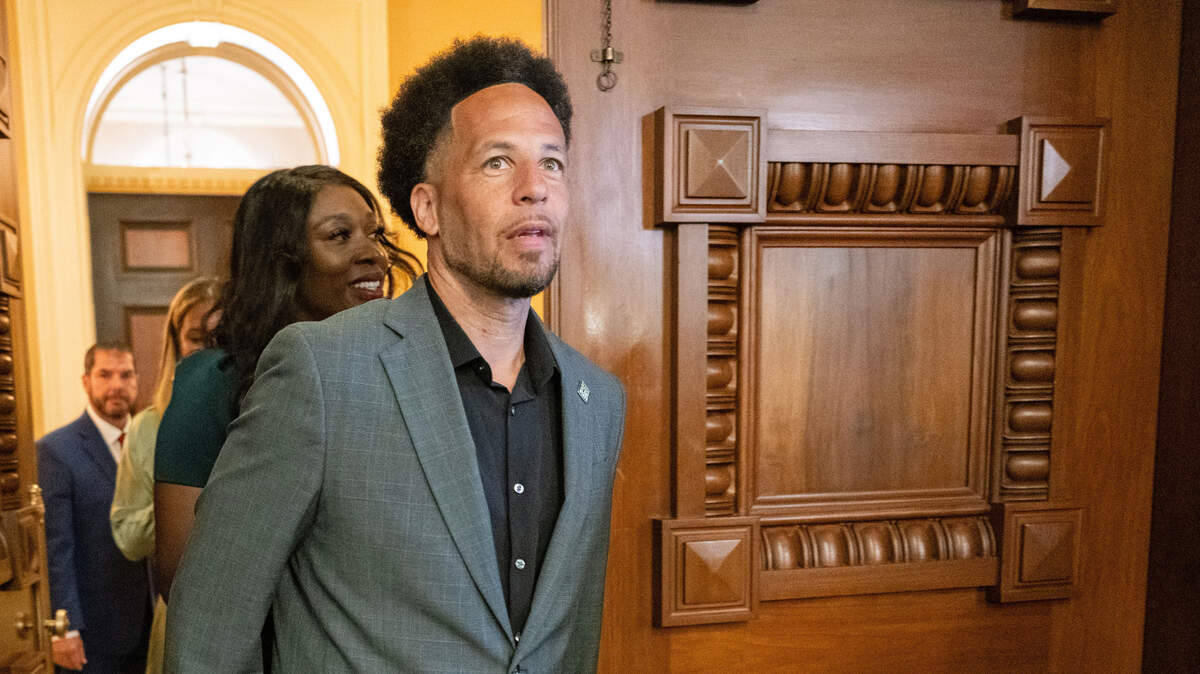
Sacramento State is looking to build more on-campus housing to meet the needs of a new requirement that freshman live at the university starting in 2026, President Luke Wood announced in a recent social media post.
Wood said in the Thursday post that Sacramento State would begin the procurement process Monday to build more university-affiliated housing. He noted that the university already has a significant waiting list for existing student housing.
“We are a university that serves many lower- and middle-income students who may struggle with where to lay their heads at night or where their next meal will come from. This is one reason why student housing (e.g., residence halls, affiliated housing complexes) is so essential,” Wood said in his statement.
In August, Wood announced that the university would institute a rule requiring first-time freshmen to live on campus starting in 2026. He said the rule would ensure that students have housing and food as way to improve their academic success.
The residential requirement will go into effect next fall and require non-transferring first year students to live in university housing for two academic years. The new policy will be fully implemented in fall 2027, Wood said in his social media post.
The policy has several exceptions, including students age 21 and older as well as active-duty military members or veterans, as well as an exemption request process. It also does not apply to students living with immediately family members within 50 miles of campus (decreasing to 30 miles in fall 2027).
Several comments on Wood’s post expressed frustration with the new policy and argued that it would make attending Sacramento State less affordable.
“How does this help those low-middle income students? Will on-campus housing be more affordable than ‘commuting?’” one commenter wrote, which had received hundreds of likes as of Saturday evening.
Wood said the move was designed to help Sacramento State transition from a commuter campus to a residential community. The president said that on-campus living arrangements for students result in better success rates.
“This is because students living in student housing never truly stop learning. They go home to academic advisors, tutors, residence hall staff and leadership development,” he said.