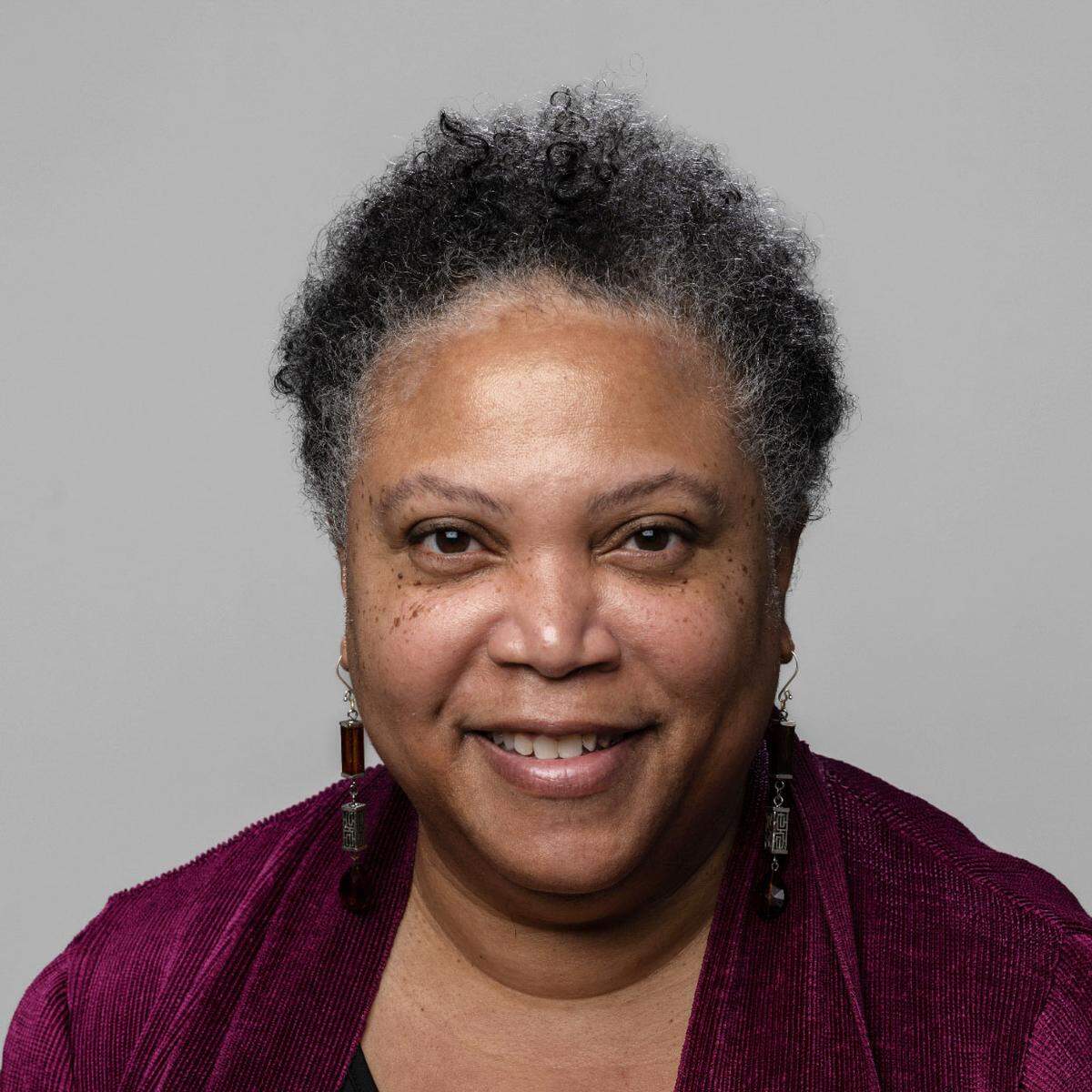
How Sacramento State is mobilizing to address college student hunger
Long before a federal judge forced the Trump administration to release full November SNAP benefits — and before Congress struck a deal to reopen the government — Sacramento State was already in crisis mode.
For Emily Tupper, the licensed social worker charged with helping students meet their basic needs, the threat of losing CalFresh funding wasn’t theoretical. It was an academic emergency for thousands of students.
“We talk to students every day who are really struggling with how much responsibility they hold,” said Tupper, the director of Sac State’s director of campus wellness and its new Crisis Assistance & Resource Education Support center. “We never want a student to stop or drop out because of basic needs insecurity.”
Although the CalFresh crisis was largely averted, demand remains high, she said. Nearly half of Sacramento State students experience low or very low food security, according to the 2024 National College Health Assessment. As many as 3,665 Sac State students receive CalFresh, what the SNAP program is called in California.
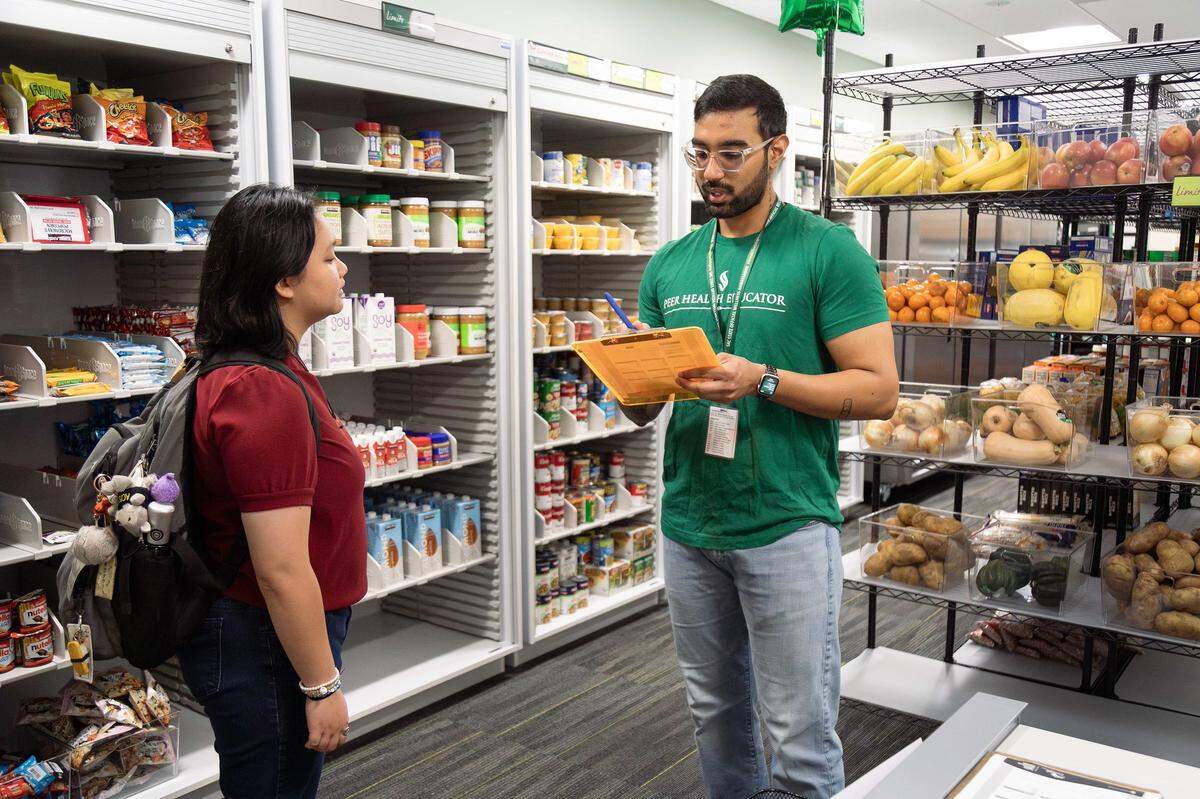
A 2019 CSU assessment found that 41.6% of Sac State’s 31,000 students qualify for the program — students who, by definition, struggle to purchase enough food without assistance.
At the state level, the crisis was even larger. Data newly released by the California Policy Lab shows that at least 414,000 college students statewide rely on CalFresh, including:
- 276,000 community college students;
- 50,000 UC undergraduates;
- 8,400 UC graduate students;
- at least 80,000 CSU students.
A CalFresh funding freeze would have left many scrambling for food mid-term. With the number of students seeking assistance rising even before November payments lapsed, Sacramento State prepared as if the gap were inevitable.
When the shutdown began in early October, the basic needs team didn’t wait for formal guidance. Tupper described “virtual get-togethers” over Microsoft Teams, rapid-fire strategy calls, and email threads connecting campus health, counseling, financial aid, development, and student affairs.
Basic needs resource centers have opened across California campuses since state leaders mandated them, including through Assembly Bill 132 and Senate Bill 129 in 2021, AB 2033 in 2024, and SB 271 in 2025.
Already stretched, Sac State saw a wave coming
Sac State President Luke Wood, who was adopted out of California’s foster care system, prioritized the center after taking office in 2023. The university opened its basic needs center on Sept. 23, just two weeks before the federal shutdown that lasted 43 days.
The timing proved critical. The center, located inside The WELL campus health complex, allows students to see a doctor, visit a counselor, pick up prescriptions, and shop for free groceries — all under one roof.
In its first five weeks, the center completed 2,399 appointments. It added a second food pantry on campus, operated by staff and volunteers.
The ASI Food Pantry, run by student government, was the first grocery site. In the past year, it served 3,103 students and distributed 16,094 pounds of produce, 1,547 pounds of frozen goods, and 28,634 pounds of shelf-stable items.
Tupper knew those numbers would climb without CalFresh. Feeding the Foothills, which distributes food in El Dorado, Placer, and Nevada counties, told The Bee that for every meal a food bank provides, CalFresh provides nine.
“CalFresh is a significant factor for our students,” Tupper said. “For some, receiving their CalFresh supplement and nutrition assistance benefit may be the reason they’re able to continue their education.”
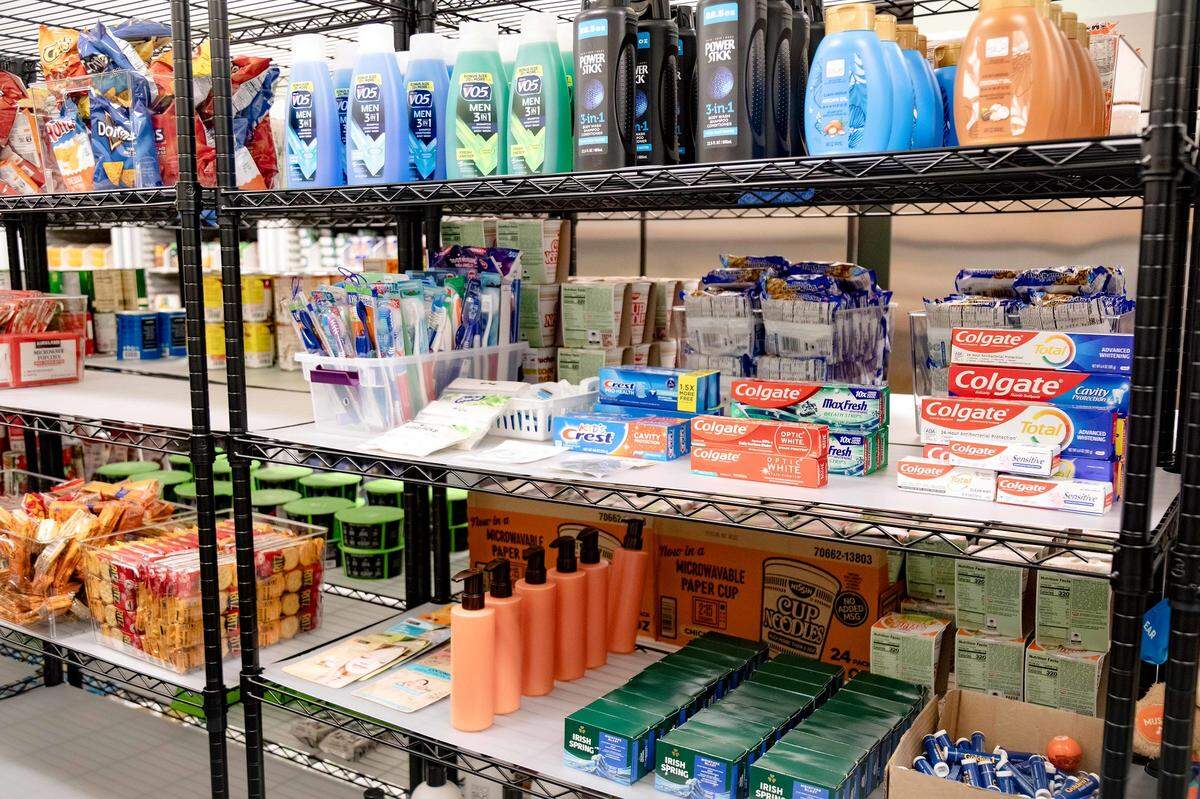
Much of the planning happened well before the shutdown: redesigning how students access food.
Instead of long lines outside the ASI pantry, which sometimes wrapped out the door, the basic needs center schedules shopping appointments: five students every 20 minutes from 8:20 a.m. to 4:20 p.m., Tupper said. Emergency slots are also held open.
“There have been times in the past when we only had one food pantry for campus, where students may have waited and then the office had to close,” Tupper said, “and they may not have been able to get the supplies they needed.”
Amid the shutdown, staff expanded food procurement, stocked freezers early, and prepared to extend hours if demand spiked, Tupper said.
Partners like Sacramento Food Bank & Family Services, Soil Born Farms, the Capital Radio Garden, and the Central Downtown Food Basket helped stabilize supply chains even as federal funds paused.
Building a hunger relief model for speed and dignity
Sacramento State has long offered $600 emergency food insecurity grants. During the shutdown, basic needs and financial aid staff streamlined the process, cutting turnaround time from two weeks to five to seven days.
To make it happen, Sac State trained social work interns to help with intake, added four days of case manager availability, and worked closely with the Office of the Bursar to expedite disbursements. Students can shop at the pantry while awaiting funds.
Counseling services were also prepared for an increase in students facing hunger and housing instability. Peer wellness advocates in cultural centers were trained to connect students with food, emergency grants, and mental health resources.
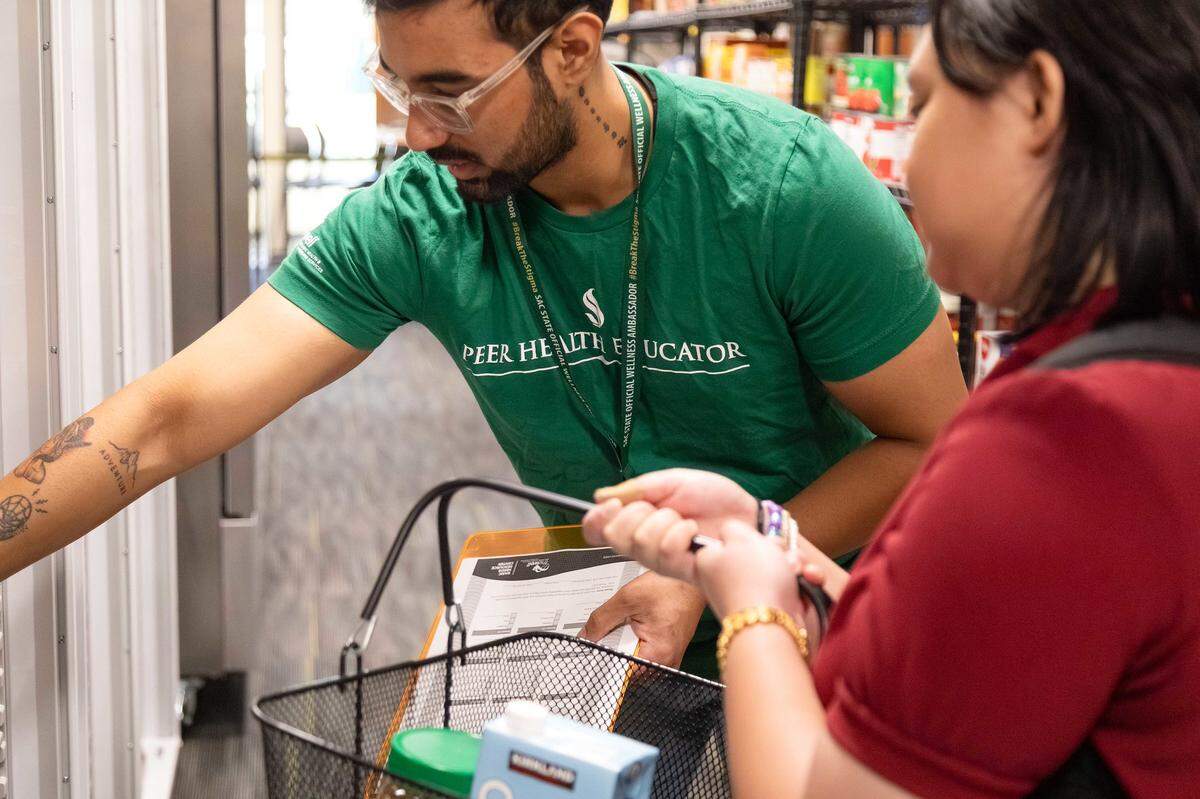
At The WELL, students might walk into a cooking class where nutrition educators use produce nearing its best-by date to teach meal prep. Peer health educators table nearby, offering guidance. Case managers assist student parents juggling food insecurity with caregiving.
“We see students each day who are hungry,” said Tupper, a licensed clinical social worker. “We see students who ... look forward to coming back next week because, without this resource, they would not have enough food.”
At the community college level, the Foundation for California Community Colleges stayed in emergency mode even after SNAP benefits were restored.
“We haven’t changed anything even with this recent news,” said spokesperson Elisa Smith.
Surveys show about half of California community college students are food insecure, with 52% saying they worry their food will run out and 45% reporting it already has.
A Sacramento freshman on edge about food aid
Miles Sims, an 18-year-old freshman at American River College, said CalFresh provides him and his mother $300 to $500 per month. Along with income from their jobs, he said, it’s enough to get by.
“We’re not eating like kings or queens on the daily,” he said, “but we do have enough just to be able to feed ourselves.”
Sims, a mentor with the nonprofit Improve Your Tomorrow, helps guide young men of color toward higher education. He went through the program himself and credits it for helping him transition to college. His mother does house-cleaning.
He said he would use ARC’s basic needs center if needed, but worries most about friends and family already in crisis before the CalFresh lapse.
“Even though me and my family might have it a little easier, there are still people out here who are struggling,” said Sims, an aviation major who plans to transfer to Tuskegee University. “There are people out here who have nothing, even though they are trying their absolute hardest.”
Sims said he felt some relief once his family’s November benefits loaded, but the uncertainty stayed with him.
What would he tell other students in the same situation? “Keep your head up. Keep a creator mindset,” he said. “We won’t let the government dictate whether or not we survive.”
At Sacramento State, Tupper said the goal is not only to respond to emergencies but to eliminate the structural causes of food insecurity.
In addition to expanding grant access and food programs, Sac State is adding pop-up grocery events, recruiting more volunteers, improving student awareness of off-campus resources, and coordinating with campus philanthropy to raise basic needs funds.
“Education breaks the poverty cycle,” Tupper said, “but students have to be able to persist and graduate for that to happen.”
Their persistence, however, requires something simple.
“Students can’t succeed academically if they’re hungry,” she said. “They won’t be able to get the GPA they know they’re capable of if they’re ... worried about meeting their basic needs.”
For Sacramento State — and California’s broader higher education system — the shutdown underscored a critical truth: students who rely on CalFresh are one congressional standoff away from instability.