Entrance exams to end for Sac City elementary schools after mandate from state
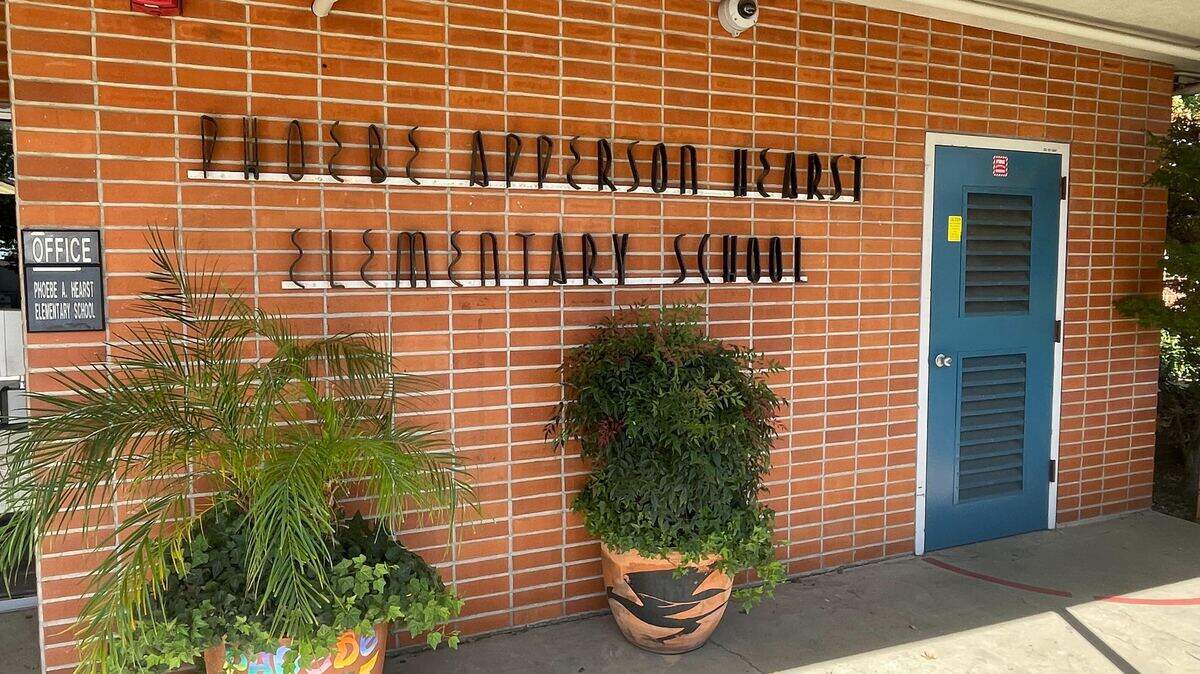
The Sacramento City Unified School District will end its screening exams for admission to two desirable elementary schools after California Attorney General Rob Bonta found the tool discriminated against students with disabilities.
Prospective kindergarten and first grade students will no longer be subject to a screening requirement for enrollment at Phoebe Hearst and Camellia Basic elementary schools. Both schools will hold open enrollment lotteries not dictated by neighborhood boundaries, the district said in a Friday news release.
Priority enrollment will still be given to families with an older sibling who attends the schools and students who have a guardian working at the schools, but otherwise students who apply will be admitted via lottery.
Trustee April Ybarra said she was glad that the attorney general was able to make the decision before open enrollment for the 2026-27 school year, which will run Feb. 2 through Feb. 27.
The change, mandated by Bonta, comes after the announcement of a settlement between the attorney general and the school district earlier this month which mandated that the district reform its open enrollment process after a state investigation found it created discriminatory barriers for students from disadvantaged groups, particularly those with either diagnosed or undiagnosed disabilities.
“Finding the screener discriminatory is pretty straight forward, there’s not a lot you can do about it as a board,” Trustee Jasjit Singh said.
“I know it will be a shift from how things have gone in the past, but we have a strong cohort of students, parents, administrators and teachers who will be able to continue in the strong traditions that Phoebe Hearst had in place with probably a much more diverse student population going forward.”
Concerns with screening exams
The settlement agreement identified “serious concerns” with the entrance screening exams required to be entered into the enrollment lottery for the two schools.
Witnesses stated that the district failed to provide accommodations for students with an established Section 504 or Individualized Education Plan.
The attorney general was further concerned that the exams could exclude young students with suspected disabilities who have not yet been assessed, because learning disabilities are often not diagnosed in children until they enter school.
The attorney general also noted that the use of such screening tools for students not yet exposed to education can significantly disadvantage low-income students, citing research that shows disparities in what children know and can do in early childhood is strongly associated with their socioeconomic circumstances before attending school.
Phoebe Hearst and Camellia elementary schools are the district’s “basic” schools, which emphasize the development of academic skills and good study habits, according to the district website.
The basic school model, coined by former U.S. Commissioner of Education Ernest L. Boyer, emphasizes the school as a community of learning, encouraging high parent-involvement and a cohesive curriculum.
Demographics of the schools
Phoebe Hearst, located in East Sacramento, is one of the highest-performing schools in the district, with students meeting state standards for English and math at a rate of about 45 percentage points higher than the district average.
It is also one of the district’s whitest, wealthiest schools. In a district in which 65% of students are socioeconomically disadvantaged and 83% are nonwhite, Phoebe Hearst serves a population of 50% white students.
Latino students account for 42% of the district’s population, but amount to just 26% of Phoebe Hearst’s students.
Camellia, located in southeastern Sacramento, has similar demographics to the rest of Sacramento City Unified — around 85% of its students are socioeconomically disadvantaged. The school serves a mostly Asian population at 70% of its students.
Camellia students outperform the district standard in English and math by about 26 and 34 percentage points, respectively.
While Bonta’s office cited discrimination against students with disabilities, Ybarra noted that the admissions process also created a barrier for English learning students to be accepted to an academic program that best suits their needs.
“Not knowing the English language doesn’t mean that you’re not qualified for a gifted and talented education,” she said.
Ybarra represents the trustee area covering southeast Sacramento where Camellia is located. During her campaign, many of her constituents shared stories about struggles getting their kids into Phoebe Hearst in East Sacramento, she said.
“This is a huge win for my constituents, too,” Ybarra said. “I understand the many challenges that our families face when they are looking for their kids to have the best opportunities for their growing minds at the level they deserve.”
Ybarra said the issue is personal for her because of an experience she had when being assessed for a GATE program in Texas as a child. Ybarra said that her mother had to fight to get the school to accept the Spanish word for quilt on a portion of the exam asking kids to identify objects.
Her mother succeeded and Ybarra was accepted into the program, which she says changed the trajectory of her life.
This story was originally published January 16, 2026 at 1:27 PM.