Elk Grove’s new superintendent talks budget, growth and first-year plans in Q&A
.png "David Reilly")
AI-generated summary reviewed by our newsroom.
- Reilly began as EGUSD superintendent Jan. 1, after 10 years as associate superintendent.
- Reilly prioritizes fiscal solvency, program sustainment and recruitment for district.
- District plans major school construction, targeted outreach and ethnic studies rollout.
David Reilly is stepping into his tenure as Elk Grove Unified School District’s superintendent “honored” and “humbled.”
“I’m very proud of this community,” Reilly said. “We’re in a good position, because we’re starting this new era, so to speak, under my administration, from a very strong foundation.”
Reilly, whose tenure as Elk Grove Unified School District’s superintendent began Jan. 1, worked as an associate superintendent in the district for 10 years before his promotion to superintendent.
Reilly’s predecessor, Christopher Hoffman, who retired last year, was the highest paid superintendent in the state in 2023, earning $441,092 plus benefits. Reilly begins at a base salary of $352,365 plus benefits and is eligible to move up the salary schedule in July, according to previous Bee reporting.
EGUSD, the fourth-largest school district in the state and the largest in the Sacramento area, serves over 63,000 students across Elk Grove, Rancho Cordova, Sacramento and unincorporated areas of southern Sacramento County. It employs over 7,200 teachers, classified staff and administrators.
Reilly spoke last week with The Sacramento Bee to discuss his priorities and plans for his first year as superintendent. His responses were lightly edited for length and clarity.
Question: Tell me a little bit about yourself. Why did you get into working in education?
Answer: I was inspired. I was raised by a single mom who was a special education teacher for students with pretty severe emotional disabilities for over 30 years. Being raised by her and watching her come home every day through her trials, but also her triumphs, definitely made a significant impression on me.
When I was in first or second grade, she went back to school to get her master’s degree to get her special education credential. Watching her get her master’s while raising two very young children on her own also instilled the importance of work ethic at a very young age — how to study, how to be academic and how to pursue and achieve a goal. I think it left a very strong imprint on me as a child.

Q: You’ve worked as an associate superintendent in Elk Grove Unified for the past 10 years. How have you seen the district grow and change in that time, especially through the COVID-19 pandemic?
A: From my perspective, I think the district has really homed in on what its goals are, what its strategic vision is. The work that has been done in the recent decade really made strides to define — for the staff and for the support staff at the school sites, the teachers in the classrooms — the vision and the goals.
We’re very focused on our multi-tiered systems of support. Every student in their whole career, at some point, is going to struggle with a class or concept or unit or something socially, struggle with a personal matter. Every single human struggles. So how do we, as a system, understand that everything is connected, that if a child isn’t feeling secure and safe, they’re not in a place to learn?
Our challenge moving forward will be getting better in terms of our response and making sure that we align our resources and our budgeting to those goals and to those aims, and identify areas that we need to strengthen and bolster in order to be that full support to the students we serve and their families.
Q: What are your goals for your first year as superintendent?
A: I have the advantage of having been in the district for 10 years, but I worked predominantly in the area of human resources. I’ve been the lead negotiator for the district with the seven labor groups (that are unions representing staff at EGUSD), and I’ve also had the opportunity to oversee special education and student support and health services. So I have experience with a good portion of the district, but I would say in this first year, to spend more time in areas that I have not been directly managing or involved in, and that is facilities, our construction planning and such. I want to take a deeper dive and spend more time.
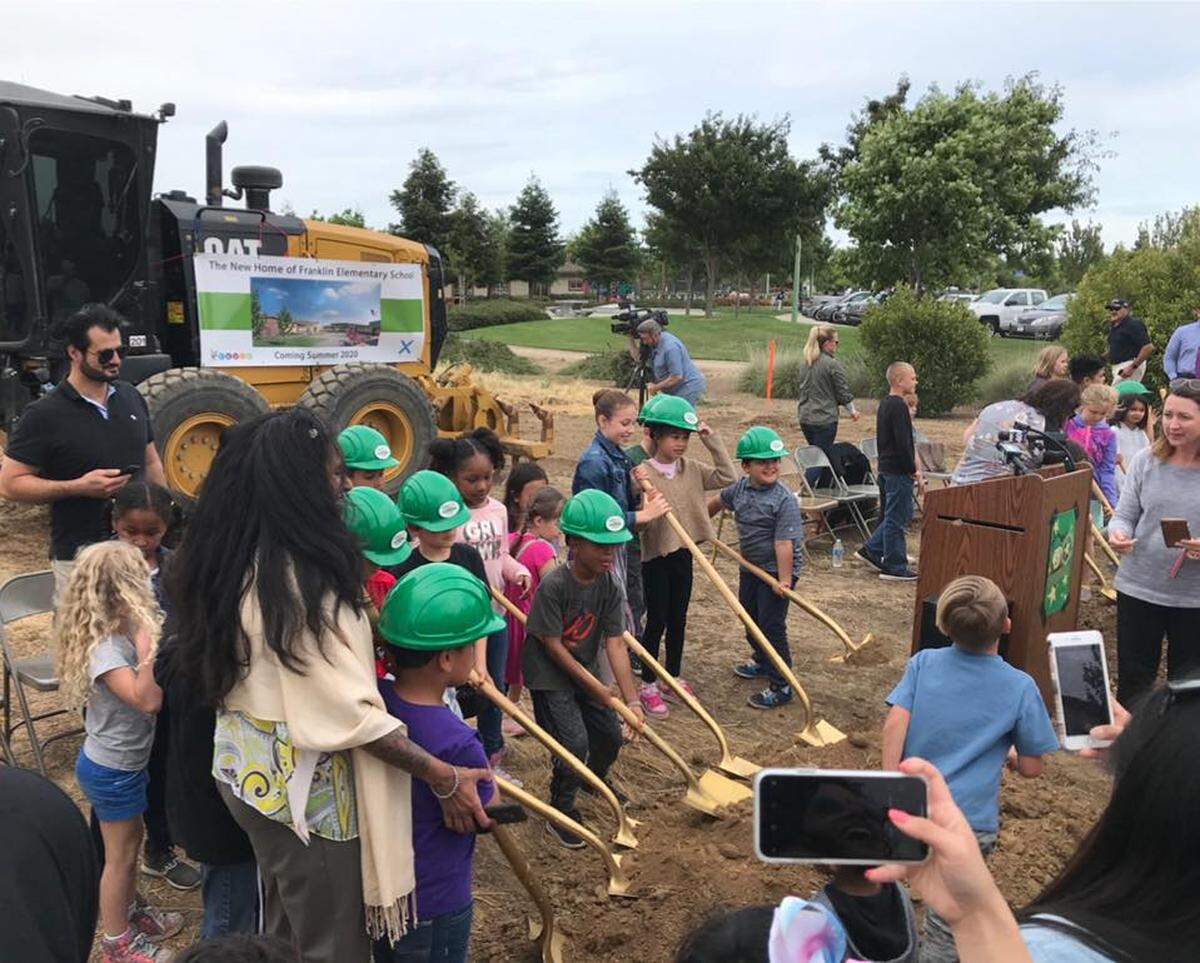
We are a growing district, which makes us a bit of an anomaly in the state of California, where many districts in the state are struggling with declining enrollment. We do not have that challenge. We have four schools in the next three years that we are building, and we’re going to be building many, many more. We’re 320 square miles, and as we fill in and extend further through Rancho Cordova, those areas are going to need schools. We’re trying to be very strategic in our facility planning, working with developers and cities to make sure that we are very efficient with our resources and very smart in how we build these future communities.
Q: You mentioned the district’s budget. What are your priorities for the budget in the coming years?
A: The budget is precarious at the moment. We’re fortunate in that we are a growing district, so we’re not dealing with the declining enrollment piece, but we have a lot of needs pulling on limited ongoing funds. The state tends to give us one time funds, which are helpful for capital purchases, but we are a service sector. We spend about 89% of our total budget on people, and people need ongoing money. Our biggest struggle is as the needs for our communities expand, as the cost of services expand, the need for services and special education services continue to cost more and more.
Our main goals have always been to, obviously, one, stay fiscally solvent. Two is to maintain and sustain the programs that we have in place, and three is our recruitment and retention, but particularly our recruitment. We’re growing, so we are hiring, and we need to stay competitive with our salaries and our benefits. A major concern in the context of finance is the cost of health care. The cost of health care is just going up exponentially, very difficult to keep up with.
Q: How do you plan to engage with parents, teachers and the broader community?
A: Family and community engagement is key to our success. We have to be mindful of the needs and perspectives of our families. We synthesize all of the information that we get from our stakeholders to develop our strategic goal and align our resources to those priorities that our families identify.
We have a family and community engagement department that is integral to our success in reaching out to families. We have several affinity groups for various groups of parents. Our special education community has very strong advocacy groups, specifically one in particular, EG Speaks. We have very good relations with them, and we meet with them regularly to share our vision and some about the challenges that we’re facing, so that when parents reach out to them for support, they’re informed.
We’re going to be very focused on our targeted and strategic goals. We’ve targeted several subgroups — Black and African American students, students with disabilities, our foster youth and our students experiencing homelessness and our Native American population. In terms of outreach to the communities, we’re going to be very deliberate in continuing those conversations and involving them, informing them and cultivating them as partners.
.jpg "Bias-Inside-of-Us-2 (1).jpg")
Q: I want to ask a couple of questions regarding statewide issues and how that’s affecting EGUSD. EGUSD is adding an ethnic studies graduation requirement next school year in compliance with California Assembly Bill 101. What are your thoughts on that class, and do you anticipate the district receiving any positive feedback or any pushback on this requirement?
A: We’ve been working hard and our curriculum and professional learning department has been instrumental in working with school sites and teachers and our teachers union in the development of this curriculum. We believe it will develop a deeper understanding of students and others, and it really falls in line with our multi-tiered system of support. It helps build self-empowerment, empathy and helps us to build bridges amongst the various cultures.
We are the second-most diverse district in California, and we are the sixth-most diverse district in the nation. So from a leadership perspective, I think ethnic studies will help us understand one another, and it will help build empathy. It reduces tension and misunderstandings and helps us create safe learning environments, which we all know is the foundation for student achievement and learning.
We’re embracing this requirement, and we also are allowing our parents, if there are concerns, to come in and review the curriculum and to play a part in that curriculum. If any parent or community has questions about that curriculum, we’re transparent and we’re open and we’re willing to share. I think the more people that understand the curriculum and the aims of it, I think that’ll work to assuage any concerns.
Q: The EGUSD board voted last year to stop future discussion of banning transgender students from participating in girls’ sports. And while Gov. Gavin Newsom signed a law in 2024 that prohibits requiring teachers to notify families about students’ gender identity changes, it’s still being debated in the federal courts and in districts around the Sacramento area. Where do you see EGUSD going in the future on this, and where do you stand on this?
A: We’re going to follow the law. This is a developing case. There are updates almost daily on it, so we’re following it closely, and we want to be in compliance with the law. We’ll continue to be communicative, keeping everybody informed of these developments, and we will then work and respond accordingly with our policies and our practices as these decisions become finalized and resolved through the courts.
Q: Is there anything else that you want readers to know that I didn’t ask about?
A: I’m very honored to be in this position. I’m very humbled to be in this position. I’m very inspired by the leadership in this district, the leadership at the school sites, the communities. I’ve lived in Elk Grove and been a community member. I raised my family here. We have a very engaged community who I truly believe wants the best for students, and so to be standing on such a solid foundation, and yet, seeing areas where we can grow and get better and better serve students, is a great place to be.
This story was originally published January 26, 2026 at 12:58 PM.